
TL;DR

Get the latest gadgets delivered free — and shop member deals
- Fast, free delivery on millions of items
- Access to Prime Big Deal Days deals on October 6–7
- Prime Video, Amazon Music and more included
Apple’s latest Studio Display improved some features but still relies on a 12-year-old panel, limiting its performance and flexibility. Competitors offer better value and more features, raising questions about Apple’s strategy.
Apple’s latest Studio Display, released in early 2026, features hardware improvements such as a mini-LED backlight and better ports, but continues to rely on a 12-year-old IPS panel, limiting its performance and value compared to newer competitors.
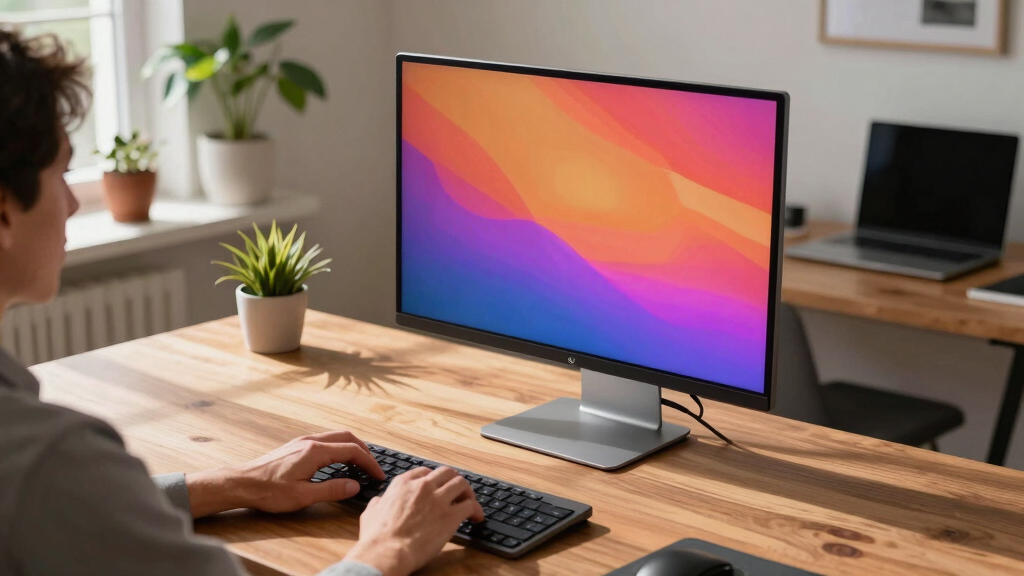
The 2026 Studio Display includes a mini-LED backlight, a quantum-dot optical stack, a 120Hz refresh rate, and two Thunderbolt 5 ports, along with improved speakers and a better webcam. However, it still uses the same aging 60Hz IPS panel as the 2022 model, with only 600 nits of brightness and limited black levels, which affects contrast and overall picture quality. The stand options remain restricted, with tilt-only adjustments unless paying an extra $400 for more flexibility, and the display’s price remains at $1,600. Meanwhile, competitors like BenQ, Asus, and KTC offer 27-inch 5K monitors with more adjustable stands, better port options, and comparable or better color accuracy at significantly lower prices, ranging from $550 to $1,100.
Why It Matters
This development highlights Apple’s missed opportunity to fully modernize its flagship monitor, raising questions about its product strategy and value proposition in a competitive market. For consumers, it underscores the importance of considering alternatives that offer better features for less money, especially as the market evolves with more versatile options.
Apple Studio Display alternative monitor
As an affiliate, we earn on qualifying purchases.
As an affiliate, we earn on qualifying purchases.
Background
Apple introduced the original Studio Display in 2022, replacing LG’s long-dominant 5K UltraFine monitors. Despite hardware upgrades in 2026, the core panel technology remains outdated, limiting the display’s performance. Meanwhile, competitors began releasing more advanced 5K monitors in late 2024, offering better features at lower prices, challenging Apple’s dominance in the high-end monitor space.
“Apple’s new Studio Display has hardware upgrades but is still built around a 12-year-old panel, which limits its contrast, brightness, and overall picture quality.”
— The Verge reviewer
“Apple’s pricing strategy for the Studio Display feels increasingly disconnected from what the market offers, especially given the competition’s better specs at lower prices.”
— Industry analyst
27 inch 5K monitor with adjustable stand
As an affiliate, we earn on qualifying purchases.
As an affiliate, we earn on qualifying purchases.
What Remains Unclear
It is not yet clear whether Apple plans to replace the panel technology entirely in future models or continue to focus on incremental hardware upgrades. The company’s long-term strategy regarding monitor development remains undisclosed.
best professional computer monitor 2026
As an affiliate, we earn on qualifying purchases.
As an affiliate, we earn on qualifying purchases.
What’s Next
Apple may release a future model with a new, modern panel technology or further hardware upgrades. Meanwhile, competitors are likely to continue advancing their offerings, and consumers will have more options at various price points. Monitoring industry trends and official announcements will clarify Apple’s next steps.
high contrast 4K/5K computer monitor
As an affiliate, we earn on qualifying purchases.
As an affiliate, we earn on qualifying purchases.
Key Questions
Why does the Studio Display still use a 12-year-old panel?
Apple has not officially explained why it continues to use the same panel technology, but it appears to be a combination of cost, supply chain considerations, and design choices.
How does the new Studio Display compare to competitors?
While the 2026 Studio Display has hardware improvements, it still lags behind competitors like BenQ and Asus in terms of adjustable stands, port variety, and black levels, often at a higher price.
Will Apple update the panel in future models?
It is currently unknown whether Apple will upgrade the panel technology in upcoming versions, as the company has not announced any plans to do so.
Is the price justified given the display’s limitations?
Many reviewers and industry analysts argue that the price is high relative to the features and performance offered, especially compared to more versatile and cheaper alternatives.
Halloween Picks
halloween
As an affiliate, we earn on qualifying purchases.