
📊 Full opportunity report: Efficient Food Safety Management Using Vision-Model Kitchen Checks on IdeaNavigator AI — validation score, market gap, and execution plan.

Get the latest gadgets delivered free — and shop member deals
- Fast, free delivery on millions of items
- Access to Prime Big Deal Days deals on October 6–7
- Prime Video, Amazon Music and more included
TL;DR
A restaurant group is piloting an AI-powered kitchen inspection system that uses photos to identify food safety violations. This approach aims to improve accuracy and accountability in daily safety checks, potentially transforming food safety management.
A new AI-powered kitchen inspection tool is being piloted by a multi-unit restaurant group to verify daily food safety checks through photo analysis, replacing traditional paper checklists with verifiable data. This development could significantly improve the accuracy and accountability of routine safety inspections, which are critical for compliance and customer safety.
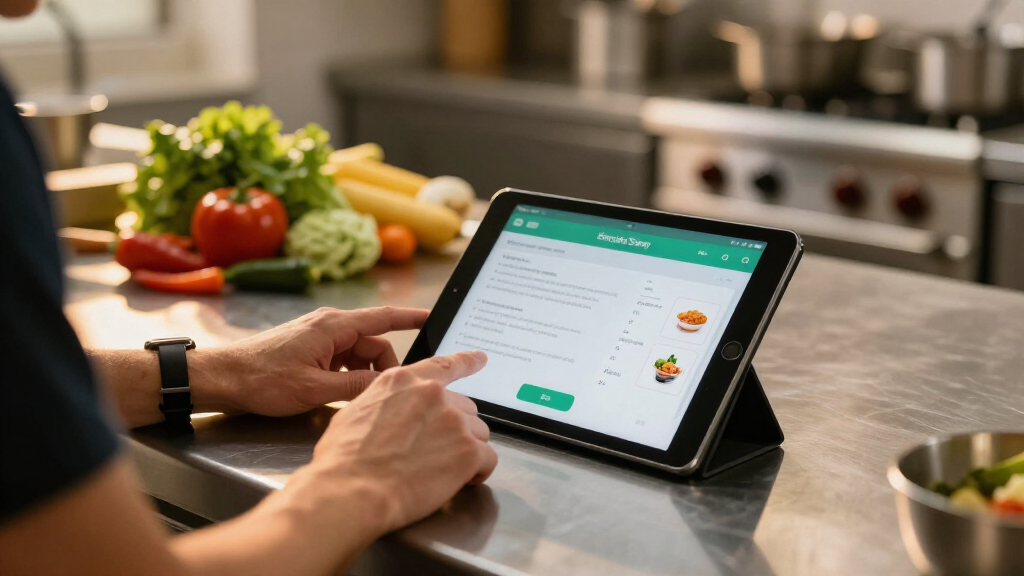
The proposed system involves managers taking photographs during morning kitchen walk-throughs, including prep stations, storage areas, and sinks. An AI vision model then analyzes these images to identify violations such as uncovered containers, propped cooler doors, and missing date labels. The system generates timestamped reports per location, highlighting violations and tracking trends across multiple sites.
This approach aims to address a common problem: current checklists often record that inspections were performed but do not verify the actual conditions. As a result, violations may go unnoticed until a health inspection, or issues are discovered later by inspectors. The AI system provides a verifiable record, reducing reliance on subjective or incomplete manual checks.
The pilot involves comparing the AI’s flagged violations against findings from a hired health-inspection consultant over a two-week period at five restaurant locations. The goal is to validate the AI’s accuracy and reliability in real-world conditions before wider deployment.
Efficient Food Safety Management Using Vision-Model Kitchen Checks
A restaurant group is testing photo-based AI inspections that turn daily kitchen walk-throughs into objective, timestamped evidence—helping teams detect violations earlier and strengthen accountability across locations.
From tick boxes to visible conditions
Managers photograph critical kitchen zones. The vision model reviews what is actually present in the image, creating a verifiable record instead of relying solely on a completed paper checklist.
Uncovered food
Identifies containers or ingredients left exposed during preparation or storage.
Open cooler doors
Flags doors that appear propped open, supporting temperature-control discipline.
Missing date labels
Surfaces containers without visible preparation, use-by, or discard information.
Improper placement
Checks visible storage arrangements for conditions that may increase contamination risk.
Sanitation readiness
Reviews sink areas for visible readiness issues, obstructions, or missing essentials.
Recurring patterns
Aggregates reports to reveal repeat violations and location-level trends over time.
A faster evidence loop
The pilot connects routine manager behavior with machine analysis, corrective action, and centralized operational oversight.
Walk through
Manager visits prep, storage, cooler, and sink zones.
Photograph
Current conditions are recorded as visual evidence.
Analyze
The vision model searches for trained violation patterns.
Flag
Possible issues appear in a timestamped location report.
Correct
Staff verify findings, resolve issues, and monitor trends.
Manual checklist vs. vision-assisted inspection
The key shift is not merely digitization. It is the move from recording that an inspection occurred to retaining evidence of the conditions observed.
| Inspection capability | Paper checklist | Vision-assisted check | Operational effect |
|---|---|---|---|
| Confirms the check occurred | ~Self-reported | ✓Timestamped evidence | Stronger accountability |
| Verifies visible conditions | ✕Limited | ✓Photo analysis | Earlier issue discovery |
| Consistency across locations | ~Staff-dependent | ✓Shared model criteria | More comparable reporting |
| Trend tracking | ~Manual review | ✓Aggregated reports | Recurring risks become visible |
| Expert judgment | ✓Human interpretation | ~Human verification required | Augmentation, not replacement |
✓ strong capability · ~ conditional capability · ✕ material limitation
Accuracy must be earned in the kitchen
The system’s credibility depends on how closely its findings align with trained human assessment across varied layouts, lighting conditions, equipment, and staff practices.
What the pilot needs to prove
These bars represent validation priorities—not published performance scores.
Two weeks of results can provide an initial signal, but longer testing is needed to establish reliability, scalability, privacy controls, and performance in diverse kitchens.
A new layer of operational accountability
If validation is favorable, photo-based inspection records could help restaurant groups strengthen compliance without removing human judgment from food safety decisions.
More reliable checks
Visual records make it harder for incomplete inspections to disappear behind a checked box.
Earlier correction
Daily flags can surface visible issues before an external health inspection or later discovery.
Multi-site visibility
Central teams can compare locations and identify recurring operational weaknesses.
Evidence-led habits
Objective records can support coaching, follow-through, and a more transparent safety culture.
Traceability chain
What operators need to know
The current pilot is an evaluation of assisted inspection—not proof of full automation or immediate commercial availability.
How are violations identified?
A vision model analyzes kitchen photographs and flags trained visual patterns such as uncovered food, improper storage, open cooler doors, and missing labels.
Will AI replace human inspectors?
No. The proposed system augments managers and inspectors with verifiable reports. Human oversight remains essential for context, confirmation, and corrective decisions.
What are the main benefits?
Potential benefits include objective evidence, more consistent checks, reduced manual reporting effort, improved compliance tracking, and better visibility across locations.
When could deployment expand?
If pilot results are favorable, the restaurant group may extend the system to additional sites over the following months, with further validation before broader availability.
What about privacy and data security?
Photographs are expected to be stored securely under relevant privacy protocols, but final details covering retention, access, employee visibility, and data handling are still being defined.
Compare AI-flagged violations with consultant findings across five locations for two weeks, analyze agreement and errors, then decide whether to refine, expand, or pause deployment.
Potential Impact on Food Safety Verification
This development could transform how restaurant chains conduct daily food safety checks by providing verifiable, objective data. By automating inspection reports with AI analysis, restaurants can improve compliance, reduce human error, and create a more transparent safety culture. If successful, it may set a new standard for operational accountability and regulatory adherence in the foodservice industry.
As an affiliate, we earn on qualifying purchases.
Current Challenges in Kitchen Safety Inspections
Traditional checklists used in restaurant inspections often rely on staff tick-boxing that inspections occurred, not on actual conditions. This can lead to overlooked violations such as uncovered food, improper storage, or missing labels. Health departments and restaurant operators have expressed concern about the reliability of manual checks, especially during busy periods or with high staff turnover.
Recent advances in AI and computer vision have enabled more accurate detection of safety violations through photographs. Pilot programs in other sectors have demonstrated the potential for AI to provide continuous, objective monitoring, prompting interest in applying these technologies to food safety management.
“Using AI vision models to analyze kitchen photos can reliably flag violations that often go unnoticed in manual inspections.”
— an anonymous researcher
As an affiliate, we earn on qualifying purchases.
Uncertainties About AI Inspection Accuracy
It is not yet confirmed how accurately the AI system can identify violations compared to expert human inspectors across diverse kitchen environments. The pilot’s two-week validation will provide initial data, but longer-term results and broader testing are needed to establish reliability and scalability.
restaurant kitchen safety camera system
As an affiliate, we earn on qualifying purchases.
As an affiliate, we earn on qualifying purchases.
Next Steps in Validation and Deployment
Following the two-week pilot, the restaurant group plans to analyze the AI system’s performance and compare flagged violations against expert inspections. If results are favorable, the system could be rolled out to additional locations and integrated into routine safety protocols, with ongoing monitoring and refinement based on user feedback and data accuracy.
verifiable food safety checklist tool
As an affiliate, we earn on qualifying purchases.
As an affiliate, we earn on qualifying purchases.
Key Questions
How does the AI system identify food safety violations?
The system uses a vision model to analyze photographs taken during kitchen inspections, flagging issues such as uncovered food, improper storage, and missing labels based on trained visual patterns.
Will this replace human inspectors entirely?
Currently, the system is designed to augment human inspections by providing verifiable reports. Full automation is not planned at this stage; human oversight remains essential.
What are the benefits of using AI for kitchen checks?
Benefits include increased accuracy, verifiable records, reduced manual effort, and improved compliance tracking across multiple locations.
When will this technology be available for wider use?
If pilot results are positive, the restaurant group plans to expand deployment over the next several months, with potential commercial availability following further validation.
Are there privacy or data security concerns?
Photographs are stored securely, and data privacy protocols are being followed to ensure compliance with relevant regulations. Details on data handling are still being finalized.
Source: IdeaNavigator AI
Halloween Picks
halloween
As an affiliate, we earn on qualifying purchases.