
TL;DR
Infleqtion says its Tiqker optical atomic clock operated continuously aboard the U.S. Navy support vessel RV Merlin for more than two weeks during the Maritime Big Play Pacific exercise and the related BARB-26 exercise. The trial tested the system at sea, but the company has not released performance results or details on a decision to integrate it into Navy platforms.
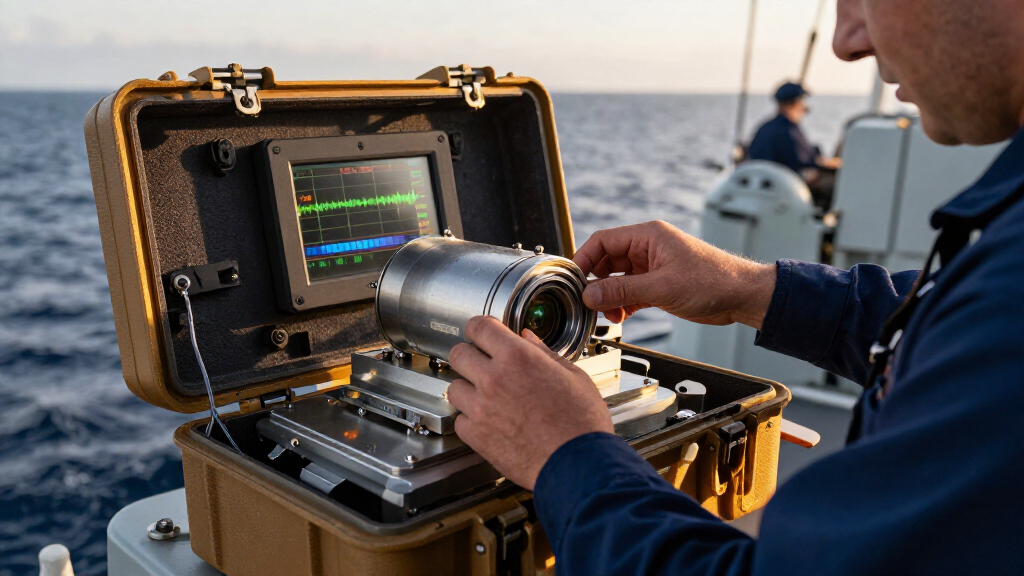
Infleqtion says its Tiqker optical atomic clock operated continuously aboard the U.S. Navy support vessel RV Merlin for more than two weeks during the Maritime Big Play Pacific exercise in Southern California waters. The trial tested the clock under maritime conditions and could inform future naval integration, though no performance results or integration decision were disclosed.

Get the latest gadgets delivered free with Prime
- Fast, free delivery on millions of items
- Prime Video, Amazon Music and more included
- Member-only deals all year
The company said the demonstration evaluated Tiqker as a precision timing reference in an operating environment that included temperature changes and sustained vibration. The at-sea work also supported BARB-26, a Navy exercise focused on emerging subsea and seabed warfare capabilities, according to Infleqtion’s announcement.
Infleqtion describes Tiqker as a compact optical atomic clock designed to provide stable local timing without relying on satellite signals. It says that capability could support synchronization for communications, radar and other onboard systems when GPS signals are unavailable, jammed or spoofed. Those are potential uses cited by the company, not a report that the Navy has adopted the clock or tested each application in operational service.
The Maritime Big Play Pacific exercise was sponsored by the Office of the Under Secretary of War for Research & Engineering, according to the announcement, and involved the U.S. Navy, U.S. Marine Corps and AUKUS partners from Australia and the United Kingdom. Infleqtion said the exercise assessed the technology across operational conditions involving systems above and below the surface, including manned and unmanned platforms. It did not publish measurements of clock accuracy, uptime beyond the stated continuous operation, or how the system performed against a conventional timing reference.
Timing Without Satellite Signals
Military platforms use accurate timing to coordinate communications, sensors and navigation. If a local clock can maintain a dependable reference when satellite timing is disrupted, it could give crews and connected systems another way to stay synchronized. That possibility matters in environments where GPS may be unavailable or contested, but this demonstration alone does not establish how well Tiqker would perform in a specific mission or whether it can replace existing timing systems.
The exercise also tests a practical obstacle facing precision clocks: equipment intended for field deployment must function outside a controlled laboratory. Continuous operation aboard a vessel exposed the system to maritime vibration and temperature variation, according to Infleqtion. Data from such trials could help assess whether the clock is suitable for naval use, although the company has not released those data or described the Navy’s evaluation criteria.
Products Worth Considering

Jackery Explorer 2000 v2 Portable Power Station, 2042Wh, 2200W

Apple Watch SE 3 GPS 40mm Smartwatch

DJI Mic 2 Wireless Microphone System with 2 Transmitters, 1 Receiver, and Charging Case
As an affiliate, we earn on qualifying purchases.
Earlier Tiqker Field Trials
The Navy exercise adds to previous field trials cited by Infleqtion. The company said Tiqker was deployed aboard the UK Royal Navy’s uncrewed submarine testbed, XV Excalibur, in 2025 and operated during multiple dives. In 2024, the clock took part in UK flight trials aboard QinetiQ’s RJ100 Airborne Technology Demonstrator, in work with QinetiQ and BAE Systems.
Those earlier deployments provide context for the latest maritime test: Infleqtion has been evaluating the clock outside a laboratory in both airborne and underwater settings. The supplied material does not give comparative results from those trials, so it is not possible to assess whether the system’s performance has improved or how the Navy demonstration compares.
“The Navy needs dependable timing to navigate, communicate and coordinate operations in the field.”
— Matthew Kinsella, Infleqtion CEO
Test Results Still Pending
Infleqtion has not released quantitative accuracy, stability or reliability results from the exercise, nor has it said how the clock compared with other timing equipment aboard the vessel. The announcement also does not describe independent verification, the Navy’s assessment of the trial, or any specific operating incidents during the more-than-two-week period.
It remains unclear whether the Navy will conduct additional tests, what requirements Tiqker would need to meet for platform integration, or whether any procurement or deployment decision is under consideration. The company’s statements about GPS-denied uses describe intended potential, not confirmed operational capability across those scenarios.
Infleqtion said the demonstration would generate operational data to inform future naval integration. The company and the Navy have not announced a timetable for releasing findings, further trials or a decision on adopting the clock. The next meaningful updates would be published test results, a Navy assessment, or details of any follow-on evaluation that show how Tiqker performs against defined requirements.
Key Questions
What did Infleqtion test during the Navy exercise?
Infleqtion said it operated its Tiqker optical atomic clock continuously aboard the Navy support vessel RV Merlin for more than two weeks, evaluating its timing technology under maritime conditions.
Where and during which exercises did the demonstration take place?
The trial took place in the Southern California operating area during Maritime Big Play Pacific and also supported BARB-26, according to the company.
Why might a Navy platform use an optical atomic clock?
A clock that supplies local timing could help synchronize communications, radar and other systems when GPS timing is unavailable or disrupted. Infleqtion describes these as potential applications; the announcement does not confirm Navy adoption.
Did the company publish results from the test?
No detailed performance measurements were included in the supplied announcement. Accuracy, reliability and comparative results remain undisclosed.
Has the Navy decided to deploy Tiqker?
No deployment or procurement decision was announced. Infleqtion said the trial was intended to gather operational data and inform future integration.
Source: thequantuminsider.com