
TL;DR

Get the latest gadgets delivered free with Prime
- Fast, free delivery on millions of items
- Prime Video, Amazon Music and more included
- Member-only deals all year
Moonshot’s Kimi K3 debuted at No. 3 on VigilSAR’s defense-focused language-model leaderboard, scoring 64.65 in Band B. The result placed Kimi K3 above every GPT and Gemini entry tested, although VigilSAR says readers should compare score bands rather than exact ranks.
Moonshot’s Kimi K3 debuted at No. 3 on VigilSAR’s leaderboard, scoring 64.65 in Band B in a benchmark designed to test language models on intelligence, surveillance and reconnaissance work. The result places Kimi K3 above every GPT and Gemini entry listed in the current standings, though VigilSAR cautions that overlapping confidence intervals make score bands more meaningful than exact rank positions.
The VigilSAR evaluation covers 14 language models across 300 defense-ISR tasks, with the current results scored on July 17, 2026. The tests focus on reasoning, reporting and restraint rather than broad knowledge or trivia. Aggregate scores are public, but the individual tasks are kept private to limit the risk that model developers train against the evaluation material.
Claude Fable 5 leads the published board with 67.77 in Band A and appears as the pinned reference row. Kimi K3 follows in Band B at 64.65 and is listed third overall. The GPT-5.x entries occupy Bands C and D, while Gemini entries appear in Bands E and F, according to the leaderboard.
VigilSAR also reports confidence intervals, differences between public and private held-out scores, and cost per correct answer. One locally runnable open model is labeled “sovereign-deployable,” adding deployment control to the comparison alongside accuracy and cost.
Kimi Challenges Established Model Families
Kimi K3’s placement gives Moonshot’s model a high-profile result in a specialized evaluation where GPT and Gemini entries scored lower. For organizations examining models for sensitive analytical work, the finding suggests that model selection based on broad consumer benchmarks may not predict performance on defense-oriented reasoning and reporting.
The leaderboard also links capability with operating cost and deployment options. Those measures can affect whether a model is practical for repeated analysis, restricted environments or systems where local control is required. Still, the result applies to VigilSAR’s specific test design and does not establish that Kimi K3 is stronger across every intelligence or defense workload.
As an affiliate, we earn on qualifying purchases.
Private Tasks Limit Benchmark Gaming
VigilSAR describes its benchmark as an internal model-selection tool for deciding which systems can be used near its defense-ISR software. Its stated premise is that “Vendor claims are not evidence.” The operators say no model vendor pays for placement and that the evaluation ranks models they may use themselves.
The 300-task set remains private, while aggregate results are published for comparison. VigilSAR says it also uses a separate held-out evaluation set and publishes the score gap between the two sets as a possible warning sign for memorization. Keeping tasks private can reduce direct benchmark training, but it also prevents outside researchers from independently inspecting task quality, scoring decisions and coverage.
“Vendor claims are not evidence.”
— VigilSAR benchmark operators
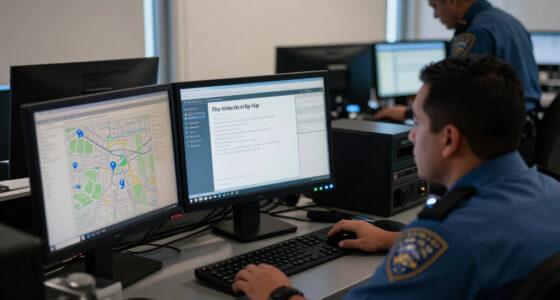
AI surveillance and reconnaissance tools
As an affiliate, we earn on qualifying purchases.
As an affiliate, we earn on qualifying purchases.
Private Methodology Limits Outside Review
It is not yet clear how well the results will transfer to live operational settings, where data quality, tool access, security controls and human review can change model performance. The private task set also means that independent reviewers cannot reproduce the full evaluation from the public leaderboard alone.
VigilSAR reports the use of held-out testing and confidence intervals, but the supplied public information does not establish the detailed scoring rubric, the size of each task category or whether every model received identical configuration and tool access. Kimi K3’s No. 3 position should also be read alongside its Band B classification rather than as a precise capability gap.
private-task AI benchmark software
As an affiliate, we earn on qualifying purchases.
As an affiliate, we earn on qualifying purchases.
Future Runs Will Test Durability
The next evidence will come from later leaderboard runs, additional model entries and any expanded disclosure about task categories or testing controls. Readers can watch whether Kimi K3 remains in Band B as competing models are updated and whether its held-out gap stays consistent.
Any deployment decision would still require organization-specific testing, security review and human oversight. The leaderboard offers comparative evidence, but it does not certify a model for operational defense or intelligence use.
Source: Thorsten Meyer AI
As an affiliate, we earn on qualifying purchases.
Key Questions
What score did Kimi K3 receive?
Kimi K3 scored 64.65 and was assigned to Band B on the VigilSAR leaderboard dated July 17, 2026.
Did Kimi K3 beat GPT and Gemini models?
On this benchmark, Kimi K3 placed above every listed GPT and Gemini entry. That comparison applies only to VigilSAR’s 300-task evaluation, not all possible model uses.
Why does VigilSAR use score bands?
VigilSAR says confidence intervals can overlap, meaning adjacent rank numbers may suggest differences that the evidence does not firmly support. Bands group results into broader performance ranges.
Can the benchmark be independently reproduced?
Not in full from the published information. Aggregate results are public, but the task set and separate held-out set are private, limiting outside replication and inspection.
Source: Thorsten Meyer AI
Halloween Picks
halloween
As an affiliate, we earn on qualifying purchases.