
TL;DR

Get the latest gadgets delivered free with Prime
- Fast, free delivery on millions of items
- Prime Video, Amazon Music and more included
- Member-only deals all year
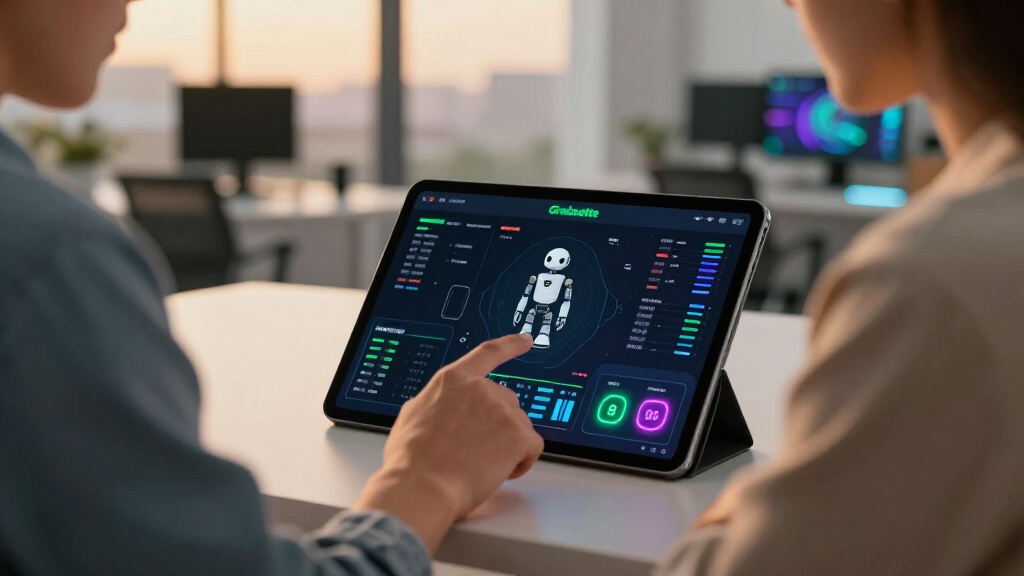
Hugging Face has announced Grabette, an open hardware and software system that allows users to record human manipulation demonstrations without operating a robot. You can learn more in the original analysis. The system converts recordings into datasets for training robots, potentially broadening access to manipulation data.
Hugging Face has unveiled Grabette, an open-source handheld device designed to record human manipulation demonstrations and convert them into datasets for robot training. The system aims to reduce the costs and logistical barriers associated with collecting large-scale manipulation data, which is vital for advancing robot learning and autonomy.
Grabette combines a handheld gripper equipped with two cameras, an inertial measurement unit, and magnetic encoders. It records demonstrations via a simple button press, capturing wrist-level fisheye camera footage and RGBD data for six-degree-of-freedom tracking. The collected data is processed through a browser-based dashboard, which uploads episodes to the Hugging Face Hub, where they are converted into LeRobot datasets suitable for training robotic policies.
The hardware costs are estimated at about €490, with a motorized end effector called Gripette costing around €120. The entire system, including software, processing pipeline, and hardware files, is open-source, aiming to facilitate community-driven data collection and research. The project is inspired by Stanford’s UMI system but emphasizes affordability and accessibility through its open design and browser-based workflow.
Potential Impact on Robot Learning Data Accessibility
Grabette addresses a key challenge in robot learning: the high cost and complexity of collecting diverse manipulation datasets. By enabling humans to record demonstrations without operating a robot, it could democratize data collection, increase dataset diversity, and accelerate development in robot manipulation skills. Its open hardware and software approach may foster broader collaboration across institutions, ultimately advancing autonomous robot capabilities.
Products Worth Considering

Apple iPad Air 11-inch (M2), 512GB, Wi-Fi, Space Gray
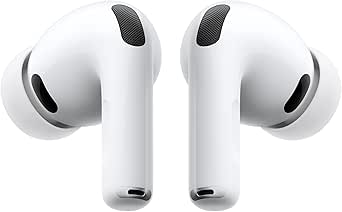
Apple AirPods Pro 3 Wireless Earbuds with Active Noise Cancellation
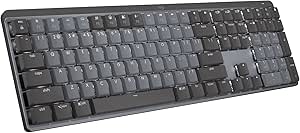
Logitech MX Mechanical Wireless Illuminated Keyboard, Tactile Quiet, Graphite
As an affiliate, we earn on qualifying purchases.
Background and Inspiration for Grabette Development
The system draws inspiration from Stanford’s Universal Manipulation Interface (UMI), which used handheld devices for outside-lab demonstration recording. Prior commercial devices from companies like Agibot and Genrobot have attempted similar tasks but often remain closed-source or expensive. Hugging Face’s initiative aims to combine open hardware, browser-based processing, and shared datasets to lower barriers and foster community engagement in manipulation data collection.
“The bottleneck isn’t the model. It’s the data.”
— Hugging Face Grabette team
Unverified Aspects and Performance Limitations
The announcement does not include independent testing results or peer-reviewed validation of Grabette’s performance, particularly regarding the accuracy of motion tracking during fast or complex movements, handling occlusions, or reflective surfaces. Reliability metrics, dataset size, and policy transferability across different robot platforms remain unconfirmed. Licensing, contributor governance, and quality control protocols are also not yet detailed.
Next Steps for Community Adoption and Validation
Researchers and developers are expected to reproduce the hardware setup, contribute demonstration datasets, and evaluate the system’s performance in diverse environments. Future updates should include validation studies, benchmark results, expanded datasets, and clearer licensing terms. The success of Grabette will depend on community engagement, dataset growth, and demonstrated policy transferability across different robotic systems.
Key Questions
What is Grabette?
Grabette is an open-source handheld device that records human manipulation demonstrations, capturing camera, depth, motion, and gripper data, then converting these recordings into datasets for robot training.
Does Grabette require a robot during data collection?
No, the system allows humans to record demonstrations without operating a robot during the collection process. The recorded data can later be used to train robots for similar tasks.
How does Grabette convert demonstrations into usable datasets?
The system uploads recordings via a browser dashboard to the Hugging Face Hub, where the data is processed using Grabette’s pipeline into LeRobot format, suitable for training policies.
What are the hardware costs and components?
The estimated hardware cost is approximately €490 for the complete Grabette system, which includes a handheld gripper, cameras, Raspberry Pi, and sensors. The Gripette end effector costs around €120.
What are the limitations or uncertainties around Grabette?
Performance validation is still pending; no independent testing results are available. It remains unclear how well the system handles complex movements, occlusions, or scene reflections, and how transferable datasets are across different robot platforms.
Source: ThorstenMeyerAI.com