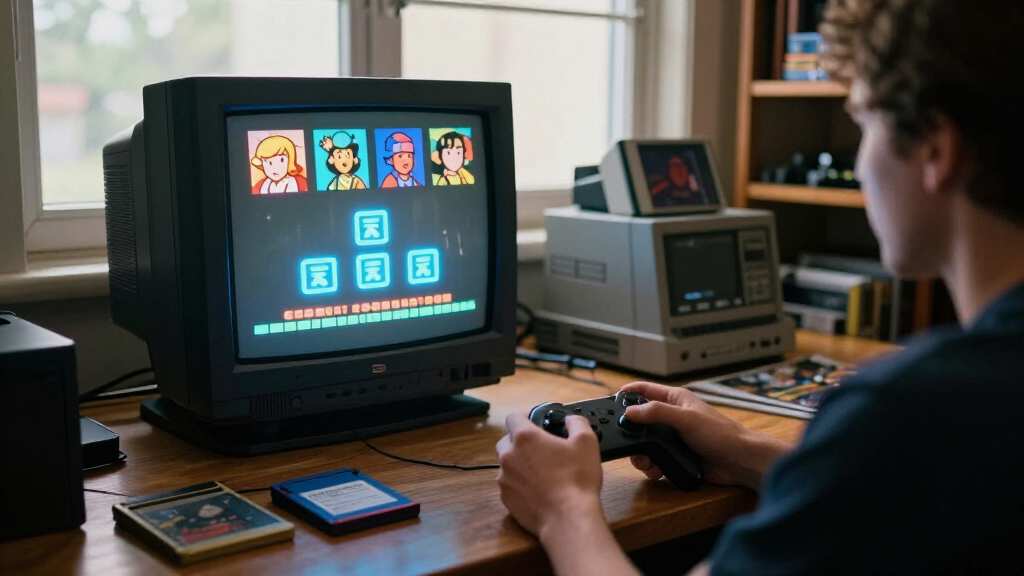

TL;DR
ScabShack published an essay arguing that the distinctive save-file screens of sixth-generation consoles deserve a return. The piece recalls how Dreamcast, GameCube, PlayStation 2 and original Xbox menus used game-specific icons and visual designs, while noting that contemporary systems commonly show game cover art.
ScabShack has published an essay calling for the return of distinctive save-file screens, recalling how the Dreamcast, GameCube, PlayStation 2 and original Xbox gave saved games their own visual identities. The piece contrasts those menus with the game cover art commonly used for saves today, arguing that the older designs added personality to routine file management.

Get the latest gadgets delivered free with Prime
- Fast, free delivery on millions of items
- Prime Video, Amazon Music and more included
- Member-only deals all year
The essay describes the screens as part of the experience of using memory cards and console storage menus, where players could find, copy or delete individual saves. Instead of displaying only a game title, the systems often used small images or models drawn from the game. The author, Aaron, says those icons could make save files memorable enough that he kept some even after no longer owning the associated games.
Each system had its own presentation. Dreamcast saves appeared as small square icons against the console menu’s watery, cloud-filled backdrop. GameCube saves sat on floating cubes over a dark grid. PlayStation 2 used a grid of three-dimensional models or blocks, including game-related imagery such as Dragon Quest 8’s slime and God of War’s Blades of Chaos. The original Xbox, by contrast, paired round save icons with a green, honeycomb-like menu design.
The essay also highlights the Dreamcast’s Visual Memory Unit (VMU), which could act as a small second screen in some games and run downloadable minigames. The author recalls uses including raising Chao connected to Sonic Adventure 2 and a creature in Zombie Revenge. These examples make the broader point: save management and memory cards could serve as more than a plain list of files, combining utility with game-specific design.
The case made by the essay is about interface design and player memory, rather than a newly announced console feature. Save screens are practical menus, but their icons and environments could give players a small reminder of the games they had played. That helped turn a basic task—finding or deleting a file—into a more recognizable part of each console’s identity.
For readers who remember those systems, the differences also made moving between consoles feel distinctive. A floating GameCube cube and a PS2 character model were not just interchangeable file markers; they reflected different visual approaches. The author’s appeal invites a comparison with today’s more standardized presentation, while stopping short of arguing that current systems should abandon the convenience of familiar cover art.
The nostalgia matters because it points to a design choice that can be easy to overlook: even secondary menus shape how a device feels to use. The essay does not establish that a return to bespoke save icons is planned or widely demanded. It offers a personal argument that small interface details can carry lasting emotional value.
Products Worth Considering
Logitech MX Creative Console with 9 Customizable Keys, Graphite

Apple MacBook Air 15-inch Laptop with M5 Chip, 24GB Memory, 1TB SSD, Midnight

Jackery Explorer 300 Portable Power Station, 292Wh
As an affiliate, we earn on qualifying purchases.
Memory Cards and Console Identity
The essay focuses on the sixth generation of home consoles, naming the Dreamcast, GameCube, PlayStation 2 and original Xbox. At the time, players on several of those systems used separate memory cards to store saves; the author notes that the original Xbox was an exception, with an internal hard drive. That difference shaped how players accessed and managed their files.
Those storage menus gave each console room for a distinct visual treatment. The report recalls the Dreamcast’s VMU as more than storage, since supported games could use its display or downloadable content for additional play. The piece contrasts these examples with contemporary save listings that, in the author’s account, commonly rely on a game’s cover art. It is a retrospective rather than a technical survey of every current console or title.
““Sometimes I wish we still had these small treasures buried inside of our memory cards or devices.””
— Aaron, the ScabShack essay’s author
No New Console Feature Announced
The source is a personal retrospective and appeal, not an announcement from a console maker. It does not report that Sony, Microsoft, Nintendo or another company is developing new save-file screens, nor does it provide evidence of a broader industry effort to restore them. The essay’s description of current menus is a general observation, not a system-by-system comparison.
The source material does not include a publication date, independent technical documentation or responses from console manufacturers. It also does not say how modern storage systems might support custom icons, whether players would want that feature across platforms, or what design and compatibility constraints would apply. Those questions remain open.
The Appeal Remains a Design Idea
No follow-up product announcement or development milestone is identified in the essay. The immediate development is the publication of Aaron’s argument on ScabShack; any move to bring back custom save-file screens would require a separate decision by platform makers or game developers. No company has been reported here as taking that step.
Readers can compare the remembered systems with the menus on consoles they use now, but the source offers no evidence that modern interfaces will change. Whether the essay prompts further discussion or inspires a specific feature request is also unknown. For now, the call to bring back distinctive save screens remains a point of view grounded in the author’s memories of sixth-generation consoles.
Key Questions
What is the news?
ScabShack published a retrospective essay arguing that modern gaming could bring back distinctive save-file screens like those on sixth-generation consoles. It is an opinion expressed in the essay, not a console-industry announcement.
Which consoles does the essay discuss?
The essay recalls the Dreamcast, GameCube, PlayStation 2 and original Xbox, describing different visual treatments for their save menus.
What made the older save screens different?
They often displayed game-specific icons, characters or models within a console-specific menu design, rather than relying only on a game’s cover art.
Has a company announced plans to bring these screens back?
No such plan is reported in the source material. The essay makes a call for the design approach to return but does not cite a response or commitment from a platform maker.
Source: hn