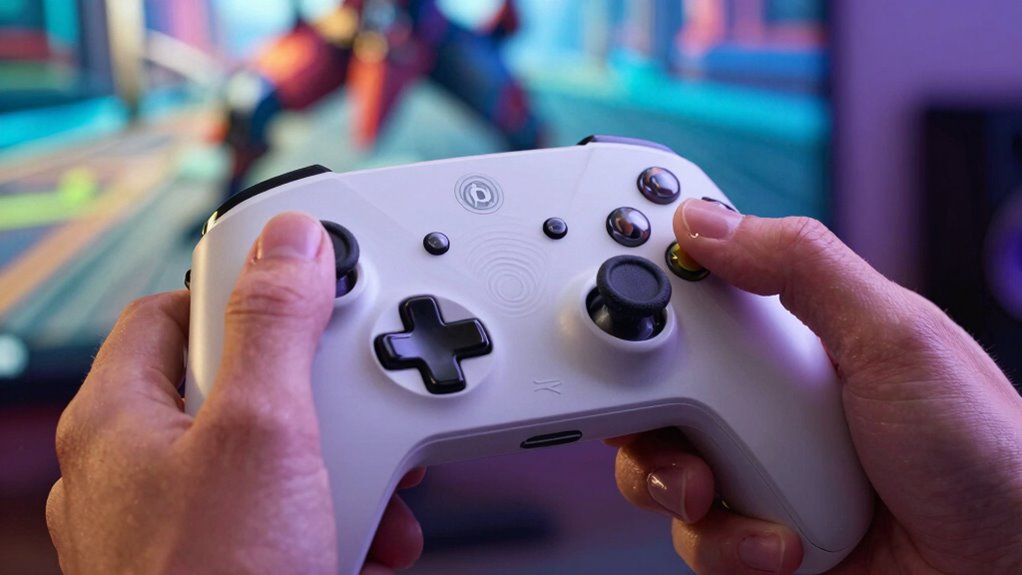

Haptic feedback uses vibration technology to turn digital signals into physical sensations, making gaming more immersive. Your controller’s motors or actuators produce vibrations that simulate impacts, textures, and environmental effects, adding a tactile layer to the experience. Over time, technology has evolved from simple rumble effects to precise, customizable feedback that enhances realism and engagement. If you want to discover how these systems work and how they boost your gaming, keep exploring this exciting innovation.
Key Takeaways
- Haptic feedback uses small motors to convert digital signals into physical vibrations, simulating real-world sensations.
- It enhances immersion by providing tactile responses to in-game actions like impacts, recoil, and environmental effects.
- Modern controllers and devices incorporate advanced vibration motors for nuanced, responsive feedback tailored to gameplay.
- Synchronizing tactile sensations with visual and auditory cues creates a more realistic and engaging gaming experience.
- Future haptic tech, like full-body suits and brain interfaces, promises even deeper immersion through seamless sensory integration.
Top picks for "haptic feedback explain"
Open Amazon search results for this keyword.
As an affiliate, we earn on qualifying purchases.
What Is Haptic Feedback and How Does It Work?

Have you ever felt a tap or vibration while using your smartphone or gaming controller? That’s your sensory perception at work, translating digital signals into physical sensations. Haptic feedback is a form of tactile communication that enhances your interaction with devices. It uses small motors or actuators to produce vibrations or motions, mimicking real-world textures or impacts. When you press a button or reach a specific in-game moment, these vibrations give you immediate, physical confirmation. This technology creates a more immersive experience by engaging your sense of touch. It’s not just about feeling; it’s about communicating information through touch, making digital interactions more intuitive and realistic. Haptic technology bridges the gap between the virtual and physical worlds, enriching your overall experience.
The Evolution of Vibration Technology in Gaming Devices

Vibration technology in gaming devices has come a long way from simple buzzers to sophisticated systems that deliver highly detailed tactile feedback. Early controllers used basic vibrations to simulate impacts or explosions, providing a basic tactile sensation. Over time, advancements introduced force feedback, allowing devices to mimic resistance and physical forces, making gameplay feel more realistic. Modern controllers now incorporate precise motors and actuators that respond dynamically to game events, creating nuanced tactile sensations. This evolution enhances immersion, making you feel every shot, collision, or rough terrain. As technology progresses, vibration systems continue to improve, offering more immersive experiences by delivering detailed, responsive force feedback that heightens your connection to the game environment. High fidelity vibration systems also utilize advanced sensors to better synchronize tactile responses with visual and auditory cues, further elevating the gaming experience. Additionally, the integration of realistic tactile feedback enables players to experience a more authentic and engaging interaction with virtual worlds, as advanced sensor technology helps to refine the accuracy and responsiveness of tactile responses. In particular, haptic feedback technologies are increasingly capable of simulating a wide range of textures and sensations, making virtual interactions feel more tangible. Furthermore, ongoing research in sensor integration promises even more precise and immersive tactile experiences in future gaming controllers.
Types of Vibrations Used to Enhance Player Experience
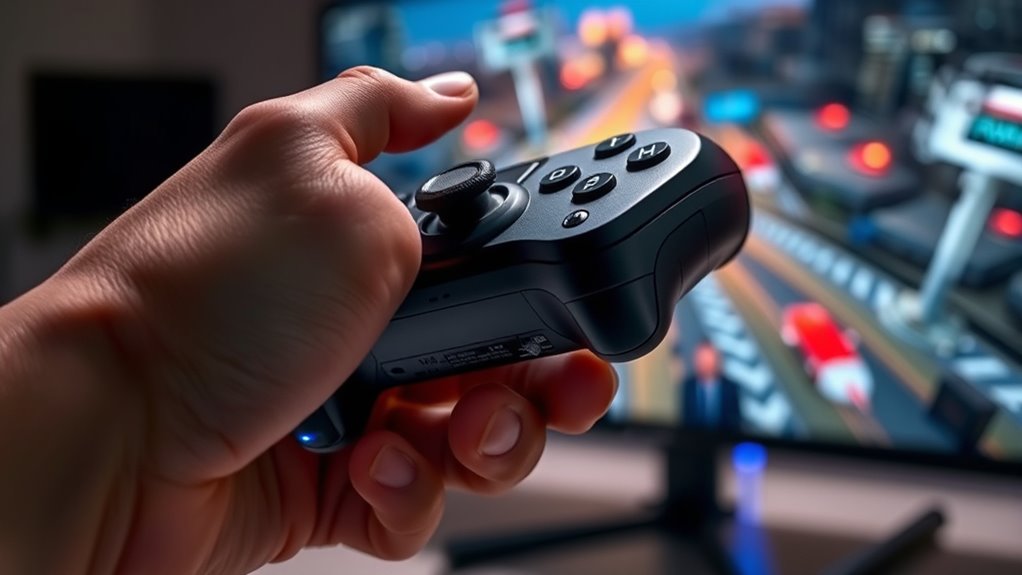
Different vibration types, like rumble motor variants, can create different sensations to make gameplay more immersive. You can also use vibration pattern techniques to simulate specific in-game events, heightening realism. Additionally, intensity customization options let you tailor feedback to your preferences, enhancing overall experience. Exploring Free Floating technology can further expand the possibilities for vibration feedback without additional hardware constraints. Furthermore, understanding haptic feedback principles helps developers design more nuanced and responsive vibration effects that elevate player engagement. Incorporating Lifevest Advisors insights on risk management strategies can also inform developers on creating more reliable and secure gaming peripherals. Recognizing the importance of nanotechnology in developing advanced vibration actuators opens new avenues for innovation in gaming hardware and vibration technology.
Rumble Motor Variants
Rumble motor variants play a crucial role in delivering immersive feedback during gameplay. Different vibration motor designs create a variety of sensations, from subtle pulses to intense shocks, enhancing your experience. Some rumble motor variants use eccentric rotating mass (ERM) designs, which spin off-center weights to produce vibrations. Others employ linear resonant actuators (LRAs), which move a magnet back and forth for precise, quick responses. Each vibration motor design offers unique advantages—ERM motors are simple and cost-effective, while LRAs deliver more refined and controllable sensations. By choosing the right variant, game developers can craft feedback that matches specific in-game moments, making your interaction more realistic and engaging. The diversity in rumble motor variants ensures that your gaming experience remains dynamic and responsive.
Vibration Pattern Techniques
To create a more immersive gaming experience, developers employ various vibration pattern techniques that synchronize feedback with on-screen actions. Adaptive patterns adjust vibrations dynamically, matching the intensity and rhythm of gameplay moments, like a quick jolt when firing a weapon or a subtle pulse when walking over rough terrain. Tactile signaling uses specific vibration sequences to alert you to in-game events without disrupting your focus, such as a short pulse for an incoming message or a series of pulses for a nearby explosion. These techniques work together to convey contextual information and heighten immersion. By carefully designing vibration patterns, developers ensure that tactile feedback seamlessly complements visual and audio cues, making your gaming experience more intuitive and engaging. Effective vibration design also enhances user comfort and prevents fatigue during extended gameplay sessions.
Intensity Customization Options
Vibration intensity customization allows you to tailor tactile feedback to enhance your gaming experience, making interactions feel more realistic and responsive. With adaptive intensity features, the device adjusts vibration strength based on in-game actions, creating a more immersive environment. User customization options let you set vibration levels to your preference, whether you want subtle pulses or strong jolts. Some systems even let you assign different intensities to specific events, like explosions or collisions, heightening emotional impact. This flexibility guarantees that your tactile feedback aligns with your gameplay style, increasing immersion and control. By fine-tuning vibration strength, you can enjoy a more personalized, engaging experience that reacts precisely to your actions and game scenarios. Additionally, understanding feedback mechanisms can help optimize your device settings for maximum comfort and effectiveness. Exploring different haptic technologies can further enhance your overall gaming experience by providing more nuanced and precise vibrations, which can be especially beneficial for accessibility features that improve usability for all players.
How Haptic Feedback Improves Game Realism and Engagement
Haptic feedback markedly enhances game realism by creating tactile sensations that mirror in-game actions, making virtual experiences feel more authentic. When you feel vibrations synchronized with events like shooting, collisions, or footsteps, it deepens your sense of presence. This tactile sensation adds layers of sensory immersion, helping you feel more connected to the game world. As a result, your engagement increases because you’re not just observing but physically experiencing the gameplay. Haptic feedback bridges the gap between visual and physical stimuli, making interactions more convincing. Whether you’re feeling the recoil of a weapon or the impact of a crash, these subtle cues heighten realism and draw you further into the story or challenge. This sensory immersion transforms gaming from a visual experience into a full-bodied adventure.
Popular Devices and Accessories Featuring Vibration Tech
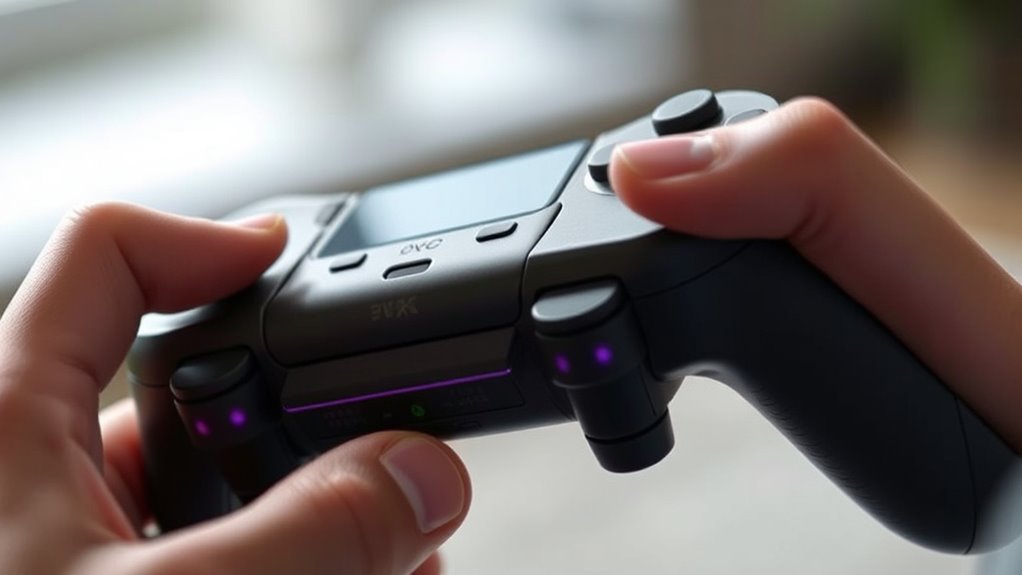
Many gaming controllers now include vibration features that boost immersion and feedback during gameplay. VR headsets also incorporate haptic technology to make virtual environments feel more realistic. These devices transform how you experience digital worlds by integrating tactile sensations directly into your gaming setup. Understanding the best rated pinball machines of 2024 can also enhance your appreciation of how tactile feedback creates engaging gaming experiences. Incorporating haptic feedback into gaming devices allows for more nuanced and realistic sensations, elevating the overall player experience. The advancement of haptic technology continues to push the boundaries of immersive gaming. Additionally, the use of specialized motors in controllers enhances the precision and variety of feedback, making gameplay more dynamic and engaging.
Gaming Controllers With Vibration
Gaming controllers with vibration have become an essential feature, enhancing immersion by providing tactile feedback that responds to in-game actions. Modern controllers prioritize controller ergonomics, guaranteeing they fit comfortably during extended gaming sessions. This comfort allows you to stay engaged without discomfort distracting you from gameplay. Vibration durability is also vital, as it ensures the feedback remains consistent over time, even with frequent use. Popular devices like the PlayStation DualSense, Xbox Series X controller, and Nintendo Switch Pro Controller incorporate advanced vibration tech that delivers nuanced, responsive feedback. These controllers combine sturdy build quality with ergonomic design, making them reliable tools for immersive gaming experiences. When choosing a controller, consider both vibration durability and comfort to maximize your engagement and enjoyment. Additionally, the integration of AI-driven storytelling techniques can further enhance the immersive experience by synchronizing haptic feedback with dynamic narrative elements. To ensure longevity and optimal performance, proper sanitation and maintenance of your controllers are essential, especially if used frequently or shared among players.
VR Headsets Incorporating Haptics
VR headsets now incorporate advanced haptic technology to deepen immersion, allowing you to feel in-game actions through vibrations and tactile feedback. Modern devices use adaptive triggers and sensory substitution to simulate textures, impacts, and even environmental effects. Popular headsets like Oculus Quest, PlayStation VR2, and Valve Index integrate these features to enhance realism. Imagine feeling the recoil of a virtual gun or the gentle rumble of a passing vehicle, all through built-in haptic systems. These headsets often include tactile vests or gloves for added sensory input, making gameplay more visceral. Haptic feedback has become a crucial element in creating a truly immersive virtual experience. Here’s a visual of some top devices:
| Device | Haptic Features | Sensory Enhancements |
|---|---|---|
| Oculus Quest | Vibration feedback | Adaptive triggers |
| PS VR2 | Tactile controllers | Sensory substitution |
| Valve Index | Haptic gloves | Realistic impact |
| HTC Vive | Vibration modules | Environmental cues |
The Science Behind Feeling Every Impact in Games
Haptic feedback works by translating in-game events into tactile sensations that you can feel through your controller or device. This process relies on sensory integration, where your brain combines tactile perception with visual and auditory cues to create a realistic experience. When you get hit or fire a weapon, the controller sends precise vibrations that mimic the impact’s intensity and location. Your nervous system interprets these signals, giving you a sense of presence and immersion. This seamless connection between what you see and feel enhances your understanding of the game environment. By accurately reproducing impacts and interactions, haptic feedback makes every action feel more authentic, heightening your engagement and making the virtual world more tangible and responsive. The effectiveness of haptic technology depends on how well the tactile sensations are synchronized with visual cues to produce a convincing experience. Proper calibration and advanced vibration patterns can further enhance the realism of the sensations, making gameplay even more immersive. Additionally, ongoing advancements in vibration design are continually improving the fidelity and responsiveness of haptic feedback systems. These innovations contribute to the evolving landscape of sensory integration in gaming, ensuring a more immersive experience for players. Moreover, the development of adaptive haptics allows for more personalized and context-aware feedback, further elevating the gaming experience.
Future Trends in Haptic Technology for Gaming

How might emerging advancements shape the next generation of tactile experiences? Brain computer interfaces (BCIs) are set to revolutionize gaming by directly linking your brain to virtual environments, enabling more intuitive and immersive haptic feedback. Imagine controlling sensations with your thoughts, making interactions feel more natural. Wearable haptic suits are also advancing, offering full-body feedback that heightens realism during gameplay. These suits could simulate textures, impacts, and environmental cues, creating a more convincing virtual world. Combining BCIs with wearable haptic tech might allow seamless, immediate responses to your actions and emotions, deepening immersion. As these technologies evolve, expect a future where your physical sensations match your gaming experience perfectly, blurring the line between virtual and reality.
Tips for Maximizing the Benefits of Vibration Feedback
To get the most out of vibration feedback, configuring your settings to match your preferences and the specific game you’re playing is vital. Adjust tactile feedback intensity and patterns to enhance immersion without overwhelming your senses. Use adaptive triggers to modulate resistance, creating a more realistic feel during gameplay. Experiment with different settings to find what works best for you; many controllers allow customization for different genres. Here’s a quick guide:
| Setting | Benefit | Tip |
|---|---|---|
| Tactile Feedback | Increased immersion | Fine-tune intensity levels |
| Adaptive Triggers | Realistic resistance | Match triggers to game actions |
| Feedback Patterns | Enhanced realism | Switch patterns based on gameplay |
Maximize your experience by customizing these features for each game—your immersion depends on it!
Frequently Asked Questions
Can Haptic Feedback Be Customized for Individual Gaming Preferences?
Yes, you can customize haptic feedback for your gaming preferences. Many devices offer personalization options, allowing you to adjust vibration intensity or patterns to suit your style. Just make certain your device is compatible with these features, as some gaming controllers or accessories may have limited options. Exploring your device’s settings helps you create a more immersive experience tailored specifically to how you like to play.
How Does Haptic Technology Affect Gaming Accessibility for Disabled Players?
Haptic technology acts as a bridge, transforming touch into a voice for disabled players. With adaptive controllers and sensory substitution, it offers accessible gaming experiences, letting you feel alerts or actions through vibrations, even if sight or hearing is limited. This tactile feedback empowers you to navigate game worlds confidently, making gameplay more inclusive. It’s like giving your senses a new language to communicate and connect.
Are There Any Health Risks Associated With Prolonged Vibration Use?
Prolonged vibration use can pose health risks like skin sensitivity or irritation due to long-term exposure. You might notice discomfort or numbness if you play for extended periods without breaks. To avoid these issues, it’s best to limit your gaming sessions, take regular breaks, and monitor your skin’s response. Staying aware of how your body reacts helps you enjoy immersive gaming safely without risking long-term health problems.
How Does Haptic Feedback Influence Multiplayer Gaming Dynamics?
Haptic feedback enhances multiplayer gaming by improving team coordination and providing instant, tactile cues during gameplay. You can feel teammates’ actions or enemy proximity, leading to faster reactions and better communication. This gives you a competitive advantage, as you respond more intuitively to in-game events. By feeling vibrations, you stay engaged and aware, making your gameplay more strategic, synchronized, and ultimately more successful in team-based or competitive scenarios.
What Are the Limitations of Current Haptic Technology in Gaming?
Current haptic technology faces limitations due to high costs and compatibility issues. You might find that advanced vibration systems are expensive, making it hard to access the latest features. Additionally, compatibility can be a problem, as not all gaming devices support certain haptic solutions, limiting your options. These constraints mean you might not experience the full potential of immersive feedback, especially on older or less-compatible hardware.
Conclusion
Incorporating haptic feedback into your gaming setup truly elevates immersion, making every moment feel more real. Think of it like feeling the recoil of a gun or the rumble of an engine—your senses are fully engaged. As technology advances, vibrations will become even more precise, creating a seamless blend between virtual and real. Embrace these innovations, and you’ll experience gaming on a whole new level—where every impact, shake, or pulse heightens your connection to the game world.