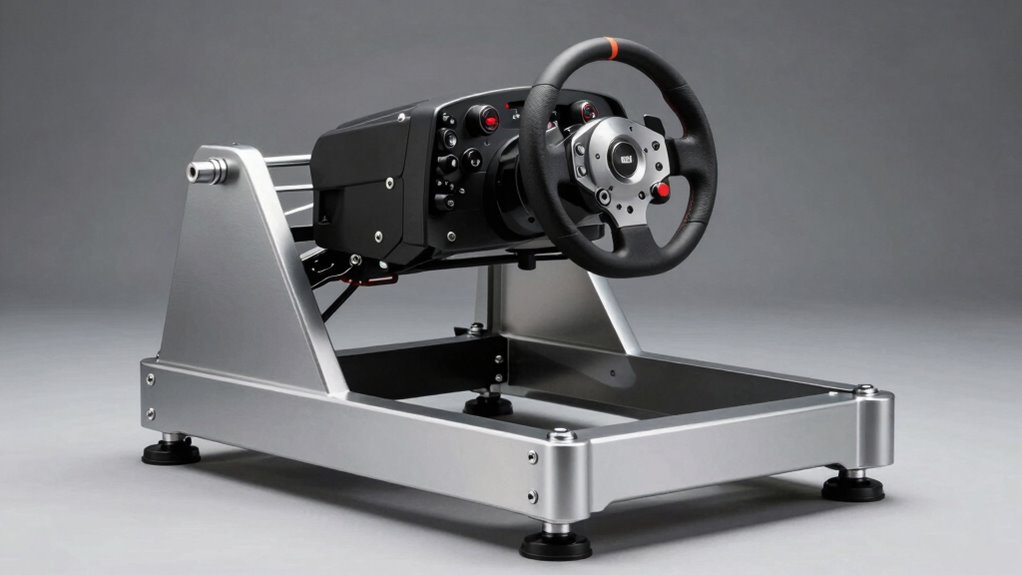

Aluminum sim rigs keep winning because they offer an unbeatable combination of strength, lightweight design, and versatility. You get a durable frame that handles aggressive driving without flexing or breaking, while still being easy to move and adjust. Their customizability means you can fine-tune your setup for maximum comfort and control. Plus, they’re built to last and adapt as your skills grow. Stick around to discover more ways aluminum rigs can elevate your racing experience.

Get the latest gadgets delivered free with Prime
- Fast, free delivery on millions of items
- Prime Video, Amazon Music and more included
- Member-only deals all year
Key Takeaways
- Aluminum’s exceptional strength-to-weight ratio ensures a durable yet lightweight rig, enhancing performance and stability during races.
- Its high customizability allows enthusiasts to personalize setups for optimal comfort and control, leading to better racing outcomes.
- The modular design of aluminum rigs facilitates easy upgrades and adjustments, keeping pace with evolving skills and technology.
- Aluminum’s long-term durability ensures consistent performance and reliability, even under aggressive use.
- The lightweight construction makes rigs easy to transport and reposition, supporting versatile racing environments and competitive edge.
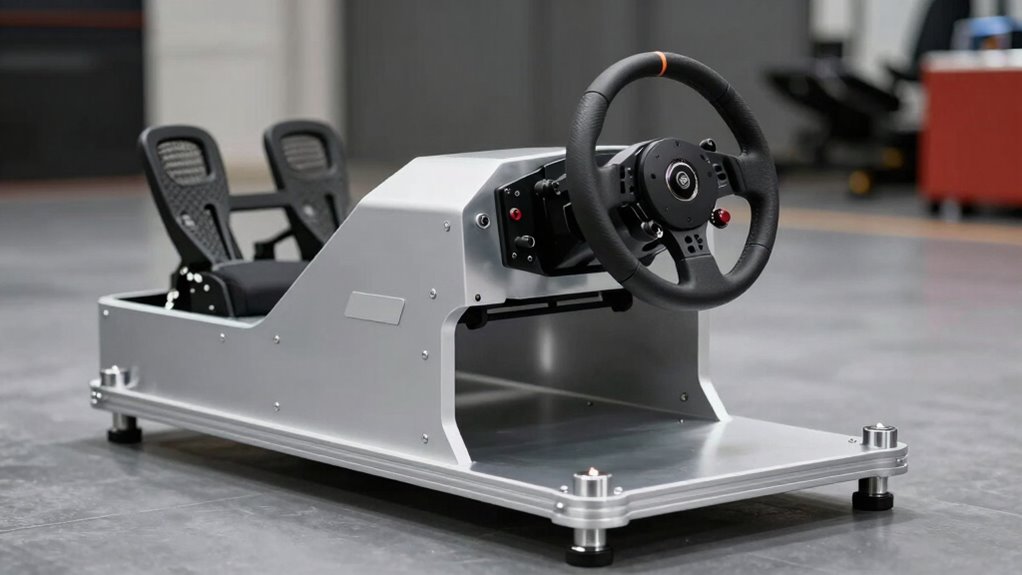
Aluminum sim rigs are consistently winning over enthusiasts because of their unmatched combination of strength, lightweight design, and durability. When you’re investing in a sim rig, you want something that feels solid under your hands and provides a stable platform for intense racing sessions. Aluminum’s exceptional strength-to-weight ratio makes this possible. You get a structure that can handle aggressive driving and repeated use without flexing or breaking, yet remains light enough for easy transport or adjustments. This balance means you can set up your rig quickly and move it around as needed, without feeling weighed down by heavy materials.
Aluminum sim rigs offer strength, lightness, and durability for stable, adaptable racing setups.
One of the key reasons aluminum rigs are so popular is the significant ergonomics improvements they offer. A well-designed aluminum frame allows for more precise adjustments to fit your body perfectly. You can easily tweak the seat position, pedal height, and wheel placement to guarantee ideal comfort and control. Since aluminum is highly customizable, you can tailor your rig to your specific preferences, which isn’t always possible with bulkier, less adaptable materials. This level of customization options helps reduce fatigue during long sessions and enhances your overall racing experience, keeping you comfortable and focused. Additionally, the modular design of aluminum rigs often facilitates easier upgrades or reconfigurations, which appeals to enthusiasts seeking a versatile racing setup. Moreover, the inherent properties of aluminum make it easier to incorporate a wide variety of additional accessories, further enhancing the personalization options.
Beyond comfort, aluminum allows for a wide range of customization options that appeal to enthusiasts who want a personalized setup. You can add or modify components with relative ease, whether it’s upgrading the wheel mount, adding extra monitor brackets, or integrating advanced accessories. Aluminum frames often feature modular designs, so you can expand or reconfigure your rig as your skills develop or your preferences change. This flexibility makes aluminum sim rigs a smart investment for both beginners and seasoned racers alike. Using aluminum also enhances material strength, ensuring your rig remains reliable and sturdy over time.
As an affiliate, we earn on qualifying purchases.
Frequently Asked Questions
How Does Aluminum Compare to Other Materials in Durability?
Aluminum is highly durable compared to other materials, offering excellent material flexibility that withstands daily use without cracking or bending. You’ll find it more cost-efficient than steel or carbon fiber, as it’s easier to produce and repair. Its lightweight nature also means your rig remains stable during intense gameplay. Overall, aluminum balances durability, flexibility, and cost efficiency, making it a popular choice for enthusiasts seeking long-lasting, reliable sim rigs.
Are Aluminum Rigs Suitable for All Types of Racing Simulations?
Aluminum rigs are suitable for most racing simulations because they offer excellent durability and a sleek aesthetic appeal. You’ll appreciate their lightweight yet sturdy build, enhancing your experience. However, consider price considerations, as aluminum rigs tend to be more expensive than other materials. If you prioritize aesthetics and durability, an aluminum rig is a smart choice. For budget-conscious users, exploring alternative materials might be more practical.
What Maintenance Is Required for Aluminum Sim Rigs?
You’ll want to regularly check and tighten all bolts and joints on your aluminum sim rig to keep it stable. Clean the frame with a damp cloth to prevent dust buildup, and inspect the wireless connectivity for any interference or issues. Additionally, make certain your ergonomic design remains comfortable by adjusting the seat and controls as needed. Proper maintenance keeps your rig durable, enhances performance, and extends its lifespan.
Can Aluminum Rigs Be Customized Easily?
You can customize aluminum rigs easily, and it’s like hitting two birds with one stone. Thanks to their material versatility, you can tweak their aesthetic appeal with paint, decals, or accessories without much hassle. Aluminum’s strength allows for flexible modifications, making these rigs highly adaptable to your style and needs. So, whether you want a sleek look or a rugged feel, aluminum sim rigs give you the freedom to personalize your setup effortlessly.
How Does Weight Affect the Performance of Aluminum Rigs?
Weight greatly influences your aluminum rig’s performance. Proper weight distribution guarantees stability during intense races, preventing unwanted movement. Aluminum’s material flexibility allows you to fine-tune weight placement for ideal balance. If your rig is too heavy, it may feel sluggish, but if it’s too light, it could lack stability. Balancing weight and leveraging aluminum’s flexibility helps you achieve precise control, ultimately enhancing your overall racing experience.
adjustable aluminum racing simulator stand
As an affiliate, we earn on qualifying purchases.
As an affiliate, we earn on qualifying purchases.
Conclusion
So, if you’re eyeing a winning setup, aluminum sim rigs are like the sleek sports cars of the racing world—light, durable, and built for performance. They offer the perfect balance of strength and agility, making every race feel more real. With their winning streak among enthusiasts, it’s clear they’re not just a trend but a reliable choice. Jump in, and you’ll feel the difference—like shifting into high gear on a smooth racetrack.
As an affiliate, we earn on qualifying purchases.
customizable aluminum sim rig accessories
As an affiliate, we earn on qualifying purchases.
As an affiliate, we earn on qualifying purchases.
Halloween Picks
halloween
As an affiliate, we earn on qualifying purchases.