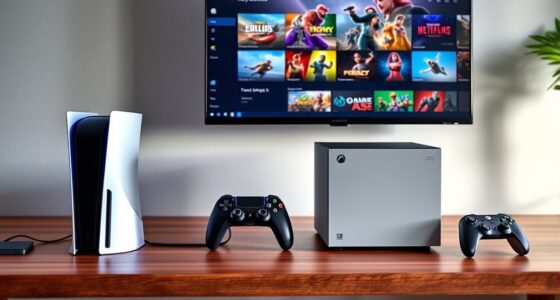
Video games offer more than entertainment—they can boost your brain power, improve problem-solving skills, and enhance creativity. They also promote social connections, helping you build teamwork and communication. Gaming can reduce stress and promote relaxation with calming visuals and immersive stories. Plus, they support emotional resilience and strengthen coordination and fine motor skills. If you want to discover how gaming can benefit your mind and well-being, keep exploring these surprising advantages.
Key Takeaways
- Video games enhance cognitive skills, such as memory, problem-solving, and mental flexibility, supporting overall brain health.
- Gaming fosters social connections and teamwork, reducing loneliness and promoting emotional well-being.
- Many games promote relaxation and stress relief through calming visuals, narratives, and mindfulness practices.
- Playing video games develops creativity, strategic thinking, and decision-making abilities applicable in real life.
- Regular gaming improves fine motor skills, hand-eye coordination, and goal-setting resilience.
Top picks for "video good surpris"
Open Amazon search results for this keyword.
As an affiliate, we earn on qualifying purchases.
Enhancing Cognitive Skills and Brain Function
Playing video games can boost your cognitive skills by engaging your brain in complex tasks. This activity promotes neuroplasticity enhancement, meaning your brain forms new connections and strengthens existing ones. As a result, you become better at adapting to new challenges and learning new information. Many games require you to remember detailed instructions, patterns, and strategies, which helps improve your memory retention. This continual mental stimulation keeps your brain active and healthy. Additionally, brain flexibility can be further supported by creating calm and organized homes, which can also help reduce stress, allowing your brain to function at its best. Supporting neuroplasticity through consistent mental challenges encourages ongoing cognitive development and resilience. In short, gaming can be a powerful tool for enhancing your brain’s flexibility and memory capabilities, especially when combined with good privacy management practices that ensure a secure gaming environment.
Improving Problem-Solving and Strategic Thinking
Since many video games require you to plan, adapt, and think critically under pressure, they naturally enhance your problem-solving and strategic thinking skills. Good game design challenges you to develop tactics, analyze situations, and make quick decisions to succeed. Narrative immersion pulls you into complex storylines, encouraging you to anticipate outcomes and consider different approaches. These elements push you to think creatively and logically, sharpening your ability to solve problems efficiently. As you navigate game environments, you learn to weigh options, prioritize objectives, and adapt strategies on the fly. Furthermore, engaging with well-crafted games can foster cognitive skill development, which supports your overall mental agility. Developing these skills is closely linked to the key traits of successful problem solvers, such as analytical thinking and patience. Studies show that playing strategic and problem-solving games can also improve decision-making processes, enhancing your ability to evaluate options in real-world scenarios. Over time, this strengthens your capacity to tackle real-world challenges with a strategic mindset, making gaming a valuable tool for developing essential cognitive skills.
Strengthening Social Connections and Teamwork
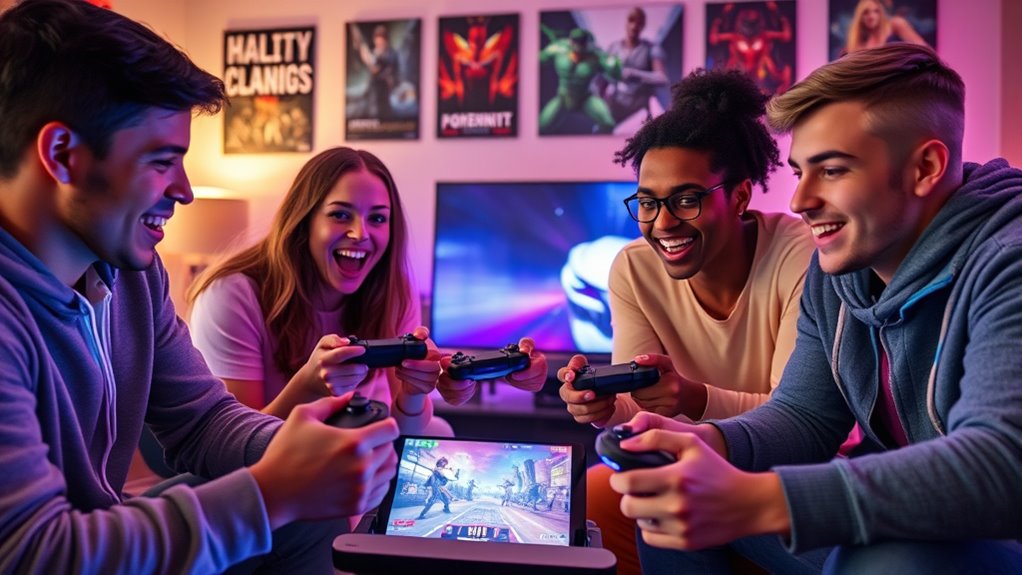
Engaging in multiplayer video games naturally fosters social connections and teamwork, as players must communicate, coordinate, and support each other to achieve common goals. Through virtual teamwork, you learn how to collaborate effectively, adapt to different roles, and solve problems collectively. These experiences often lead to the development of online friendships, providing a sense of belonging and community beyond the game itself. As you work together with others, you improve your communication skills and build trust, which can translate into real-world social skills. Video games create a platform where teamwork is essential, helping you forge meaningful relationships and understand the importance of cooperation, empathy, and shared objectives in both virtual and real-life settings. Developing these skills can also enhance understanding of complex concepts like Deaf Vibes, improving overall communication and inclusive interactions. Additionally, participating in these collaborative environments can boost your ability to problem-solving and adapt to various social dynamics, which are valuable skills beyond gaming. Moreover, multiplayer gaming can positively influence the Mental Wellbeing Index by fostering a sense of community and emotional support. Recognizing the significance of team-based strategies can further enhance your collaborative skills and social resilience.
Reducing Stress and Promoting Relaxation

Video games can serve as an effective way to reduce stress and promote relaxation, especially after a long day. Engaging in meditative gameplay allows you to focus on simple, calming tasks that ease your mind. The soothing experience is often enhanced by calming visuals that create a peaceful environment. As you immerse yourself, you might find yourself:
- Exploring tranquil landscapes that evoke serenity
- Completing gentle, repetitive tasks that foster mindfulness
- Listening to soothing sounds that lower anxiety
- Incorporating polynesian symbols for strength or other cultural symbols can enhance the calming atmosphere by connecting you to a sense of heritage and resilience. Including relaxation techniques within gaming environments can deepen the calming effects, helping you achieve a more profound sense of peace. Additionally, mindfulness practices integrated into gameplay can further enhance your mental clarity and relaxation.
These elements work together to help you unwind, shift your focus away from daily worries, and promote a sense of calm. Video games with relaxing features are a powerful tool for managing stress and encouraging mental clarity. Incorporating calming visuals and sounds found in some gaming environments can further enhance this relaxation effect.
Boosting Creativity and Imagination
Playing video games can sharpen your problem-solving skills and spark your artistic side. As you navigate complex puzzles or create unique designs, your creativity gets a boost. These experiences encourage you to think outside the box and imagine new possibilities. Engaging with these challenges also fosters a growth mindset, which is essential for ongoing personal development. Additionally, the diverse range of game genres can help you understand different perspectives and enhance your interpersonal skills. In fact, some game designs incorporate landscaping elements that stimulate your appreciation for natural beauty and outdoor environments. Exploring realistic virtual environments can also inspire interest in best plants for beginners, encouraging you to bring elements of the outdoors into your own space. Furthermore, engaging with these virtual worlds can deepen your understanding of local traditions, enriching your cultural awareness and appreciation.
Enhancing Problem-Solving Skills
When you solve puzzles or navigate complex scenarios in games, your brain actively develops creative thinking and imaginative problem-solving skills. You learn to adapt your strategy quickly, shifting tactics when obstacles arise. Managing resources efficiently becomes second nature, as you prioritize needs and allocate limited supplies. These skills transfer beyond gaming, sharpening your ability to approach real-life challenges.
Consider how you:
- Adjust strategies on the fly to overcome unexpected hurdles
- Balance limited resources to maximize outcomes
- Think outside the box to find innovative solutions
Stimulating Artistic Expression
Engaging with games that encourage creative storytelling and design sparks your imagination and enhances artistic expression. These games often involve digital artistry, allowing you to experiment with colors, shapes, and styles in a virtual space. As you craft characters, environments, or narratives, you develop your creative visualization skills, turning abstract ideas into visual concepts. This process not only boosts your artistic confidence but also nurtures your ability to think outside the box. By exploring different art styles and storytelling techniques, you expand your creative horizons. Whether designing custom skins, building worlds, or composing scenes, gaming becomes a dynamic platform for artistic growth. Additionally, understanding Youngster Choice can inspire players to pursue their passions and develop new skills through gaming. Research into Music Therapy Integration shows that engaging in creative activities like gaming can improve emotional well-being and promote mindfulness. Recognizing the importance of Bee-friendly environments can also motivate players to support biodiversity and conservation efforts. Exploring innovative digital tools within gaming platforms can further enhance artistic skills and introduce new methods of visual expression. Ultimately, it inspires you to express yourself more freely and innovatively in both digital and real-world artistic pursuits.
Supporting Emotional Resilience and Mental Health
Playing video games can help you manage stress and boost emotional resilience by providing a fun way to relax. They also sharpen your problem-solving skills, giving you tools to handle challenges more effectively. Plus, gaming fosters social connections that support your mental health and sense of belonging. Additionally, engaging in gaming can stimulate creative storytelling, which can improve your ability to think imaginatively and adaptively in various situations. Incorporating connected fitness technology elements into gaming experiences can further enhance motivation and long-term engagement in healthy habits.
Stress Relief Through Play
Video games offer a powerful way to reduce stress and build emotional resilience. Engaging with games provides an immersive escape, allowing you to disconnect from daily worries. Virtual reality takes this further by transporting you into new worlds, creating a sense of presence and calm. Through immersive storytelling, you can focus on engaging narratives that distract your mind from stressors. Picture yourself:
- Exploring vibrant landscapes in a relaxing virtual environment
- Solving puzzles that challenge your mind without causing frustration
- Participating in calming activities like fishing or meditation within games
These experiences help you unwind, recharge, and develop mental resilience. Playing regularly can create a mental buffer against stress, improving your overall emotional health. Gaming becomes a practical tool for managing anxiety and fostering well-being.
Enhances Problem-Solving Skills
Because many games require quick thinking and strategic planning, they naturally boost your problem-solving skills. As you navigate complex situations, you develop better game strategies to overcome challenges. Puzzle solving is a core aspect of many titles, forcing you to analyze patterns, think critically, and experiment with different solutions. These mental exercises strengthen your ability to approach real-life problems with confidence and creativity. Regular gameplay enhances your capacity to adapt under pressure, sharpening your decision-making skills. Over time, you become more effective at breaking down complex tasks into manageable parts. This continuous process of strategizing and puzzle solving trains your mind to think flexibly and logically, supporting your emotional resilience and mental health in everyday life.
Fosters Social Connections
While some may view gaming as a solitary activity, it actually fosters meaningful social connections that support emotional resilience and mental health. Through multiplayer collaboration, you build teamwork skills and trust with others. Online friendships often develop from shared experiences, providing a sense of belonging and support. These connections can boost your confidence and reduce feelings of loneliness. Imagine:
- Forming a team to tackle challenging quests together
- Sharing strategies and celebrating wins with friends
- Supporting each other during tough times, both in-game and outside
These social interactions help you feel connected and understood, strengthening your emotional resilience. Gaming creates a community where you can thrive, making it more than just a hobby—it’s a way to nurture mental well-being.
Encouraging Goal Setting and Perseverance
Many video games require players to set clear goals and work persistently to achieve them, fostering important skills that translate beyond the screen. As you pursue objectives, you cultivate motivation, learning to stay focused even when faced with setbacks. This process encourages resilience building, helping you develop a mindset that sees failures as opportunities to improve rather than reasons to give up. Through repeated attempts and strategic adjustments, you strengthen your perseverance, which applies to real-life challenges. Video games can teach you to break down complex tasks into manageable steps, boosting your confidence as you progress. Ultimately, this goal-oriented gameplay trains you to stay committed and motivated, skills that benefit various aspects of your personal and professional life.
Developing Fine Motor Skills and Coordination
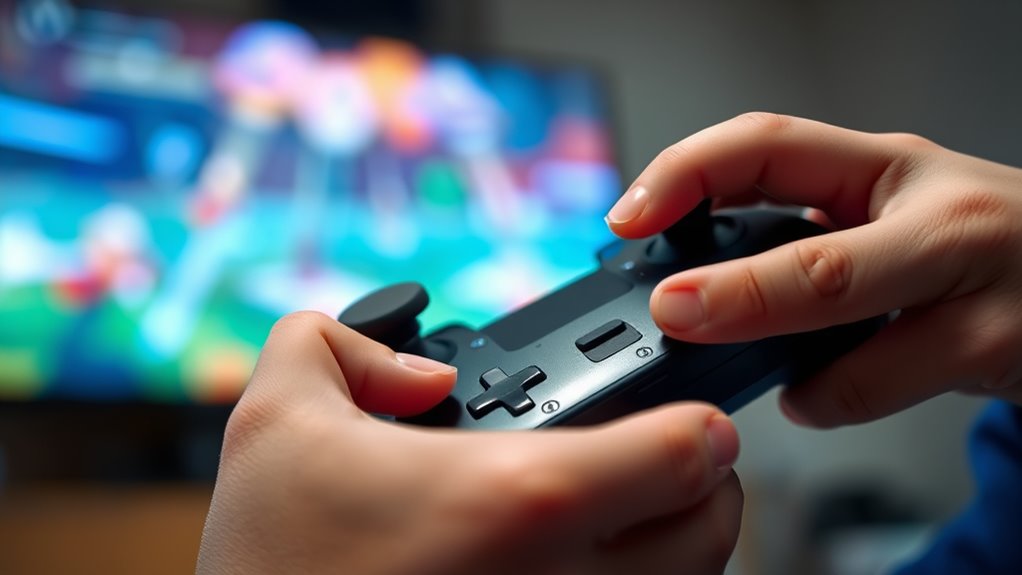
Playing video games can considerably improve your fine motor skills and hand-eye coordination. As you play, you develop a keener sense of tactile feedback, allowing you to respond quickly to in-game stimuli. Your fingers learn to navigate buttons and joysticks with precision, sharpening your manual dexterity. Imagine:
- Reacting instantly to visual cues, enhancing your hand-eye coordination
- Feeling tactile feedback that guides your movements and improves accuracy
- Mastering complex controls that boost finger agility and timing
These activities challenge your brain and muscles simultaneously, making fine motor skills more refined over time. Whether aiming weapons or performing intricate maneuvers, gaming trains your hands to coordinate seamlessly with what your eyes see, fostering better control in real-world tasks.
Frequently Asked Questions
Can Gaming Habits Influence Academic or Professional Success?
Yes, your gaming habits can influence academic or professional success. When your gaming motivation aligns with developing skills like strategic thinking or problem-solving, it can boost your academic performance and work efficiency. However, excessive gaming might distract you from important tasks. Balancing gaming with responsibilities helps you leverage its benefits, improving focus, decision-making, and motivation, ultimately supporting your success both academically and professionally.
Are There Specific Genres That Maximize Mental Health Benefits?
Playing story-driven games and solving puzzle challenges can maximize mental health benefits. These genres engage your mind, boost problem-solving skills, and provide emotional catharsis through immersive narratives. You’ll find that story-driven games help you process emotions and build empathy, while puzzle challenges improve focus and cognitive flexibility. Incorporating these genres into your gaming routine can promote relaxation, reduce stress, and enhance overall mental well-being.
How Do Multiplayer Games Impact Real-World Social Skills?
Multiplayer games boost your real-world social skills by fostering virtual teamwork and social bonding. As you coordinate with others, you learn communication, cooperation, and problem-solving. These interactions help you build trust and empathy, which translate into stronger relationships outside the game. Playing regularly enhances your ability to work with diverse groups, making you more confident and skilled in social settings. You develop critical interpersonal skills that benefit your daily life.
Is Excessive Gaming Linked to Negative Physical Health Effects?
Excessive gaming can indeed lead to negative physical health effects. You might find your screen time skyrocketing, which increases the risk of posture issues like neck and back pain. The longer you play without breaks, the more these problems can worsen. Stay mindful of your gaming habits, take regular breaks, and practice good posture to avoid long-term health consequences. Balance is key to enjoying gaming without sacrificing your well-being.
What Age Groups Benefit Most From Gaming’s Cognitive Advantages?
You benefit most from gaming’s cognitive advantages during childhood and adolescence, as these are critical periods for brain development. Games enhance skills like problem-solving, memory, and attention, which support age-related benefits across your lifetime. Younger players experience rapid improvements in cognitive flexibility, while older adults can maintain mental sharpness. By engaging in age-appropriate games, you optimize brain development and strengthen cognitive resilience at any age.
Conclusion
So, next time you pick up that controller, remember—it’s more than just a game. Beneath the surface, your brain is growing stronger, your stress melting away, and your creativity sparking. But what if the true power of gaming goes even deeper? Could these moments of play unseal hidden potential you never imagined? The possibilities are endless, and the real question is—are you ready to discover what lies beyond the screen?