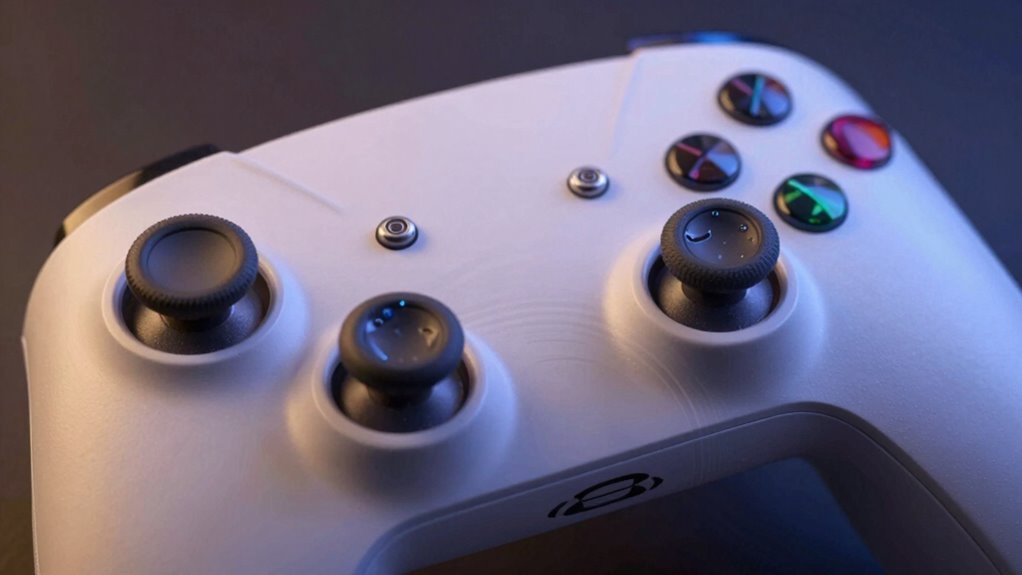

Haptic feedback and adaptive triggers make gameplay more immersive by simulating real textures, impacts, and resistance. You’ll feel everything from the tension of a bowstring to the feel of a car’s accelerator, thanks to advanced vibrations and controllable tension. New controllers incorporate sensors and nuanced tactile sensations, creating a more natural and engaging experience. Keep exploring to discover how these innovations can transform your gaming sessions and deepen your connection to virtual worlds.
Key Takeaways
- Advanced haptic motors deliver realistic textures and impacts, enhancing tactile immersion during gameplay.
- Adaptive triggers adjust resistance in real-time, mimicking actions like bowstring tension or brake pedal feedback.
- Precise vibrations and force sensations synchronize with visual cues for a more believable virtual experience.
- Controller sensors analyze gameplay to personalize tactile responses, increasing engagement and immersion.
- Integration of hardware and software creates seamless, nuanced feedback that deepens the connection to game environments.
The Science Behind Haptic Feedback

Haptic feedback works by using precise vibrations and force sensations to simulate physical interactions, enhancing the gaming experience. Neuroscience research reveals how our brains interpret these tactile cues, creating a realistic sense of touch. Advances in material science play an essential role, enabling controllers to produce varied and nuanced sensations. Engineers develop specialized actuators and durable materials to generate realistic textures and impacts. These innovations allow haptic systems to mimic sensations like rough surfaces or soft textures, immersing players deeper into gameplay. By understanding how sensory signals are processed, designers refine haptic technology to deliver more accurate and compelling feedback. This synergy between neuroscience and material science ensures that haptic feedback feels natural, making virtual interactions convincingly tangible. Additionally, the integration of energy-efficient components aligns with sustainable development goals, reducing environmental impact while maintaining high performance. Moreover, ongoing research into biomechanical feedback aims to further enhance realism by closely mimicking the physical properties of real-world interactions.
How Adaptive Triggers Enhance Gameplay
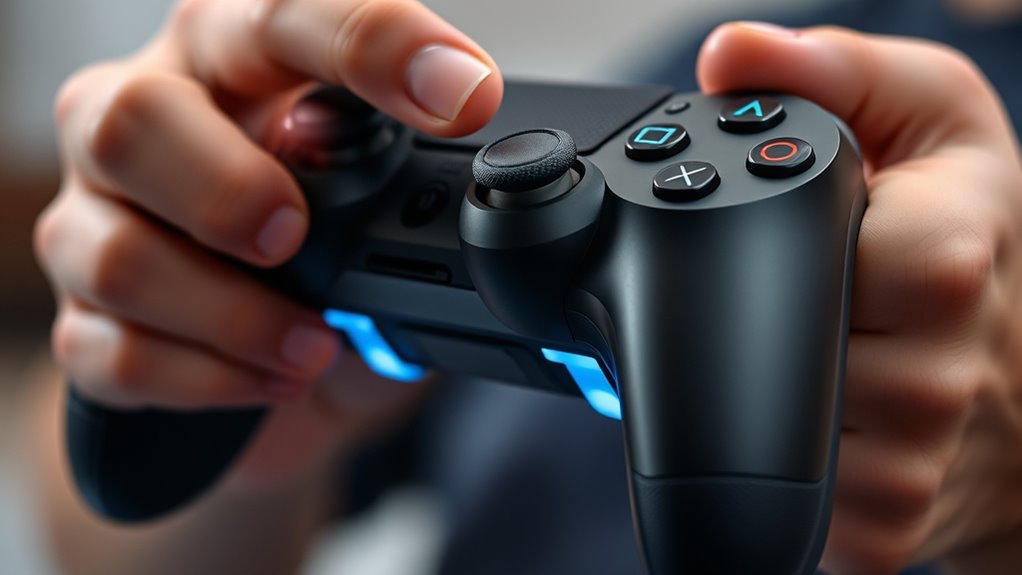
Adaptive triggers take haptic feedback a step further by adjusting resistance and tension in real-time to match in-game actions. This feature enhances immersion by providing tactile cues that mirror what you see on screen, like the tension of pulling a bowstring or the resistance of pressing a car’s accelerator. Gesture recognition allows the controller to interpret your movements, making interactions more intuitive and precise. Sound integration complements this by syncing audio cues with trigger feedback, so you feel every shot fired or obstacle encountered. These combined elements create a more dynamic experience, making gameplay feel authentic and responsive. As a result, your actions become more impactful, pulling you deeper into the game world with every press and pull.
The Evolution of Controller Technology
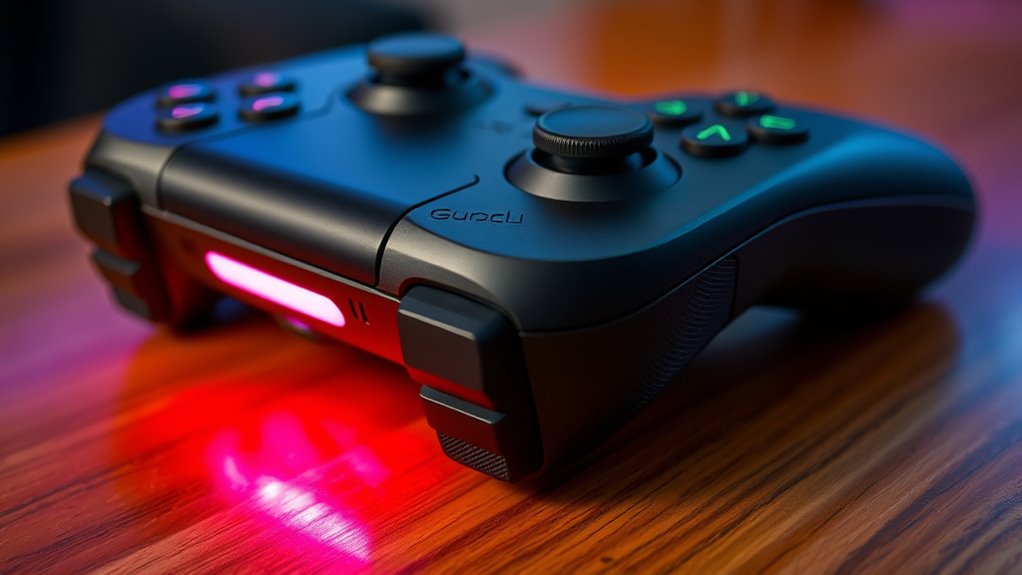
Controller technology has come a long way from simple button inputs to sophisticated devices that respond to your every move. Today’s controllers prioritize controller ergonomics, ensuring comfort during extended gaming sessions, which reduces fatigue and enhances your experience. Wireless connectivity has revolutionized gaming by eliminating cords, allowing you to move freely and seamlessly switch between devices. Modern controllers integrate advanced sensors, adaptive triggers, and haptic feedback, creating more immersive interactions. This evolution means you can enjoy more precise controls and a more natural feel, making gameplay more intuitive. As technology advances, controllers continue to become more responsive and comfortable, helping you stay engaged without distraction. The progression from basic inputs to feature-rich devices marks an exciting era in gaming innovation, with sensor technology playing a crucial role in delivering lifelike sensations.
Realism Through Tactile Sensations
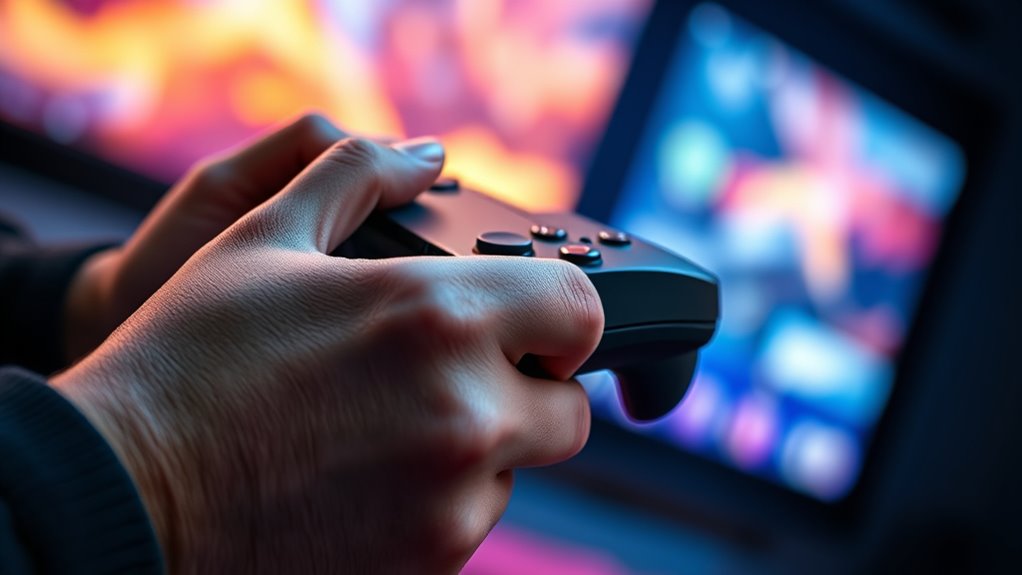
To make gameplay feel more authentic, modern gaming devices use tactile sensations that mimic real-world interactions. These sensations enhance controller ergonomics, allowing you to feel textures, impacts, and subtle vibrations that match in-game actions. When combined with audio integration, these tactile cues create a more immersive experience, as sound and touch work together to reinforce realism. For example, feeling the recoil of a firearm while hearing the blast makes the experience more convincing. The precise feedback from adaptive triggers and haptic motors responds to your movements and the environment, heightening your sense of presence. This synergy of tactile sensations and audio cues makes virtual worlds feel more tangible, pulling you deeper into the gameplay without needing extra peripherals. Additionally, understanding reliable power sources ensures your gaming setup remains uninterrupted during intense gaming sessions.
Impact on Player Engagement and Immersion
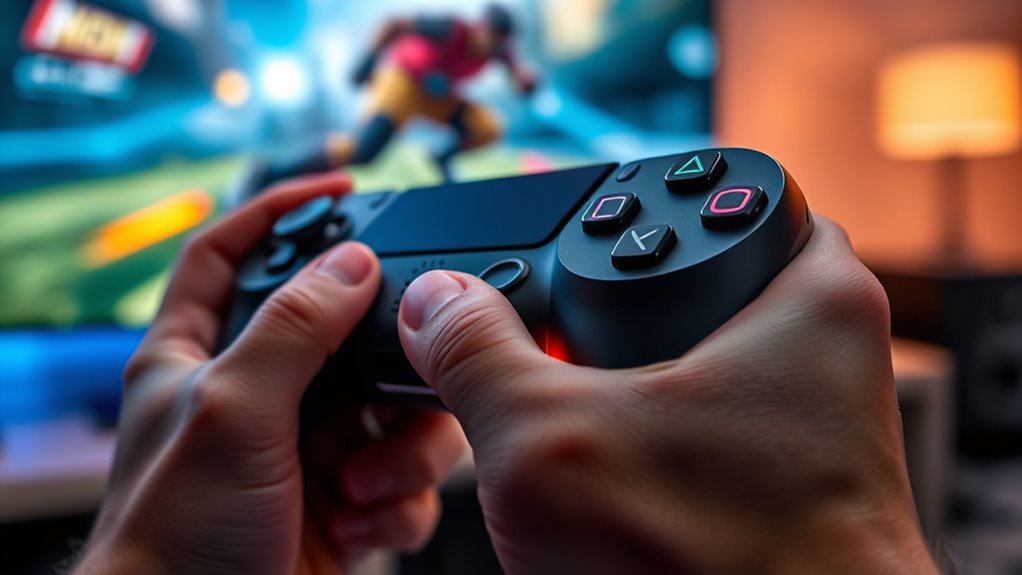
Haptic feedback and adaptive triggers considerably boost how engaged and immersed players feel during gameplay. They enhance game design by making interactions more realistic and tactile, pulling you deeper into the virtual world. Additionally, improved controller ergonomics guarantees comfort during extended play, preventing fatigue and maintaining immersion. Here are four ways they impact your experience:
- Heightened realism through tactile responses that mirror in-game actions
- Increased emotional connection with game events through physical sensations
- More intuitive gameplay, where feedback guides your decisions
- Sustained engagement due to comfortable, well-designed controllers
Furthermore, the integration of accessible design features ensures that a wider range of players can enjoy immersive gaming sessions comfortably. Together, these features transform your gaming sessions into more compelling and immersive experiences, making you feel like an active participant rather than just an observer.
Comparing Traditional and Modern Controllers
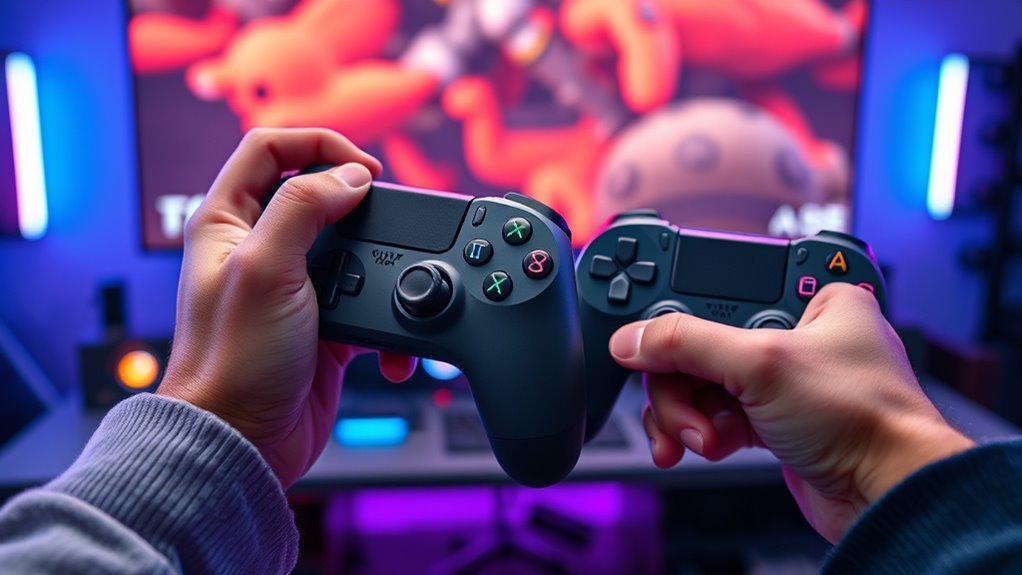
While traditional controllers rely primarily on buttons and joysticks for input, modern controllers incorporate advanced features like haptic feedback and adaptive triggers to elevate your gaming experience. These enhancements improve controller ergonomics, making long gaming sessions more comfortable, and boost button responsiveness, giving you quicker, more precise control.
| Aspect | Traditional Controller | Modern Controller |
|---|---|---|
| Controller Ergonomics | Basic design, less adaptable | Ergonomically refined, customizable |
| Button Responsiveness | Standard response | Enhanced, tactile feedback |
| Features | Buttons, joysticks | Haptic feedback, adaptive triggers |
| Immersion | Limited | markedly increased |
Future Trends in Gaming Haptics
Future trends in gaming haptics will focus on creating more realistic sensory experiences that immerse you deeper into the game. As technology advances, your interactions will become increasingly personalized, adapting to your gameplay style and preferences. This evolution promises to make every moment more engaging and uniquely tailored to you. Additionally, as with safe installation practices in home EV charging, ensuring that haptic and controller technologies are reliable and well-calibrated will be essential for a seamless gaming experience.
Realistic Sensory Experiences
As gaming technology advances, developers are increasingly focused on creating more realistic sensory experiences through haptic feedback. They’re pushing boundaries with techniques like sensory substitution, where touch replaces or enhances visual cues, and fostering emotional resonance to deepen immersion. Imagine feeling the texture of rough terrain or the subtle pulse of an in-game heartbeat. To achieve this, advancements include:
- Precise force feedback mimicking real-world resistance
- Dynamic vibrations synchronized with in-game events
- Textural simulations that emulate different surfaces
- Emotional cues through nuanced haptic patterns
These innovations aim to make virtual worlds feel authentic, engaging your senses fully. By leveraging sensory substitution and emotional resonance, future controllers will deliver sensations that go beyond simple feedback, creating truly immersive experiences.
Personalized Gaming Interactions
Personalized gaming interactions are set to revolutionize how you experience virtual worlds by tailoring haptic feedback to your individual preferences and play style. Advanced controllers will analyze your gameplay and adjust feedback patterns, making sensations more immersive and relevant. Controller ergonomics will be optimized to guarantee comfort during extended sessions, enhancing your overall experience. Additionally, manufacturers will focus on balancing personalization with battery life considerations, so your customized feedback doesn’t drain power too quickly. This means you’ll enjoy more refined, responsive sensations without sacrificing controller longevity. As these innovations develop, your gaming sessions will become uniquely suited to your habits, making every interaction feel more natural and engaging. Ultimately, personalized gaming interactions will deepen your connection to virtual environments, creating a truly bespoke gaming experience. The integration of hardware and software will be crucial in delivering seamless and adaptive haptic feedback that keeps up with your gameplay.
Tips for Maximizing Your Gaming Experience
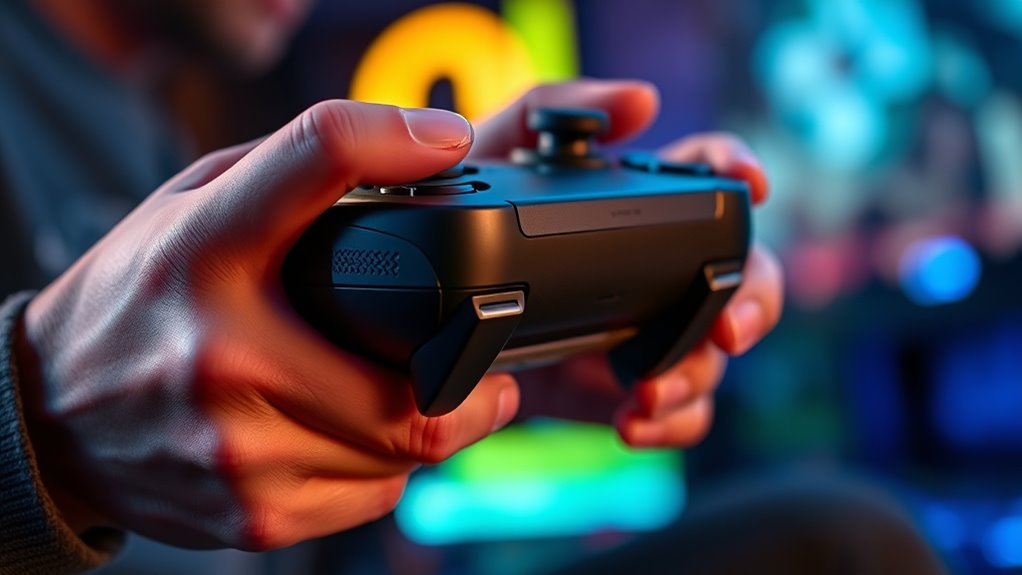
To get the most out of your gaming sessions, start by customizing your controller settings to suit your preferences. Focus on maximizing controller ergonomics for comfort during extended play, and guarantee your gaming setup is arranged for easy access and minimal strain. Here are four tips to enhance your experience:
Customize controller settings and ergonomics for a more comfortable, focused gaming experience.
- Adjust haptic feedback intensity to match your comfort level.
- Customize trigger sensitivity for precise control.
- Position your controller for ideal ergonomics.
- Use a dedicated gaming space to reduce distractions and improve focus.
Frequently Asked Questions
How Do Haptic Feedback and Adaptive Triggers Work Together?
Haptic feedback and adaptive triggers work together to enhance your gaming experience by providing controller compatibility that delivers realistic sensations. When you press the triggers, they adjust resistance based on in-game actions, while haptic feedback creates varied vibrations that mimic real-world textures and impacts. This combination immerses you in the game’s environment, making every shot, collision, or interaction feel more authentic and engaging.
Are There Any Health Concerns With Extended Use of Advanced Controllers?
Extended use of advanced controllers with ergonomic design generally isn’t a major health concern, but it’s wise to take breaks to safeguard your long-term health. Prolonged gripping or repetitive motions can cause strain or discomfort, especially if the controller isn’t comfortable. To prevent issues, adjust your grip, stay mindful of fatigue, and follow good gaming habits. Regular breaks help ensure you enjoy gaming without risking strain or injury.
Can These Technologies Be Integrated Into Existing Gaming Consoles?
Yes, these technologies can be integrated into existing gaming consoles through controller compatibility updates. Manufacturers often release firmware updates to enable new features like haptic feedback and adaptive triggers on current controllers. You should check for available updates and compatibility notes to guarantee your console supports these enhancements. This way, you can enjoy the immersive experience without needing to buy entirely new hardware.
Do All Games Support Haptic Feedback and Adaptive Triggers?
Think of your gaming experience as a symphony; not all instruments play every note. Not all games support haptic feedback and adaptive triggers, so game compatibility varies. You can customize your controller settings, but some titles may not utilize these features fully. To get the most immersive experience, check if your games are compatible and explore controller options. This way, you’re tuned in for a richer, more tactile adventure.
What Are the Cost Differences Between Traditional and Modern Controllers?
You’ll find modern controllers typically cost more than traditional ones due to advanced controller manufacturing and added features like haptic feedback and adaptive triggers. Retail pricing for new controllers usually ranges from $60 to $70, while standard controllers might cost around $50 or less. The higher price reflects the increased complexity and technology, offering a richer gaming experience, but it also means you’ll pay a premium for the latest innovations.
Conclusion
By embracing advanced haptic feedback and adaptive triggers, you can transform your gaming experience into a more immersive adventure. Imagine feeling the recoil of a sniper shot or the tension of a bowstring—just like in a recent case where players reported heightened realism in shooting games. These innovations don’t just enhance gameplay; they deepen your connection to virtual worlds, making every moment more intense and engaging. Stay curious and explore how these features can elevate your gaming journey.