To turbocharge your gaming laptop on the go, optimize your power settings for maximum performance, keep your drivers and software updated, and close unnecessary background apps. Use external cooling solutions like fans and cooling pads to prevent overheating. Adjust in-game settings for stability and better frame rates, and consider performance-boosting utilities to fine-tune your system. Want to unleash even more tips? Keep exploring to get the most out of your gaming experience anywhere.

Get the latest gadgets delivered free with Prime
- Fast, free delivery on millions of items
- Prime Video, Amazon Music and more included
- Member-only deals all year
Key Takeaways
- Optimize power settings for maximum performance and adjust fan speeds to balance cooling and noise.
- Close unnecessary background applications and disable non-essential startup programs to free system resources.
- Update graphics and system drivers regularly, and tweak in-game settings like resolution and effects for smoother gameplay.
- Use external cooling devices such as fans or cooling pads to prevent thermal throttling during intense gaming sessions.
- Monitor system temperatures and performance with tools, and perform regular maintenance to keep hardware running efficiently.
As an affiliate, we earn on qualifying purchases.
Optimize Power Settings for Peak Performance
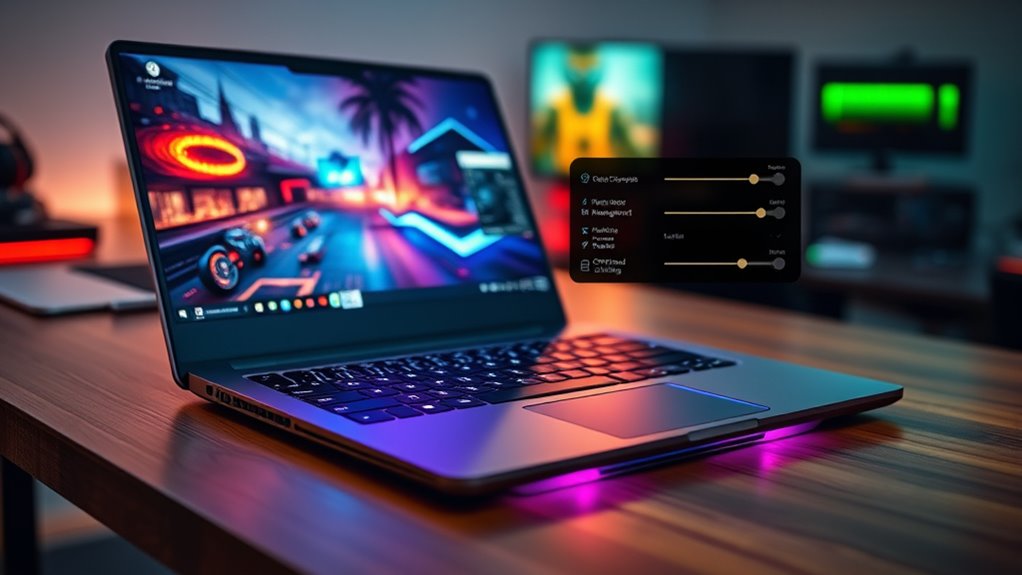
To get the most out of your gaming laptop, it’s essential to optimize your power settings. Start by adjusting your power plan to prioritize performance, which helps your CPU and GPU run efficiently during intense gaming sessions. This setup also improves battery conservation when unplugged, extending your playtime. Additionally, fine-tune fan control settings to keep temperatures in check without excessive noise. Many laptops allow you to customize fan speeds, so you can balance cooling and noise levels based on your needs. Turning off unnecessary background applications also reduces power drain, ensuring your system remains responsive. Properly managing these settings helps you maximize performance while maintaining good battery life and keeping your laptop cool under load. Exploring adaptive cooling options can further enhance your system’s thermal management during prolonged gaming sessions. Understanding power management techniques can help you optimize overall system efficiency and longevity during intensive use, especially when leveraging European cloud solutions for remote support or data management. Additionally, utilizing system monitoring tools can provide real-time insights into your laptop’s performance and temperature levels, allowing for more precise adjustments.
As an affiliate, we earn on qualifying purchases.
Keep Your Drivers and Software Up to Date
Staying current with your drivers and software guarantees your gaming laptop runs smoothly and efficiently. You should regularly check for updates to fix bugs and improve performance. Enabling automatic updates helps keep everything up to date without extra effort. Additionally, grocery savings strategies can be applied to managing your digital tools by removing unnecessary software or bloatware, which can improve system performance.
Regularly Check for Updates
Regularly updating your drivers and software is essential for maintaining peak gaming performance. Sticking to a consistent software update schedule ensures you get the latest features and security patches. It also helps prevent compatibility issues that can cause lag or crashes. During updates, perform hardware compatibility checks to confirm your system recognizes new drivers and software versions. Manually check for updates at least once a week, especially after major game releases or system updates. This proactive approach keeps your laptop running smoothly and reduces the risk of bugs or performance drops. Remember, outdated drivers can bottleneck your GPU or CPU, limiting gaming performance. Staying on top of updates is a simple, effective way to maximize your gaming experience wherever you go.
Enable Automatic Updates
Enabling automatic updates guarantees your drivers and software stay current without requiring constant manual checks. This feature ensures your gaming laptop receives the latest patches and improvements promptly, helping maintain peak performance. Automatic updates enhance system stability by fixing bugs and security vulnerabilities as soon as updates are released. By turning on automatic updates, you reduce the risk of compatibility issues that can slow down your system during gaming sessions. It also saves time, so you don’t have to remember to check for updates manually. Keeping your drivers and software up to date is essential for maximizing gaming performance and ensuring your laptop runs smoothly on the go. Regular updates help keep your system stable, secure, and ready for any gaming challenge you throw at it.
performance boosting utility software for gaming laptops
As an affiliate, we earn on qualifying purchases.
As an affiliate, we earn on qualifying purchases.
Manage Background Processes and Applications
To enhance your gaming performance, you should close any unnecessary apps running in the background. Prioritizing your gaming tasks and disabling background sync can free up system resources for smoother gameplay. Taking these steps ensures your laptop focuses on your game, not on unnecessary processes. Additionally, managing background applications can prevent system slowdowns and help maintain optimal performance during intensive gaming sessions.
Close Unnecessary Apps
Running multiple background apps can considerably hinder your gaming laptop’s performance. Unnecessary programs consume system resources, slowing down your CPU, RAM, and GPU. To optimize, perform background app management by closing apps you don’t need during gaming sessions. Use Task Manager or Activity Monitor to identify resource hogs and shut them down. This reduces unnecessary system resource allocation, freeing up power for your game. Keep an eye on startup programs too; disable any that aren’t essential. Remember, every background process takes a small slice of your system’s capacity, which adds up during gaming. Keeping your background apps in check ensures smoother gameplay, faster response times, and less lag. Regularly managing these processes is a simple yet effective way to turbocharge your gaming laptop’s performance on the go.
Prioritize Gaming Tasks
Since background processes can divert valuable system resources, actively managing and prioritizing your gaming tasks guarantees smoother gameplay. Start by closing unnecessary programs that run in the background, freeing up CPU and RAM. Use your task manager to prioritize your game’s process, ensuring it gets maximum CPU and disk access. Adjust network prioritization settings to give your game priority over other applications, reducing lag and latency. Focus on graphics optimization by updating your GPU drivers and tweaking in-game settings for best performance. Avoid running multiple bandwidth-heavy applications simultaneously. Additionally, managing air purifier maintenance by ensuring your system is free from dust and debris can help prevent overheating and maintain optimal performance of your hardware. Regularly checking and cleaning your system’s cooling components can also improve overall hardware efficiency and prevent thermal throttling. Proper cooling and dust buildup prevention are essential for maintaining consistent performance during extended gaming sessions. Incorporating system cooling solutions such as additional fans or liquid cooling can further enhance hardware stability. To further boost your system’s longevity, consider implementing preventative maintenance routines to keep hardware components in top condition. By managing these background processes and applications effectively, you guarantee your system allocates resources efficiently, resulting in improved graphics quality and a more stable, responsive gaming experience on the go.
Disable Background Sync
Disabling background sync features can substantially free up system resources, ensuring your gaming laptop performs at its best. When cloud synchronization runs in the background, it consumes CPU and bandwidth, which can cause lag during gameplay. Similarly, automatic data backup processes might slow down your system unexpectedly. Turning these off helps prioritize game performance and reduces interruptions. You can disable unnecessary sync options in system settings or app preferences. This prevents background processes from draining resources when you’re gaming. Keep in mind, disabling cloud sync and data backup temporarily may risk data loss if an unexpected issue occurs. Use this tip wisely to maximize performance during gaming sessions, and turn sync features back on when you’re done playing to keep your data safe. Additionally, managing background processes can further optimize your system’s performance for gaming. Optimizing system resources can also help prevent unexpected slowdowns and improve overall gaming experience. Regularly reviewing and adjusting resource allocation ensures your laptop remains responsive during intensive gaming sessions. Moreover, understanding system load can help you identify which processes are most resource-intensive and manage them effectively.
As an affiliate, we earn on qualifying purchases.
Use External Cooling Solutions to Prevent Overheating
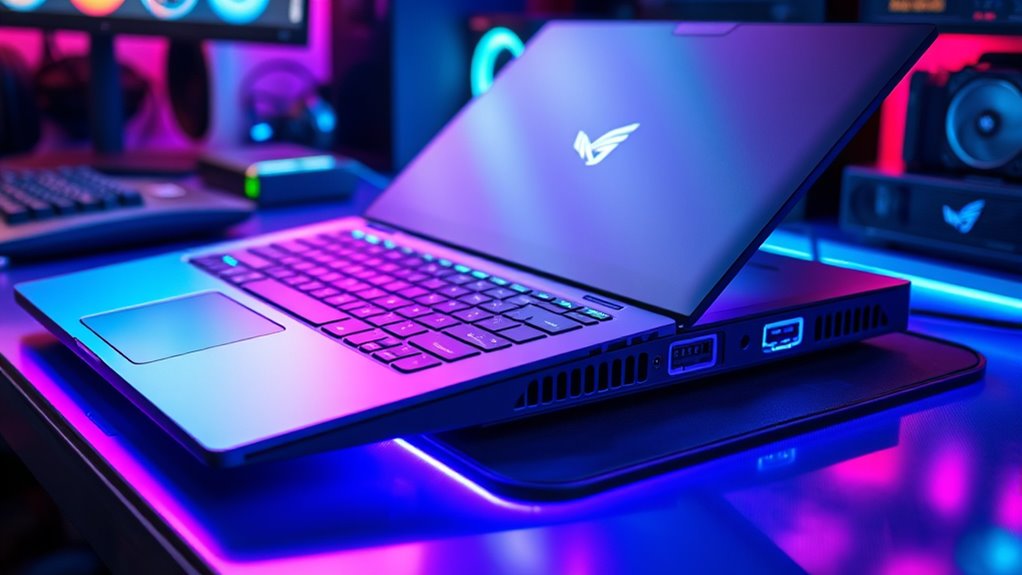
Overheating can markedly reduce your gaming laptop’s performance and lifespan, especially during intense sessions. To keep temperatures in check, use external cooling solutions like an external fan or a cooling pad. An external fan boosts airflow directly around your laptop, preventing heat buildup. A cooling pad, with built-in fans, elevates your device and improves heat dissipation. Both options are portable, easy to set up, and effective for gaming on the go. Position your laptop on a sturdy surface, connect the cooling device, and ensure airflow isn’t obstructed. These external cooling solutions help maintain ideal temperatures, reduce thermal throttling, and keep your gaming experience smooth. Regularly using them ensures your laptop stays cool and performs at its best during extended gaming sessions. Additionally, employing smart‑home integrations can help monitor device temperatures remotely, alerting you to overheating issues before they impact performance. Incorporating temperature management tools can further optimize your setup by providing real-time data and automated responses to prevent overheating.
Adjust Game Settings for Better Stability and Frame Rates

Adjusting your game settings is a quick and effective way to improve stability and boost frame rates. Start by selecting appropriate graphics presets; lowering them can considerably reduce the load on your GPU. Use resolution scaling to maintain visual quality while easing performance demands—reducing it slightly can lead to smoother gameplay. Adjust your in-game resolution to match your laptop’s capabilities for ideal stability. Turn off or lower demanding features like anti-aliasing and shadows, which can hinder frame rates. Finally, enable V-Sync only if you experience tearing—otherwise, disabling it can improve responsiveness. Fine-tuning these settings helps your laptop run games more smoothly, providing a better gaming experience on the go without sacrificing too much visual fidelity.
Utilize Performance-Boosting Tools and Utilities
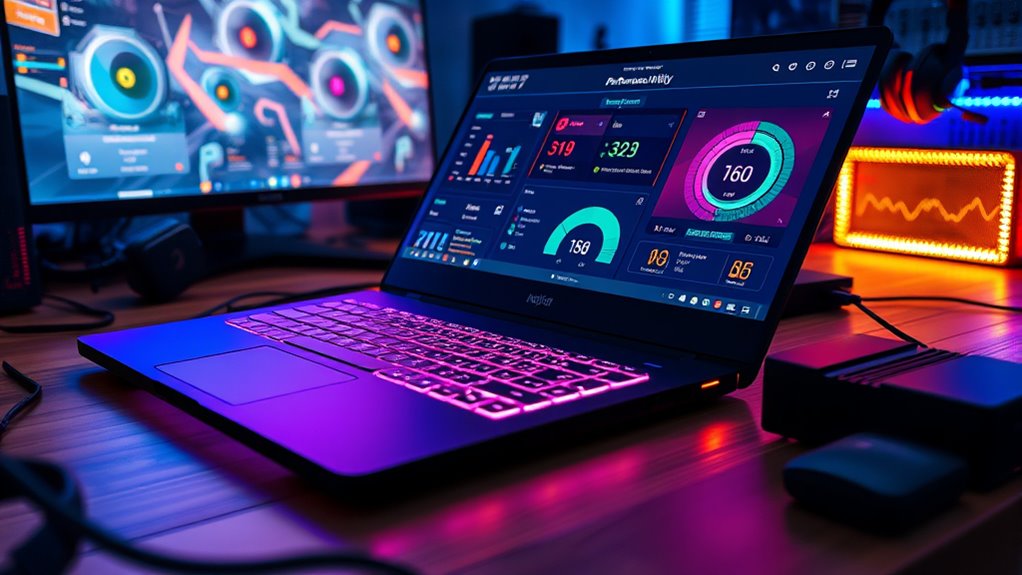
To maximize your gaming laptop’s performance, leveraging specialized tools and utilities can make a significant difference. Use overclocking hardware to push your CPU or GPU beyond default limits, boosting frame rates. Utilities like custom fan control or power management tools help keep temperatures ideal. Additionally, customizing interface settings allows you to prioritize gaming performance over aesthetics. Implementing regular software updates ensures your system runs smoothly and efficiently. Additionally, customizing interface settings allows you to prioritize gaming performance over aesthetics.
Frequently Asked Questions
Can Overclocking My Gaming Laptop Improve Performance Without Voiding Warranties?
Overclocking your gaming laptop can boost performance, but warranty concerns often arise. To avoid voiding your warranty, stick to manufacturer-recommended overclocking settings or use software that doesn’t alter hardware permanently. Additionally, invest in effective cooling solutions, like external fans or cooling pads, to prevent overheating. Keep in mind that improper overclocking may cause hardware issues, so proceed carefully and always prioritize your warranty’s terms.
What Are the Best External Accessories to Enhance Gaming Performance on a Laptop?
To boost your gaming performance on a laptop, consider external cooling pads to prevent overheating and maintain ideal speeds. A portable monitor can also enhance your gaming experience by offering more screen space and better visuals. These accessories help you stay comfortable and focused, ensuring smooth gameplay. Combining external cooling and a portable monitor lets you maximize your gaming potential wherever you go without compromising your laptop’s performance.
How Does Network Latency Affect Gaming Performance, and How Can I Minimize It?
Did you know that a mere 30ms increase in latency can cause noticeable lag? Network latency directly impacts gaming performance by delaying your actions, leading to frustration. To minimize it, you should focus on network optimization—use a wired connection, close background apps, and prioritize gaming traffic. These steps effectively reduce latency, ensuring smoother gameplay and better responsiveness, giving you the competitive edge you need.
Are There Specific Gaming Modes or Profiles for Better Performance in Windows?
Yes, you can optimize your gaming performance by using specific gaming profiles or performance modes in Windows. These profiles adjust settings like CPU and GPU priorities, ensuring your system allocates resources efficiently. Enable gaming mode in Windows settings, and consider using third-party tools to create custom performance modes. Switching to these profiles before gaming helps reduce background processes and boosts overall responsiveness, giving you a smoother gaming experience.
What Are the Risks of Using Third-Party Optimization Software on My Gaming Laptop?
Using third-party optimization software can pose software risks and threaten your system stability. These tools might aggressively tweak settings, causing crashes or overheating, which could damage your hardware or lead to data loss. Additionally, some software may contain malware or adware that compromises your security. Before installing any optimization tools, research thoroughly and stick to trusted sources to avoid these risks and keep your gaming laptop running smoothly.
Conclusion
So, there you have it—your surefire plan to turn your gaming laptop into a blazing fast beast. Just tweak some settings, keep your drivers fresh, and maybe invest in a fancy cooling pad. Who knew that a little effort could make your on-the-go gaming smoother than butter? Now go ahead, conquer those virtual worlds—because your laptop’s performance is only limited by your willingness to ignore these tips. Happy gaming!
Halloween Picks
halloween
As an affiliate, we earn on qualifying purchases.