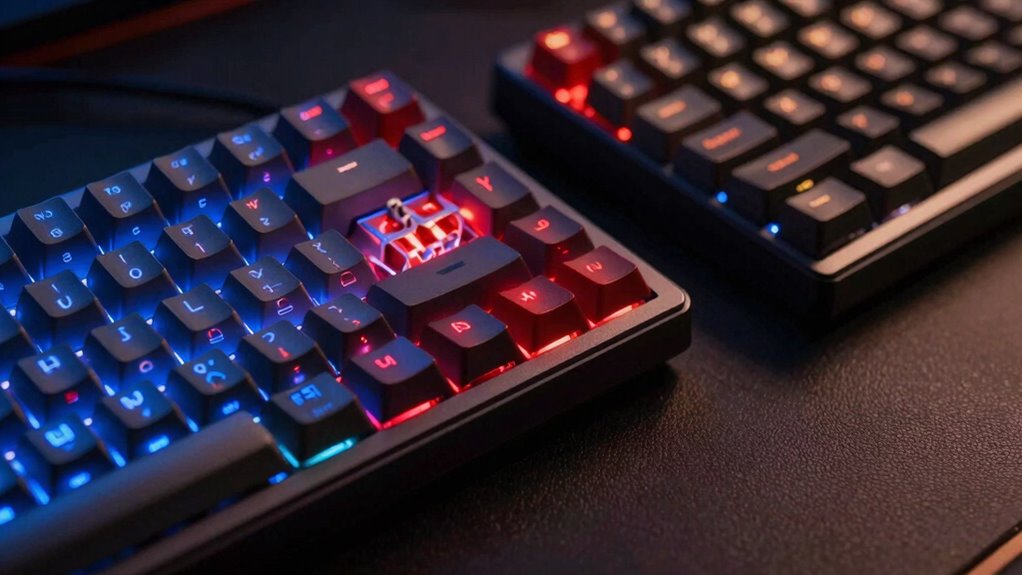

Choosing between mechanical and membrane keyboards considerably impacts your gaming experience. Mechanical models offer faster response times, better accuracy, and tactile feedback that helps you react quickly and confidently. Membrane keyboards are quieter and often more affordable but may delay your inputs slightly. Understanding how each type feels, sounds, and performs can help you pick the best tool for your gaming style. Keep exploring to discover which option suits you best and how to get the most out of your setup.
Key Takeaways
- Mechanical keyboards offer faster response times and higher precision, improving gaming performance and reaction times.
- They provide durable switches with longer lifespans, making them more cost-effective over time for gaming.
- Mechanical models deliver tactile feedback and customizable features, enhancing user experience during fast-paced gameplay.
- Membrane keyboards are quieter and cheaper but tend to have higher latency and less responsiveness.
- The choice depends on gaming style, preference for feedback, and budget, but mechanical keyboards generally provide a competitive edge.
Understanding the Basic Differences Between Mechanical and Membrane Keyboards
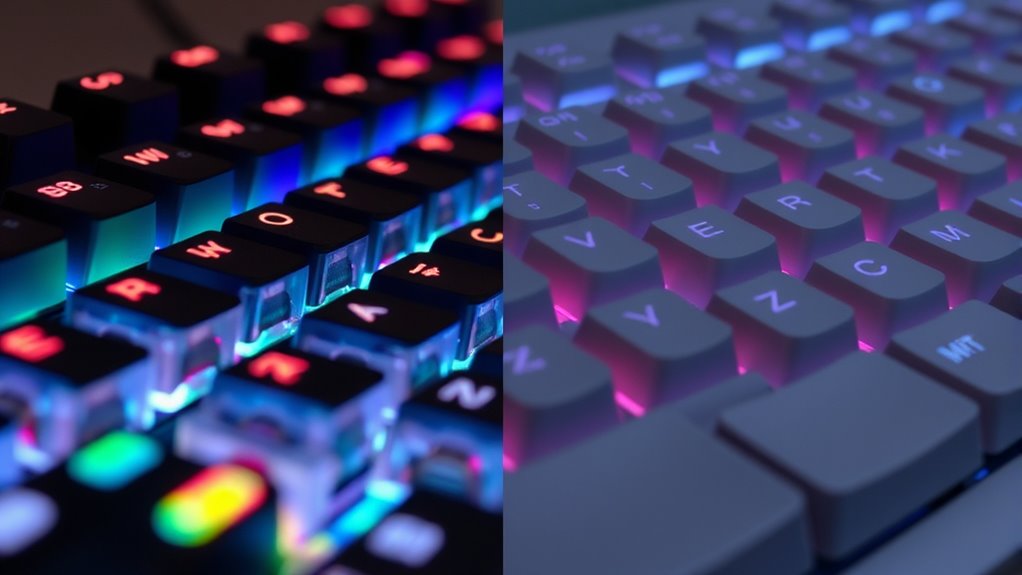
Understanding the basic differences between mechanical and membrane keyboards is essential if you’re trying to choose the right one for your needs. Mechanical keyboards feature individual switches for each key, offering a tactile feel and often better ergonomic design, reducing strain during long typing sessions. They tend to have a more distinctive aesthetic appeal, with customizable keycaps and backlighting options that enhance their visual appeal. Membrane keyboards, on the other hand, use a rubber or silicone membrane beneath the keys, making them more affordable and quieter. While they may lack the tactile feedback of mechanical models, membrane keyboards often have a sleeker, more uniform look, fitting modern desk setups. Additionally, switch technology plays a significant role in determining the overall typing experience and durability of the keyboard. Knowing these differences helps you align your choice with your priorities, whether it’s comfort, style, or budget.
Performance and Responsiveness in Gaming: Which Keyboard Type Excels?
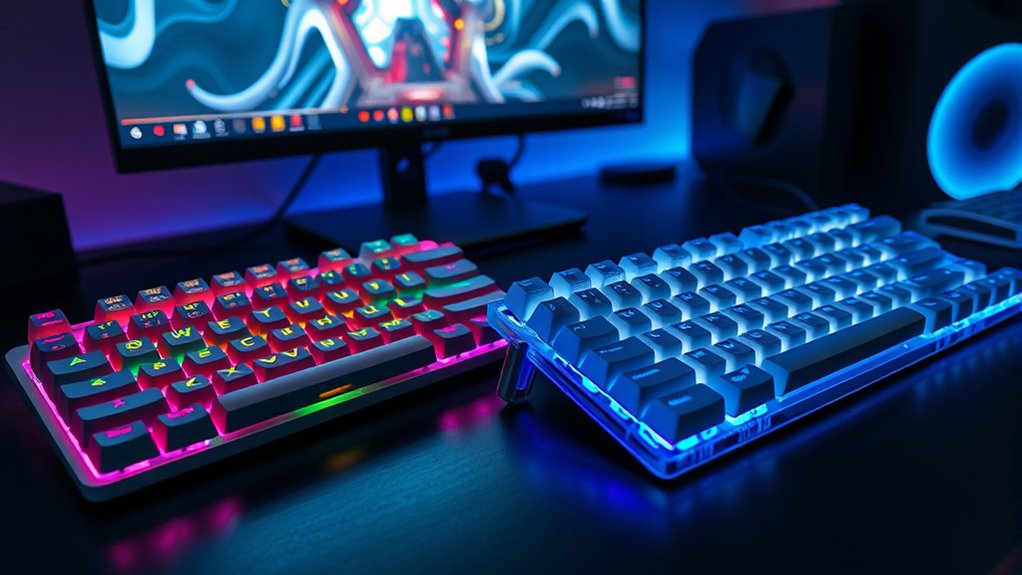
When it comes to gaming, your keyboard’s actuation speed, accuracy, and input delay can make all the difference. Mechanical keyboards typically offer faster response times and better precision, giving you an edge in competitive play. Understanding how these factors influence performance helps you choose the best keyboard for your gaming needs. Additionally, selecting a keyboard with energy-efficient technology can contribute to more sustainable gaming setups without compromising on responsiveness. Recognizing the importance of performance metrics in gaming can help you make an informed choice tailored to your play style.
Key Actuation Speed
Key actuation speed plays a crucial role in gaming performance, as it directly impacts how quickly your commands register on the screen. Mechanical keyboards generally offer faster actuation due to their lower debounce time, which means your keystrokes are recognized more swiftly. The keycap material can influence how quickly you press and release keys; smoother materials like PBT may slightly improve responsiveness. Additionally, the keyboard layout matters—compact layouts reduce finger travel, enabling quicker key presses and releases. Membrane keyboards tend to have higher actuation thresholds, causing slight delays in registering commands. If speed is critical, choosing a mechanical keyboard with a minimal key travel distance and a layout optimized for rapid access can give you a competitive edge, ensuring your reactions are as fast as possible.
Accuracy and Precision
Mechanical keyboards tend to deliver superior accuracy and precision compared to membrane models, making them the preferred choice for gamers who require consistent performance. Their reliable actuation points and tactile feedback help you hit commands accurately, especially during fast-paced gameplay. The ergonomic design of mechanical keyboards reduces strain, enhancing your overall responsiveness. Aesthetic appeal also plays a role, with customizable keycaps and backlighting creating an immersive experience. To imagine this, consider the following:
| Feature | Mechanical Keyboards | Membrane Keyboards |
|---|---|---|
| Accuracy | High, consistent, tactile feedback | Lower, mushy feel |
| Precision | Precise actuation, less error | Less precise due to softer feel |
| Aesthetic Appeal | Customizable, vibrant lighting | Often basic, limited options |
| Ergonomic Design | Better key spacing, stable build | Less ergonomic, flexible layout |
| Responsiveness | Fast, minimal key travel | Slight delay, softer feedback |
Latency and Input Delay
Latency and input delay are critical factors that determine a keyboard’s performance in gaming, directly affecting your responsiveness and reaction time. Mechanical keyboards generally have faster switch types, reducing the time between keypress and registration. Additionally, key rollover—how many keys can be pressed simultaneously without conflict—plays a essential role in high-pressure situations.
To understand performance differences:
- Mechanical switches typically have lower latency than membrane switches.
- Higher key rollover ensures your inputs are registered accurately during rapid actions.
- The combination of switch types and key rollover influences overall responsiveness.
If you value quick reactions, choose a keyboard with fast switch types and high key rollover. These features minimize latency and input delay, giving you a competitive edge.
The Feel and Sound: How Tactile Feedback Influences Your Play
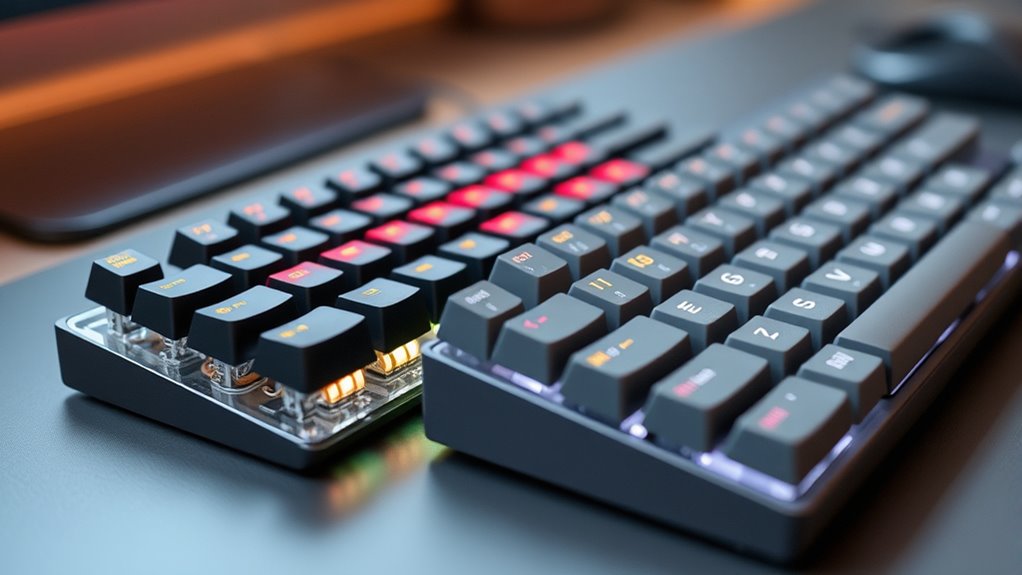
The tactile feedback from a keyboard plays an essential role in shaping your typing experience, directly affecting how satisfying and accurate your interactions feel. With mechanical keyboards, the distinct bump and click provide immediate confirmation of each keypress, enhancing your sense of control. Membrane keyboards tend to have softer feedback, which can feel less responsive but quieter. The sound profile also matters: mechanical keyboards often produce a sharper, clicky noise, while membrane keyboards are quieter and more subdued. This difference influences your focus and comfort during long gaming sessions. Your perception of tactile feedback impacts reaction times and confidence, making it a crucial factor in your overall play. Additionally, the free floating design of some mechanical keyboards can contribute to a more precise typing experience, further influencing your overall satisfaction. Recognizing the importance of key switch types helps you choose the right keyboard to match your gaming style and preferences. Furthermore, understanding the material quality of the keyboard can also affect durability and long-term performance.
Durability and Maintenance: Which Keyboard Lasts Longer?
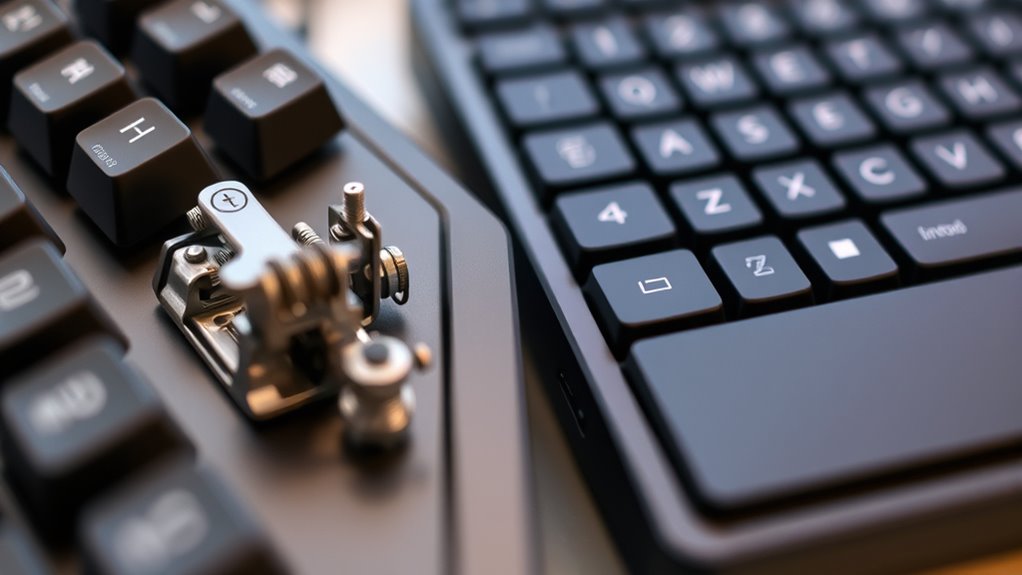
Since durability and ease of maintenance vary considerably between keyboard types, choosing the right one depends on how much you use and care for your device, as well as your long-term expectations. Mechanical keyboards generally have a longer key lifespan, often lasting over 50 million keystrokes, making them more durable. In contrast, membrane keyboards tend to wear out sooner, requiring replacement sooner.
Consider these points:
- Key lifespan: Mechanical switches typically last longer than membrane rubbers.
- Maintenance ease: Mechanical models are easier to clean and repair.
- Long-term value: Higher durability often translates to better long-term investment.
Your choice impacts how well the keyboard withstands frequent use and how simple maintenance will be over time.
Customization and Features: Personalizing Your Gaming Setup
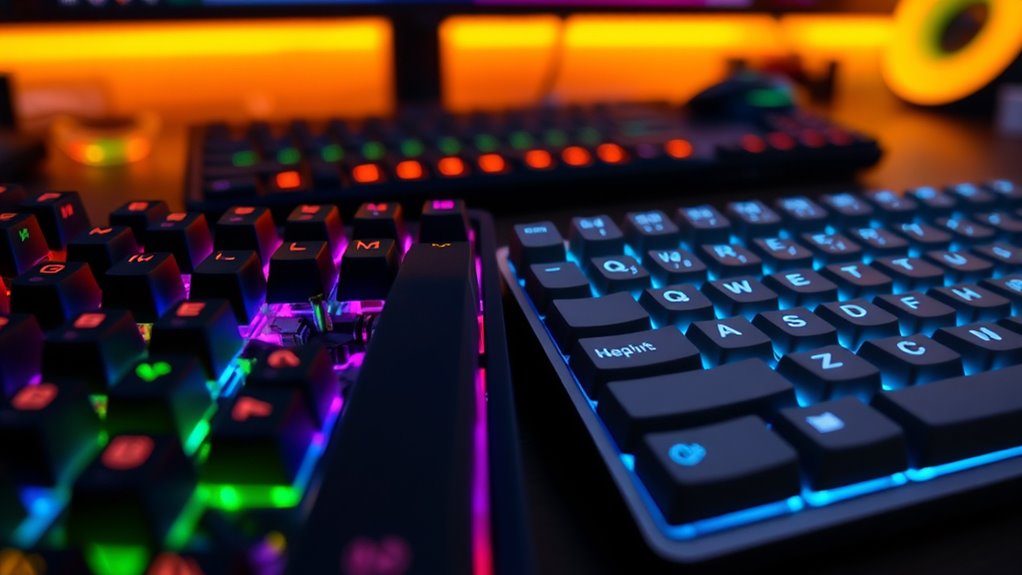
Personalizing your gaming setup starts with exploring keycap options, so you can choose styles that match your aesthetic. Programmable macro features let you customize commands for faster, more efficient gameplay. Plus, RGB lighting effects give you the chance to create a vibrant, immersive environment that reflects your unique style. Embracing limited-edition artwork can enhance your overall gaming experience and boost your confidence behind the keyboard. Additionally, understanding the types of switches can help you select the most comfortable and responsive option for your gaming style.
Keycap Customization Options
Keycap customization options let you tailor your keyboard’s look and feel to match your gaming style. You can choose from various keycap materials, such as PBT or ABS, which affect durability and texture. Keycap profiles, like OEM or Cherry, influence how the keys feel under your fingers and your overall typing experience. Customizing these aspects allows you to create a more comfortable and personalized setup. Additionally, material choices can impact the sound profile of your keyboard, further customizing your gaming environment. The availability of custom legends enables you to add colors or symbols that reflect your gaming personality. Exploring keycap profiles can also help you find a design that enhances your typing comfort over long gaming sessions. Understanding keyboard switch types can further refine your setup, ensuring optimal responsiveness for gaming performance.
Programmable Macro Features
Programmable macro features allow you to customize your keyboard by assigning complex commands or sequences to individual keys, streamlining your gaming and productivity workflows. With programmable macros, you can perform multi-step actions instantly, giving you an edge during intense gameplay. Many keyboards let you save multiple gaming profiles, each with tailored macro setups for different titles or scenarios. This flexibility means you can switch profiles quickly, ensuring your commands are always optimized for the game you’re playing. Whether you need quick combos, weapon swaps, or chat shortcuts, programmable macro features enhance efficiency and responsiveness. Both mechanical and membrane keyboards can support these features, but the ease of programming and profile management varies. Overall, programmable macros are a valuable tool for serious gamers aiming to personalize their setups.
RGB Lighting Effects
RGB lighting effects have become a standout feature for gamers looking to create a vibrant and immersive setup. With lighting customization, you can tailor colors, patterns,, and effects to match your style or game mood. This not only enhances the aesthetic appeal of your gaming space but also adds a personal touch. To maximize your experience, consider these key aspects:
- Dynamic Effects – Sync lighting with in-game actions or sounds for an engaging atmosphere.
- Custom Profiles – Save different lighting setups for various games or moods.
- Brightness & Speed Control – Adjust intensity and animation speed to suit your preference.
- Regularly updating your lighting settings can help prevent stale visuals and keep your setup fresh and exciting. Understanding lighting customization options can further enhance your ability to craft a personalized gaming environment, making your setup more unique and engaging. Incorporating software control can streamline managing multiple lighting effects and profiles. These features allow you to personalize your gaming environment, making it more visually appealing and uniquely yours. RGB lighting isn’t just about looks; it’s about creating an immersive, customized experience.
Cost Considerations and Value for Money

While mechanical keyboards often come with a higher upfront cost, they can offer better long-term value due to their durability and customizable features. The pricing differences between mechanical and membrane keyboards are significant initially, but mechanical options tend to last longer and withstand heavy use. Your investment in a mechanical keyboard can pay off over time, especially if you enjoy customizing your setup or need reliable performance. Here’s a quick comparison:
| Feature | Mechanical Keyboard | Membrane Keyboard |
|---|---|---|
| Upfront Cost | Higher | Lower |
| Durability | Longer lifespan | Shorter lifespan |
| Customization | Extensive options available | Limited options |
Considering these factors, mechanical keyboards provide better long-term value, especially for gaming enthusiasts.
Making the Right Choice for Your Gaming Style
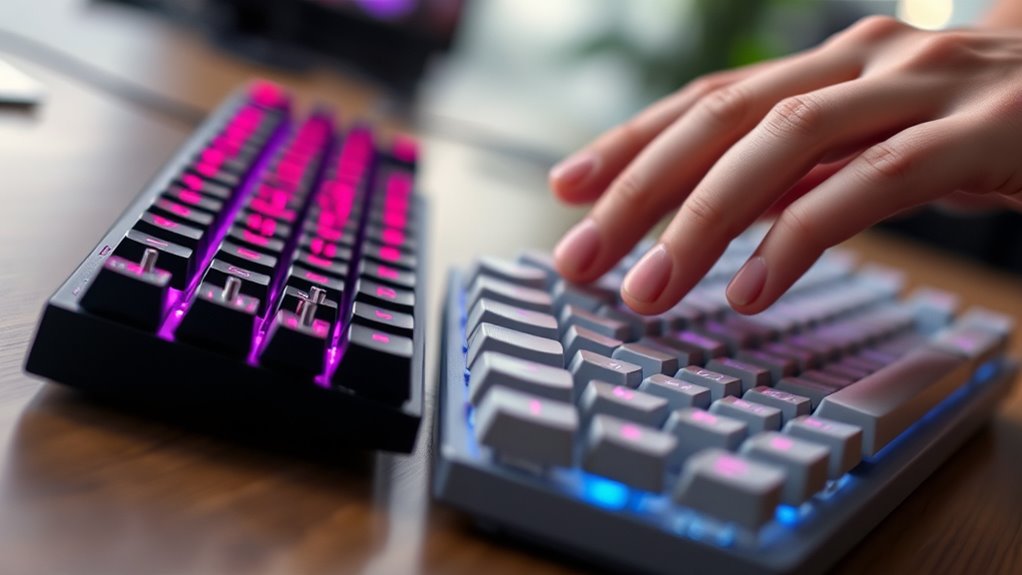
Choosing the right keyboard for your gaming style depends on how you play and what feels most comfortable. Your choice hinges on factors like keycap materials and ergonomic design. To find the best fit, consider these:
- Prioritize keycap materials that enhance durability and comfort during long sessions.
- Look for ergonomic design features that reduce strain and improve your gameplay endurance.
- Match your gaming style—whether fast-paced or strategic—with the tactile feedback and key responsiveness of either mechanical or membrane keyboards.
- Incorporating attention to detail in your selection process ensures you choose a keyboard that aligns with your gaming needs and preferences. Additionally, understanding the differences in construction can help you select a keyboard that best suits your performance requirements.
- Recognizing the impact of materials on key feel and longevity can further refine your choice to suit your specific gaming habits.
If you prefer precise, rapid key presses, mechanical keyboards with high-quality keycap materials and ergonomic layouts are ideal. For casual gaming, membrane options with a softer feel and basic ergonomic features might suffice. Your gaming style should guide your choice to maximize comfort and performance.
Frequently Asked Questions
Are Mechanical or Membrane Keyboards Better for Long Gaming Sessions?
For long gaming sessions, mechanical keyboards are better because they offer superior key switch durability, meaning they can handle frequent use without failing. Plus, their design often improves keyboard ergonomics, reducing fatigue over hours of play. Membrane keyboards tend to wear out faster and might cause discomfort with extended use. So, if you game for hours, investing in a mechanical keyboard can enhance your comfort and performance.
How Do Different Switch Types Affect Gaming Performance?
You’ll notice that different switch types directly impact your gaming performance through switch durability and typing noise. For example, clicky switches like Cherry MX Blue offer tactile feedback but can be noisy, while linear switches like Reds deliver smooth, quieter keystrokes ideal for rapid actions. The right switch enhances response time and comfort, making your gameplay more precise. So, choosing the right switch depends on your preference for sound and durability, influencing overall gaming efficiency.
Can Membrane Keyboards Be Upgraded or Customized Like Mechanical Ones?
Membrane keyboards generally don’t support switch customization like mechanical ones do, but you can often upgrade or replace membrane switches for better feel or responsiveness. Some models allow membrane upgrades, giving you a chance to improve performance. However, these modifications are usually limited compared to mechanical keyboards, which offer extensive switch customization options. So, while you can make some upgrades, don’t expect the same level of flexibility or ease as with mechanical switches.
Do Gaming Keyboards With RGB Lighting Impact Performance?
RGB lighting on gaming keyboards doesn’t impact your performance directly, but it can boost your aesthetic appeal and immersion. Bright, customizable lighting enhances visibility in low-light conditions and allows you to personalize your setup. Keep in mind, a reputable brand’s RGB features tend to be more reliable and durable. So, if aesthetics and brand reputation matter to you, RGB lighting can make your gaming experience more enjoyable without sacrificing performance.
Which Keyboard Type Is More Suitable for Competitive Esports?
For competitive esports, a mechanical keyboard is more suitable because of its superior build quality and ergonomic design. You’ll benefit from faster response times, better tactile feedback, and durability that withstands intense gaming sessions. Mechanical switches allow for precise key presses, giving you an edge during pivotal moments. Investing in a well-built mechanical keyboard helps enhance your performance and comfort, making it the ideal choice for serious gamers.
Conclusion
Ultimately, choosing between mechanical and membrane keyboards is like picking the right paintbrush for your masterpiece. If you crave precision and a satisfying click, a mechanical keyboard is your trusted brushstroke. For a quieter, more budget-friendly option, membrane keyboards are like a soft watercolor wash. Think about your gaming style and what feels right in your hands—because, in the end, your keyboard is the gateway to revealing your full gaming potential.