📊 Full opportunity report: The RayNeo GT Max: A New Benchmark In VR Signal Monitoring Devices on IdeaNavigator AI — validation score, market gap, and execution plan.
TL;DR
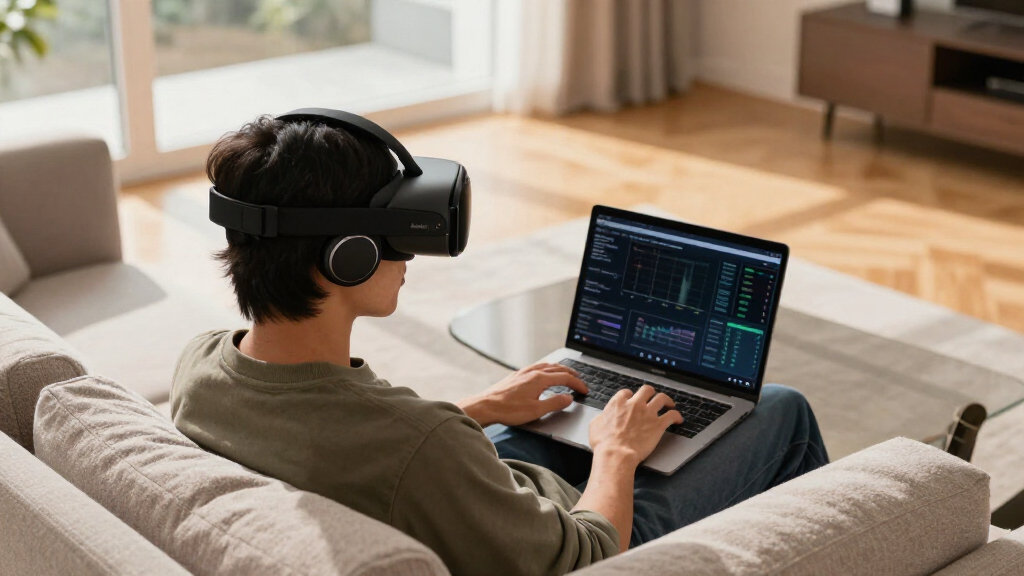
The RayNeo GT Max smart glasses have been officially announced, claiming to set a new benchmark in VR signal monitoring devices. This development is significant for operators needing rapid, accurate updates in dynamic environments. Details on performance and availability are still emerging.
The RayNeo GT Max, a new VR signal monitoring device, has been officially announced, claiming to deliver superior real-time updates for operators in fast-moving environments. This development could redefine standards for role-specific, rapid decision-making tools, especially for professionals who rely on instant, accurate information from VR systems.
The RayNeo GT Max is a pair of smart glasses designed specifically for signal monitoring in virtual reality environments. According to the manufacturer, it offers enhanced data filtering, real-time alerts, and improved clarity compared to previous models. The device is targeted at operators who must quickly interpret VR signals to make timely decisions, such as those in defense, industrial, or emergency response sectors.
Early reports from testers indicate that the RayNeo GT Max can process multiple data streams simultaneously, providing a clear, consolidated view of critical signals. The device reportedly features an advanced sensor suite, optimized for fast data acquisition and minimal latency, which is essential for high-stakes decision-making. While exact technical specifications remain proprietary, the manufacturer claims the device surpasses existing market offerings in speed and accuracy.
Availability details are still under wraps, with the company indicating a planned release later this year. The device’s pricing and regional rollout are also yet to be announced, but industry insiders suggest it could command a premium given its targeted professional use case.
Impact on Fast-Paced VR Signal Monitoring
The RayNeo GT Max’s introduction marks a potential breakthrough in VR signal monitoring, especially for professionals who operate in environments where rapid data interpretation is critical. Its advanced filtering and real-time alert capabilities could significantly reduce decision-making delays, thereby improving operational efficiency and safety. If the device performs as claimed, it could set a new industry benchmark and accelerate the adoption of specialized VR monitoring solutions across sectors.
VR signal monitoring smart glasses
As an affiliate, we earn on qualifying purchases.
As an affiliate, we earn on qualifying purchases.
Previous Technologies and Industry Needs
Prior to the RayNeo GT Max, VR signal monitoring devices primarily focused on consumer applications or basic industrial use, often hampered by latency issues and limited data clarity. As VR applications expand into more critical fields like defense, emergency response, and industrial operations, the demand for high-precision, low-latency monitoring tools has grown. Industry experts have long called for devices that can handle multiple data streams efficiently, offering operators instant, actionable insights.
The recent surge in VR adoption for operational use has heightened the need for specialized hardware capable of integrating seamlessly with complex data environments. The RayNeo GT Max appears to be a response to this demand, promising to deliver a new level of performance that could reshape industry standards.
professional VR data monitoring devices
As an affiliate, we earn on qualifying purchases.
As an affiliate, we earn on qualifying purchases.
Unconfirmed Technical Specifications and Deployment Timeline
Details about the device’s technical specifications, including sensor capabilities, processing power, and data filtering algorithms, remain confidential. Additionally, the exact release date, regional availability, and pricing have not yet been disclosed. It is also unclear how the device will perform in real-world operational conditions beyond early testing reports.
As an affiliate, we earn on qualifying purchases.
Upcoming Details and Industry Adoption Expectations
The manufacturer is expected to release detailed technical specifications and official availability information later this year. Industry insiders anticipate that initial rollouts will target sectors with urgent needs for high-fidelity VR signal monitoring, such as defense and industrial safety. Further field testing and user feedback will determine whether the RayNeo GT Max can fulfill its promise as a new industry standard.
As an affiliate, we earn on qualifying purchases.
Key Questions
What makes the RayNeo GT Max different from previous VR monitoring devices?
The RayNeo GT Max claims to offer enhanced data filtering, lower latency, and better accuracy, specifically designed for professional, high-pressure environments, unlike previous consumer-focused models.
When will the RayNeo GT Max be available to the public?
The manufacturer has not announced an exact release date but indicates a rollout later in 2026, with regional availability details to follow.
What sectors are expected to benefit most from this device?
Defense, industrial operations, emergency response teams, and any professionals relying on real-time VR signal data are the primary target sectors.
How does the device improve decision-making in fast-moving environments?
By providing real-time, filtered signals with minimal latency, the RayNeo GT Max enables operators to interpret critical data quickly and accurately, reducing delays in response times.
Are there any known limitations or concerns about the RayNeo GT Max?
Specific technical limitations are not yet disclosed, and real-world performance remains to be validated through broader testing beyond early reports.
Source: IdeaNavigator AI