
📊 Full opportunity report: Transforming Patient-Doctor Interactions With AI: AMIE’s Real-Time Clinical Video Capabilities on ThorstenMeyerAI.com — validation score, market gap, and execution plan.

Get the latest gadgets delivered free with Prime
- Fast, free delivery on millions of items
- Prime Video, Amazon Music and more included
- Member-only deals all year
TL;DR
Google Research and DeepMind revealed that their AI system, AMIE, can now perform real-time clinical video consultations with simulated patients. While evaluators rated its performance favorably, the system is still experimental and not approved for clinical use.
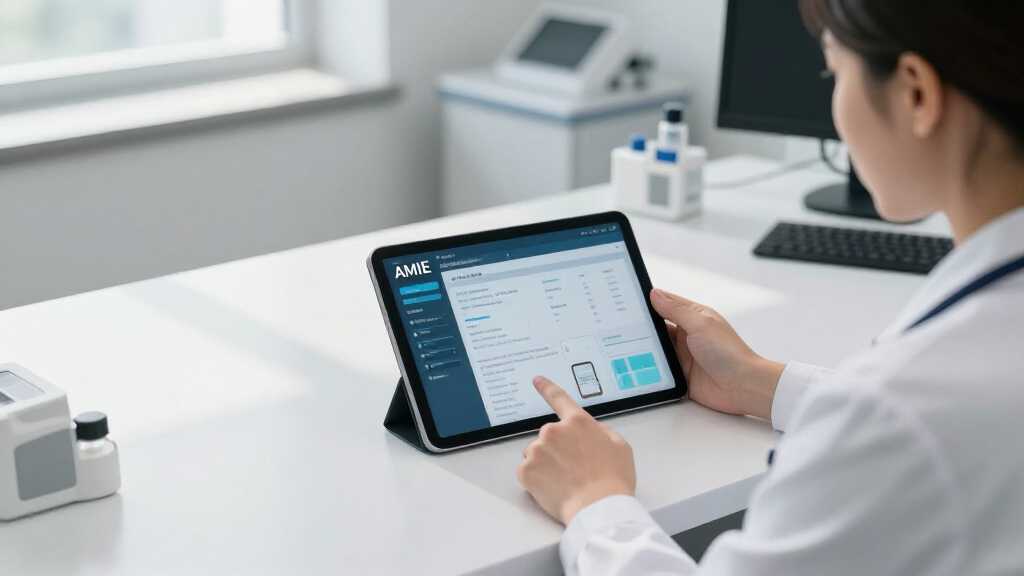
Google Research and DeepMind announced that their AI system, AMIE, can now conduct real-time clinical video consultations with patient actors, interpreting visual and auditory cues while guiding virtual physical examinations. You can read more about the capabilities in the original analysis. The demonstration, which extends beyond text chat, has not been approved or deployed for actual patient care, but represents a significant research milestone in AI-assisted telemedicine.
According to Google, evaluations involved a randomized study where AMIE interacted with patient actors and primary care physicians. The AI system was assessed across several clinical competencies, including history-taking, diagnostic accuracy, management decisions, and communication quality. Google reports that evaluators rated AMIE favorably, and patient actors preferred the video interactions over text-based chats. However, Google did not disclose specific sample sizes, detailed performance metrics, or statistical results, limiting the ability to assess the system’s comparative effectiveness.
AMIE integrates multimodal data processing through Google’s Gemini and Project Astra within a multi-agent architecture, enabling it to interpret speech, visible symptoms, and patient behaviors in real time. This allows the system to reason about diagnoses and guide patients through examination steps during live video interactions. The move from text to video provides access to clinical signals like movement, appearance, and discomfort, which are often critical in medical decision-making. This development highlights the potential of AI in telemedicine, as detailed in the original analysis.
Google emphasizes that this demonstration is a research achievement and does not imply readiness for clinical deployment. The company highlighted that further validation, including independent peer review, broader testing with diverse patient groups, and regulatory approval, is necessary before considering real-world use.
Implications for Future Telemedicine Applications
This development indicates that AI systems like AMIE could eventually expand the scope of remote medical consultations by incorporating real-time audiovisual analysis. If future studies confirm safety and effectiveness, such systems could assist or augment clinical decision-making, especially in settings with limited access to healthcare providers. However, the current state remains experimental, and significant challenges around safety, regulation, and ethical considerations must be addressed before widespread adoption.
As an affiliate, we earn on qualifying purchases.
Advances in AI for Medical Video Interactions
Previous work on AI in healthcare primarily focused on text-based interactions, where models could gather patient history and suggest diagnoses without visual input. Google’s demonstration of AMIE extends this capability to multimodal, real-time video consultations, marking a notable progression in AI’s potential to simulate expert-level clinical interactions. The system’s architecture leverages Google’s Gemini and Project Astra, designed to process complex sensory data and reasoning tasks within a multi-agent framework.
While earlier AI models have shown promise in diagnostic support, their deployment in live video settings has been limited. This demonstration suggests that integrating audiovisual cues into AI-driven telemedicine is feasible, but real-world validation and regulatory scrutiny are still pending.
“This is a pioneering step toward AI-enabled real-time clinical video consultations, but much work remains before it can be considered safe for actual patient care.”
— an anonymous researcher
As an affiliate, we earn on qualifying purchases.
Unresolved Questions About System Performance and Safety
Google has not disclosed detailed performance metrics, error rates, or how the system handles ambiguous symptoms, emergencies, or cases outside primary care. The evaluations involved actors, not real patients seeking treatment, limiting conclusions about clinical outcomes. It remains unclear how the system would perform in diverse, real-world settings or how regulatory agencies might evaluate its safety and effectiveness.
clinical video consultation equipment
As an affiliate, we earn on qualifying purchases.
As an affiliate, we earn on qualifying purchases.
Next Steps in Validation and Regulatory Approval
Google plans to conduct further research, including broader testing with diverse patient populations and conditions, and to publish detailed results. Independent validation and peer review are expected to follow, alongside efforts to address privacy, bias, and safety concerns. No timeline for clinical deployment or regulatory approval has been announced, and the system remains in the research phase.
AI-powered medical examination tools
As an affiliate, we earn on qualifying purchases.
As an affiliate, we earn on qualifying purchases.
Key Questions
What is AMIE?
AMIE is a Google research AI system designed to conduct clinical conversations, interpret audiovisual cues, and reason about diagnoses during real-time video consultations. It is currently experimental and not available for patient use.
Can AMIE replace doctors now?
No. AMIE is a research prototype; it has not been approved for clinical deployment and is not intended to replace healthcare professionals at this stage.
What are the main limitations of this demonstration?
Google has not provided detailed performance data, and the evaluations involved actors rather than real patients. The system’s safety, accuracy, and handling of complex cases remain unproven outside controlled research settings.
When might systems like AMIE be used in real healthcare?
Further validation, independent testing, regulatory approval, and addressing privacy and safety concerns are required before such systems could be integrated into real clinical practice. No specific timeline has been announced.
What challenges remain before AI can assist in telemedicine?
Key challenges include ensuring diagnostic safety, managing ethical and privacy issues, reducing bias, and establishing regulatory standards for AI-assisted medical care.
Source: ThorstenMeyerAI.com
Halloween Picks
halloween
As an affiliate, we earn on qualifying purchases.