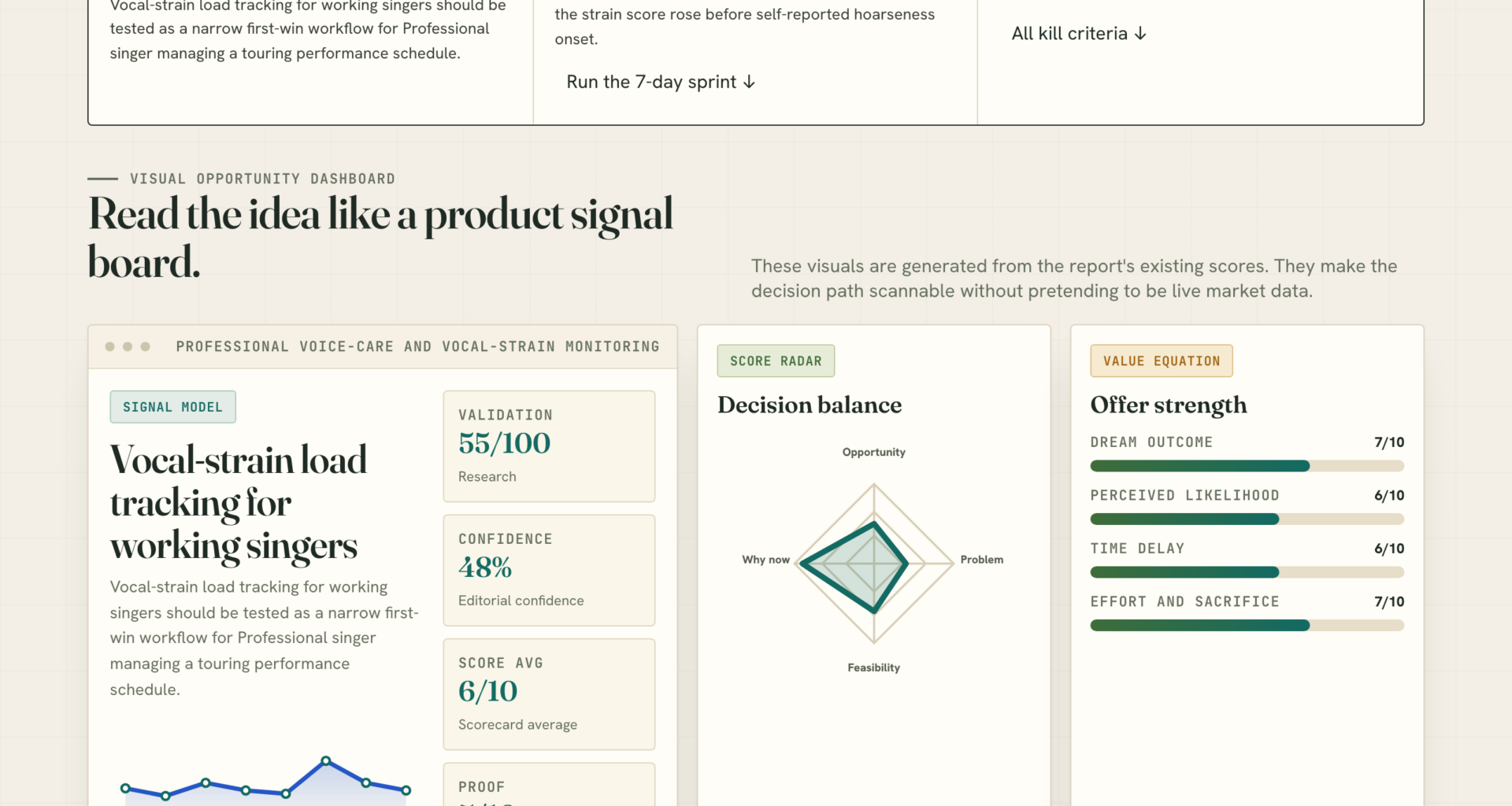

📊 Full opportunity report: Vocal-strain load tracking for working singers on IdeaNavigator AI — validation score, market gap, and execution plan.

Get the latest gadgets delivered free with Prime
- Fast, free delivery on millions of items
- Prime Video, Amazon Music and more included
- Member-only deals all year
TL;DR

Researchers are testing an app that records short vocal samples after performances to monitor cumulative vocal strain in singers. The goal is to provide early warnings of voice fatigue and prevent injury, with initial validation involving gigging singers over three weeks.
A new vocal strain tracking app prototype is being tested with professional singers to monitor their vocal load after each performance, aiming to prevent injury and voice fatigue. This development is significant as it offers a potential tool for voice professionals managing demanding touring schedules, where early warning signals for strain are currently lacking.
The app uses on-device audio analysis to evaluate vocal characteristics from a short recording made after each performance. It scores the cumulative vocal strain against each singer’s personal baseline, flags tone shifts that historically precede hoarseness, and suggests warm-up routines to mitigate further strain. The initial validation involves recruiting 15 gigging singers who will record daily vocal samples over three weeks, logging any instances of hoarseness to see if the strain scores increase beforehand.
This approach leverages recent advances in audio analysis technology, which now allows phones to assess vocal qualities in real-time. The app aims to serve voice professionals who often self-manage their schedules without immediate access to vocal coaches, providing a tool to identify early signs of overuse before symptoms become severe.
Implications for Voice Health Management in Performers
If successful, this technology could revolutionize how professional singers and voice workers monitor their vocal health. Early detection of strain could reduce the risk of voice injuries, which often lead to cancellations or long-term damage. It also offers a scalable, accessible solution for self-managed voice care, especially relevant in the gig economy where performers frequently operate without direct supervision. The potential to prevent voice loss could have significant career and health benefits for performers across the industry.
As an affiliate, we earn on qualifying purchases.
Advances in Audio Analysis and Voice Monitoring Tools
Recent developments in on-device audio analysis have enabled more precise evaluation of vocal characteristics, making tools like this app feasible. Historically, singers relied on subjective feedback or delayed symptoms to assess strain, which often resulted in injury. The idea of using technology to provide real-time, objective feedback on vocal load is gaining traction, with similar applications emerging in speech therapy and occupational health. The current focus is on validating these tools in real-world, demanding performance environments.
“This technology could give singers a much-needed early warning system for vocal fatigue, potentially reducing injuries and improving long-term voice health.”
— an anonymous researcher
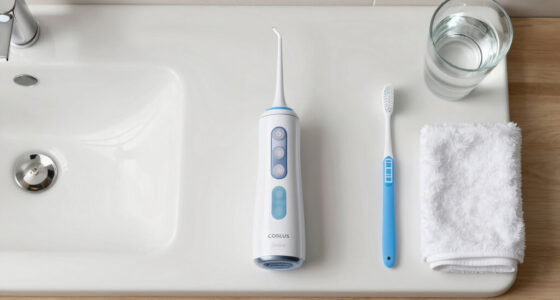
professional singer voice health device
As an affiliate, we earn on qualifying purchases.
As an affiliate, we earn on qualifying purchases.
Uncertainties in Effectiveness and User Adoption
It is not yet clear whether the app’s strain scores will reliably predict hoarseness or injury across diverse singing styles and individual differences. The validation study is ongoing, and results are pending. Additionally, user acceptance and consistent usage during busy touring schedules remain untested, which could influence the app’s real-world effectiveness.
As an affiliate, we earn on qualifying purchases.
Next Steps: Validation and Broader Deployment
The current phase involves recruiting 15 gigging singers to record daily samples over three weeks, with data analysis to determine if strain scores predict hoarseness. If results are promising, developers plan to refine the app’s algorithms and expand testing to larger, more diverse groups. Long-term, the goal is to offer a commercially available subscription service tailored for voice professionals managing demanding schedules.
As an affiliate, we earn on qualifying purchases.
Key Questions
How does the app measure vocal strain?
The app analyzes short vocal samples recorded after performances, assessing characteristics such as tone, pitch, and vocal stability to generate a cumulative strain score compared to the singer’s baseline.
Can this technology prevent voice injuries?
While early results are promising, it remains to be seen whether the app’s strain scores can reliably predict injury risk. Validation studies are ongoing to determine its predictive accuracy.
Is this app suitable for all singing styles?
The current prototype is being tested with professional singers managing touring schedules. Effectiveness across different styles and voice types will depend on further validation.
Will this be available to the public?
If validation proves successful, developers plan to release a subscription-based version for voice professionals and performers in the near future.
Source: IdeaNavigator AI
Halloween Picks
halloween
As an affiliate, we earn on qualifying purchases.