🔍 Read the full analysis: The Top 11 AI Software For Productivity In The Year 2026 on ThorstenMeyerAI.com

Get the latest gadgets delivered free with Prime
- Fast, free delivery on millions of items
- Prime Video, Amazon Music and more included
- Member-only deals all year
TL;DR
In 2026, eleven AI productivity software solutions stand out for their features, integration capabilities, and user suitability. Microsoft Copilot leads as the top choice, while others excel in niche applications. The landscape emphasizes ease of use, automation, and customization, transforming how work is done.
In 2026, the landscape of AI productivity software has expanded significantly, with at least 11 leading tools recognized for their ability to automate tasks, streamline workflows, and enhance collaboration. For a detailed overview, see the original analysis. Among these, Microsoft Copilot remains the overall top pick, praised for its broad integration with Microsoft 365 and enterprise environments. This development underscores a shift toward AI-driven work automation that benefits both individual professionals and large organizations.
The top 11 AI productivity tools of 2026 include software that balances ease of use with advanced capabilities, such as prompt engineering, automation, and seamless integration with existing tools. Microsoft Copilot continues to lead due to its deep integration with Microsoft 365, enabling users to automate emails, documents, and data analysis directly within familiar applications. To explore similar tools, check out AI automation solutions. Claude AI, another prominent solution, offers powerful prompt engineering features tailored for professionals seeking customization and control. Many of these tools support niche needs, such as managing ADHD or assisting beginners in learning complex workflows, reflecting the diverse requirements of today’s workforce.
Pricing varies across the spectrum, from free basic plans suitable for casual users to high-end enterprise solutions. Ease of use remains a critical factor, with some platforms prioritizing user-friendly interfaces for beginners, while others cater to power users seeking extensive customization. Support and learning resources are also a key consideration, as many providers offer tutorials, community forums, and developer support to facilitate onboarding and troubleshooting. The overall trend emphasizes automation, prompt engineering, and integration as core drivers of productivity gains in 2026. For more insights into AI productivity tools, visit this detailed review.
The 11 picks
- 1
 Claude AI for Microsoft 365 for Beginners: Practical Guide to Mastering Produ…View on Amazon →
 - 2
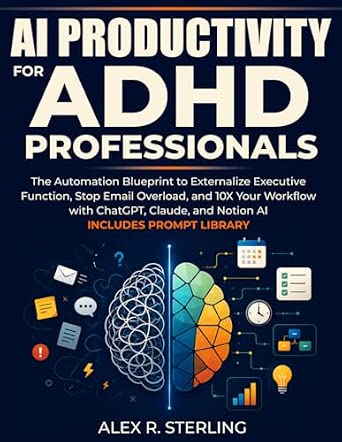 AI Productivity for ADHD Professionals: Automation Blueprint to Externalize E…View on Amazon →
 - 3
 Mastering Claude AI: The Complete Practical Guide to Prompt Engineering, Proj…View on Amazon →
 - 4
 AI Prompts for Productivity and Time Management: 500 Powerful Prompts to Work…View on Amazon →
 - 5
 Master AI for Beginners: Develop Artificial Intelligence Basics, Understand M…View on Amazon →
 - 6
 AI Tools for Everyone: Your Guide to Artificial IntelligenceView on Amazon →
 - 7
 AI-Powered Productivity & Prompt Engineering: A Practical System to Work Smar…View on Amazon →
 - 8
 Microsoft Copilot: A Practical Guide to Using AI in Word, Excel, PowerPoint,…View on Amazon →
 - 9
 AI Productivity Made Simple: How to Use ChatGPT, Automation Tools, Prompts, a…View on Amazon →
 - 10
 AI Tools for Productivity: Microsoft Copilot at Work for BeginnersView on Amazon →
 - 11
 How To Master Generative AI: Master AI Tools, Write Better Prompts, Boost Pro…View on Amazon →
Why the 2026 AI Productivity Tools Matter
The prominence of these 11 AI tools reflects a fundamental shift in workplace productivity, where automation and intelligent assistance become integral to daily tasks. For businesses, adopting these solutions can lead to significant time savings, reduced manual effort, and improved decision-making. For individual users, especially those managing complex workflows or niche needs, tailored AI solutions can enhance focus and efficiency. The widespread adoption of these tools indicates a future where AI-driven automation is no longer optional but essential for maintaining competitive advantage and operational agility in a rapidly evolving digital economy.
Evolution of AI Productivity Software in 2026
Since the early 2020s, AI productivity software has steadily gained prominence, with major tech companies integrating AI features into their platforms. Microsoft’s introduction of Copilot in 2023 marked a significant milestone, setting a standard for seamless integration within enterprise tools. Over the subsequent years, the market has expanded to include specialized solutions like Claude AI, which focus on prompt engineering, and niche applications tailored for specific user groups such as students or professionals with ADHD. The trend toward combining automation with user-friendly interfaces has driven rapid adoption, especially as AI capabilities have become more accessible and affordable.
By 2026, the landscape features a mix of broad-spectrum platforms and specialized tools, with many solutions offering free tiers to attract new users. The emphasis remains on ease of use, integration, and automation depth, reflecting the diverse needs of the modern workforce. This evolution underscores the importance of matching software capabilities to specific productivity goals, whether for individual task management or enterprise-wide automation.
“The top AI tools in 2026 demonstrate a clear shift toward automation and customization, making work faster and more efficient than ever before.”
— Thorsten Meyer, AI Productivity Expert
Remaining Questions About AI Productivity in 2026
While the top 11 tools are well-established, some uncertainties remain. It is not yet clear how these solutions will evolve in response to rapid technological advances or shifting user preferences. The long-term reliability of AI automation, data privacy concerns, and the potential for over-reliance are ongoing issues. Additionally, the impact of emerging competitors and new features still under development could alter the competitive landscape in the coming months. As AI continues to advance, some features may become more sophisticated, but their practical integration and user acceptance are still uncertain.
Next Steps for AI Productivity Software in 2026
Expect continuous updates and new feature rollouts throughout 2026, driven by advances in AI models and user feedback. Major providers like Microsoft are likely to expand integrations and automation capabilities, while niche solutions will refine their specialized features. Industry analysts predict increased focus on privacy, security, and user control, addressing current concerns. Additionally, as AI tools become more embedded in daily workflows, organizations will need to develop strategies for effective adoption, training, and management of these technologies to maximize productivity gains.
Key Questions
How do I choose the best AI productivity tool for my needs?
Assess your work requirements, technical comfort, and budget. Look for solutions that integrate seamlessly with your existing tools, prioritize ease of use if you’re a beginner, and consider advanced customization if needed. Matching features to your specific goals ensures the best fit.
Are free AI productivity tools sufficient for professional use?
Many free options handle basic automation and prompt generation, suitable for casual tasks. However, professional environments often require more reliable, feature-rich solutions with dedicated support, which generally come with paid plans. Investing in premium versions can offer better integration, higher limits, and security.
What should I prioritize when selecting an AI productivity software in 2026?
Focus on compatibility with your current tools, ease of use, automation depth, and support resources. Consider your specific needs, such as niche applications or general productivity, to choose the most effective solution.
Will AI tools replace human workers in the near future?
AI is primarily transforming workflows by automating routine tasks, allowing humans to focus on higher-level work. While it may reduce certain roles, it is more likely to augment human productivity rather than replace it entirely, especially in complex or creative tasks.
Source: ThorstenMeyerAI.com
Halloween Picks
halloween
As an affiliate, we earn on qualifying purchases.