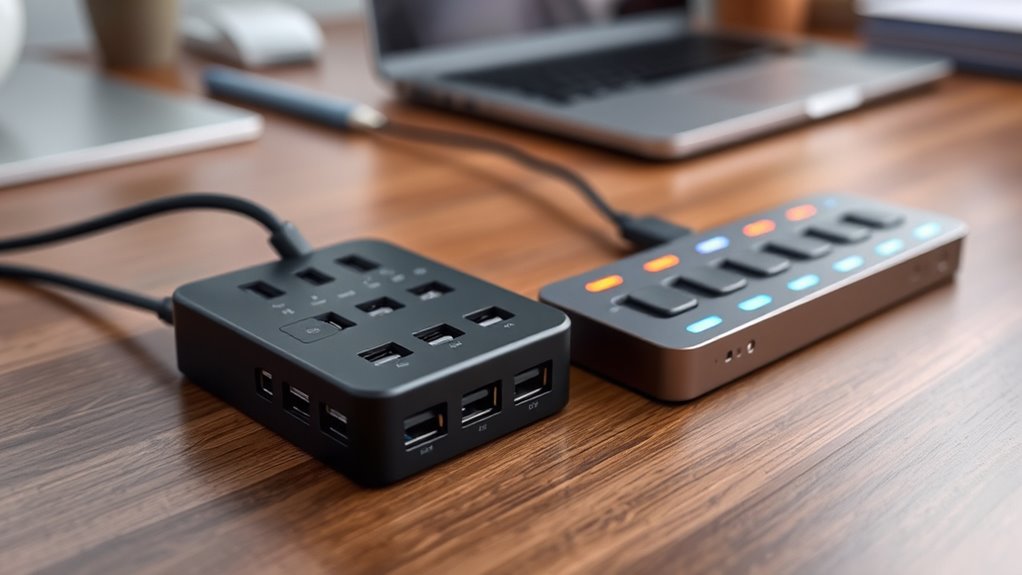

If you need advanced features like multiple display outputs, faster data transfers, high power delivery, and security, a USB dock suits you best. It’s ideal for professional setups, gaming, or tasks that require stable, high-performance connections. On the other hand, if you’re looking to add a few extra ports for casual use or portability, a USB hub is simple and compact. To choose the right option for your needs, explore the details further.
Key Takeaways
- Choose a dock if you need multiple high-speed ports, power delivery, security features, and support for multiple displays.
- Opt for a hub if you require simple, portable connectivity expansion without advanced features or security.
- Docks offer better device compatibility, faster data transfer, and support for professional or high-performance tasks.
- Hubs are often more affordable, lightweight, and suitable for basic connectivity on the go.
- Consider your workspace setup and device needs to determine whether a dock’s features or a hub’s portability best fit your use case.
Understanding the Core Differences Between Docks and Hubs
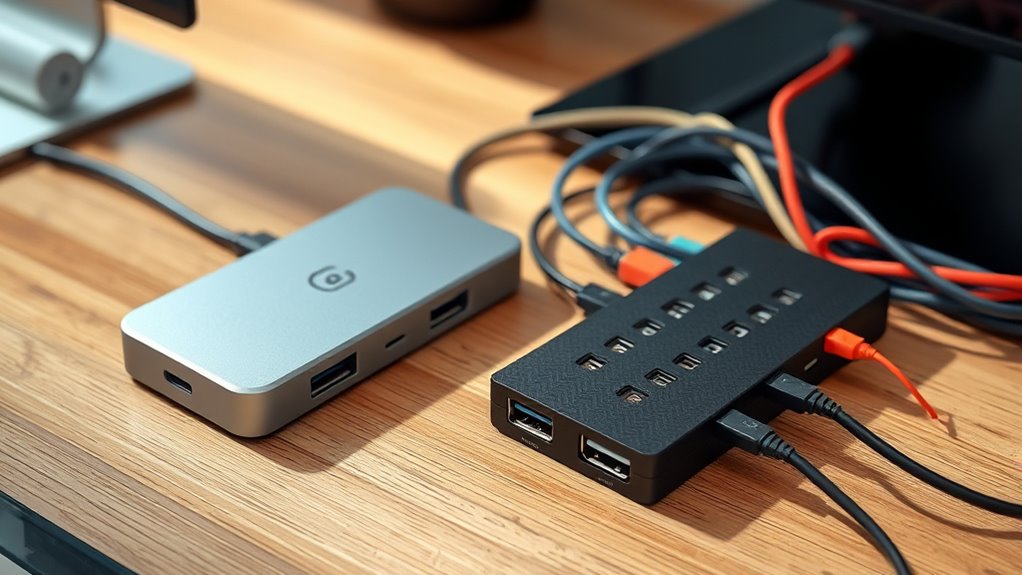
While USB docks and hubs both expand your device’s connectivity, they serve different purposes. Docks typically offer advanced features like wireless connectivity options, allowing you to connect wirelessly to peripherals or networks. They often include security features such as built-in encryption, secure boot, or device authentication, safeguarding your data and device. Hubs focus on increasing port availability, mainly through wired connections, without necessarily providing wireless or security enhancements. Docks are usually larger, more versatile, and designed for a seamless integration of multiple functions in a single setup. They can also support additional functionalities like power delivery and multiple display outputs, making them suitable for professional use. Additionally, docks may incorporate European cloud standards and compliance features to enhance data security and privacy. Recognizing the difference in technology between docks and hubs ensures you select the device that best fits your specific needs. Hubs are simpler, more portable, and ideal for basic connectivity needs. Understanding these core differences helps you choose the right device based on whether you prioritize security, wireless access, or basic port expansion. Cut Through Tech Clutter with expert recommendations tailored to your needs.
Design and Port Selection: How They Fit Into Your Workspace
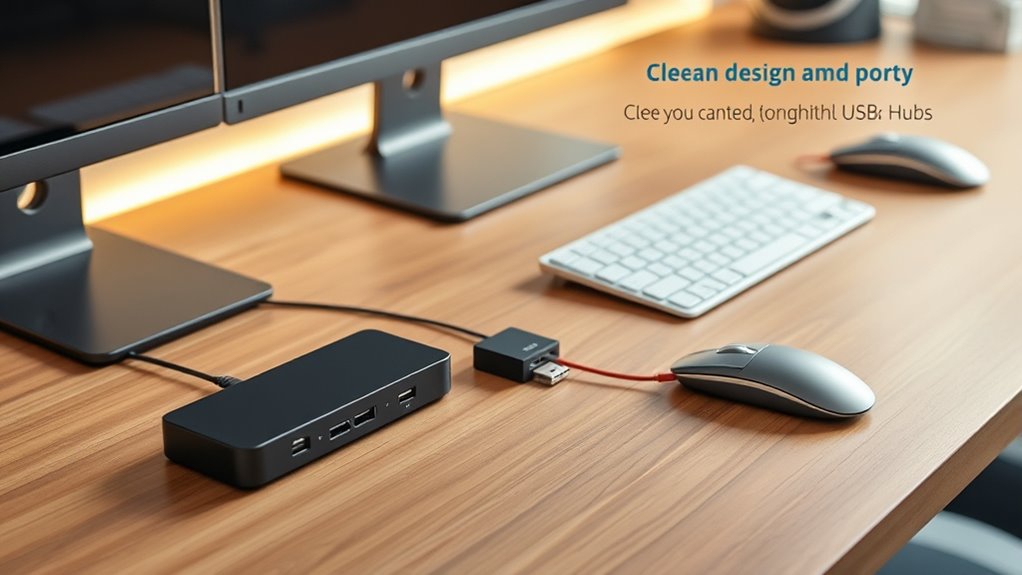
The way USB docks and hubs are designed considerably impacts how they fit into your workspace. An aesthetic design can make your setup look sleek and organized, while poor design may cause clutter. Port selection is also essential; docks often offer a wider variety of ports suited for multiple devices, whereas hubs are more compact. Consider how each fits your needs and space constraints. Good cable management features, like built-in clips or hidden channels, help reduce cable clutter. This not only keeps your workspace tidy but also prevents accidental disconnections. When choosing, think about how the device’s design complements your setup and whether its port options meet your daily needs. A well-designed dock or hub can seamlessly integrate into your workspace, improving both function and aesthetics. Additionally, understanding the difference between USB Dock and Hub can help you make an informed decision tailored to your specific workflow. For example, selecting a power delivery capable dock ensures your devices stay charged without additional adapters. Understanding device compatibility is also crucial to ensure all your peripherals work smoothly with your chosen device. Evaluating expandability options can further enhance your setup by allowing future upgrades and additional connections. Moreover, considering the thermal performance of the device can help prevent overheating during extended use.
Power Delivery and Charging Capabilities

When choosing between a USB dock and a hub, understanding their power output limits is key to ensuring your devices charge efficiently. Not all docks or hubs support the same charging speeds, so compatibility with your gadgets matters. You need to pick one that meets your device’s power and charging requirements for ideal performance. Additionally, considering Free Floating design options can help you select a setup that seamlessly integrates into your workspace or entertainment area. It’s also important to be aware of power delivery standards, which dictate how quickly and safely your devices can be charged through these devices.
Power Output Limits
Power output limits are a vital difference between USB docks and hubs, especially regarding their charging capabilities. Docks often provide higher power output, enabling faster charging and powering of larger devices, but this can also increase the risk of power surge if not managed properly. Hubs typically offer lower power limits, suitable for data transfer and simple device connections without charging. Ensuring electrical safety is essential when choosing a device with higher power output, as inadequate protection can lead to damage. Always verify the maximum wattage and safety features to prevent overloads. Understanding these limits helps you avoid potential electrical hazards while optimizing device performance. Additionally, power management features can help regulate energy flow and protect connected devices. Proper electrical safety measures should be considered to prevent accidents caused by excessive power delivery. Incorporating power regulation can further enhance device safety by controlling voltage and current levels. Integrating overcurrent protection is also crucial for safeguarding your devices from damage due to unexpected power fluctuations. Moreover, understanding the current capacity of your device helps in selecting the appropriate accessories for safe operation.
Charging Speed Compatibility
Charging speed compatibility plays a crucial role in selecting between a USB dock and a hub, especially if fast charging is a priority. If you rely on wireless charging, verify the device supports it alongside your dock or hub’s capabilities. A high-quality dock often provides Power Delivery (PD), enabling faster charging for devices with larger battery capacity, reducing downtime. Hubs may offer limited charging speeds, which can slow down your workflow if you need quick power boosts. Consider whether your devices need rapid charging or wireless charging features, and check the specifications for compatibility. A dock with better charging speed compatibility can keep your devices ready for use longer, especially when managing multiple gadgets with varying battery capacities. Understanding charging standards can help you choose the right device for your needs. Additionally, power management features can influence charging efficiency and device safety, especially as emerging AI-powered solutions continue to revolutionize device capabilities and energy optimization. Being aware of charging protocol compatibility ensures your devices can utilize the fastest available charging speeds without issues, and considering compliance with industry standards can further guarantee safe and efficient charging performance.
Data Transfer Speeds and Performance Factors

Your device’s data transfer speeds depend on the bandwidth limits of the dock or hub you choose. Compatibility issues can also affect performance, especially with different device types. Understanding real-world speed differences helps you pick the right option for your needs. Additionally, considering net worth estimates of certain tech accessories can inform your investment in reliable peripherals. Furthermore, selecting a device with reputable market reputation can ensure long-term reliability and support.
Transfer Bandwidth Limits
When comparing USB docks and hubs, understanding their transfer bandwidth limits is essential because these limits directly impact data transfer speeds and overall performance. A dock typically offers higher bandwidth, supporting faster data transfers for large files or multiple devices simultaneously. Hubs, especially basic ones, may have lower bandwidth, which can slow down transfers if many devices are connected. Keep in mind, wireless alternatives can bypass some bandwidth restrictions but may introduce latency. Aesthetic considerations matter too; docks often have sleek designs suited for professional setups, while hubs are more compact. To optimize your setup, consider your data needs and device load.
- Higher bandwidth supports faster, smoother transfers
- Multiple devices share limited bandwidth, risking slowdown
- Wireless options can reduce physical restrictions and enhance aesthetics
Device Compatibility Variations
Have you ever wondered why some USB docks and hubs deliver faster data transfer speeds than others? Device compatibility plays a big role in performance variations. Not all docks and hubs support the same protocols or transfer rates, which can affect your device’s speed. For example, some models include advanced features like wireless connectivity, improving convenience but sometimes limiting compatibility with certain devices. Additionally, aesthetic design can influence your experience; sleek, modern docks may prioritize style over performance, affecting data transfer efficiency. To get excellent speeds, verify your dock or hub supports the latest standards, such as USB 3.1 or Thunderbolt 3. Compatibility issues can bottleneck your device, so choose carefully based on your performance needs and device ecosystem.
Real-World Speed Differences
While device compatibility sets the foundation for performance, actual data transfer speeds can vary considerably in real-world use. When comparing a USB dock to a hub, factors like cable quality, port standards, and the type of device you’re connecting matter. Keep in mind that wireless alternatives may offer convenience but often sacrifice speed. For tasks demanding high data rates, a dock with dedicated port expansion typically delivers more consistent performance. Speed differences are often noticeable when transferring large files or working with high-resolution media. To optimize your setup, consider these points:
- USB 3.0/3.1 standards for faster data transfer
- The impact of cable length and quality
- How port sharing affects overall speed and performance
Compatibility and Ease of Use With Different Devices
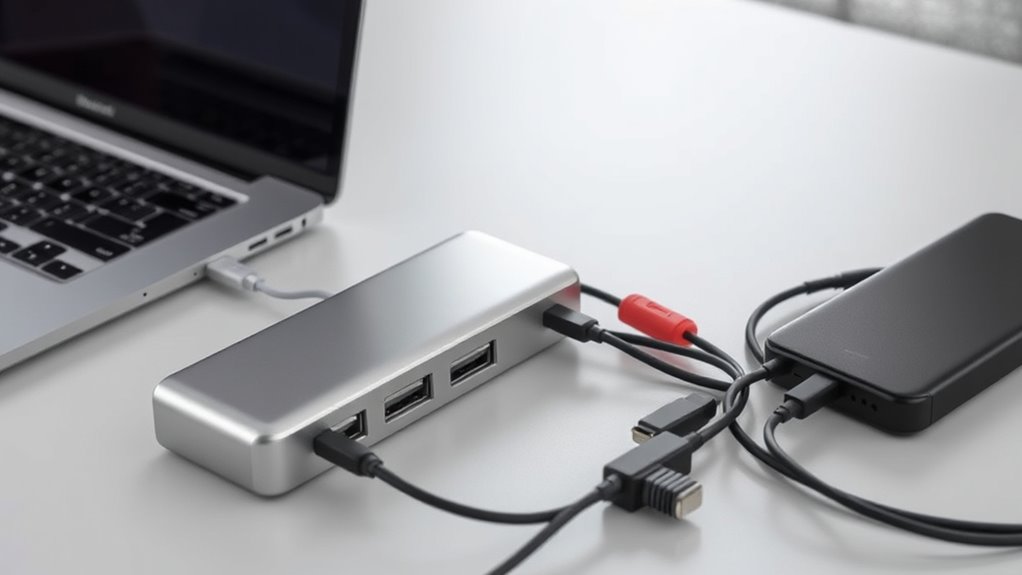
USB docks generally offer better compatibility with a wide range of devices compared to hubs, making them more convenient for users with multiple peripherals. They often include built-in features that enhance device security, reducing risks like unauthorized access or data breaches. Additionally, docks tend to have superior software compatibility, ensuring your devices work smoothly without driver issues or conflicts. This means you can connect smartphones, external monitors, and other peripherals with fewer setup worries. Hubs, while simple and affordable, may struggle with certain devices or require additional drivers, which can complicate your setup. Overall, if you want a seamless experience across various devices, a dock simplifies compatibility and improves ease of use, saving you time and frustration.
Situations and Users Who Benefit Most From Each Option
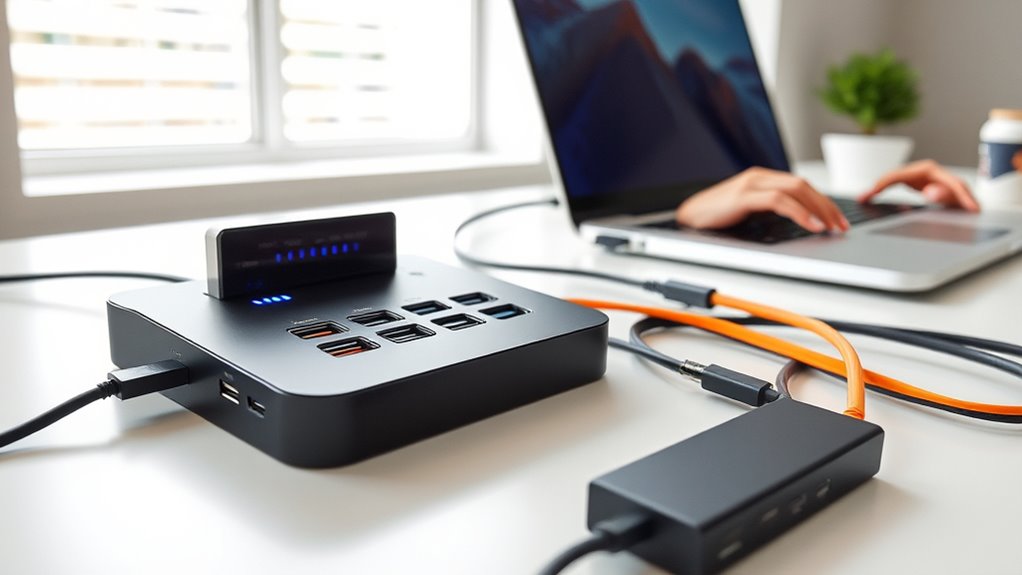
Choosing between a dock and a hub depends largely on your specific needs and usage scenarios. If you’re into mobile gaming or virtual reality, a dock can provide the power and bandwidth needed for smooth performance, especially with high-demand peripherals. Docks are ideal for users who want a seamless, all-in-one connection solution for intensive tasks. On the other hand, if you need flexibility and portability for basic device connections, a hub offers a compact, lightweight option.
Choose a dock for high-performance tasks or a hub for portable, basic device connections.
- You benefit most from a dock if you use VR headsets or high-performance gaming peripherals.
- A hub suits users who need to connect multiple low-power devices on the go.
- For professional setups with multiple monitors or power needs, docks provide better stability and power delivery.
Frequently Asked Questions
Can a Dock Replace a Monitor or Need a Separate Display?
A dock cannot substitute a monitor because it’s designed to expand your existing display setup, not serve as a primary screen. If you’re considering monitor replacement, you’ll still need a separate display to meet your display necessity. Docks connect your device to monitors, peripherals, and power, but they don’t replace for a dedicated monitor. So, for a full visual experience, ensure you have a separate display alongside your dock.
Are Hubs Suitable for Gaming Setups or High-Performance Tasks?
Hubs can be a double-edged sword for gaming setups or high-performance tasks. While they offer convenience for connecting multiple devices, they might bottleneck your gaming performance due to limited bandwidth. If you need high speed data transfer and low latency, a dedicated dock or powered hub is your best bet. Otherwise, a simple hub may leave you hanging, like a fish out of water, especially during intensive tasks.
How Do Docks Handle Multiple High-Speed Data Devices Simultaneously?
Docks handle multiple high-speed data devices simultaneously by offering efficient power management and broad device compatibility. They prioritize stable power delivery, ensuring each device gets enough juice without overloads. Docks also support various device types, from external displays to storage drives, making them ideal for complex setups. This combination allows you to connect multiple high-speed devices seamlessly, maintaining performance and reducing lag or connection issues.
Do Docks or Hubs Require Specific Operating System Support?
Think of your operating system as the gatekeeper for your devices. Docks often require specific OS support and sometimes need driver installation to work smoothly, like giving your system a special key. Hubs are usually plug-and-play, with broader compatibility, acting like a universal adapter. So, check your OS compatibility and driver needs to guarantee your dock or hub seamlessly connects, turning chaos into harmony.
What Is the Typical Lifespan or Durability Difference Between Docks and Hubs?
Docks generally have a longer lifespan than hubs because they’re built with higher-quality materials and better build quality, making them more durable over time. Hubs might wear out sooner due to cheaper components or frequent plugging and unplugging. You’ll notice that a well-made dock withstands daily use better, especially if it’s constructed from sturdy materials like aluminum or heavy-duty plastics, ensuring longevity and reliable performance.
Conclusion
Choosing between a dock and a hub depends on your needs. If you want a sleek, all-in-one station like the Starship Enterprise, a dock’s your best bet. But if you prefer flexibility and simplicity, a hub works just fine—no need to call in tech support. Think about your workspace, power needs, and device compatibility. In the end, selecting the right option keeps your setup running smoother than a well-oiled robot.