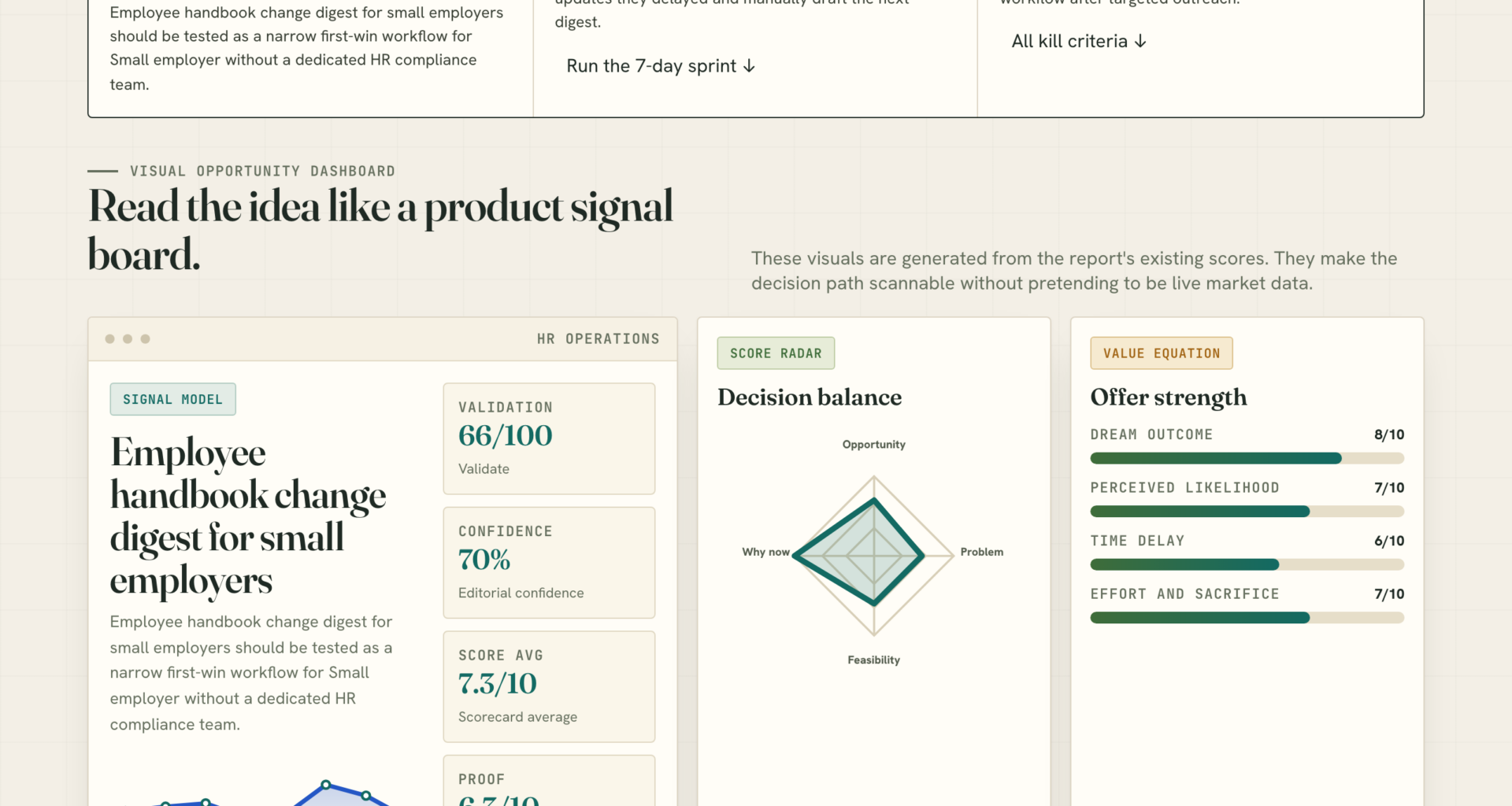

📊 Full opportunity report: Employee handbook change digest for small employers on IdeaNavigator AI — validation score, market gap, and execution plan.

Get the latest gadgets delivered free with Prime
- Fast, free delivery on millions of items
- Prime Video, Amazon Music and more included
- Member-only deals all year
TL;DR
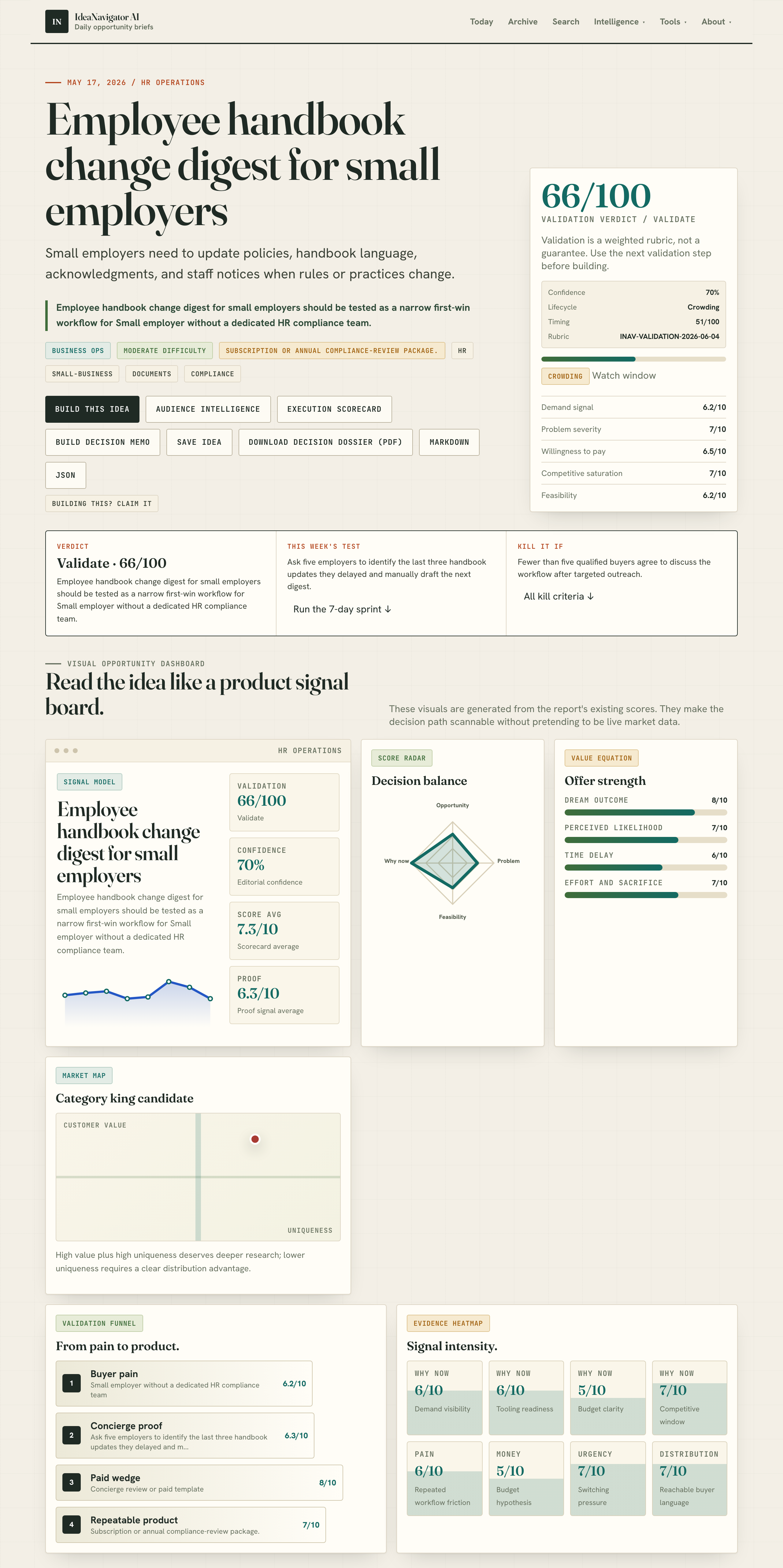
A new workflow prototype is being tested to assist small employers without dedicated HR teams in managing employee handbook updates. This aims to streamline policy changes amid remote work and legal shifts.
IdeaNavigator AI is piloting a new workflow designed to help small employers without dedicated HR compliance teams manage employee handbook updates more efficiently. This development responds to increasing policy drift caused by remote work, AI tools, and evolving state employment laws, aiming to reduce compliance risks for small businesses.
The proposed workflow involves logging relevant policy topics, drafting change notes, and tracking employee acknowledgment status. It is intended as a minimal viable product (MVP) that small employers can adopt to stay current with legal and operational changes. The initial testing involves asking five small employers to identify recent handbook updates they delayed and to manually draft the next digest, providing feedback on usability and effectiveness.
This initiative is part of a broader market effort to streamline HR operations for small businesses, with potential revenue from subscription services or annual compliance review packages. The focus is on creating a practical, scalable solution that reduces the administrative burden on small teams that lack dedicated HR resources.
Implications for Small Business HR Management
This development could significantly ease compliance burdens for small employers, helping them avoid legal pitfalls and ensuring policy consistency. By providing a structured, automated approach to updating employee handbooks, it addresses a key pain point exacerbated by the rapid pace of legal and operational changes. If successful, the workflow could become a standard tool, improving HR efficiency and reducing risks associated with outdated policies.As an affiliate, we earn on qualifying purchases.
Growing Policy Complexity for Small Employers
Small employers increasingly face challenges updating employee handbooks due to remote work, new AI tools, and shifting state employment laws. Historically, these businesses lack dedicated HR teams, making manual updates time-consuming and prone to oversight. Recent legal changes and workplace practices have accelerated the need for more dynamic, accessible solutions. The idea of a digest workflow builds on this context by offering a simplified process tailored to small business needs, with early validation through testing among a limited group of employers.“Small employers often delay handbook updates because they lack the resources to track legal changes continuously.”
— an anonymous researcher
small business HR compliance tools
As an affiliate, we earn on qualifying purchases.
As an affiliate, we earn on qualifying purchases.
Uncertain Outcomes and Adoption Challenges
It is not yet clear how small employers will respond to the workflow prototype, or if it will effectively reduce delays and compliance risks. The success depends on user feedback, ease of integration into existing processes, and ongoing support. Further testing is needed to determine scalability and long-term adoption potential.employee acknowledgment tracking system
As an affiliate, we earn on qualifying purchases.
As an affiliate, we earn on qualifying purchases.
Next Steps in Workflow Validation and Refinement
IdeaNavigator AI plans to gather feedback from the initial five participating employers, refine the workflow based on their input, and potentially expand testing to a broader user base. Future developments may include automation features and integration with existing HR tools. The goal is to establish a reliable, user-friendly solution before broader market rollout.As an affiliate, we earn on qualifying purchases.
Key Questions
Who is this workflow intended for?
The workflow is designed for small employers without dedicated HR compliance teams, helping them manage employee handbook updates more efficiently.
How will the workflow help small businesses?
It will log policy topics, draft change notes, and track employee acknowledgments, reducing manual effort and ensuring timely updates amid legal and operational changes.
Is this tool available now?
The workflow is currently in the testing phase with a limited group of employers and is not yet commercially available.
What are the potential benefits for small employers?
It could reduce compliance risks, save administrative time, and ensure policies stay current with evolving laws and practices.
What challenges might this face?
Adoption hurdles include integration into existing processes, user engagement, and ensuring the workflow remains adaptable to different business needs.
Source: IdeaNavigator AI
Halloween Picks
halloween
As an affiliate, we earn on qualifying purchases.