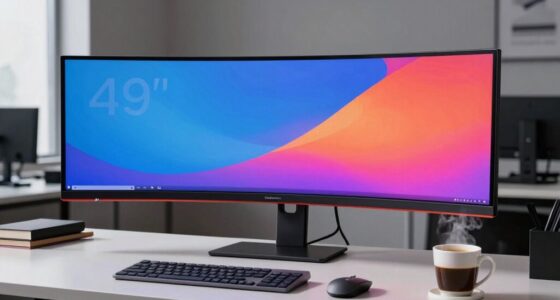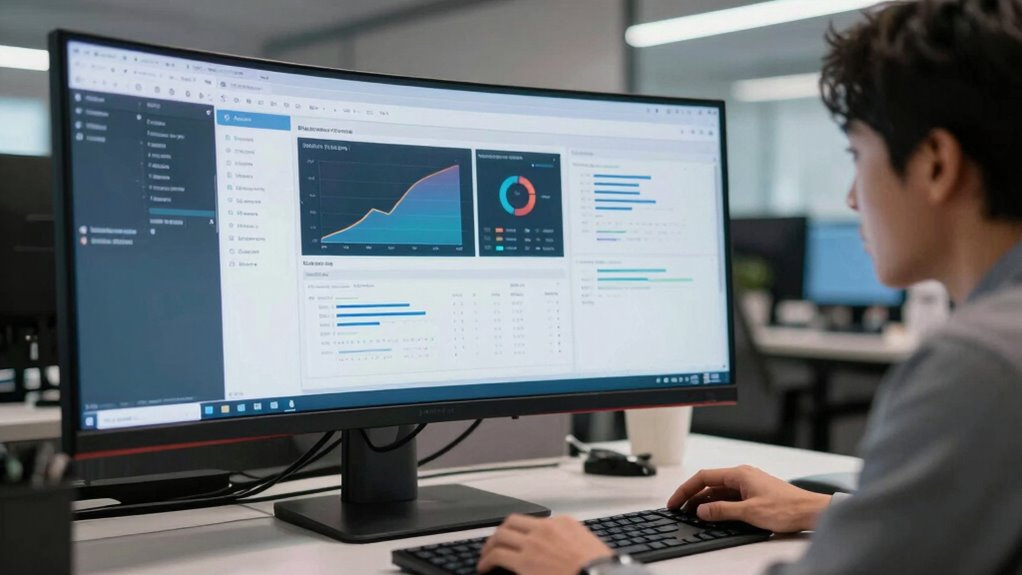
Choosing the right monitor size can boost your productivity by making multitasking easier and reducing distractions. Larger screens give you more space to organize windows and work smoothly without constant switching. They also help you focus better if well-positioned, while high resolution enhances clarity and reduces eye strain. However, an oversized monitor that isn’t set up properly can cause discomfort, which hampers your efficiency. Keep exploring to discover how ideal setup turns your workspace into a productivity powerhouse.
Open a free Amazon Business account
Business pricing, bulk buying and tax-exempt orders.
As an affiliate, we earn on qualifying purchases.
Key Takeaways
- Larger monitors enable easier multitasking by providing more screen space for multiple windows simultaneously.
- Properly sized monitors improve focus by reducing clutter and minimizing distractions during tasks.
- Increased screen size, when well-positioned, enhances comfort and reduces neck and eye strain, boosting productivity.
- High-resolution large monitors improve visual clarity, supporting detailed work and reducing visual fatigue.
- Optimal monitor size, combined with ergonomic setup, creates a comfortable workspace that sustains longer, efficient work sessions.
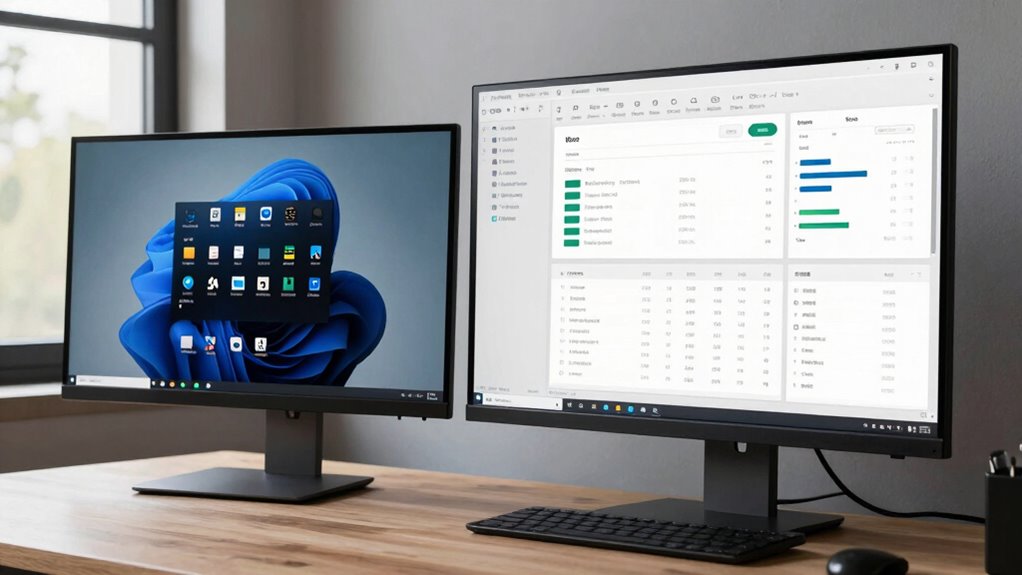
Have you ever wondered how monitor size impacts your productivity? It’s more than just a matter of preference; the size of your screen can considerably influence how efficiently you work. When choosing a monitor, you should consider how its dimensions affect your ability to multitask, focus, and stay comfortable during long hours. Larger screens can provide more space for multiple windows, which makes multitasking smoother. You won’t need to constantly switch between tabs or applications, saving you time and mental energy. But size isn’t everything. An ergonomic design becomes vital when working with bigger monitors because it helps prevent strain and discomfort. Properly adjusted, an ergonomic setup ensures your monitor’s height and tilt promote good posture, reducing neck and eye fatigue. If your monitor is too large and not well-positioned, it might cause you to crane your neck or strain your eyes, counteracting any productivity gains from the extra screen real estate. Additionally, understanding AI tools and their integration can help optimize your workflow by automating repetitive tasks and enhancing your overall efficiency. Incorporating monitor calibration can also ensure that colors and brightness are optimized for your specific workspace, reducing eye strain and improving visual comfort. Properly configuring color accuracy settings is essential for avoiding visual fatigue during extended work sessions. Screen resolution also plays a role in how effectively you can utilize a larger display. Higher resolutions, like 1440p or 4K, make images and text sharper, which becomes increasingly important as your screen size increases. A large monitor with low resolution can result in pixelation, making things look blurry and forcing you to squint or zoom in, ultimately slowing you down. Conversely, a high-resolution screen allows you to see more detail clearly and comfortably, which is especially helpful when working with intricate graphics, data, or detailed documents. When combined with a larger size, a high screen resolution ensures that everything appears crisp and readable, reducing eye strain and making it easier to work for extended periods. Moreover, the impact of display size on your overall workspace organization can significantly influence your ability to stay focused and productive. As technology advances, monitor size options continue to grow, providing even more tailored solutions for different work environments. However, bigger isn’t always better if your workspace is limited or if the monitor isn’t well-designed ergonomically. You might find that a very large monitor fills your desk and makes it harder to maintain an ideal viewing distance. This can lead to discomfort and distraction, hampering productivity rather than enhancing it. Ultimately, the right monitor size strikes a balance: it’s large enough to increase your workspace and improve multitasking, but not so big that it causes physical strain or compromises ergonomic principles. Combining the right size with a good ergonomic design and high screen resolution creates an environment where you can work comfortably and efficiently, making the most of your time and effort.
As an affiliate, we earn on qualifying purchases.
Frequently Asked Questions
How Does Monitor Size Impact Eye Strain Over Long Work Hours?
A larger monitor can reduce eye strain during long work hours by offering better visual comfort and ergonomic benefits. When your screen is appropriately sized, you don’t have to squint or lean forward, which minimizes fatigue. With improved ergonomic positioning, your eyes stay at a comfortable distance, decreasing strain and discomfort. So, choosing the right monitor size helps you work longer without suffering from eye fatigue or discomfort.
Are Larger Monitors Suitable for All Types of Work Tasks?
Like a Swiss Army knife, larger monitors can be versatile, but aren’t suited for every task. They offer ergonomic benefits, reducing eye strain and encouraging better posture, while their aesthetic appeal can elevate your workspace. However, for tasks like quick edits or limited desk space, smaller screens might be more practical. You need to evaluate your work style to determine if a bigger monitor truly enhances your productivity.
What Is the Ideal Monitor Size for Small Workspace Setups?
For small workspace setups, a 24-inch monitor is ideal. It fits comfortably without cluttering your desk, allowing ergonomic placement to prevent strain. This size offers ample screen space for multitasking while maintaining a sleek, aesthetic integration with your environment. You’ll find it easy to adjust for comfort, ensuring productivity stays high without sacrificing the visual appeal of your workspace.
Does Monitor Size Influence Overall Employee Satisfaction?
Monitor size definitely influences your overall satisfaction at work. A larger screen with ergonomic design reduces eye strain and makes multitasking easier, boosting your comfort. Conversely, a small monitor might look sleek but can cause frustration over limited workspace. The aesthetic appeal also matters—an attractive, well-sized monitor can make your workspace more inviting. Ultimately, choosing the right size enhances your experience, blending functionality with visual harmony.
How Does Screen Resolution Interact With Monitor Size in Productivity?
Higher screen resolution enhances productivity by providing better screen clarity, making text and images sharper on larger monitors. When your monitor size increases, a high resolution guarantees you don’t lose detail or experience clutter, which supports visual ergonomics. You can work more comfortably and efficiently, reducing eye strain and minimizing distractions. Ultimately, the interaction between screen resolution and monitor size helps you see clearly and work comfortably for longer periods.
As an affiliate, we earn on qualifying purchases.
Conclusion
So, next time you’re tempted to upgrade to that massive monitor, remember: bigger isn’t always better. You might think it’ll boost your productivity, but in reality, that sprawling screen could just be your new distraction. Ironically, the very size meant to streamline your work might just slow you down or overwhelm you. So go ahead, choose your monitor wisely—sometimes, a modest screen is all you need to stay focused and get things done.
As an affiliate, we earn on qualifying purchases.
dual monitor setup for productivity
As an affiliate, we earn on qualifying purchases.
As an affiliate, we earn on qualifying purchases.
NFL season / tailgating Picks
team gear
As an affiliate, we earn on qualifying purchases.