
Better monitors often outlast computers because they are built with durable materials and designed for long-term use, so they resist wear and tear better over time. Their advanced display technology, like LCD or OLED, stays visually impressive far longer than computer hardware. They also remain compatible with new systems, which helps extend their usefulness. If you want to discover more about why monitors stand the test of time, keep exploring how their design and technology make this possible.

Get the latest gadgets delivered free with Prime
- Fast, free delivery on millions of items
- Prime Video, Amazon Music and more included
- Member-only deals all year
Key Takeaways
- Monitors use durable materials and robust designs that resist wear, extending their functional lifespan beyond computers.
- Display technologies like LCD and OLED improve slowly, maintaining high visual quality over time despite hardware advances.
- Monitors are less affected by software updates and compatibility issues, ensuring long-term usability.
- Their core visual components remain relevant longer, making them less susceptible to obsolescence than computer hardware.
- Investing in high-quality monitors provides extended performance, reducing the need for frequent replacements.
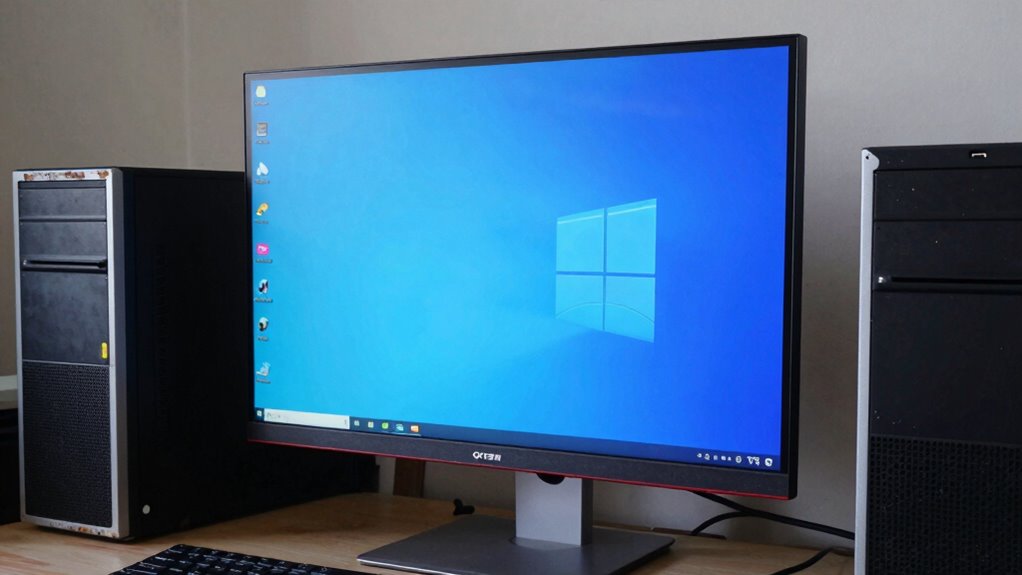
In today’s fast-paced digital world, better monitors often outperform computers in regard to display quality and longevity. This is because, unlike computers, monitors are designed with a focus on visual clarity and durability over time. When you choose a high-quality monitor, you’re investing in a device with impressive hardware durability, meaning it can withstand daily use without degrading quickly. Monitors are less prone to the rapid technological obsolescence that often affects computers. While a computer’s components, like processors and storage drives, tend to become outdated within a few years, monitors tend to retain their usefulness for much longer.
One reason monitors outlast computers is that their core technology, particularly display panels, remains relevant longer. Modern LCD or OLED screens have advanced to offer stunning resolution, color accuracy, and contrast ratios that are unlikely to be surpassed overnight. Because these display technologies evolve more slowly than computer hardware, your monitor can stay functional and visually impressive well beyond the lifespan of your computer’s internal parts. This longevity is further supported by their simple design; monitors don’t require frequent hardware upgrades like CPUs or GPUs, which tend to become obsolete quickly. Additionally, the hardware durability of monitors is a key factor, as high-quality units are built with robust materials that resist everyday wear and tear, ensuring long-term performance. Interestingly, the software compatibility of monitors also contributes to their extended usability, as they often remain compatible with new operating systems and hardware upgrades with minimal adjustments.
The durability of a monitor’s hardware is also critical. High-quality monitors are built with robust materials and protective features that resist damage from everyday use—such as scratches, dust, or accidental impacts. This focus on hardware durability ensures that your monitor remains operational for many years, even under less-than-ideal conditions. In contrast, computers have more delicate internal components that are sensitive to heat, static, and physical shocks, making them more vulnerable to wear and tear. Furthermore, battery life is irrelevant for monitors, further extending their usability compared to portable devices that depend on power sources. The lower maintenance requirements of monitors mean they often need fewer repairs over time, contributing to their longer lifespan.
Technological longevity plays a significant role here as well. Monitors are less affected by software updates or compatibility issues that can render older computers obsolete. Once a monitor is connected to a device, it often continues to perform well with minimal adjustments, regardless of evolving software or hardware standards. This means you can keep using the same monitor with newer computers or upgraded hardware, extending its useful life. Additionally, the focus on visual quality ensures that even older monitors can still deliver a crisp and vibrant display, making them a cost-effective choice over time.
Ultimately, when you compare monitors to computers, you’ll notice that the former’s focus on display quality, combined with their robust construction and slower rate of obsolescence, makes them stand the test of time. They’re designed not just for immediate performance but for sustained, long-term use. This durability and technological longevity make better monitors a smart investment, providing excellent display performance and lasting value that outpaces the lifespan of most computers.
high durability computer monitor
As an affiliate, we earn on qualifying purchases.
As an affiliate, we earn on qualifying purchases.
Frequently Asked Questions
How Often Should I Replace My Monitor for Optimal Performance?
You should replace your monitor every 3 to 5 years for peak performance. Over time, color accuracy can decline, affecting your work or entertainment quality. Additionally, newer monitors tend to have better power consumption, saving energy and reducing costs. If you notice your display’s colors look dull or it’s consuming more power, it’s a sign it’s time for an upgrade to guarantee sharp visuals and efficiency.
Can Upgrading a Monitor Improve Overall Computer Lifespan?
Upgrading your monitor can improve your computer’s overall lifespan by enhancing your experience. For example, a higher-resolution monitor reduces strain, making work more comfortable and lessening hardware stress. An ergonomic design promotes better posture, decreasing fatigue and hardware wear. While the core system remains, these upgrades can extend your device’s usability, ensuring you get more years out of your setup before needing full replacement, all while boosting productivity and comfort.
Are There Specific Monitor Features That Contribute to Longevity?
Yes, specific monitor features like advanced display technology and power efficiency contribute to longevity. Modern display tech, such as OLED or IPS panels, offer better durability and color accuracy over time. Power-efficient monitors reduce wear on internal components, minimizing heat and energy stress. By choosing a monitor with these features, you guarantee it lasts longer, often outliving your computer, since quality components and efficient design prevent early failures.
How Do Monitor Maintenance Habits Affect Its Lifespan?
Think of your monitor as your trusty sidekick—its lifespan depends on your habits. Regularly calibrate your screen to prevent color and contrast issues, and manage dust by cleaning vents and screens gently. These habits reduce strain on internal components and prevent overheating. Just like in a vintage spaceship, proper maintenance keeps your monitor running smoothly longer, saving you money and hassle in the long run.
Do Brand Reputations Influence Monitor Durability?
Yes, brand reputations influence monitor durability because trusted brands often prioritize quality and use durable materials. You might hear durability myths suggesting some brands are better, but reputation is usually a good indicator. When you choose a reputable brand, you’re more likely to get a monitor built to last, reducing the need for frequent replacements. Trusting well-known brands helps you avoid low-quality products that can fail sooner.
As an affiliate, we earn on qualifying purchases.
Conclusion
Think of your monitor as the loyal lighthouse guiding your digital journey. Even when your computer’s hardware dims and fades, a good monitor can keep shining bright, outlasting the rest of your setup. It’s a silent partner that endures the test of time, patiently waiting to illuminate your work and play. When you choose quality, you’re investing in a beacon that lasts long after the computer’s story has been written.
As an affiliate, we earn on qualifying purchases.
professional-grade computer monitor
As an affiliate, we earn on qualifying purchases.
As an affiliate, we earn on qualifying purchases.
Halloween Picks
halloween
As an affiliate, we earn on qualifying purchases.