
If you’re choosing between a traditional router and a mesh system for your home, consider your space and device needs. Routers are budget-friendly but may struggle in larger or multi-room homes, while mesh systems offer seamless coverage and easier setup for bigger spaces. Mesh networks also handle smart devices better and adapt as your home grows. To learn more about which option suits your home best, keep exploring the details below.
Key Takeaways
- Mesh systems offer seamless large-area coverage and eliminate dead zones, ideal for bigger or multi-room homes.
- Traditional routers are more budget-friendly initially but may require extenders or upgrades for extensive coverage.
- Mesh networks are easier to set up, manage, and expand, providing a more future-proof and scalable solution.
- Routers typically have lower upfront costs but might need hardware upgrades over time, increasing long-term expenses.
- Both systems support essential features like security updates and parental controls, but mesh systems often include advanced, integrated options.
Top picks for "mesh router simple"
Open Amazon search results for this keyword.
As an affiliate, we earn on qualifying purchases.
Understanding the Basics of Home Networking
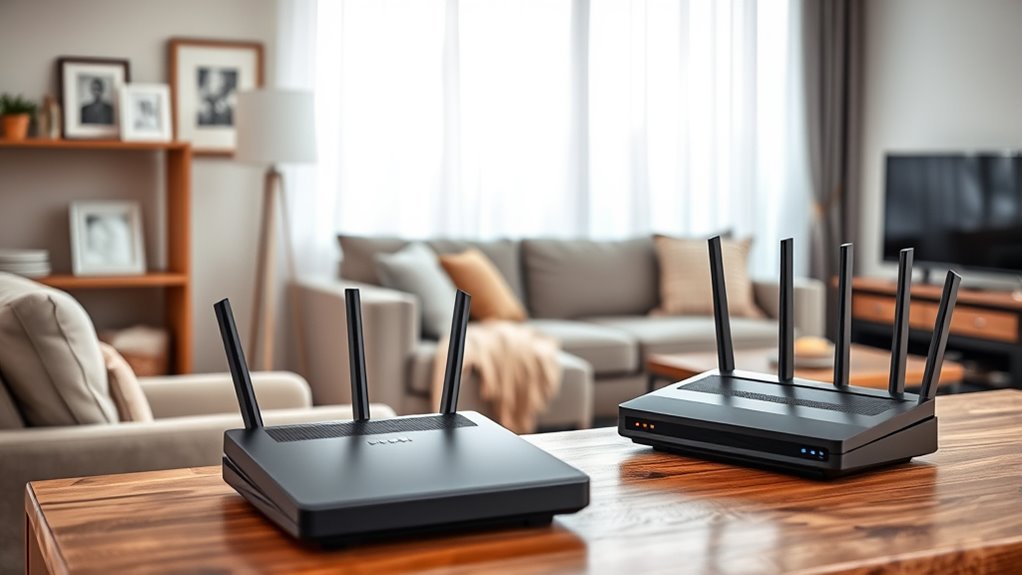
Understanding how your home network works is essential to choosing the right setup. Your network connects all your devices, from smartphones to smart home integration gadgets, ensuring seamless communication. A good setup supports parental controls, helping you manage screen time and filter content for kids. Knowing how data flows between devices helps you decide between a traditional router and a mesh system. Mesh networks improve coverage by spreading Wi-Fi signals across multiple points, reducing dead zones. This is especially useful if you have a smart home with multiple devices or need reliable internet throughout large spaces. Additionally, understanding European cloud innovation can help you choose more secure and sustainable networking solutions for your home. Considering network security features is crucial to protect your household from cyber threats. By understanding these basics, you can select a setup that provides strong coverage, easy management, and security features tailored to your household’s needs.
What Is a Traditional Router?

A traditional router serves as the central hub for your home network, connecting your devices to the internet and each other. It uses wireless standards like Wi-Fi 5 or Wi-Fi 6 to provide wireless connectivity. These standards determine the speed and range of your network. A router manages traffic between devices and the internet, ensuring data flows smoothly. To stay secure and improve performance, regular firmware updates are essential. These updates fix bugs, add features, and enhance security. Unlike mesh systems, traditional routers typically have a single point of connection, which can limit coverage in larger homes. While simple to set up, they may require additional extenders or access points for better coverage. Understanding these basics helps you decide if a traditional router fits your home’s needs. Security vulnerabilities in outdated firmware can pose risks, making updates crucial for maintaining a secure network. Additionally, considering coverage area is important when choosing a router to ensure all your devices maintain strong connectivity. A good understanding of network management can help optimize your setup and prevent common issues.
The Rise of Mesh Network Systems
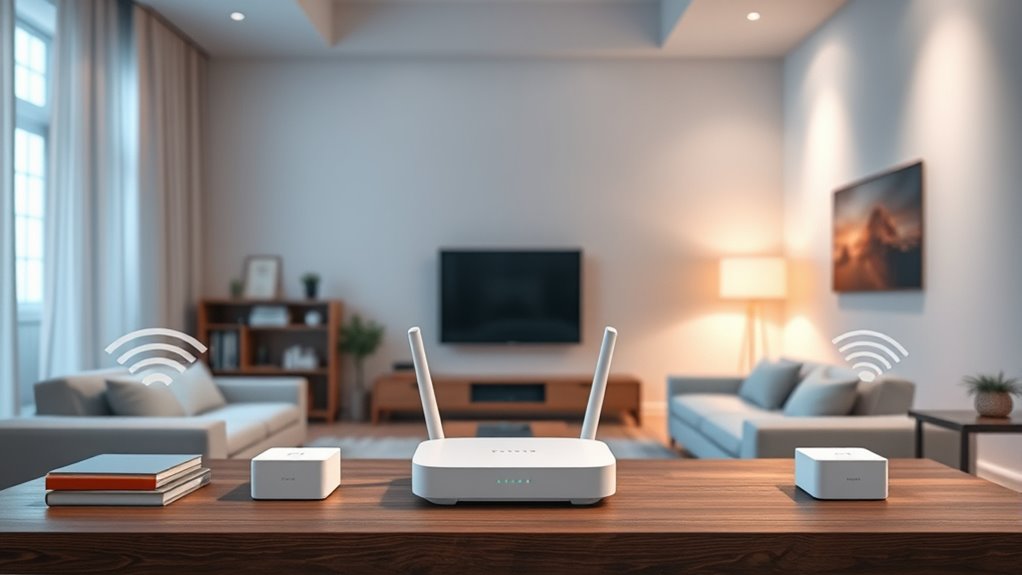
As more homes demand reliable, seamless Wi-Fi coverage, mesh network systems have gained popularity for their ability to eliminate dead zones. These systems use multiple nodes that work together to create a unified network, ensuring you get strong signal strength throughout your entire home. If you have a smart home setup, mesh networks make it easier to connect all your devices without interruptions. Plus, many mesh systems include advanced network security features, helping protect your personal information from cyber threats. They’re designed to adapt as your home grows, seamlessly adding more nodes when needed. The rise of mesh systems reflects a shift toward more reliable, flexible Wi-Fi solutions that prioritize security and simplicity, making them an attractive choice for modern households seeking uninterrupted connectivity. Your Guide to Compassionate Senior Caregiving emphasizes the importance of reliable support systems, much like dependable Wi-Fi keeps your digital life running smoothly.
Setup and Installation Ease

Setting up a mesh network is generally straightforward and user-friendly, especially compared to traditional routers. With simple app-guided processes, you can quickly connect devices and customize settings. Mesh systems often feature automatic updates for enhanced network security and compatible devices, reducing setup headaches. Unlike routers, which may require manual configurations, mesh systems are designed for seamless integration. Additionally, many mesh systems offer intuitive management tools that make ongoing network adjustments simple for users of all technical levels. Moreover, some systems incorporate local automation features that enable network adjustments without relying on internet connectivity, further simplifying maintenance. These systems often include easy-to-use mobile apps, making setup and troubleshooting accessible even for less tech-savvy users. For those interested in optimizing their network for smart home devices, mesh systems are typically more adaptable to home automation needs, enhancing overall convenience. Furthermore, the integration of automatic firmware updates ensures your network stays secure and performs optimally over time.
Coverage and Signal Strength

Mesh networks often provide more consistent coverage and stronger signal strength across your entire home, especially in larger or multi-story buildings. This means fewer dead zones and reliable connections in every room, which is essential for seamless smart home integration. With better coverage, your smart devices stay connected without interruptions, making automation smoother. Many mesh systems include parental controls that help manage and monitor internet use across all connected devices, enhancing security and peace of mind. Unlike traditional routers with limited range, mesh systems adapt to your home’s layout, ensuring strong signals where you need them most. This improved coverage makes your smart home more reliable and easier to control, giving you confidence in your network’s reach and security. Additionally, understanding network optimization can help you further enhance your device placement for the best performance. Proper router placement is crucial for maximizing the benefits of a mesh system and achieving optimal coverage throughout your home. Optimizing signal distribution can further enhance your network’s overall performance and stability.
Performance and Speed Considerations

While mesh networks are known for their coverage, they can also deliver impressive performance and speed when configured correctly. To enhance your network, consider these factors:
- Bandwidth limitations: Mesh systems often share bandwidth across nodes, so high demand can slow speeds. Proper configuration of your network setup can help mitigate these issues. Additionally, understanding network management can optimize bandwidth allocation and improve overall performance. Being aware of signal propagation can further aid in optimal placement of nodes. Recognizing network congestion patterns can also help in planning device connections for smoother operation.
- Firmware updates: Regular updates improve performance, fix bugs, and optimize speed.
- Router placement: Proper positioning reduces interference and maximizes speed.
- Device compatibility: Ensure your devices support the network’s capabilities for best performance.
- Free Floating landscaping and outdoor structures can influence signal propagation and should be considered when positioning your mesh nodes.
Cost Differences and Value
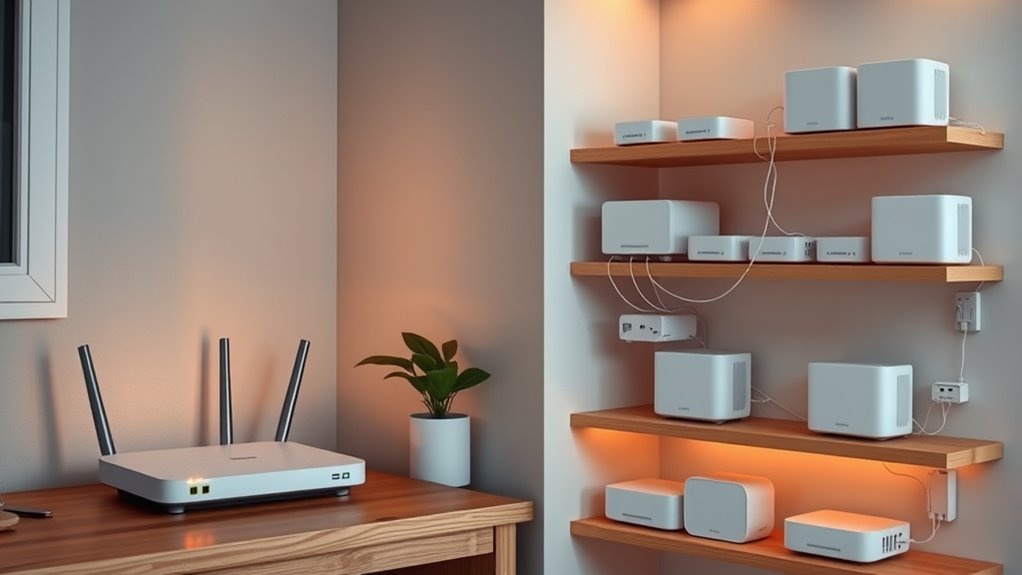
When choosing between a mesh system and a traditional router, your initial purchase cost is an important factor to contemplate. While mesh networks often cost more upfront, they can save you money long-term through easier expansion and maintenance. If you’re on a tight budget, there are budget-friendly options for both, but weighing the overall value can help you make the best choice. Additionally, understanding the different cookie categories and their impact on your browsing experience can influence your decision if you prioritize privacy and customization. Considering network setup and future scalability can also contribute to a more informed and satisfying purchase. Recognizing how home network requirements evolve over time can further assist in selecting the right system for your needs.
Initial Purchase Expense
Are you wondering which option offers better value upfront? The initial purchase expense varies between mesh systems and traditional routers. Here are four key points to contemplate:
- Mesh systems often come with higher pricing options, reflecting advanced features and better brand reputation.
- Routers typically have lower starting prices, making them more budget-friendly initially.
- Brand reputation influences pricing, with trusted brands charging more for reliability and support.
- Some mesh kits include multiple nodes, increasing upfront costs but providing seamless coverage.
While mesh systems might seem pricier at first, they often deliver better value for larger homes. Your choice depends on balancing initial costs with desired performance and brand trust.
Long-term Cost Benefits
Investing in a mesh system or a traditional router can lead to significant long-term savings, especially when considering maintenance, upgrades, and performance reliability. With a mesh system, you often enjoy better hardware compatibility across nodes, reducing the need for frequent replacements. Additionally, firmware updates tend to be more streamlined, helping to keep your network secure and efficient without extra costs. A traditional router might require occasional hardware upgrades if it becomes outdated or incompatible with new devices, which can add up over time. Mesh systems, designed for scalability, often provide a more resilient solution that minimizes ongoing expenses. Overall, choosing the right system can save you money by maintaining ideal performance and reducing maintenance or replacement costs in the long run.
Budget-Friendly Options
Choosing between a mesh system and a traditional router often comes down to budget, as initial costs and overall value vary considerably. If you’re seeking affordability, consider these options:
- Entry-Level Routers – Usually cheaper, but may lack advanced wireless security features or extensive device compatibility.
- Mesh Systems on a Budget – Some budget-friendly models provide solid coverage without breaking the bank, though they might have limited features.
- Long-Term Savings – Cheaper routers might need frequent upgrades, increasing overall costs.
- Value for Money – Investing in a slightly pricier mesh system can offer better wireless security and device compatibility, enhancing your network’s reliability and security.
Balancing upfront costs with long-term value ensures you get the best wireless security and device compatibility without overspending.
Scalability and Future Proofing

When considering scalability and future-proofing, mesh networks often offer a more adaptable solution because they can expand seamlessly by adding more nodes without significant reconfiguration. This makes it easier for you to grow your network as your needs evolve, without worrying about compatibility issues. Mesh systems are designed with device compatibility in mind, ensuring new devices can connect smoothly. Additionally, network management tends to be more straightforward, allowing you to monitor and adjust your network settings easily as you add devices or upgrade hardware. Traditional routers may require manual configuration or replacing hardware, but mesh systems provide a scalable, flexible approach. This future-proofing aspect means your home network can adapt to increased demands and new technology without hassle.
Making the Best Choice for Your Home

When choosing between a mesh system and a traditional router, consider how well they cover your entire home and handle signal strength. Think about how easy it will be to set up and get everything running smoothly. Your decision should balance coverage needs with setup simplicity to best fit your lifestyle.
Coverage and Signal Strength
Wondering how to guarantee your entire home stays connected? Your choice between a mesh system and a router hinges on coverage and signal strength. Here’s what to contemplate:
- Mesh systems excel in eliminating dead zones by covering large areas seamlessly.
- Signal interference from walls and appliances can weaken signals; mesh units often handle this better.
- Routers may struggle with device compatibility, especially with smart home gadgets.
- Multiple devices connect more reliably with mesh systems due to their unified network.
Ultimately, if your home is large or has thick walls, a mesh system offers broader, more consistent coverage. For smaller spaces, a high-quality router might suffice, but keep signal interference and device compatibility in mind to ensure solid performance everywhere.
Ease of Setup
Choosing between a mesh system and a router often depends on how easy they are to set up in your home. Mesh systems typically have a straightforward setup process, with a user interface designed for simplicity, often allowing you to manage devices easily through a smartphone app. They usually support a wide range of device compatibility, making it easy to connect your smartphones, smart home gadgets, and computers. Routers, however, may require more effort during setup, especially if they have a complex user interface or need manual configuration. If you’re looking for a quick, hassle-free installation, a mesh system might be the better choice. Overall, consider how user-friendly the setup process is and whether your devices will seamlessly connect.
Frequently Asked Questions
Can Mesh Networks Replace Traditional Routers Entirely?
Mesh networks can replace traditional routers entirely, especially in larger homes. They improve wireless security by offering seamless coverage and easier updates, while expanding signal range to eliminate dead zones. You’ll find mesh systems particularly useful if you want consistent, strong Wi-Fi throughout your space. However, for small setups, a good router might still suffice. Ultimately, consider your home size and network needs before making the switch.
How Do Mesh Systems Handle Multiple Device Connections?
Think of your mesh system as a busy highway, smoothly handling multiple devices at once. It uses device prioritization to give important gadgets like your laptop or smart TV faster access. The system intelligently manages signal interference, ensuring each device maintains a strong connection without lag. You won’t notice slowdowns because the mesh adapts in real-time, balancing the load across nodes, making your network reliable and efficient like a well-orchestrated symphony.
Are Mesh Networks More Secure Than Traditional Routers?
Yes, mesh networks are generally more secure than traditional routers. They often use advanced network encryption to protect your data and implement device authentication to guarantee only trusted devices connect. This layered security helps prevent unauthorized access and keeps your home network safer. Plus, the system updates automatically, patching vulnerabilities quickly. So, with a mesh network, you get enhanced security features that help safeguard your personal information.
What Maintenance Is Required for Mesh Network Systems?
You need to regularly update your mesh network’s firmware to guarantee security and stability. Check device compatibility when adding new devices, as some might not work seamlessly. Keep the nodes clean and positioned ideally for network scalability, avoiding obstructions. Restart your system occasionally to refresh connections. By maintaining these practices, you keep your network running smoothly, supporting growth and ensuring all devices stay connected efficiently.
How Do Firmware Updates Differ Between Mesh and Router Setups?
Think of firmware updates as upgrading the engine in your vehicle. With a mesh system, the firmware update process is like a smooth, synchronized tune-up across all nodes, ensuring security patch deployment happens seamlessly. In contrast, a traditional router might require individual updates, like fixing each part separately. Mesh systems often offer automated, centralized updates, making security patches quick and hassle-free, while routers may need manual intervention for each device.
Conclusion
Choosing between a mesh system and a traditional router is like picking the right paintbrush for your masterpiece—you want one that fits your needs perfectly. If you’re after seamless coverage and easy setup, a mesh system might be your best bet. However, if you prefer simplicity and affordability, a traditional router could do the trick. Consider your home’s size and your internet habits, and you’ll find the perfect fit just like finding the right key for a lock.