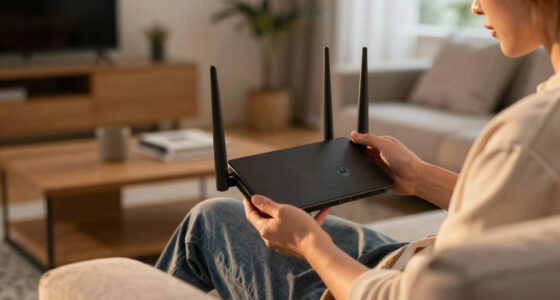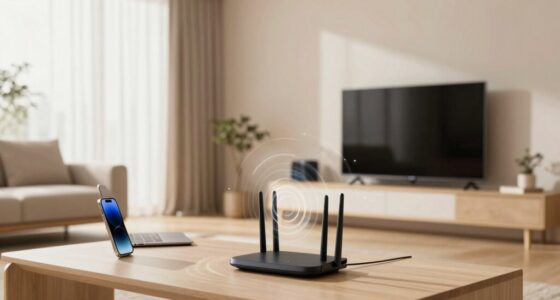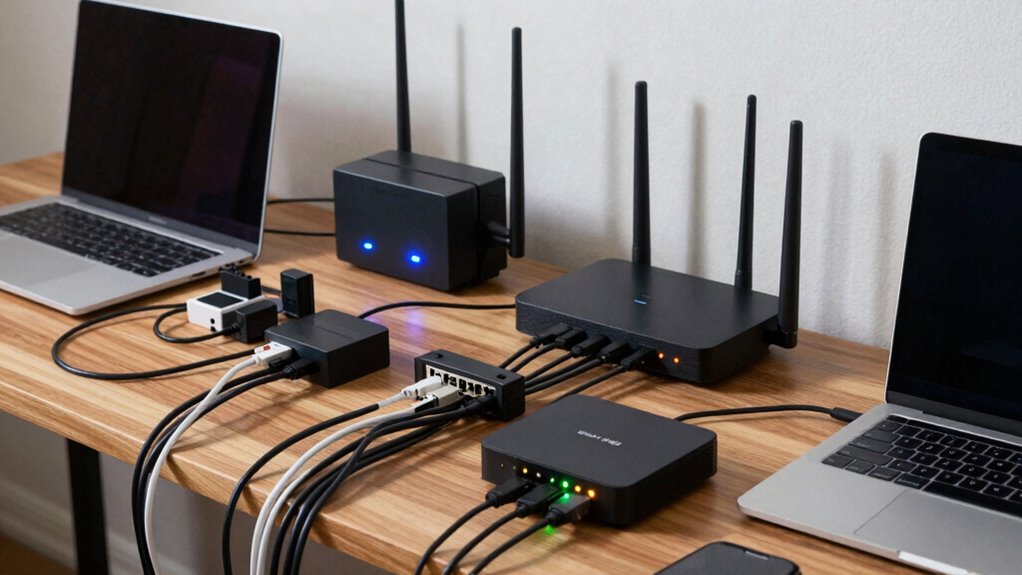

Today’s home networks are more complex because they support multiple devices like smartphones, laptops, IoT gadgets, and streaming tools, requiring advanced management. You need stronger security measures such as WPA3 encryption, firmware updates, and segmented networks to prevent threats. Managing all these devices and security features can be overwhelming, but understanding how to set up and maintain a secure, efficient network is vital in this evolving landscape. Keep exploring to learn more about staying protected.

Get the latest gadgets delivered free with Prime
- Fast, free delivery on millions of items
- Prime Video, Amazon Music and more included
- Member-only deals all year
Key Takeaways
- Increasing device proliferation requires advanced management and security measures for modern home networks.
- Implementation of network segmentation, such as VLANs and multiple SSIDs, adds layers of complexity.
- Evolving security threats demand regular firmware updates, strong passwords, and encryption protocols like WPA3.
- Supporting diverse gadgets like IoT devices, streaming services, and smartphones complicates network configurations.
- Maintaining security and performance now involves layered strategies, including device monitoring and ongoing vigilance.
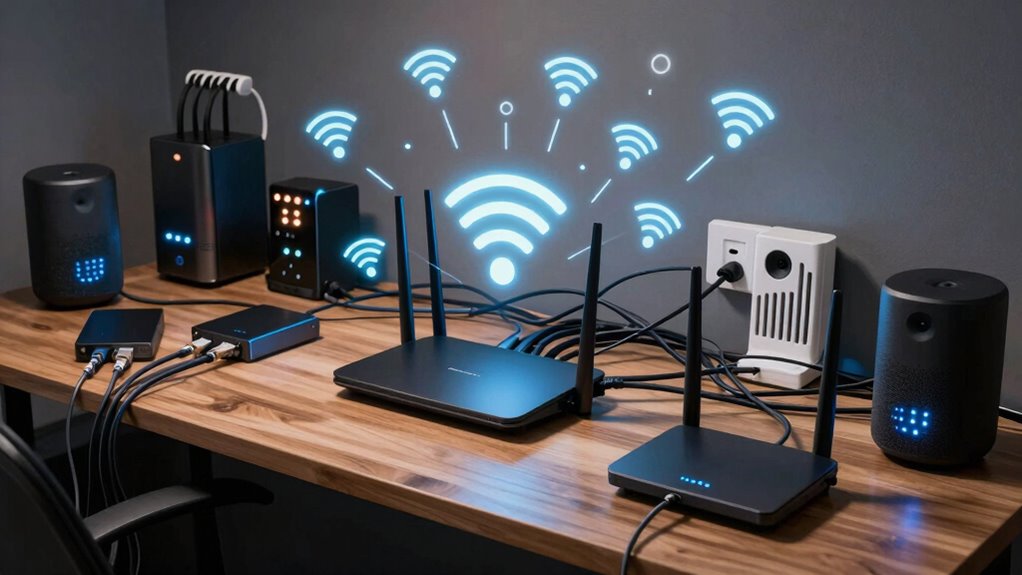
Have you ever wondered why setting up your home network feels more complicated than it should be? It’s because modern networks have grown far more complex, driven by the proliferation of devices and the need for better security measures. Gone are the days when a simple router and a few devices sufficed. Today, you’re faced with managing multiple gadgets, each with its own security needs, and ensuring your entire network remains protected against potential threats. Wireless security is now at the forefront, requiring you to set up strong passwords, enable encryption protocols like WPA3, and regularly update firmware to patch vulnerabilities. Without these steps, your network becomes an open invitation for hackers, malware, or unauthorized access. But securing individual devices isn’t enough; you also need to think about network segmentation. This involves dividing your network into smaller, isolated zones so that if one device gets compromised, the rest of your network stays safe. This concept is especially important given the rise of microplastics in dust and other pollutants that can potentially exploit vulnerabilities in poorly secured networks. It’s a crucial step that many overlook, yet it significantly enhances your security posture.
The challenge is that with so many connected devices—smartphones, laptops, IoT gadgets, streaming devices—you need a more sophisticated approach to manage them efficiently. Network segmentation allows you to create separate subnetworks for different device groups, such as a guest network for visitors, a dedicated IoT network for smart home devices, and a primary network for your personal computers. This way, if a smart thermostat gets hacked, the attacker can’t easily access your main devices or sensitive data. Setting up these segments requires a good understanding of your router’s features and the ability to configure VLANs or separate SSIDs, which can be confusing if you’re not tech-savvy. Additionally, keeping your devices updated with the latest firmware is essential, especially since firmware updates often include security patches that protect against vulnerabilities.
Moreover, managing wireless security across these segments demands constant vigilance. You must change passwords regularly, disable WPS, and monitor device activity. These steps, combined with network segmentation, help prevent intrusions and keep your digital life safe. Properly configuring your extension cord standards and ensuring weatherproof tool storage also contribute to a safer environment for your devices and tools. Understanding cybersecurity best practices can further strengthen your defenses, especially as cyber threats become more sophisticated. The increased complexity might seem overwhelming at first, but it’s necessary to protect your privacy and data in today’s interconnected world. As threats evolve, so does the need for smarter, layered security strategies. By understanding the importance of wireless security and implementing network segmentation, you’re taking essential steps to stay ahead of potential cyber threats. While it might require a bit more effort now, the peace of mind knowing your home network is secure makes it all worthwhile.
As an affiliate, we earn on qualifying purchases.
Frequently Asked Questions
How Do I Troubleshoot Connectivity Issues in a Complex Home Network?
To troubleshoot connectivity issues, start by checking your network topology to identify any weak links or bottlenecks. Make sure your router and devices are properly connected and updated. Use device prioritization settings to manage bandwidth for critical devices. Restart your router and devices, then test connection stability. If issues persist, consider resetting your network settings or consulting your ISP to identify potential external problems affecting your complex home network.
What Security Risks Are Associated With Advanced Home Networks?
Did you know that IoT vulnerabilities have increased by over 300% in the past year? With advanced home networks, you’re at risk of unauthorized access if your devices aren’t secure. Hackers can exploit weak passwords or outdated firmware, leading to data theft or even control of your smart home. To protect yourself, make certain your devices have strong security, update firmware regularly, and use robust, unique passwords.
How Can I Optimize Network Performance With Multiple Devices?
To enhance your network performance with multiple devices, start by using device prioritization to give essential devices like your work laptop or streaming box higher bandwidth. Implement bandwidth management to evenly distribute internet speed, preventing slowdowns. Regularly update your router’s firmware and consider setting up a guest network for visitors. These steps guarantee smoother connectivity, reduce lag, and maintain ideal performance across all your devices.
What Are the Best Practices for Managing Network Privacy?
To manage network privacy effectively, start by updating your device’s privacy settings regularly and enabling strong encryption protocols like WPA3. Use unique, complex passwords for your Wi-Fi and change them often. Turn off network sharing features when not needed, and consider setting up a guest network for visitors. Regularly review connected devices and monitor network activity to spot any suspicious behavior, keeping your home network secure.
How Do I Update or Upgrade My Home Network Equipment?
To update or upgrade your home network equipment, start by checking your router’s firmware and installing any available updates for better security and performance. Consider upgrading to a modern router that supports smart device integration and parental controls. You might also add range extenders or mesh systems to improve coverage. Regularly review your network settings and device connections to guarantee everything runs smoothly and remains secure.
As an affiliate, we earn on qualifying purchases.
Conclusion
As you navigate today’s home networks, remember they’re like a bustling city, constantly evolving with new devices and connections. It might seem overwhelming at first, but staying informed and organized helps you stay in control. Just like a city needs traffic rules to flow smoothly, your network benefits from clear management. Embrace the complexity, knowing it’s a sign of progress—your digital life is growing, vibrant and full of potential.
As an affiliate, we earn on qualifying purchases.
As an affiliate, we earn on qualifying purchases.
Halloween Picks
halloween
As an affiliate, we earn on qualifying purchases.