
TL;DR

Get the latest gadgets delivered free with Prime
- Fast, free delivery on millions of items
- Prime Video, Amazon Music and more included
- Member-only deals all year
AI-driven Wi-Fi 7 routers are emerging as the best way to boost home internet speeds and coverage. Experts highlight models like the TP-Link Archer BE550 for balanced performance and advanced features, though real-world benefits depend on device compatibility and home layout.
Multiple Wi-Fi 7 routers with AI optimization features are now available, promising improved speed, coverage, and device management for home networks. These advancements are driven by the integration of AI algorithms that adapt performance based on usage patterns, making them particularly relevant as more devices connect at higher speeds. The key development is the introduction of models like the TP-Link Archer BE550, which balances advanced features with affordability, signaling a shift toward smarter home networking.
Recent reviews and industry reports highlight that AI-optimized Wi-Fi 7 routers are designed to dynamically manage bandwidth, reduce congestion, and improve overall network stability. The TP-Link Archer BE550, ranked as the top overall pick by Thorsten Meyer AI, offers tri-band support with a 6GHz band and multiple 2.5G ports, providing a versatile balance of speed and capacity suitable for most homes. Meanwhile, models like the TP-Link BE400 and Deco BE63 focus on value and coverage, respectively, with the latter being ideal for large or multi-story residences needing mesh systems.
Experts emphasize that while higher hardware specs, such as 10G ports or multiple bands, can enhance performance, the actual benefit depends heavily on the home environment, device compatibility, and network setup. AI features in these routers include adaptive traffic routing, automatic interference mitigation, and real-time performance tuning, which are designed to optimize user experience without manual intervention. However, the full advantage of AI-driven features is still emerging, with some functions requiring compatible client devices and updated firmware.
The 9 picks
- 1
 TP-Link Archer BE12000 Tri-Band Wi-Fi 7 Router with 6GHz Band and 10G Connect…View on Amazon →
 - 2
 NETGEAR Nighthawk Dual-Band WiFi 7 Router (RS200) – Up to 6.5 Gbps, Covers 2,…View on Amazon →
 - 3
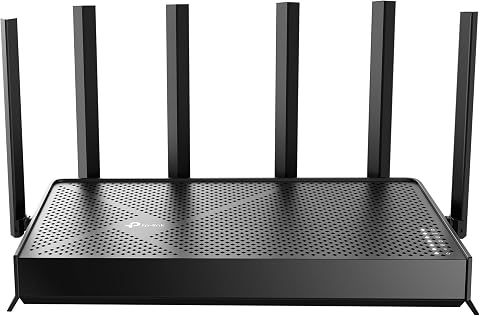 TP-Link Tri-Band WiFi 7 Router (Archer BE600) with 10G Port and HomeShield Se…View on Amazon →
 - 4
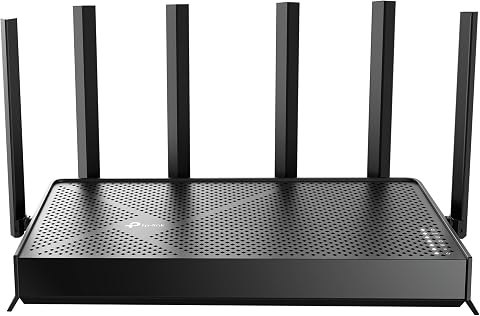 TP-Link BE6500 Dual-Band WiFi 7 Router (BE400)View on Amazon →
 - 5
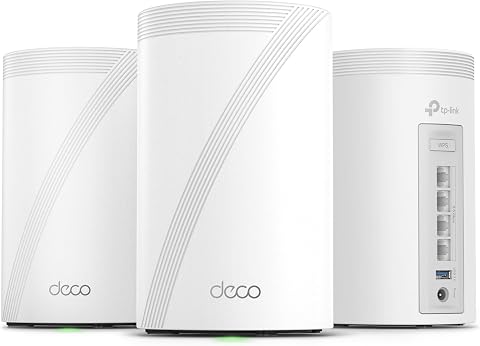 TP-Link Deco 7 Pro BE63 Tri-Band WiFi 7 Mesh System (3-Pack)View on Amazon →
 - 6
 NETGEAR Nighthawk Dual-Band WiFi 7 Router (RS140)View on Amazon →
 - 7
 TP-Link Tri-Band WiFi 7 Router (Archer BE550) with 6 Streams and 2.5G PortsView on Amazon →
 - 8
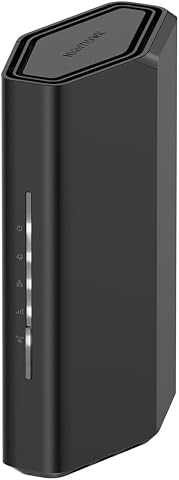 NETGEAR Nighthawk Dual-Band WiFi 7 Router (RS90)View on Amazon →
 - 9
 TP-Link Dual-Band Wi-Fi 7 Router Archer BE3600, 4-Stream, 2.5G Ports, USB 3.0…View on Amazon →
Impact of AI-Enhanced Wi-Fi 7 on Home Networking
The adoption of AI-optimized Wi-Fi 7 routers represents a significant step forward in home networking technology. These devices aim to deliver faster, more reliable internet by intelligently managing traffic and adapting to changing network conditions. For consumers, this means fewer dead zones, smoother streaming, and better support for multiple connected devices, especially in busy households with high bandwidth demands. As AI features mature and device compatibility improves, these routers could reduce the need for manual network management, making high-speed internet more accessible and user-friendly.
Evolution of Wi-Fi Technology and AI Integration
Wi-Fi 7 is the latest standard, promising higher speeds and lower latency, with features like 6GHz band support and multi-gigabit ports. Industry analysts note that the integration of AI into networking hardware is a recent trend aimed at addressing the increasing complexity of home networks. Earlier Wi-Fi generations relied on static configurations, but AI-enabled routers can now dynamically optimize performance based on real-time data. Leading manufacturers like TP-Link and NETGEAR have begun releasing AI-optimized models, signaling a new era of smarter, self-adjusting home networks.
While these advancements are promising, widespread adoption depends on consumer awareness, device compatibility, and the development of AI algorithms that can effectively manage diverse environments. Currently, most AI features are in early or beta stages, with full benefits expected to unfold over the next few years as firmware updates and device ecosystems expand.
“AI integration in Wi-Fi 7 routers is poised to transform home networks by providing smarter, more adaptive performance tailored to each household’s unique needs.”
— Thorsten Meyer, AI Networking Expert
Current Limitations and Future Developments of AI-Optimized Routers
It is still unclear how quickly AI features will become fully mature and widely adopted across all consumer devices. Many AI functions are in early stages, requiring firmware updates and compatible client hardware to realize their full potential. Additionally, the actual impact on everyday user experience varies based on home layout, device density, and network complexity. Experts caution that while promising, these routers are not yet a guaranteed solution for all performance issues, and ongoing development is necessary to address current limitations.
Upcoming Innovations and Market Adoption of AI-Driven Wi-Fi 7
Manufacturers are expected to release firmware updates that enhance AI capabilities, making routers more autonomous and efficient. Consumer awareness is likely to grow as more AI-enabled models reach the market, and compatibility with a broader range of devices improves. Industry analysts predict that within the next 12 to 24 months, AI-optimized Wi-Fi 7 routers will become more mainstream, offering users smarter, faster, and more reliable home networks. Continued research and development will focus on refining AI algorithms, expanding device compatibility, and integrating additional features like AI-based security and parental controls.
Key Questions
What are the main advantages of AI-optimized Wi-Fi 7 routers?
They offer dynamic traffic management, interference mitigation, and adaptive performance tuning, resulting in faster, more stable, and efficient home networks.
Do I need compatible devices to benefit from AI features?
Yes, many AI functions are most effective when paired with Wi-Fi 7-compatible devices; however, basic performance improvements can still be experienced with older devices.
Are AI-optimized routers more expensive than traditional models?
Typically, they are priced higher due to advanced hardware and software features, but prices are expected to decrease as technology matures and economies of scale are realized.
Will AI features eliminate the need for manual network management?
While AI aims to reduce the need for user intervention, some manual setup and optimization may still be necessary, especially in complex or unique home environments.
When can consumers expect widespread availability of AI-enhanced Wi-Fi 7 routers?
Most manufacturers are expected to release more AI-enabled models over the next year, with broader market adoption likely within 12 to 24 months.
Source: ThorstenMeyerAI.com
Fall Picks
fall essentials
As an affiliate, we earn on qualifying purchases.