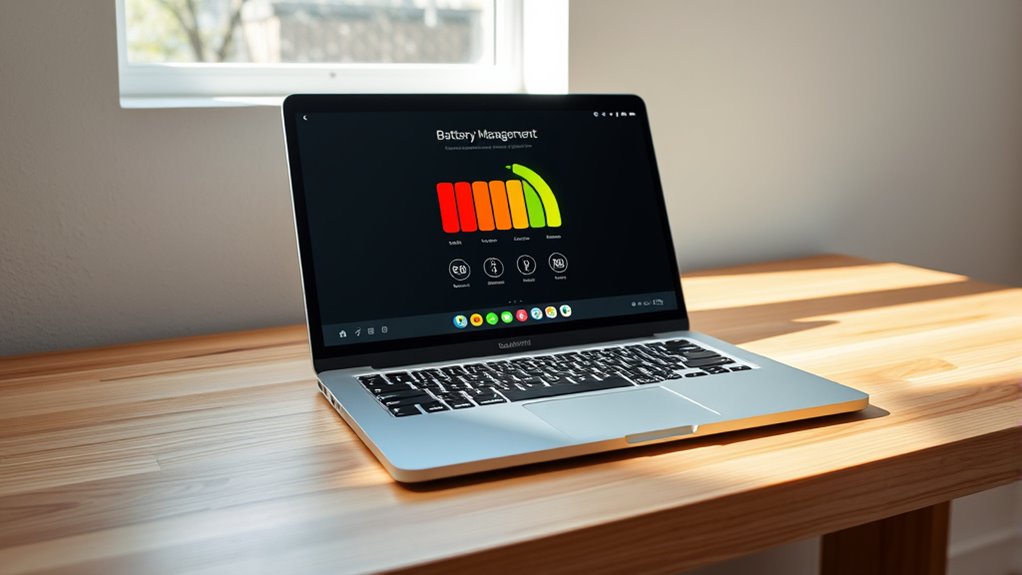

To set charge limits on your laptop and make them automatic, check if your device has built-in tools or firmware options for battery management. By activating these features, you can set a maximum charge level, like 80%, so your battery stops charging there. This helps prevent unnecessary wear and extends your battery’s lifespan. If you keep it at a lower charge, your device’s battery stays healthier longer. Keep exploring to find out how to enable these settings on your specific model.
Key Takeaways
- Use built-in firmware or laptop tools to set automatic charge limits, like 80%, to prevent manual unplugging.
- Activating charge limit features helps maintain battery health by avoiding constant full charges.
- Setting a charge cap reduces chemical stress, prolonging battery lifespan over time.
- Properly configured charge limits minimize battery degradation caused by high-capacity, full-charge states.
- Once set, these features allow you to “set and forget,” ensuring optimal battery management without ongoing adjustments.
Many laptops now come with built-in tools or firmware settings that allow you to set charge limits. These features are designed to help you manage your battery’s health without much effort. When you activate a charge limit, your device will automatically stop charging once it hits a specified percentage—say, 80%. This means you don’t have to remember to unplug it manually, which is especially helpful if you tend to leave your laptop plugged in for long stretches. By setting a charge limit, you reduce the number of full charging cycles your battery experiences, directly contributing to better battery health over time. Additionally, avoiding keeping your laptop plugged in at 100% constantly prevents the battery from staying in a high-stress state. When the battery remains at or near full capacity for an extended period, it can cause chemical changes that degrade its structure. This degradation leads to a loss of capacity, meaning your battery won’t hold a charge as long as it did when new. Using charge limits helps keep your battery in a healthier, more stable condition, which is especially important if you rely heavily on your laptop for work or entertainment. Understanding battery stress factors can help you make informed decisions to extend your device’s lifespan.
Top picks for "charge limit laptop"
Open Amazon search results for this keyword.
As an affiliate, we earn on qualifying purchases.
Frequently Asked Questions
Do All Laptops Support Customizable Charge Limit Settings?
Not all laptops support customizable charge limit settings. You’ll find some models, especially premium and business laptops, offer built-in options to set these limits, helping you maintain battery health and improve charging habits. However, many consumer-grade laptops lack this feature. If preserving your battery’s longevity matters, check your device’s specifications or software options. Setting a charge limit can notably extend your battery’s lifespan and optimize overall performance.
How Often Should I Reset My Laptop’s Charge Limit?
Reset your laptop’s charge limit monthly to maintain ideal battery health. Regular resets support proper battery calibration, preventing inaccurate charge readings. Use power management settings to easily reset the limit, ensuring your battery remains balanced and efficient. Consistent calibration keeps your device performing at its peak, prolonging lifespan and preserving power. So, make a habit of resetting your charge limit each month for maximum performance and longevity.
Are There Risks of Setting Too Low a Charge Limit?
Setting your charge limit too low can impact your battery’s health over time. It may cause calibration issues, making your power management less accurate, which leads to unexpected shutdowns or reduced capacity. To avoid this, regularly calibrate your battery and adjust the limit if needed. Proper calibration and smart power management help sustain battery longevity and ensure your laptop runs smoothly without risking long-term damage.
Can Adjusting Charge Limits Improve Battery Lifespan Significantly?
Adjusting charge limits can considerably improve your battery health and extend its longevity. You might worry about inconvenience, but many laptops let you set these limits easily with built-in features or software. By sticking to ideal charge levels—like 80%—you’re implementing effective longevity strategies that reduce wear and tear on your battery. This simple step helps you get more life out of your device, saving you money and hassle in the long run.
Is Software or Hardware Control More Effective for Charge Management?
Hardware control is generally more effective for managing charge limits and preserving your battery health. It directly influences charging cycles and prevents overcharging, which can degrade your battery faster. Software controls are useful but can be less precise, relying on settings or firmware. By using hardware solutions, you guarantee consistent charge management, reducing unnecessary charging cycles and extending your battery’s lifespan over time.
Conclusion
By setting smart charge limits, you protect your laptop’s longevity and keep it running smoothly. Think of it as taming the tempest of overcharging, turning chaos into calm. With a simple setting, you safeguard your device, saving stress and strengthening your laptop’s lifespan. So, set those limits, stay savvy, and enjoy sustained performance. Keep charging constraints consistent, and your laptop will thank you with long-lasting loyalty and lively productivity.