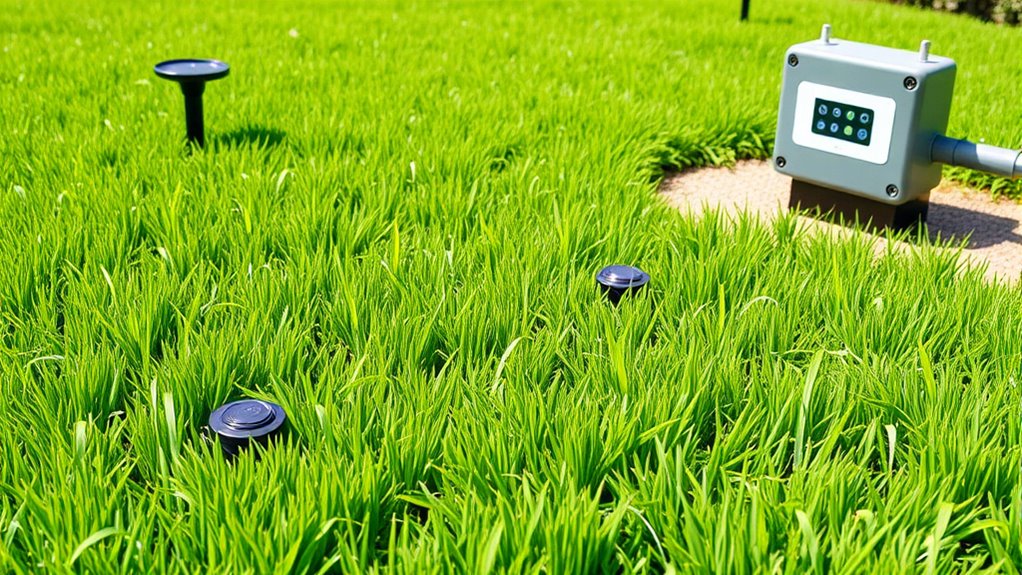

Automating your garden with smart sprinklers and sensors helps you water efficiently, saving water and reducing your bills. Smart rain sensors detect rainfall and automatically shut off sprinklers, while soil moisture sensors ensure your plants get just the right amount of water. Integration with weather data lets you better schedule watering and prevent over- or underwatering. Keep going to discover how these innovative tools can transform your garden into a lush, eco-friendly oasis with minimal effort.
Key Takeaways
- Smart rain sensors automatically shut off sprinklers during rain, preventing overwatering and conserving water.
- Soil moisture sensors provide real-time data to optimize watering schedules and promote healthy plant growth.
- Integration with smartphone apps allows remote control and alerts for moisture levels and weather conditions.
- Incorporating weather forecasts enhances system responsiveness, reducing manual adjustments and improving efficiency.
- Automated systems minimize manual effort, reduce water waste, and create a greener, healthier lawn with less maintenance.
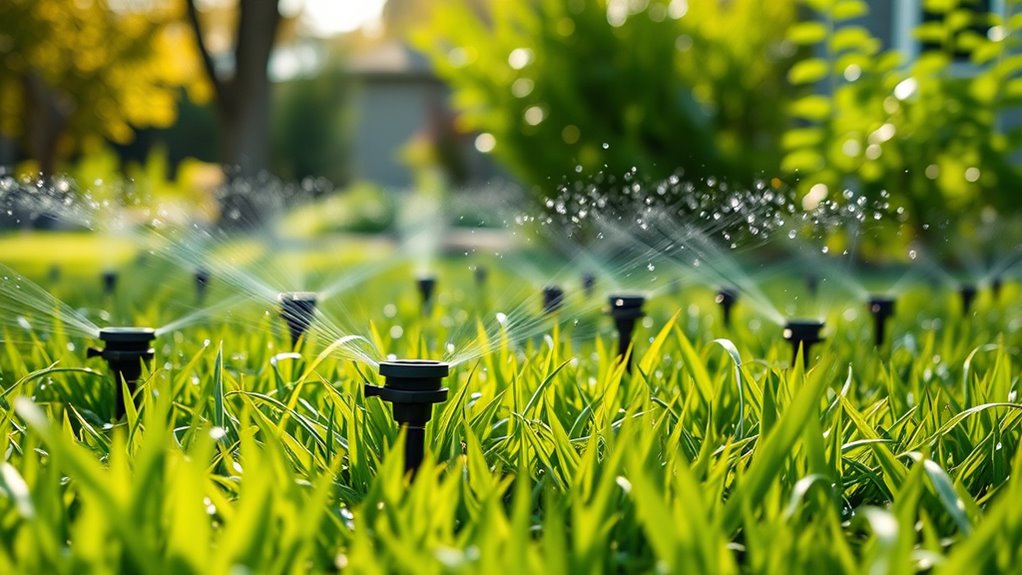
Transforming your garden into a smart, automated space is easier than ever, allowing you to save time and enjoy healthier plants with minimal effort. Modern irrigation systems equipped with rain sensors and soil moisture sensors give you the power to maintain ideal watering schedules without constant supervision. Rain sensors detect when it’s raining and automatically shut off your sprinklers, preventing overwatering and saving water. When it starts to drizzle, these sensors send a signal to pause watering, ensuring your plants don’t get soaked unnecessarily. This not only conserves water but also protects your garden from potential damage caused by excess moisture.
Smart rain sensors automatically stop watering during rain, conserving water and protecting your garden from overwatering.
Soil moisture sensors take automation a step further by measuring the actual water content in your soil. These sensors provide real-time data that helps you determine exactly when your plants need water. Instead of relying on a fixed schedule, your irrigation system adjusts based on the moisture level, ensuring your lawn and garden get just the right amount of water. With soil moisture sensors, you avoid both overwatering, which can lead to root rot and fungal issues, and underwatering, which stresses your plants. This targeted approach promotes healthier growth and reduces water waste.
Integrating rain sensors and soil moisture sensors into your smart sprinkler system is straightforward. Many models are compatible with smartphone apps, allowing you to monitor and control watering remotely. You can receive alerts when the soil moisture drops below a set threshold or when rain is detected, giving you peace of mind even when you’re away. Setting up these sensors is simple: install rain sensors on your roof or gutter system where they can easily detect rainfall, and place soil moisture sensors at various depths in your garden to get accurate readings. Once set up, the sensors communicate with your sprinkler controller to automate watering based on real-time conditions.
Additionally, using weather data integration can further optimize your watering schedule by considering local weather forecasts and environmental conditions. With these intelligent sensors working together, you’ll spend less time manually adjusting your watering schedule. Your garden stays healthy and lush because it receives moisture only when needed, not on a rigid timetable. Plus, you’ll appreciate the environmental benefits of conserving water and reducing runoff. Over time, you’ll notice your plants thriving with minimal effort, thanks to a system that responds dynamically to weather and soil conditions. Embracing rain sensors and soil moisture sensors in your smart irrigation setup transforms gardening from a routine chore into an efficient, eco-friendly process that keeps your lawn vibrant and your water bills lower.
Top picks for "automate garden smart"
Open Amazon search results for this keyword.
As an affiliate, we earn on qualifying purchases.
Frequently Asked Questions
How Do Smart Sprinklers Conserve Water Efficiently?
Smart sprinklers conserve water efficiently by adjusting watering schedules based on real-time data. You’ll find rain sensors prevent unnecessary watering after rainfall, saving water. Additionally, pairing smart sprinklers with drip irrigation ensures targeted watering, reducing waste. These systems analyze weather patterns, soil moisture, and plant needs, delivering just the right amount of water. This smart approach minimizes runoff and evaporation, keeping your lawn healthy while safeguarding water resources effectively.
What Are the Best Sensors for Detecting Soil Moisture?
Did you know that proper sensor calibration can improve soil moisture detection accuracy by up to 30%? The best sensors for detecting soil moisture include capacitive and resistive types, which measure moisture levels precisely. Make sure you calibrate your sensors regularly to maintain accuracy, and choose sensors compatible with your system. Accurate moisture readings help you water only when needed, promoting healthier plants and conserving water effectively.
Can Automation Systems Integrate With Existing Garden Setups?
Yes, automation systems can easily integrate with your existing garden setup. You just need compatible smart sprinklers and sensors that work with your garden design and support your planting schedules. Many systems are user-friendly and connect via apps or hubs, allowing you to automate watering based on weather, soil moisture, or time. This seamless integration helps you maintain a healthy, lush garden without manual adjustments, saving you time and water.
How Secure Are Smart Garden Devices From Hacking?
Like Pandora’s box, smart garden devices come with cybersecurity threats and privacy concerns. They’re generally secure if you update firmware regularly, use strong passwords, and enable two-factor authentication. Still, hackers could exploit vulnerabilities, so stay vigilant. Protect your garden’s smart tech by keeping software current, avoiding default passwords, and monitoring device activity. With these precautions, you can enjoy a greener lawn without compromising your privacy or security.
What Maintenance Is Required for Smart Sprinkler Systems?
You’ll need to perform manual calibration periodically to guarantee your smart sprinkler system waters accurately. Check for clogs or leaks and clean the nozzles as needed. Regularly update the software to keep the system secure and functioning smoothly. Also, integrate weather data to optimize watering schedules, reducing waste. By maintaining these aspects, your system stays efficient, reliable, and your lawn stays lush and healthy.
Conclusion
By embracing smart sprinklers and sensors, you turn your garden into a thriving oasis with the ease of a gentle breeze. Think of your lawn as a living mosaic, each drop of water like a carefully placed brushstroke that brings vibrant life to every corner. Automation makes watering effortless, ensuring your garden stays lush and healthy—without you having to lift a finger. It’s your personal symphony of technology and nature, playing in perfect harmony.