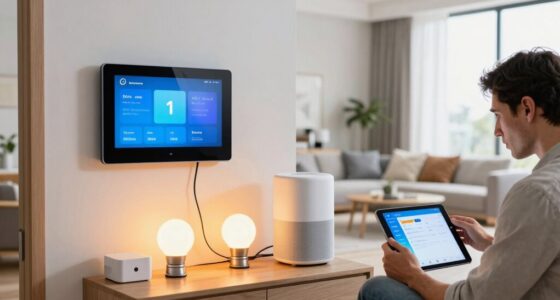
To build a smart home security system under $200, start with budget-friendly cameras featuring HD video, night vision, and motion detection that fit your needs. Add a simple smart lock or sensor to secure entry points without breaking the bank. Use a free app and a compatible hub or Wi-Fi network to control everything easily. Regular maintenance and secure network practices protect your system, and if you keep exploring, you’ll discover more tips to enhance your setup.
Key Takeaways
- Select affordable HD security cameras with night vision and motion detection that are compatible with free monitoring apps.
- Use a low-cost central hub or Wi-Fi router to connect devices and manage alerts from a single app.
- Implement strong passwords, enable two-factor authentication, and segment your Wi-Fi network for security.
- Regularly update firmware, perform security audits, and test the system to ensure reliability.
- Expand gradually with compatible devices, prioritizing essential features to stay within the $200 budget.
Selecting Affordable Cameras and Monitoring Options
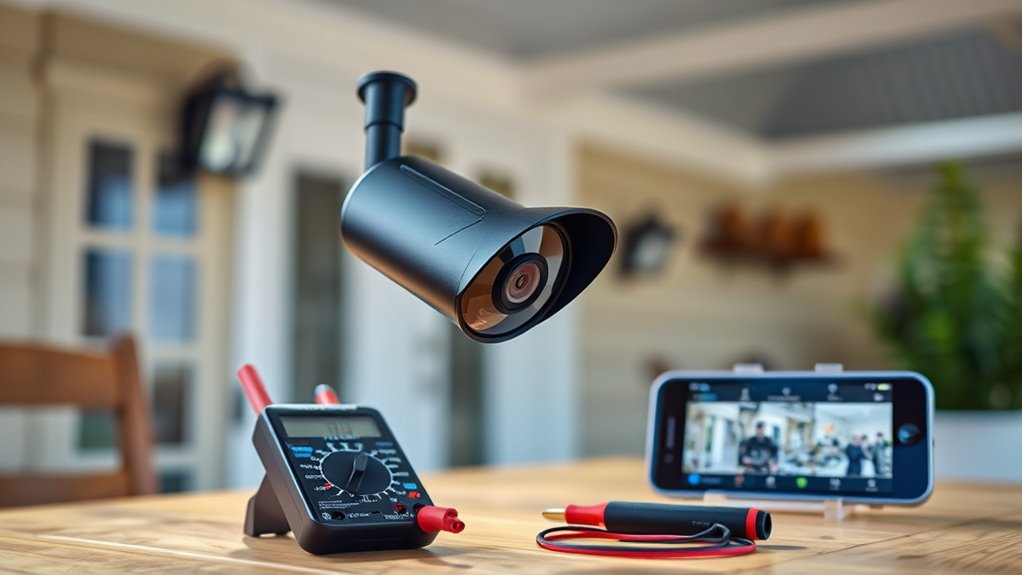
To build an effective smart home security system on a budget, you need to choose affordable cameras and monitoring options that meet your needs without overspending. Focus on security camera features like HD video quality, night vision, and motion detection to ensure reliable surveillance. Many budget-friendly cameras include these features, giving you good value. When selecting monitoring service plans, look for options that offer basic coverage without high monthly fees. Some cameras work with free or low-cost apps, reducing ongoing costs. By balancing essential security camera features with affordable monitoring plans, you can create an effective system that keeps your home protected without breaking the bank. Prioritize cameras with the features you need most, and choose plans that fit your budget. Additionally, consider system compatibility with existing smart home devices to enhance convenience and integration. Understanding the security zone info can help you determine the most effective placement and coverage areas for your cameras. Incorporating cameras with high refresh rates can also improve real-time monitoring, especially if you want smooth video feeds. Moreover, selecting cameras with reliable connectivity ensures consistent performance and reduces the risk of blind spots. Being aware of security vulnerabilities can help you implement necessary safeguards to prevent unauthorized access.
Choosing Smart Locks and Entry Sensors
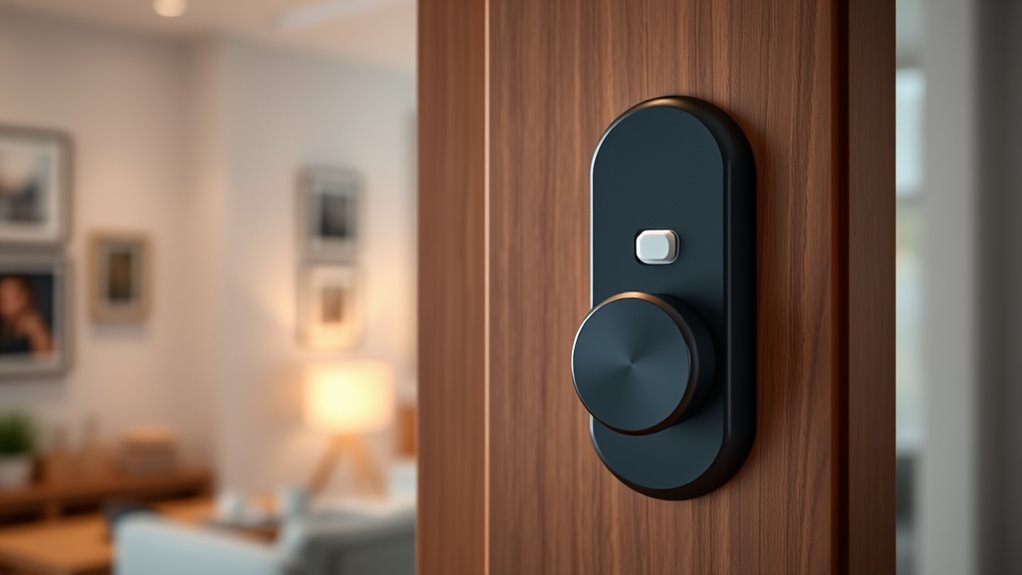
When selecting smart locks and entry sensors for your budget-friendly security system, it’s important to focus on features that enhance convenience and safety without overspending. Look for accessory options like keypads, biometric access, or remote opening to suit your needs. The user interface should be intuitive, making it easy to control and monitor your devices. Consider compatibility with your existing smart home setup to avoid extra costs. Additionally, understanding smart home terminology can help you better evaluate device capabilities and ensure proper integration. Being aware of security standards can also help in choosing reliable and secure devices that protect your home effectively. Familiarity with encryption protocols can further ensure your data privacy and device security.
Integrating a Central Hub or Control System
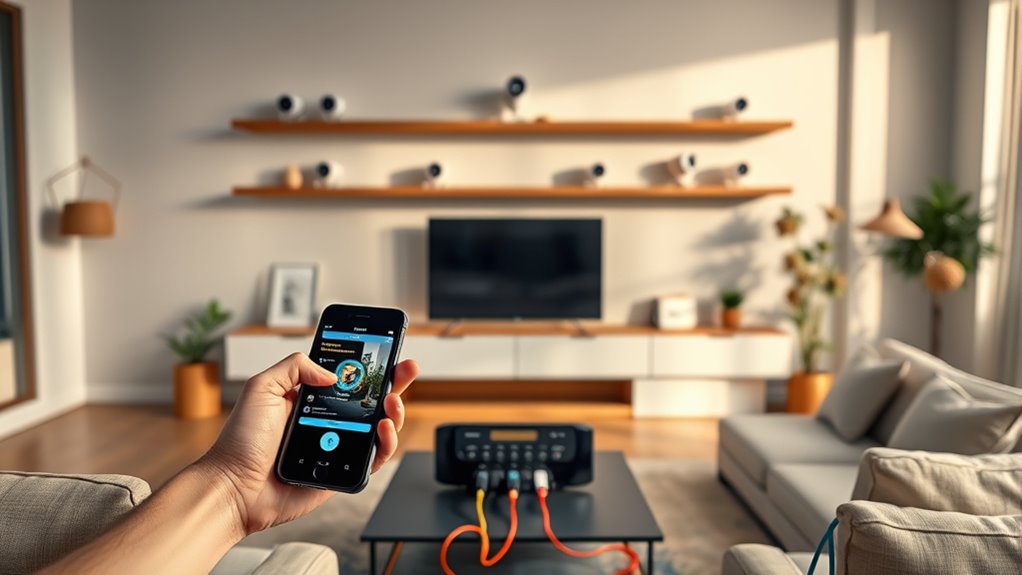
Integrating a central hub or control system is essential for streamlining your smart home security setup. The central hub acts as the brain, connecting all your devices and ensuring they work together seamlessly. With a control system, you can monitor your sensors, locks, and cameras from a single app or interface, simplifying management. Choose a compatible hub that supports the devices you’ve selected, and set it up according to the manufacturer’s instructions. This integration helps you receive real-time alerts and control your system remotely, enhancing security and convenience. A well-chosen control system keeps everything organized, reducing the need for multiple apps or devices. Additionally, understanding safe wiring practices ensures your system remains reliable and secure. Proper power management is also crucial to prevent outages and ensure continuous security coverage. Ensuring device compatibility from the start can save you time and frustration later, and it’s important to verify that your devices work well with your chosen hub. Incorporating interoperable devices can further enhance your system’s flexibility and expandability. Overall, linking your devices through a central hub makes your smart home security more efficient and user-friendly. Additionally, selecting a system with scalable options allows for future upgrades as your security needs evolve.
Setting Up Motion Detection and Alerts
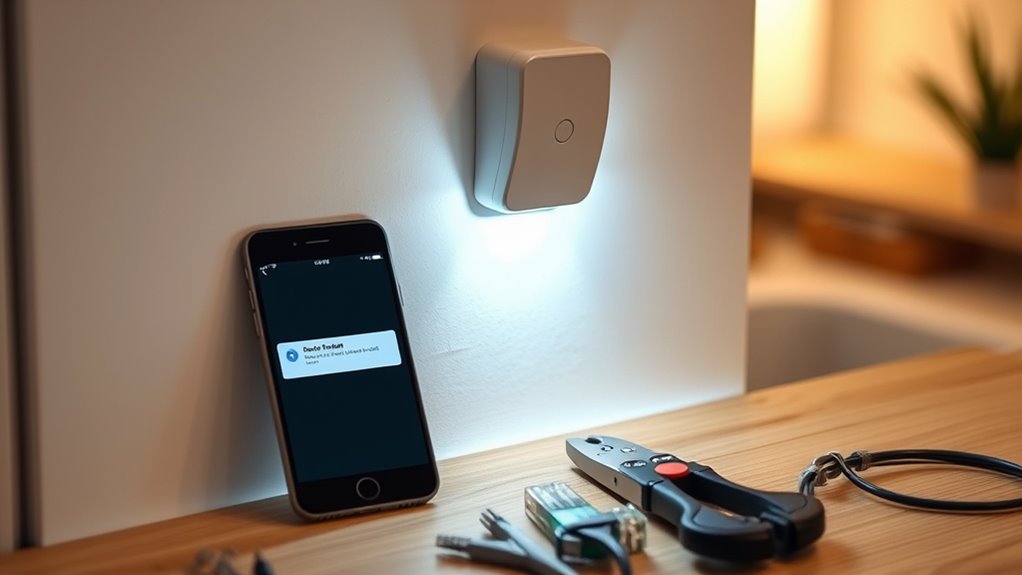
Setting up motion detection and alerts is a crucial step in securing your smart home, as it allows you to be immediately notified of any movement in sensitive areas. Use motion sensors connected to your hub to trigger alerts and lighting automation, illuminating spaces when motion is detected. For seamless control, integrate voice control options like Alexa or Google Assistant, enabling you to activate or adjust settings hands-free. Incorporating safe installation practices ensures your system functions reliably and reduces false alarms. Additionally, regularly testing your system helps maintain reliable performance and ensures alerts are accurate. To optimize detection accuracy, consider adjusting sensor sensitivity settings and placement for best coverage. Understanding the importance of privacy and consent can help you manage data sharing and notification preferences effectively. Properly configuring your system also involves understanding how to manage false alarms, which can be minimized through careful sensor placement and sensitivity adjustments.
Securing Your Network and Devices
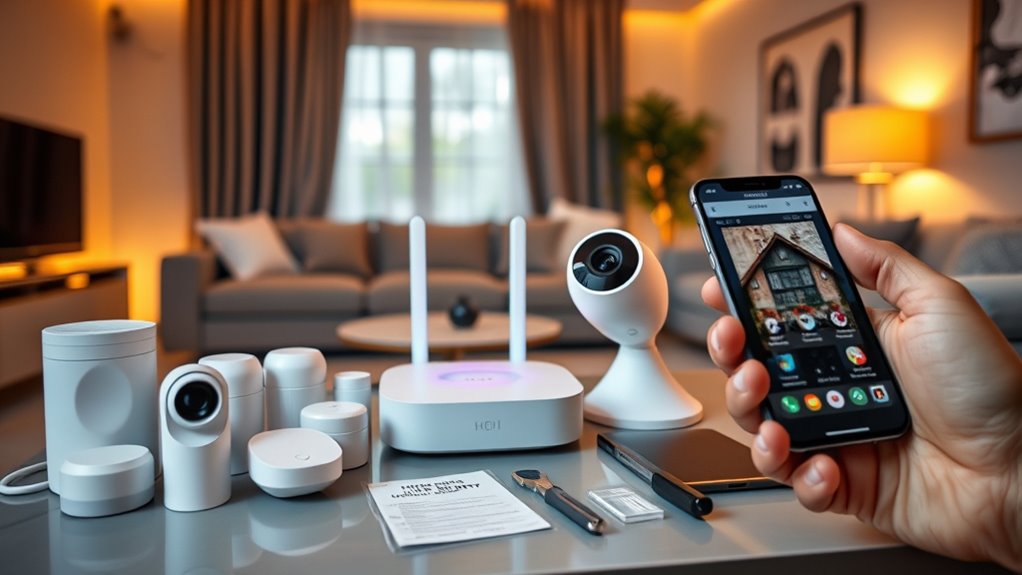
Are you taking enough steps to secure your network and devices? Protecting your smart home starts with strong wireless encryption. Make certain your Wi-Fi uses WPA3 or WPA2 encryption to prevent unauthorized access. Change default passwords on your router and devices, making them harder to hack. Check device compatibility before adding new gadgets to avoid security gaps. Regularly update firmware and software for all smart devices to patch vulnerabilities. Use a separate network or guest Wi-Fi for your smart home gadgets, keeping them isolated from your main devices. This minimizes potential breaches. Implementing proper network segmentation helps contain security threats and limits access to sensitive data. Additionally, employing multi-factor authentication adds an extra layer of security to your accounts. Remember, a secure network is the foundation of a reliable smart home system. Taking these steps helps safeguard your privacy and prevents intruders from exploiting vulnerabilities. Incorporating regular security audits and staying informed about vetted – wave and wind security practices can further identify and mitigate potential weaknesses.
Tips for Maintaining and Expanding Your System
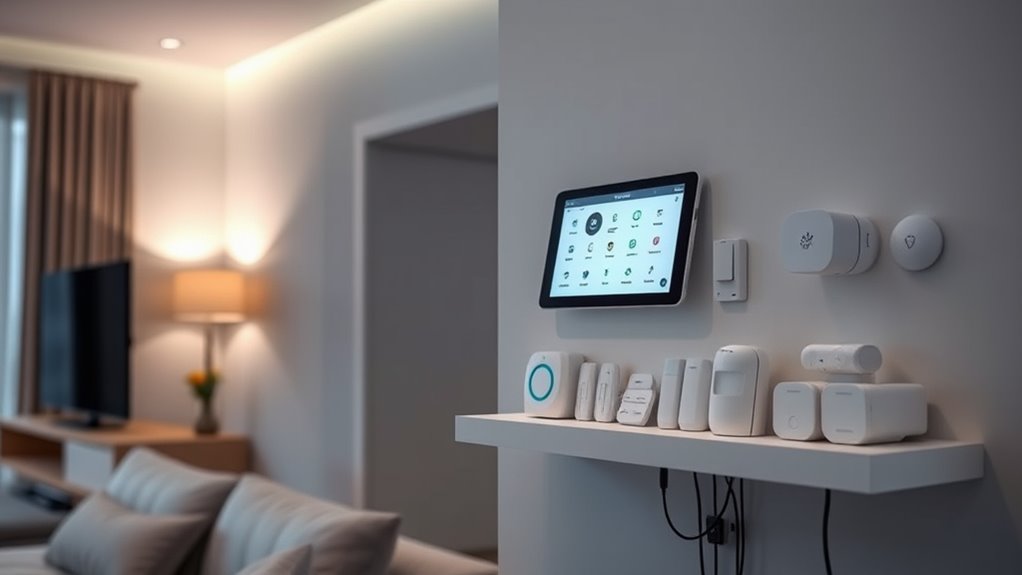
Maintaining and expanding your smart home system requires ongoing attention to guarantee everything runs smoothly and stays secure. To keep it effective, consider these tips:
Ongoing maintenance and thoughtful upgrades keep your smart home secure, reliable, and adaptable over time.
- Regularly update your device firmware and apps to patch security vulnerabilities.
- Perform DIY customization by adding new sensors or cameras as your needs evolve.
- Plan for future upgrades, like integrating voice assistants or smart locks, to enhance functionality.
- Periodically test your system to ensure all components communicate properly and respond correctly.
- Keep an eye on security best practices and implement them to protect your system from potential threats.
- Educate yourself about cybersecurity risks associated with smart devices to stay ahead of emerging threats.
- Stay informed about connected device developments to ensure your system remains compatible with new technology.
- Consider device interoperability standards to facilitate smoother integration of new components and avoid compatibility issues.
Staying proactive helps prevent issues and keeps your system reliable. Expanding your setup gradually allows you to customize it to your lifestyle while maintaining control over costs. Consistent maintenance and thoughtful upgrades ensure your smart home remains secure and adaptable over time.
Frequently Asked Questions
Can I Integrate Existing Smart Devices Into a New System?
Yes, you can integrate existing smart devices into a new system. Just check device compatibility before starting; most modern devices work with popular platforms like Alexa or Google Assistant. To guarantee smooth system expansion, choose a hub or ecosystem that supports your current devices. This way, you can enhance your security setup without replacing everything, making your smart home more efficient and cost-effective.
What Are the Best Battery Life Options for Budget Cameras?
Imagine capturing every moment without worrying about constant recharging. For budget cameras, the best options for wireless power and battery longevity are those with large-capacity rechargeable batteries or low-power sensors. Look for models with sleep modes and energy-efficient components, which extend battery life dramatically. You’ll stay secure longer, knowing your camera keeps watch without frequent replacements—adding peace of mind and saving you time and money.
How Do I Ensure My System Is Privacy-Proof?
To keep your system privacy-proof, you should use strong encryption protocols like WPA3 and end-to-end encryption for data transmission. Regularly update your firmware and change default passwords to prevent unauthorized access. Control user access by setting up individual accounts with unique passwords, and disable remote access when unnecessary. By actively managing these security measures, you guarantee your smart home remains private and protected from potential threats.
Are DIY Smart Security Systems as Reliable as Professional Ones?
DIY smart security systems can be reliable, but security myths often suggest they’re as effective as professional ones, which isn’t always true. While DIY options are budget-friendly and customizable, professional systems typically offer more advanced features and monitoring. You need to weigh convenience and cost against security needs. If you’re tech-savvy and prefer control, DIY may suffice, but for exhaustive protection, professional solutions often provide greater reliability.
What Are Common Troubleshooting Steps for Connectivity Issues?
Did you know that nearly 80% of connectivity issues are resolved with simple troubleshooting? When facing network troubles, start by checking your Wi-Fi signal strength and restarting your router. Use network troubleshooting tools to identify issues, and consider signal enhancement options like repositioning your device or adding a Wi-Fi extender. These quick steps can often restore your smart home security system’s connection without needing professional help.
Conclusion
Building a smart home security system on a budget is like creating your own fortress of peace, where every device works together to safeguard your sanctuary. With affordable cameras, smart locks, and a central hub, you can craft a vigilant guardian that’s both effective and budget-friendly. Remember, your home’s security is your story—shape it wisely, and turn your house into a fortress of comfort and confidence, all without breaking the bank.