To stop your smart lights from going offline, make certain your Wi-Fi signal is strong and stable by optimizing your router placement, minimizing interference, and updating firmware regularly. Position the lights where they have a clear line of sight to your router, and use wired connections when possible. Keep your networks secure and power sources reliable to prevent disruptions. If you follow these steps, you’ll improve stability—continue exploring to learn more ways to keep your smart lights connected.

Get the latest gadgets delivered free with Prime
- Fast, free delivery on millions of items
- Prime Video, Amazon Music and more included
- Member-only deals all year
Key Takeaways
- Ensure your Wi-Fi router is centrally located and free from interference sources like electronics or thick walls.
- Regularly update the firmware of your smart lights and network hardware for stability.
- Use wired Ethernet connections for critical smart lights to maintain a reliable connection.
- Limit the number of connected devices to reduce network congestion and improve stability.
- Implement power backups like UPS and check wiring to prevent power outages and offline issues.
Products Worth Considering

DJI Osmo Mobile 8 Gimbal with Mic Mini Transmitter, Infinity Black

Bose SoundLink Flex Bluetooth Speaker (2nd Gen), Portable Waterproof Speaker, Black

Amazon Kindle Paperwhite Signature Edition (12th Generation, 2024), 32 GB, Metallic Black
As an affiliate, we earn on qualifying purchases.
Ensuring Strong Wi-Fi Signal and Network Stability
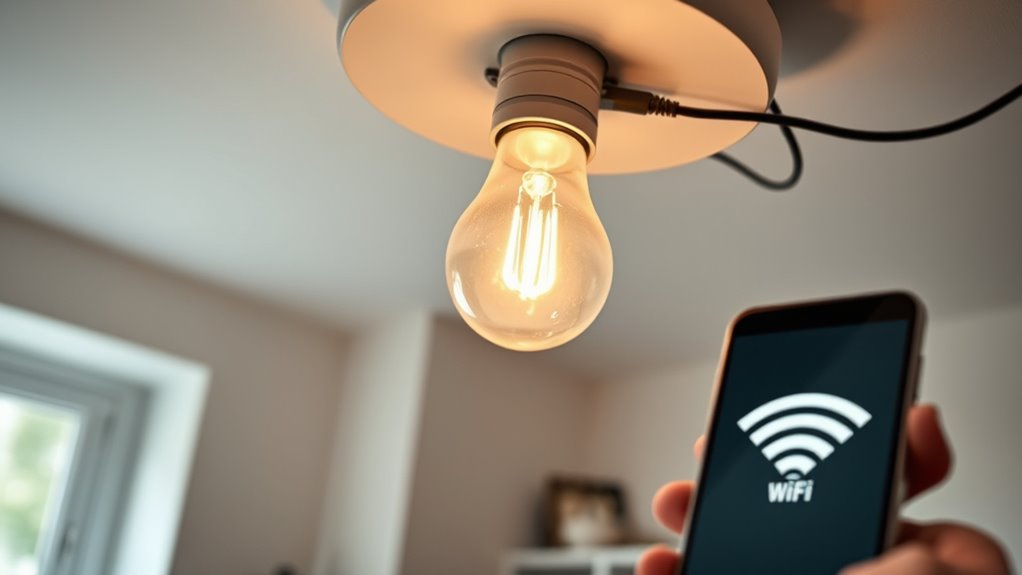
A strong Wi-Fi signal is essential for keeping your smart lights online and functioning properly. To achieve this, consider setting up a mesh networking system. Mesh networks distribute Wi-Fi evenly across your home, eliminating dead zones and providing a stable connection for all devices. Signal repeaters can also help extend your Wi-Fi coverage, making sure your smart lights stay connected even in far-reaching areas. Position repeaters strategically between your router and smart lights to boost the signal strength. Avoid placing your router in enclosed spaces or near interference sources like microwaves or thick walls. Additionally, understanding the contrast ratio can help you optimize your home network’s performance for streaming and device responsiveness. Proper placement of networking equipment, such as Signal repeaters, further enhances overall network stability. By improving your network’s stability with mesh networking and signal repeaters, you guarantee your smart lights remain responsive and online, reducing the chances of them going offline unexpectedly.
Proper Placement and Positioning of Smart Lights
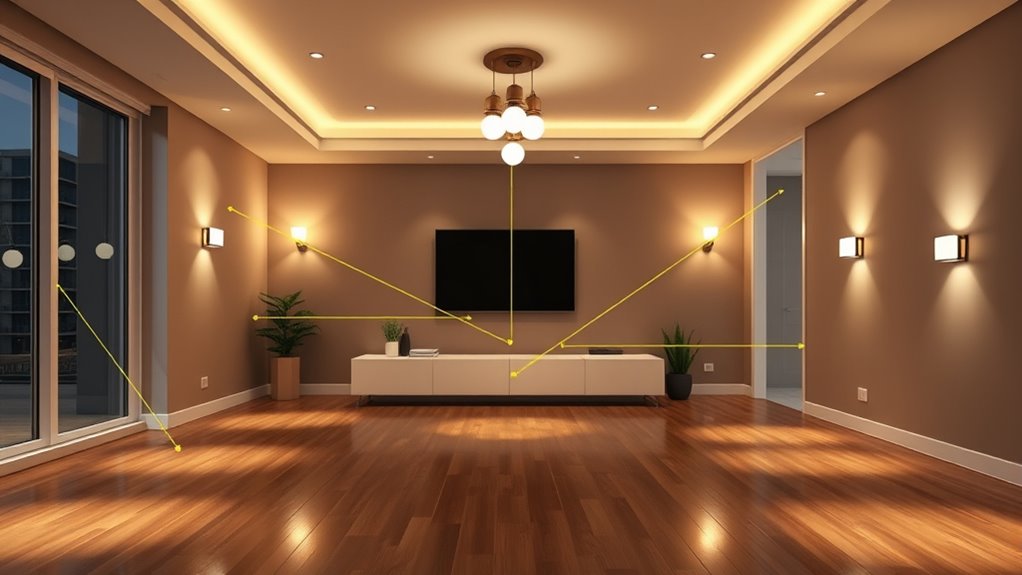
To keep your smart lights connected, you need to position them properly. Place lights where they get enough natural or artificial light and are easy to access. Make sure to avoid obstacles like thick walls or furniture that can block signals.
Optimal Light Placement
Proper placement of your smart lights is crucial to guarantee they function reliably and provide even, effective illumination. To achieve this, start with manual calibration, adjusting each light’s position for ideal coverage and performance. Consider aesthetic considerations to ensure the lights enhance your space without creating glare or shadows. Place lights where they can be easily accessed for adjustments and maintenance, avoiding areas prone to obstruction or moisture. Proper positioning helps prevent connectivity issues caused by poor signal strength or interference. Keep in mind that strategic placement can reduce the need for frequent recalibration and troubleshooting. Additionally, understanding signal interference and how it affects smart device connectivity can help you choose optimal locations for your lights. Conducting a signal strength test can further aid in identifying the best spots for placement, ensuring consistent performance. Utilizing proper wiring techniques can also improve signal stability and reduce potential disruptions. Being aware of wireless network range and ensuring your lights are within optimal distance from your router can significantly enhance reliability. Considering interference sources, such as other wireless devices or thick walls, can also help you select the most effective placement. By carefully planning your light setup, you’ll improve both the reliability of your smart lighting system and the overall ambiance of your space.
Avoid Signal Obstructions
Strategic placement of your smart lights helps prevent signal obstructions that can disrupt connectivity. To guarantee reliable device placement, position lights where they have a clear line of sight to your Wi-Fi router or hub. Avoid placing lights behind large objects, thick walls, or furniture that can block signals. Proper device placement reduces interference and enhances obstruction prevention. Keep lights elevated and spaced apart to maximize coverage. Consider the following:
| Obstruction Type | Placement Tip |
|---|---|
| Thick walls or furniture | Place lights in open areas |
| Large appliances | Keep lights away from bulky objects |
| Metal surfaces | Avoid mounting near metal fixtures |
| Other electronics | Maintain distance from other devices |
Additionally, understanding the thermal behavior of your smart lights can help you choose optimal placement to prevent overheating and signal issues. Proper placement can also minimize signal interference, ensuring your smart lighting system functions smoothly and consistently. Being aware of wireless signals can further assist in avoiding common connectivity problems. Moreover, considering the environmental conditions in your space can influence signal strength and device longevity. Recognizing the signal propagation characteristics of your environment allows for more strategic placement, leading to more reliable operation.
Regular Firmware and App Updates
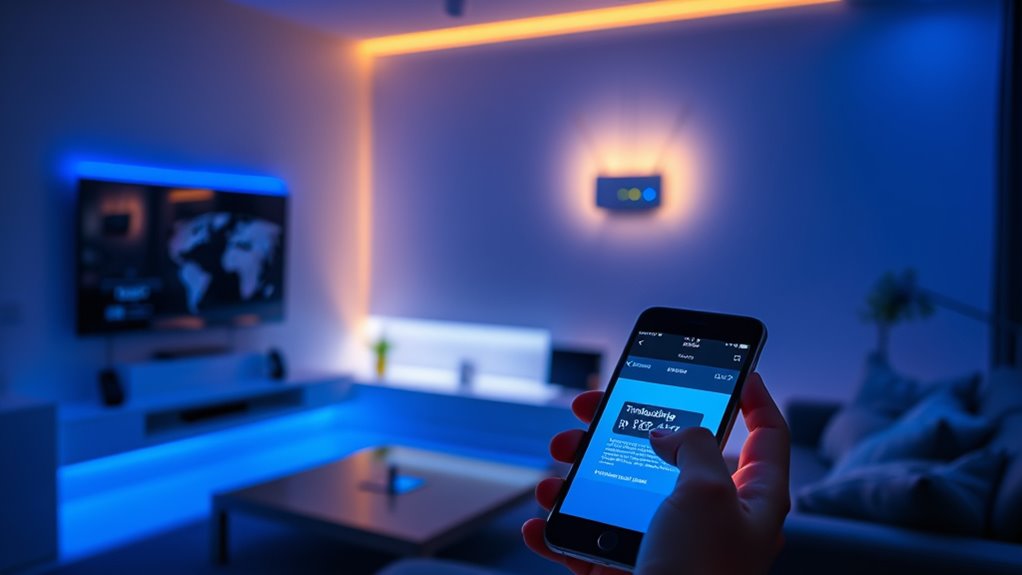
Keeping your smart lights updated with the latest firmware and app versions is essential for preventing offline issues. Firmware maintenance guarantees your lights run smoothly and securely, reducing glitches caused by outdated software. Regular app updates improve app synchronization, making control more reliable and responsive. To stay current, check for updates weekly or enable automatic updates if available. This proactive approach aligns with best practices in deep-sky imaging to ensure optimal performance and reliability. Minimize the risk of bugs and compatibility problems. Additionally, software compatibility plays a crucial role in maintaining stable connectivity and avoiding offline issues. Ensuring your device drivers and network hardware are also up-to-date can further enhance connectivity stability and prevent disruptions. Regular updates support device security, protecting your smart lighting system from potential vulnerabilities. Moreover, understanding your privacy policy helps you manage data sharing and security preferences effectively.
Managing Interference and Reducing Signal Congestion
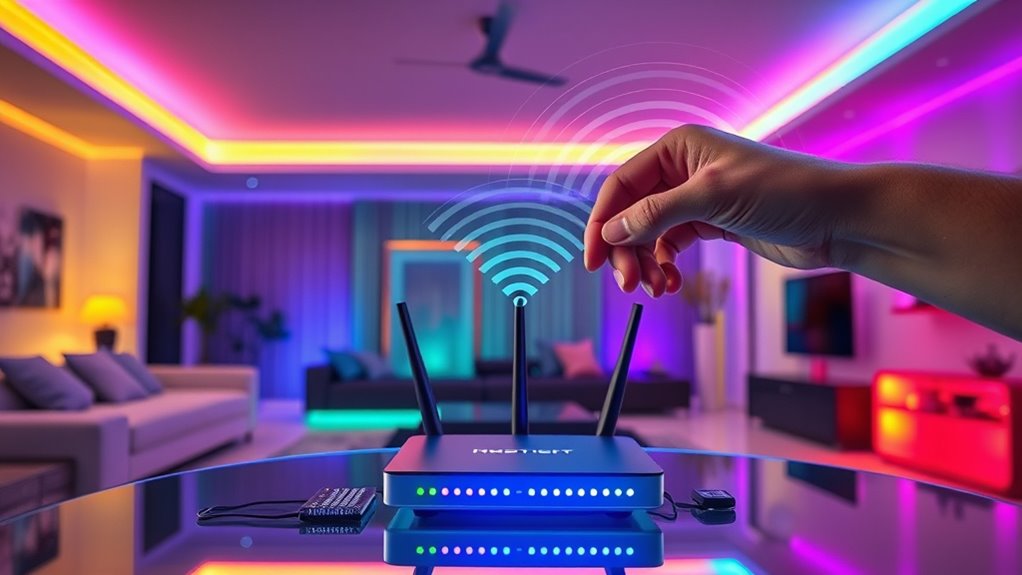
Even with your devices running the latest firmware and apps, interference from other wireless signals can still cause your smart lights to go offline. Frequency interference from nearby Wi-Fi networks, Bluetooth devices, or cordless phones can disrupt the communication between your smart lights and the hub. Signal congestion occurs when multiple devices compete for the same wireless spectrum, leading to dropped connections. To manage this, try changing the Wi-Fi channel on your router to a less crowded one, ideally using a 5GHz band if available. Keep your smart lights away from other electronic devices that emit wireless signals. Reducing congestion and avoiding overlapping frequencies help guarantee a stable connection, so your lights stay online and responsive. Proper management minimizes interruptions caused by signal interference. Additionally, electric dirt bikes are a great example of how efficient wireless and electric systems can be used for outdoor recreation and energy efficiency. Understanding wireless spectrum management can further improve device reliability and reduce connectivity issues. Being aware of network interference sources can help you identify and eliminate potential disruptions more effectively. Implementing frequency coordination strategies can also enhance overall wireless performance and stability. Staying informed about interference mitigation techniques can further optimize your smart device environment.
Setting Up Reliable Power Sources and Connections
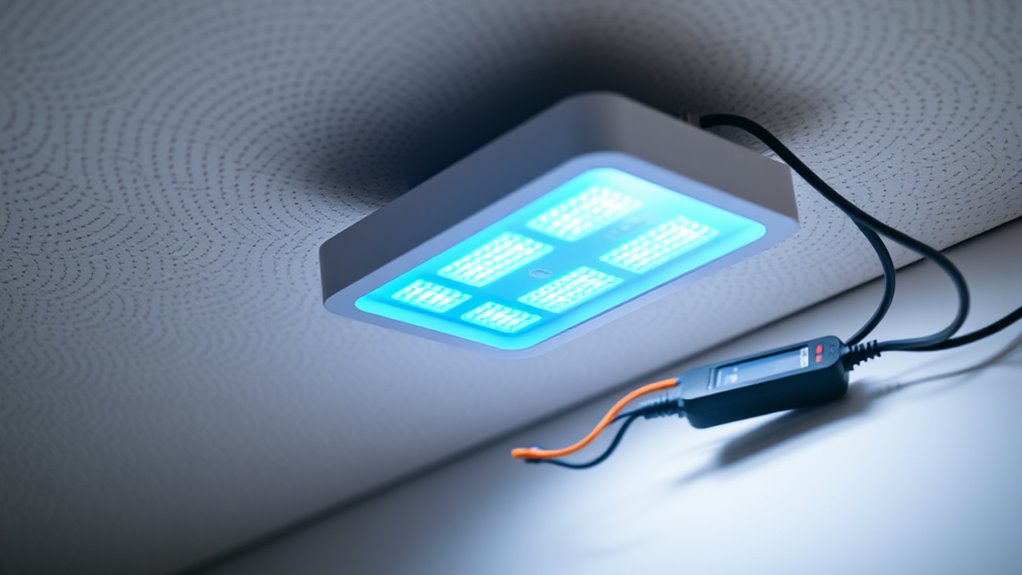
A stable power supply is essential for your smart lights to function reliably. To guarantee consistent performance, focus on maintaining power source stability and connection redundancy. Start by using a dedicated outlet away from other devices that may cause fluctuations. Check that your power strips and extension cords are high quality and not overloaded. Consider installing uninterruptible power supplies (UPS) for critical lights to prevent outages during power dips. Also, implement connection redundancy by setting up multiple control pathways or backup hubs. This way, if one connection fails, your smart lights can seamlessly switch to an alternative. Keep your wiring organized and secure, avoiding loose or damaged cables. Regularly inspect your setup to prevent interruptions and maintain reliable operation.
Implementing Effective Device and Network Security Measures

To prevent your smart lights from going offline due to security breaches, you must implement strong device and network security measures. Start by enabling robust encryption protocols to protect data transmission. Use user authentication to restrict access to authorized users only. Regularly update device firmware to patch vulnerabilities. Change default passwords immediately and choose complex, unique ones. Network segmentation isolates smart devices from your primary network, reducing risk. Use firewalls to monitor traffic. Ensure your Wi-Fi uses WPA3 encryption for added security.
| Security Measure | Description | Benefit |
|---|---|---|
| Encryption Protocols | Secure data in transit | Prevents eavesdropping and tampering |
| User Authentication | Verify user identity | Stops unauthorized access |
| Firmware Updates | Keep devices current | Fixes security flaws |
Frequently Asked Questions
Can Smart Lights Work Without Wi-Fi or Internet Access?
Smart lights can work without Wi-Fi or internet access if they have offline functionality and Bluetooth connectivity. You can control them directly through Bluetooth on your smartphone or a compatible remote, bypassing the need for an internet connection. This setup is handy when your Wi-Fi is down, allowing you to still turn lights on or off and adjust settings locally. Just make certain your smart lights are Bluetooth-enabled and support offline operation.
What Should I Do if My Smart Light Keeps Disconnecting Randomly?
If your smart light keeps disconnecting randomly, start with smart light troubleshooting by checking your Wi-Fi signal and ensuring your network stability. Move your router closer to the smart light or reduce interference from other devices. Restart your router and smart light, and update their firmware if needed. These steps help maintain a reliable connection, preventing disconnections and ensuring your smart lighting system works smoothly.
Are There Specific Routers Better Suited for Smart Light Connectivity?
Think of your router as the conductor of your smart home orchestra. For better smart light connectivity, choose routers with strong signal strength and compatibility with your devices. Dual-band or mesh routers often perform better, ensuring your lights stay in harmony. Avoid outdated or low-quality routers, as they can cause dropouts. Upgrading to a router designed for smart home devices keeps your lights connected, brightening your space without interruptions.
How Do I Reset My Smart Lights to Fix Connectivity Issues?
To fix connectivity issues, you should perform a manual reset by turning your smart lights off and on, or pressing the reset button if available. If problems persist, check for a firmware update through your app, as this can improve stability. Updating firmware and resetting your lights often resolve offline issues, helping them connect smoothly to your network again.
Can Power Outages Cause My Smart Lights to Go Offline?
Power outages can cause your smart lights to go offline, especially if a power surge occurs when electricity is restored. This surge might disrupt the firmware or reset your device’s settings. To fix this, reset your smart lights and check for firmware updates once power is back on. Keeping your system updated helps prevent future disconnects, ensuring your lights stay connected even after power disruptions.
Conclusion
To keep your smart lights online, prioritize a strong Wi-Fi signal and update your devices regularly. For instance, imagine a homeowner who relocated their router closer to their lights, markedly reducing disconnections. By managing interference and securing your network, you guarantee consistent performance. Don’t forget to check power sources and position lights properly. Taking these steps will help you enjoy seamless smart lighting, just like many users who’ve experienced fewer offline issues after making these simple adjustments.