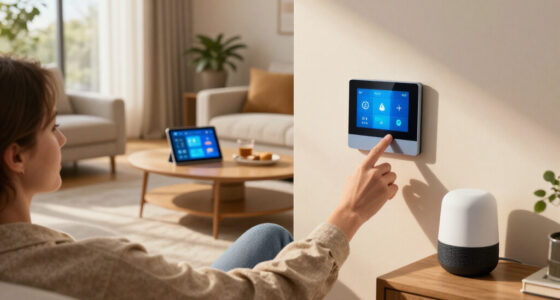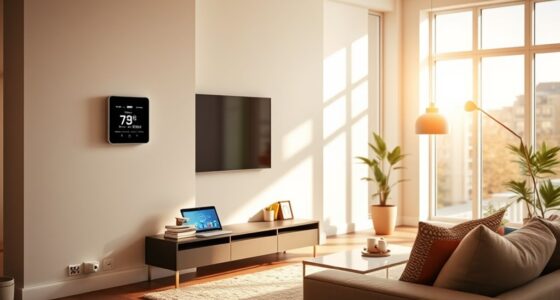
Choosing between DIY and professional smart home setup depends on your skills, budget, and security priorities. DIY can save money upfront but risks vulnerabilities and future expenses if not done right. Professional installation guarantees a seamless, secure system but costs more initially. If you’re comfortable with technology and want control, DIY might suit you. For peace of mind and long-term security, investing in pros could be smarter. Explore further to find the best fit for your home.

Get the latest gadgets delivered free with Prime
- Fast, free delivery on millions of items
- Prime Video, Amazon Music and more included
- Member-only deals all year
Key Takeaways
- Professional setup offers enhanced security and reliability, reducing vulnerabilities compared to DIY installations.
- DIY may save initial costs but risks errors and future expenses if not executed properly.
- Consider your technical skill level and complexity of the smart home system when choosing between DIY and professional.
- Ongoing support and maintenance are often more accessible with professional installation.
- Balance your budget, security priorities, and expertise to determine the best approach for your smart home setup.
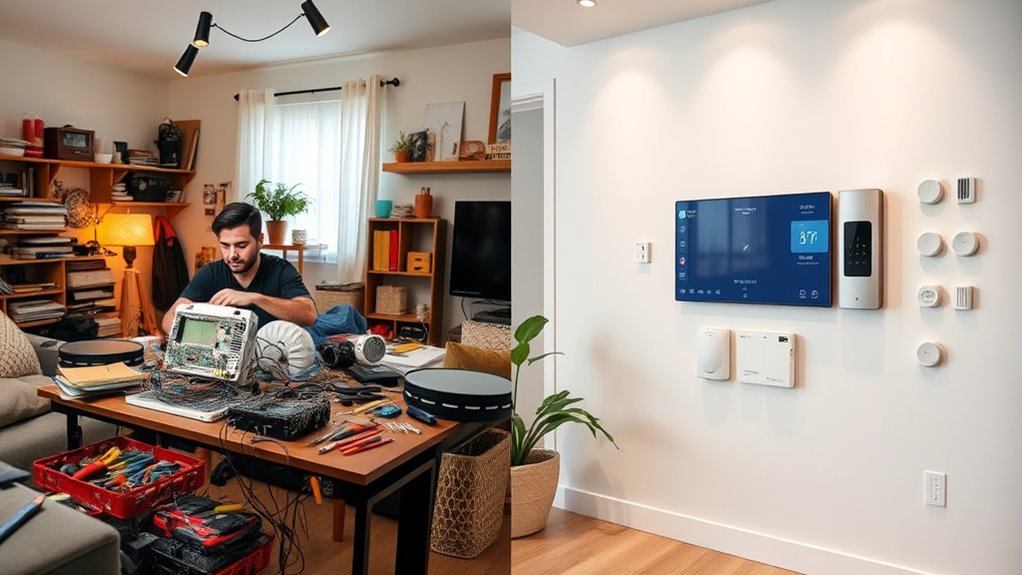
When deciding whether to tackle a project yourself or hire a professional, it’s important to weigh the benefits and drawbacks of each approach. Setting up a smart home can be enticing because it promises convenience and modern comfort, but understanding the implications of each option helps you make the right choice. If you’re leaning toward a DIY setup, you might save money initially, but you should also consider the potential security concerns. A self-installed system might have vulnerabilities if not configured correctly, leaving your home exposed. On the other hand, professionals bring expertise that guarantees all components work seamlessly and securely, reducing the likelihood of gaps that could be exploited.
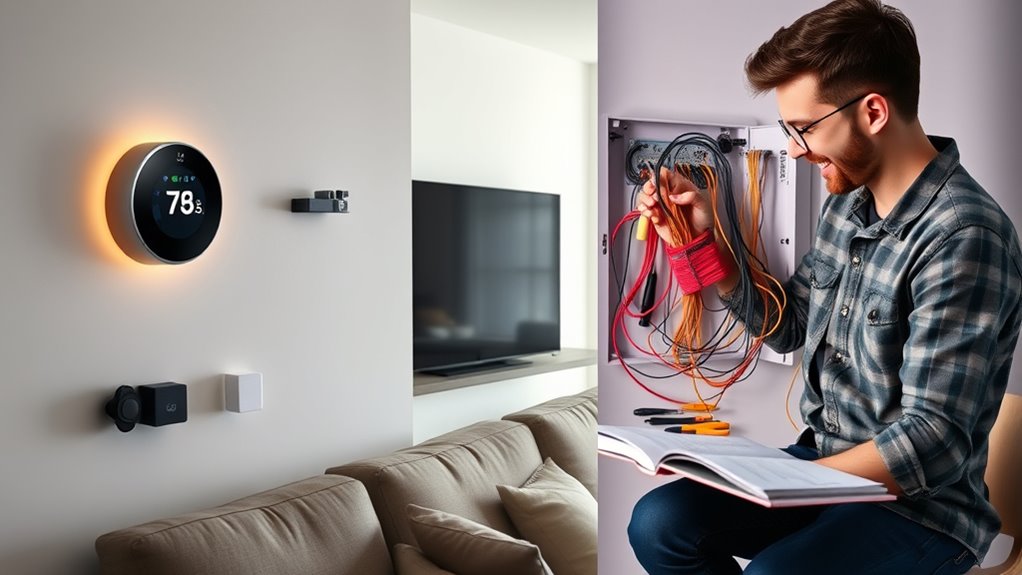
Weigh the pros and cons of DIY versus professional smart home setup to ensure security and reliability.
Cost comparison plays a significant role here. Doing it yourself can seem more affordable because you avoid labor fees, but often, you’ll need to purchase tools, equipment, or additional components you might not initially consider. Plus, if you make mistakes during installation, fixing them later can be costly and time-consuming. Professional installation might have higher upfront costs, but it often results in a more reliable, secure system right from the start. You’re paying for experience, certification, and peace of mind, knowing your setup is optimized for both performance and security.
Another aspect to think about is your technical skill level. If you’re comfortable with technology and confident in your ability to follow detailed instructions, a DIY approach could work well. However, if you’re unfamiliar with network configurations, device integration, or security protocols, a professional can handle those complexities for you. This not only saves you frustration but also ensures that your smart home operates smoothly and securely. Additionally, understanding home network security is crucial to prevent vulnerabilities that could be exploited by malicious actors.
Furthermore, consider the long-term maintenance of your system. DIY setups may require ongoing troubleshooting and updates, which could be challenging if you’re not tech-savvy. Professionals often offer ongoing support and can troubleshoot issues faster, maintaining your system’s security over time. This ongoing support can be vital, especially if you’re concerned about security breaches or system failures.
Ultimately, your decision hinges on your budget, technical confidence, and security priorities. While DIY might seem cost-effective initially, it can come with hidden risks and future expenses. Hiring a professional might cost more upfront but could save you trouble and expense down the line, especially when it comes to security concerns and ensuring your smart home functions reliably. Weigh these factors carefully, and choose the approach that aligns best with your needs, skills, and safety expectations.
smart home security system professional installation
As an affiliate, we earn on qualifying purchases.
As an affiliate, we earn on qualifying purchases.
Frequently Asked Questions
What Are the Cost Differences Between DIY and Professional Smart Home Setups?
The cost comparison between DIY and professional smart home setups varies widely. DIY options usually cost less upfront because you buy components individually and handle installation yourself, making it ideal for budget planning. Professional setups tend to be pricier due to labor and expertise, but they can save you money long-term with optimized integration. Consider your budget, technical skills, and desired features to decide which approach fits your financial plan best.
How Secure Are DIY Smart Home Systems Compared to Professional Ones?
Your DIY smart home system can be a double-edged sword, with security concerns lurking like shadows. While you can implement robust security measures, it’s often more vulnerable to hacking vulnerabilities due to inconsistent updates and weaker default settings. Professional setups tend to have stronger security protocols, regular updates, and expert oversight. If security is your top priority, a professionally installed system offers a safer fortress against potential cyber threats.
Can I Upgrade My DIY Smart Home Easily Over Time?
Yes, you can easily upgrade your DIY smart home over time. Look for modular expansion options that allow you to add new devices without replacing the entire system. make sure your current setup supports system compatibility with future upgrades. This way, you can seamlessly integrate new smart devices, improve functionality, and keep your smart home up-to-date without much hassle or technical expertise.
Do Professional Setups Offer Better Integration With Existing Home Systems?
Yes, professional setups often offer better integration with your existing home systems. They guarantee your home automation devices work seamlessly together by prioritizing system compatibility and expert configuration. This means fewer glitches and smoother control over lighting, security, and HVAC. With a professional, you get tailored solutions that fit your home’s unique infrastructure, making your smart home more reliable, easier to expand, and fully integrated from the start.
What Is the Typical Timeline for Installing a Professional Smart Home?
The typical installation timeline for a professional smart home varies based on your setup size and complexity. Usually, it takes from a few days up to two weeks. During this period, your installer will coordinate professional scheduling, ensuring smooth integration with your existing systems. Expect an initial consultation, planning, and installation phases, with some projects requiring additional time for custom configurations. Clear communication helps keep the timeline on track.
As an affiliate, we earn on qualifying purchases.
Conclusion
Choosing between DIY and professional smart home setup is like picking a seasoned captain or charting your own course through uncharted waters. If you’re confident and enthusiastic to learn, you might enjoy the thrill of steering your own ship. But if you prefer a smooth voyage with expert guidance, trusting a pro ensures calm seas. Either way, your smart home journey is yours to command—just navigate wisely, and enjoy the adventure ahead.
smart home device troubleshooting tools
As an affiliate, we earn on qualifying purchases.
As an affiliate, we earn on qualifying purchases.
home network security for smart homes
As an affiliate, we earn on qualifying purchases.
As an affiliate, we earn on qualifying purchases.
Halloween Picks
halloween
As an affiliate, we earn on qualifying purchases.