Smart thermostats can definitely help you save money by automatically adjusting temperatures based on your habits and real-time data. They learn your schedule and preferences, reducing unnecessary heating and cooling. Typical savings range from 10-15%, especially if you use scheduling and optimize your habits. Factors like climate, insulation, and home routines affect how much you save. Keep exploring to find out how to maximize these benefits and if a smart thermostat is right for you.
Key Takeaways
- Smart thermostats can reduce energy bills by 10-15% through automatic, optimized temperature adjustments based on user behavior and weather data.
- Proper scheduling and user habits significantly influence potential savings, maximizing the device’s efficiency.
- Climate and insulation quality impact how much energy savings a smart thermostat can achieve.
- Features like learning algorithms and remote control enhance convenience and help maintain optimal energy use.
- The long-term cost savings and energy efficiency often outweigh the initial purchase cost, making them a worthwhile investment.
How Smart Thermostats Operate to Save Energy
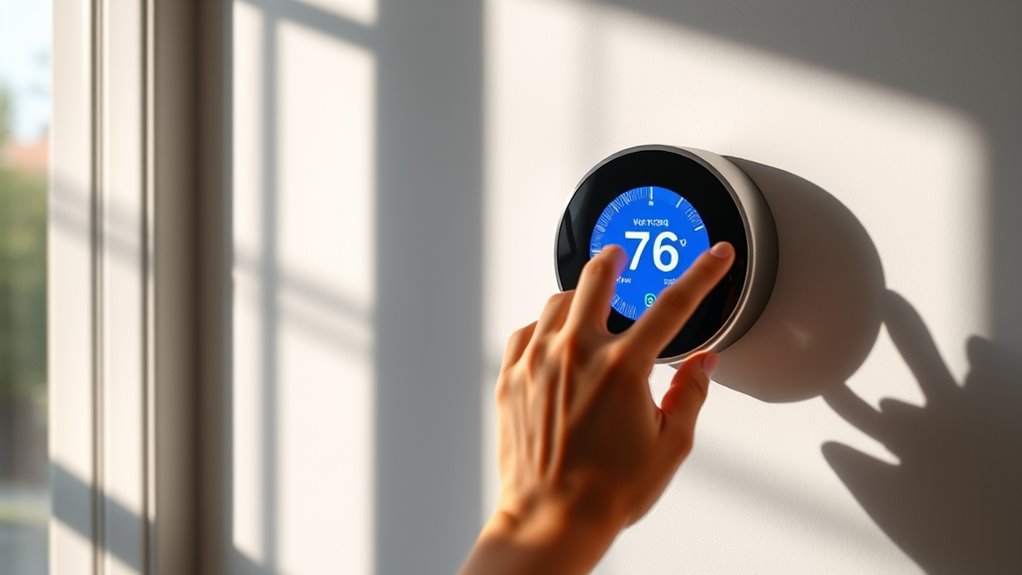
Have you ever wondered how smart thermostats actually help you save energy? When you install one, you typically go through a manual installation process, which might seem intimidating but is straightforward with clear instructions. Once set up, these thermostats learn your schedule and preferences, adjusting the temperature automatically to optimize energy use. Many models feature voice control, allowing you to change settings easily without even touching the device. This hands-free control makes it simple to fine-tune your environment on the fly, ensuring you’re not wasting energy when you’re away or asleep. By intelligently managing your heating and cooling, smart thermostats reduce unnecessary energy consumption, helping you save money while maintaining comfort. Understanding energy optimization can help you make better choices about their use and effectiveness, especially considering air quality considerations such as humidity and pollutants that can impact your comfort and health. Additionally, some models incorporate smart zoning features to further enhance efficiency by targeting specific areas of your home. Proper system compatibility is also key to maximizing their benefits and avoiding technical issues.
Evidence of Cost Savings From Using Smart Thermostats

Numerous studies and real-world examples show that smart thermostats can lead to significant cost savings. By optimizing energy consumption and influencing user behavior, these devices often reduce heating and cooling expenses. For instance, households that use smart thermostats typically see a 10-15% decrease in energy bills. The table below highlights how different factors impact savings:
| Factor | Effect on Savings |
|---|---|
| Consistent scheduling | Boosts efficiency, lowers energy costs |
| User behavior | Adjustments can increase or decrease savings |
| Climate | Warmer regions see less savings |
| Device integration | Smart home systems enhance savings |
| Occupancy patterns | More occupancy leads to better savings |
This evidence confirms that smart thermostats can effectively reduce energy consumption when user behavior adapts accordingly. Additionally, the integration of advanced control algorithms can further enhance these savings by optimizing temperature settings dynamically. Incorporating user training on device features can also maximize the potential savings.
Factors That Influence the Savings Potential

Your savings potential with a smart thermostat depends on factors like your local climate and weather patterns, which can affect heating and cooling needs. The quality of your home’s insulation also plays a big role in how efficiently your system works. Additionally, your usage habits and daily schedule influence how much you can save over time. Proper air quality management in your home can further optimize your HVAC system’s performance and savings. To maximize efficiency, understanding your energy consumption patterns can help tailor your thermostat settings for optimal savings. Regularly monitoring your system performance and making adjustments based on weather changes can also contribute to greater savings. Being aware of lease terms, especially if leasing HVAC equipment, can help you understand maintenance and upgrade options to maintain efficiency. Moreover, understanding affiliate disclosures can help you make informed decisions about products and services related to home energy management.
Climate and Weather Patterns
Climate and weather patterns considerably impact how much you can save with a smart thermostat. Seasonal temperature fluctuations determine how often you need to adjust your heating or cooling, affecting potential savings. In regions with extreme temperatures, your thermostat’s ability to optimize system use becomes more critical. Regional climate impact influences how effectively a smart thermostat can reduce energy consumption; milder climates may see smaller savings, while harsher ones can benefit more. If your area experiences unpredictable weather, the thermostat’s adaptive features can help fine-tune your settings automatically. Understanding these patterns helps you set realistic expectations for savings. Additionally, technological integration in smart thermostats allows for better customization and energy management, further enhancing potential savings. The effectiveness of these devices can be significantly influenced by regional climate factors, which should be considered when evaluating potential savings. Moreover, climate variability can affect how consistently your system operates throughout the year, impacting overall savings. Recognizing the effects of weather fluctuations can help you better anticipate your thermostat’s performance and savings potential. For example, research shows that energy-efficient design features can optimize performance in diverse climates, making your investment more worthwhile. Ultimately, your climate and weather conditions shape how much your smart thermostat can cut energy costs, making awareness of these factors essential.
Home Insulation Quality
How effectively your home retains heat or cool air considerably influences how much you can save with a smart thermostat. Good insulation reduces the workload on your HVAC system, making your thermostat’s adjustments more effective. Building codes often specify minimum insulation standards, but upgrading insulation materials can improve energy efficiency further. If your home has outdated or inadequate insulation, even the smartest thermostat won’t achieve maximum savings. Proper insulation keeps conditioned air inside longer, reducing heating and cooling needs. When combined with a smart thermostat, high-quality insulation ensures your system runs only when necessary. Additionally, air leakage control is crucial because gaps and cracks can undermine insulation efforts and diminish energy savings. Therefore, evaluating and improving your insulation quality can significantly boost your energy savings, making your smart thermostat a more powerful tool in managing your home’s temperature efficiently. Effective insulation strategies can help maximize your investment in smart technology. Improving home sealing techniques can further enhance energy retention and savings, especially when paired with auditory processing techniques that involve identifying and sealing leaks effectively. A comprehensive approach that includes insulation upgrades can lead to more consistent indoor temperatures and greater energy cost reductions.
Usage Habits and Schedules
Optimizing your usage habits and daily schedules can substantially enhance the energy savings provided by a smart thermostat. Your user behavior directly impacts energy consumption, so adjusting your routines helps maximize efficiency. For example, setting your thermostat lower during work hours or when you’re asleep prevents unnecessary heating or cooling. Using features like scheduling and geofencing allows your thermostat to adapt to your habits automatically, reducing waste. Consistently maintaining a steady temperature when you’re home and active minimizes fluctuations that waste energy. By consciously managing your schedules and habits, you can prevent energy overuse, lowering utility bills. Incorporating European cloud solutions can further improve the reliability and security of your smart home devices. Additionally, understanding how energy consumption patterns are influenced by your routines can help you fine-tune your settings for maximum savings. Being aware of user behavior impact enables you to make more informed adjustments, ensuring your smart thermostat operates at peak efficiency. Smart thermostats are most effective when your behavior aligns with their capabilities, ensuring you get the savings you’re aiming for without sacrificing comfort.
Comparing Smart Thermostats to Traditional Models

While traditional thermostats rely on manual adjustments and fixed schedules, smart thermostats offer dynamic control through automation and real-time data. This allows them to optimize energy consumption by adjusting temperatures based on your habits and preferences. Unlike traditional models, which require you to remember to change settings, smart thermostats learn your routines and make adjustments automatically, increasing user comfort. They also provide insights into your energy use, helping you identify ways to save. While traditional thermostats are simple and inexpensive, they often lead to unnecessary energy waste when you’re away or asleep. Smart thermostats, on the other hand, adapt to your lifestyle, reducing waste and maintaining comfort more efficiently. This comparison highlights how smart models can enhance both convenience and savings.
Tips for Maximizing Your Savings With Smart Thermostats
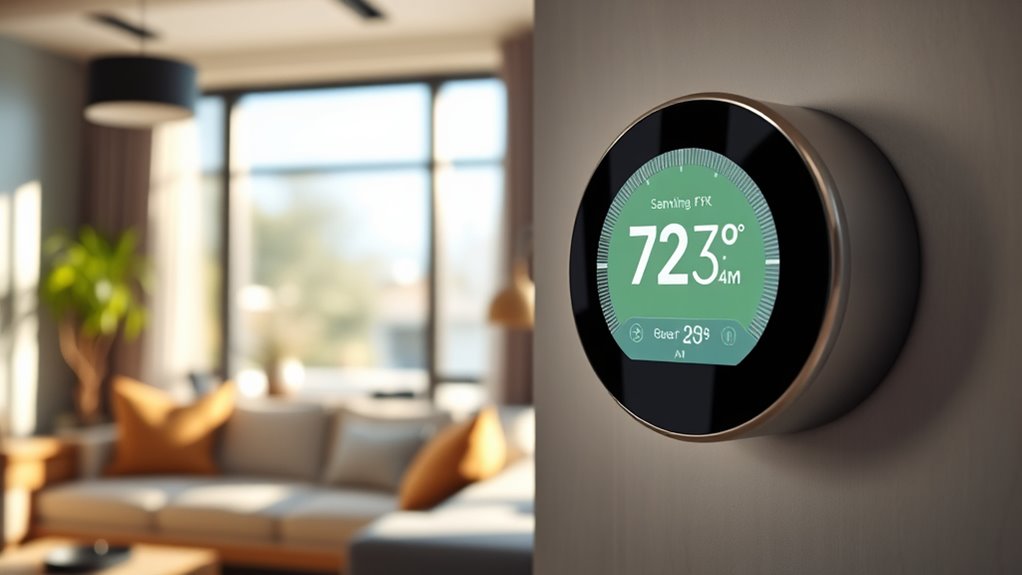
To save the most with your smart thermostat, you should optimize your temperature settings for different times of the day. Using the scheduling features allows you to automatically adjust the temperature when you’re home or away. By fine-tuning these settings, you can reduce energy waste and lower your bills effortlessly.
Optimize Temperature Settings
Adjusting your temperature settings thoughtfully can substantially boost your savings with a smart thermostat. To maximize energy efficiency while maintaining user comfort, set your thermostat to ideal temperatures based on the season. For example, during winter, aim for 68°F when you’re home and awake, and lower it when you’re asleep or away. In summer, keep it around 78°F when you’re active and higher when you’re gone. Use the following tips:
| Temperature Setting | When to Use |
|---|---|
| 68°F (winter) | When home and awake |
| 78°F (summer) | When home and active |
| 60-65°F (winter) | When sleeping or away (if comfortable) |
| 85°F or higher | When away for long periods |
| 55-60°F (winter) | When sleeping (if comfortable) |
Utilize Scheduling Features
Scheduling your smart thermostat effectively can lead to significant energy savings. Instead of relying on manual programming every day, set a schedule that aligns with your daily routine. Many smart thermostats allow you to create customized heating and cooling patterns, ensuring your home stays comfortable without wasting energy. Take advantage of remote access to adjust your schedule if your plans change, preventing unnecessary heating or cooling when you’re away. Consistently updating and fine-tuning your schedule helps maximize savings and comfort. By automating temperature changes during sleep or work hours, you reduce energy consumption and lower bills. Using the scheduling features thoughtfully guarantees your thermostat works efficiently, saving you money while maintaining a cozy home environment.
Is Investing in a Smart Thermostat Worth It?
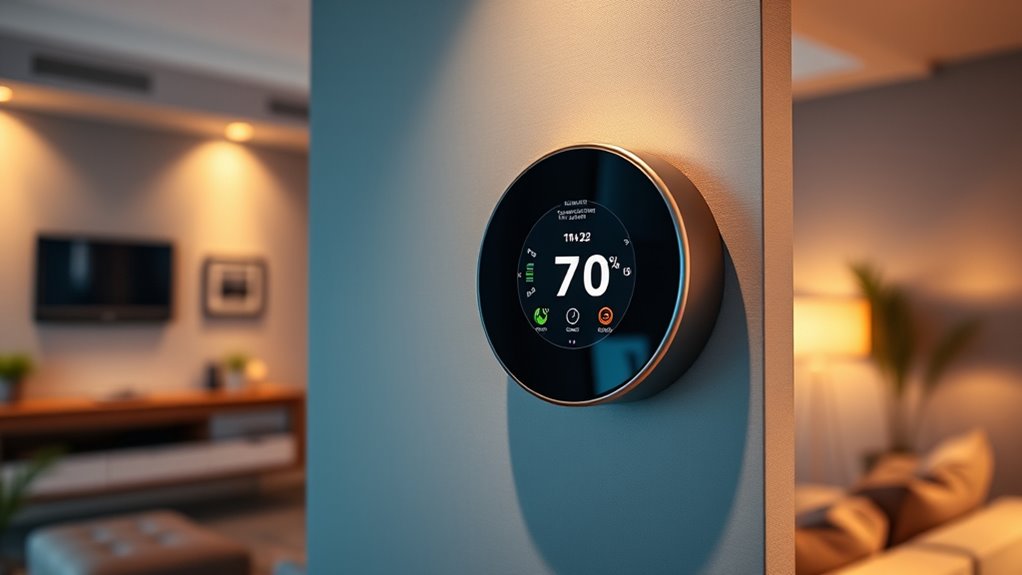
Is investing in a smart thermostat worth it? If you want seamless smart home integration, a smart thermostat can be a game-changer. It allows you to control your heating and cooling remotely, saving energy and money. Plus, many models feature sleek aesthetic design, blending effortlessly into your home decor. This means you won’t sacrifice style for functionality. Over time, the energy savings can outweigh the initial cost, making it a smart investment. Additionally, smart thermostats often come with learning capabilities that adapt to your routines, further boosting efficiency. If you value convenience, modern design, and long-term savings, investing in a smart thermostat is definitely worth considering. It’s a practical upgrade that enhances your comfort while cutting costs.
Frequently Asked Questions
How Long Does It Typically Take to Recoup the Cost of a Smart Thermostat?
You can typically recoup your smart thermostat’s installation costs within 1 to 3 years through energy savings. It depends on your current heating and cooling habits, local energy rates, and how efficiently you use the device. By adjusting your settings and taking advantage of features like scheduling, you maximize savings. Over time, these energy savings offset the initial investment, making it a smart financial move.
Are There Any Hidden Costs Associated With Installing or Maintaining Smart Thermostats?
You might face hidden costs like installation fees, especially if professional setup is needed, and ongoing maintenance expenses. Data security is also a concern; you may need to invest in protecting your network from potential breaches. Be aware of subscription plans or updates that could add to your costs over time. Carefully review the manufacturer’s policies to avoid surprises, ensuring your investment remains cost-effective.
Can Smart Thermostats Work Effectively in All Types of Heating and Cooling Systems?
Smart thermostats can work effectively with many heating and cooling systems, but compatibility concerns do exist. You’ll need to verify if your system is compatible before installation to avoid challenges. Some systems, especially older models or specialized setups, may require professional help or additional components. While most modern systems are compatible, understanding potential installation challenges ensures you get the most out of your smart thermostat.
Do Smart Thermostats Require a Stable Wi-Fi Connection to Function Properly?
Your smart thermostat’s Wi-Fi dependency is like a lifeline—without a stable connection, it can’t do its magic. If you face connectivity issues, it might not respond promptly or update settings properly. To keep everything running smoothly, verify your Wi-Fi is reliable and strong. A weak or unstable connection can cause delays or miscommunications, making it seem like your thermostat isn’t working, when in reality, it’s just a connectivity hiccup.
Are Smart Thermostats Compatible With Existing Home Automation Systems?
Yes, smart thermostats are generally compatible with many existing home automation systems, but integration challenges and compatibility issues can arise. You might need specific hubs or compatible devices to guarantee smooth operation. Always check the thermostat’s compatibility list before purchasing, and update your system’s software if needed. This way, you ensure seamless integration, avoiding frustration and maximizing your smart home’s efficiency.
Conclusion
Ultimately, a smart thermostat can be your secret weapon in slashing energy bills, turning your home into a well-orchestrated symphony of efficiency. While savings vary, staying informed and optimizing your settings can make a big difference. Think of it as planting a seed—give it proper care, and it’ll grow into a money-saving tree. So, if you’re ready to take control of your energy use, a smart thermostat might just be the change you need.