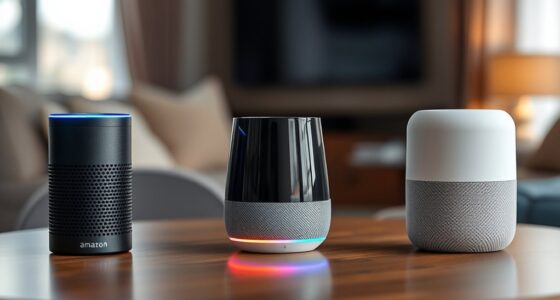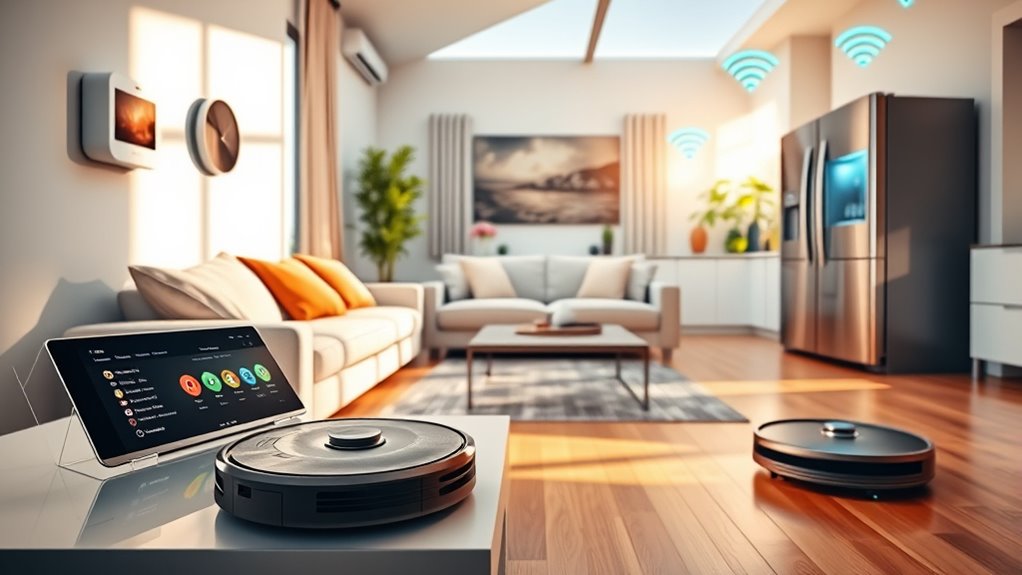

The Internet of Things (IoT) connects your everyday devices to the internet, allowing them to communicate, share data, and work together to make your life easier and more efficient. From smart thermostats to wearable health tech, IoT enhances convenience, safety, and productivity. It also opens new opportunities but comes with security and privacy concerns. If you’re curious about how IoT impacts you and ways to stay safe, there’s more to explore.

Get the latest gadgets delivered free with Prime
- Fast, free delivery on millions of items
- Prime Video, Amazon Music and more included
- Member-only deals all year
Key Takeaways
- IoT connects devices to communicate and share data, enabling automation and smarter environments in homes and industries.
- It enhances daily life through smart gadgets like thermostats, security cameras, and voice assistants for convenience.
- IoT improves efficiency and safety in industries by monitoring equipment and optimizing production processes.
- It offers benefits such as cost savings, increased productivity, and improved urban infrastructure in smart cities.
- However, IoT also introduces security risks and privacy concerns, requiring protective measures to safeguard personal data.
Products Worth Considering

Bose TV Speaker (2nd Gen) Compact Soundbar with Bluetooth and HDMI Connectivity

Logitech MX Keys S Wireless Keyboard, Graphite

Jackery Solar Generator 1000 V2 with 200W Solar Panel
As an affiliate, we earn on qualifying purchases.
Understanding the Basics of IoT

Have you ever wondered how your smart home devices communicate seamlessly with each other? The key lies in device interoperability, which allows different gadgets to work together smoothly. When devices connect, they share data, enabling you to control lights, thermostats, and security systems effortlessly. Behind the scenes, data analytics processes this shared information to optimize performance and personalize your experience. Additionally, the use of high-quality projectors with precise color accuracy ensures vibrant and true-to-life images in your home theater setup. This integration reduces manual effort and enhances convenience, making your smart home smarter each day. Understanding these basics helps you see how IoT creates a connected environment, where devices collaborate to improve your daily life. By focusing on interoperability and data analytics, IoT ensures your devices aren’t just standalone gadgets—they’re part of an intelligent network designed to serve you better. Furthermore, leveraging local automation enhances responsiveness and privacy within your smart home ecosystem. Recognizing the importance of device interoperability helps you grasp how different components communicate effectively to create a cohesive smart environment.
How IoT Devices Communicate and Share Data
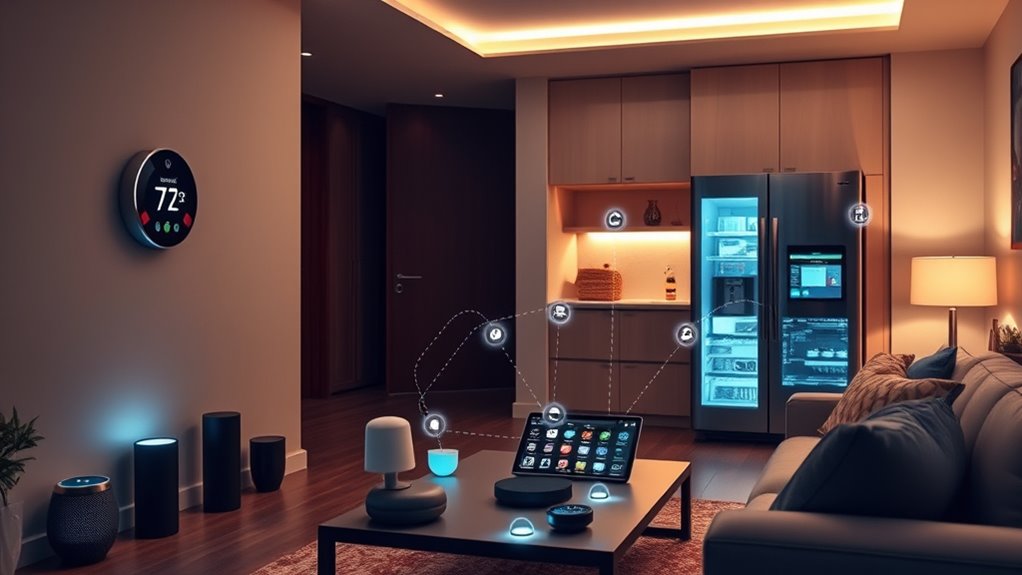
Ever wonder how your smart devices stay connected and share information seamlessly? It all starts with device pairing, where devices establish a secure link using protocols like Bluetooth or Wi-Fi. Once paired, they communicate by exchanging data packets, ensuring everything stays synchronized. Data synchronization keeps your devices updated in real-time, so your smart thermostat always knows your preferred temperature or your fitness tracker reflects your latest activity. IoT devices use cloud services or local networks to transmit data efficiently, making sure your devices work together smoothly. This process allows for continuous, real-time sharing of information, enabling you to control or monitor devices from anywhere. Understanding how device pairing and data synchronization work helps you appreciate the seamless connectivity behind your IoT ecosystem.
Common Examples of IoT in Everyday Life

You likely interact with IoT devices every day, like smart home gadgets that control your lights and thermostat. Wearable health tech tracks your fitness and health data in real time, while connected transportation systems help you navigate cities more efficiently. These examples show how IoT seamlessly integrates into your daily routines to make life more convenient. Additionally, the growing reliance on cloud services highlights the importance of robust contingency plans to prevent disruptions like those caused by the recent Microsoft outage. As the number of connected devices increases, understanding IoT security measures becomes crucial to protect your personal information and maintain system integrity. Being aware of network security helps safeguard your devices against potential cyber threats, especially as more devices become vulnerable to cyber attacks due to security vulnerabilities. Moreover, staying informed about device management practices ensures that your connected systems remain protected and functioning optimally.
Smart Home Devices
Smart home devices have become increasingly common, seamlessly integrating into daily routines to enhance convenience and efficiency. You can control your environment effortlessly with devices like a smart thermostat, which learns your schedule to optimize heating and cooling. A voice assistant allows you to manage multiple devices through simple commands, making life more convenient. These devices connect to your Wi-Fi, enabling remote access and automation. For example, you might set your lights to turn on at sunset or adjust your thermostat while away. Additional smart home devices include security cameras, smart locks, and automated lighting systems. These tools not only simplify daily tasks but also improve safety and energy efficiency, transforming your house into an intelligent, connected space.
- Smart thermostat adjusts temperature based on your habits
- Voice assistant responds to your commands instantly
- Automated lighting creates personalized ambiance
- Security cameras monitor your home remotely
- Smart locks enhance safety and convenience
Wearable Health Tech
Wearable health technology has become an integral part of daily life, providing real-time insights into your well-being. With wearable health tech, you can easily track your fitness levels, heart rate, sleep patterns, and more, all through sleek devices like smartwatches and fitness bands. These gadgets connect seamlessly to your smartphone, allowing you to monitor your progress and set health goals. Fitness tracking features motivate you to stay active and maintain a healthier lifestyle. Many wearables even alert you to irregular heart rhythms or dehydration, helping you take early action. By integrating IoT into your daily routine, wearable health tech empowers you to make smarter decisions about your health, making wellness more accessible and personalized than ever before. Understanding how devices work helps you use these tools safely and effectively. Additionally, understanding battery reconditioning can help extend the lifespan of your device batteries, ensuring they stay reliable over time. Learning about device maintenance can further improve the longevity and performance of your wearable tech. Staying informed about natural pool design options can also enhance your outdoor wellness spaces. Incorporating knowledge about the Gold IRA markets can also inspire you to diversify your investments for long-term financial health.
Connected Transportation Systems
Connected transportation systems exemplify how IoT integrates devices and infrastructure to create smarter, more efficient travel experiences. By linking vehicles, sensors, and traffic management centers, your daily commute becomes smoother and safer. Autonomous vehicles rely on IoT technology to navigate roads, avoid obstacles, and communicate with each other. Traffic management systems use real-time data to reduce congestion and improve flow. IoT-enabled infrastructure detects road conditions, adjusts signals, and provides updates to drivers. These innovations help reduce accidents and save time. Key features include:
- Real-time traffic monitoring
- Autonomous vehicle coordination
- Smart traffic lights
- Predictive maintenance
- Incident detection and response
This interconnected system transforms transportation, making it safer, more reliable, and more efficient for you.
Benefits and Opportunities of IoT Technology

The benefits and opportunities of IoT technology are transforming how businesses and individuals operate by enabling real-time data collection and automation. In a smart city, IoT devices improve traffic flow, energy management, and public safety, making urban living more efficient and sustainable. For you, this means better transportation, reduced costs, and enhanced quality of life. In industrial automation, IoT streamlines production, minimizes downtime, and boosts safety by monitoring equipment continuously. These advancements lead to increased productivity and innovation, opening new markets and job opportunities. Furthermore, understanding kitchen science & materials can help consumers select and maintain IoT-enabled appliances more effectively. Additionally, the integration of sensor technology enhances the responsiveness and adaptability of IoT systems, ensuring they meet users’ needs more effectively. As IoT continues to evolve, the development of secure data protocols is crucial for protecting user privacy and maintaining trust in connected environments. Moreover, advancements in wireless communication technologies enable seamless connectivity across diverse devices and platforms, expanding IoT’s reach and capabilities. The increasing interoperability among different IoT devices allows for more cohesive and user-friendly smart environments, making everyday life more convenient. Overall, IoT empowers you to enjoy smarter, safer, and more connected environments while helping businesses become more agile and competitive in a rapidly evolving landscape.
Challenges and Concerns Surrounding IoT
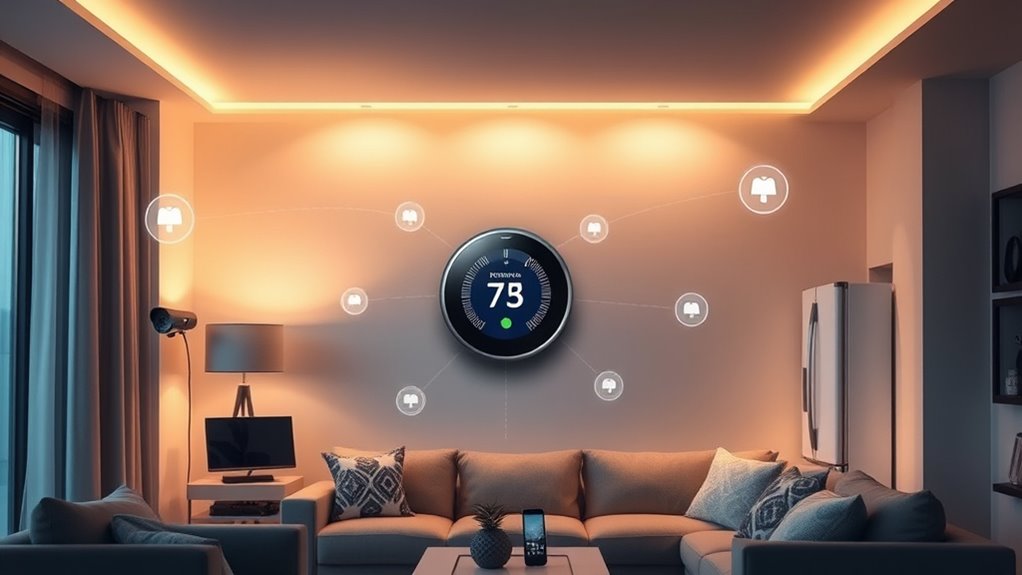
As you adopt IoT devices, security risks become a major concern because vulnerabilities can expose your data and systems to threats. Privacy issues also grow as more personal information gets collected and shared across networks. It’s important to understand these risks to protect yourself and your information effectively. Being aware of Vetted information about privacy policies and how cookies are managed can help you make informed decisions about your IoT usage. Additionally, understanding the different cookie categories and how they impact your online privacy can further enhance your awareness of data collection practices. Proper network security measures are essential to safeguard your connected devices and personal data from potential breaches. Incorporating security protocols designed specifically for IoT devices can significantly reduce the chances of unauthorized access and data leaks. Implementing encryption methods for communications between devices adds an extra layer of protection to prevent interception by malicious actors.
Security Risks Elevating Threats
While IoT offers numerous benefits, it also introduces significant security risks that can elevate threats to both individuals and organizations. These risks primarily stem from vulnerabilities in connected devices, making them prime targets for cybercriminals. You face increasing cybersecurity threats, including data breaches and malware attacks. Unauthorized access can lead to control over your devices, risking privacy and safety. To mitigate these risks, consider the following:
- Weak or default passwords
- Lack of encryption
- Unpatched firmware vulnerabilities
- Insufficient network segmentation
- Poor device authentication protocols
Staying vigilant and implementing robust security measures are essential to protect your devices from these escalating threats. Without proper safeguards, your connected devices could become entry points for malicious actors, compromising your personal and organizational security.
Privacy and Data Concerns
Have you ever considered how much personal data your IoT devices collect and share? These devices constantly monitor your activities, raising serious concerns about data privacy. When your smart home gadgets track your routines, they enable user tracking, which can be exploited if not properly protected. This information might be sold to advertisers or accessed by malicious actors, putting your privacy at risk. Many IoT manufacturers lack strict security measures, making sensitive data vulnerable to breaches. As a user, it’s essential to understand how your data is collected and used. By staying informed and adjusting privacy settings, you can better protect yourself from potential misuse and maintain control over your personal information in an increasingly connected world.
Future Trends and Innovations in IoT
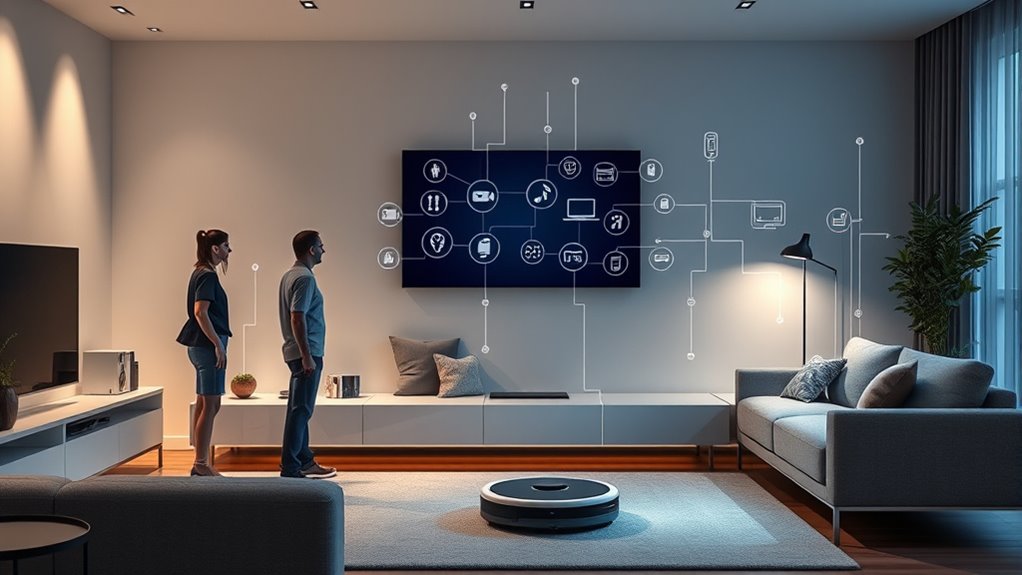
The future of IoT is poised for rapid innovation, driven by advancements in artificial intelligence, edge computing, and 5G connectivity. These developments will make devices smarter, faster, and more responsive to your needs. AI integration will enable more autonomous systems that learn from your habits, improving efficiency and personalization. Edge computing will process data locally, reducing latency and enhancing real-time decision-making. Expect smarter homes, connected vehicles, and industrial automation to become more seamless and intuitive. Additionally, innovations like self-healing devices and predictive maintenance will transform how you interact with technology. As IoT evolves, it will become more integrated into your daily routines, making your environment more adaptive and efficient. The possibilities are expanding rapidly, promising a more connected future.
How to Stay Safe and Secure in an IoT-Connected World

As IoT devices become more integrated into daily life through innovations like smart homes and connected vehicles, ensuring your security is more important than ever. Start by making sure each device has strong device authentication, which verifies that only trusted users can access them. Regular software updates are vital, as they patch security vulnerabilities and improve functionality. Avoid using default passwords, and change them to unique, complex ones. Keep your network protected with a secure Wi-Fi connection and enable encryption whenever possible. Be cautious about the data your devices collect and share. By staying vigilant with device authentication and promptly applying software updates, you reduce the risk of cyber threats and safeguard your personal information in an increasingly connected world.
Frequently Asked Questions
How Does Iot Impact Data Privacy and User Control?
IoT impacts your data privacy and user control by making your personal information more vulnerable to security breaches. You might unknowingly share data that’s stored or transmitted insecurely, risking your privacy. However, you can improve data security by using strong passwords and updates. Your user autonomy depends on your ability to manage device settings and permissions, giving you some control over what data is shared and when.
What Industries Are Most Transformed by Iot Innovations?
Like a wildfire spreading rapidly, IoT innovations transform industries. You see the biggest impacts in smart agriculture, where sensors optimize watering and crop health, and healthcare monitoring, which keeps you connected to real-time health data. These advancements make processes more efficient and personalized, affecting your daily life by improving safety, convenience, and sustainability in ways you might not even notice but truly benefit from.
How Affordable Are Iot Devices for Average Consumers?
You’ll find that IoT devices are becoming increasingly affordable for average consumers, offering a variety of consumer options that fit different budgets. Many affordable gadgets, like smart thermostats, fitness trackers, and security cameras, are accessible and easy to set up. As technology advances, prices continue to drop, making IoT solutions more practical for everyday use without breaking the bank.
What Are the Environmental Effects of Widespread Iot Deployment?
Widespread IoT deployment impacts the environment by promoting sustainable technology and enhancing energy efficiency. You’ll find that IoT devices optimize energy use in homes and cities, reducing carbon footprints. However, increased device production and e-waste pose environmental challenges. By supporting eco-friendly innovations, you help guarantee IoT benefits outweigh its drawbacks, making a positive difference through smarter, greener technology in your daily life.
How Can Individuals Contribute to Safer Iot Ecosystems?
You can help create safer IoT ecosystems by prioritizing personal data security and ensuring device authentication. Always update your devices’ software, use strong, unique passwords, and enable two-factor authentication when available. Avoid connecting devices to unsecured networks, and regularly monitor your device activity for suspicious behavior. By taking these steps, you contribute to a more secure IoT environment, protecting your data and reducing vulnerabilities for everyone.
Conclusion
As you navigate this interconnected world, imagine your daily life as a web of shimmering threads, each device seamlessly communicating and responding. Embracing IoT opens doors to convenience and innovation, but it also calls for vigilance. By understanding its flow and staying secure, you can confidently walk this digital landscape—where every smart device becomes a trusted partner, weaving a safer, smarter future around you like a comforting, ever-present embrace.