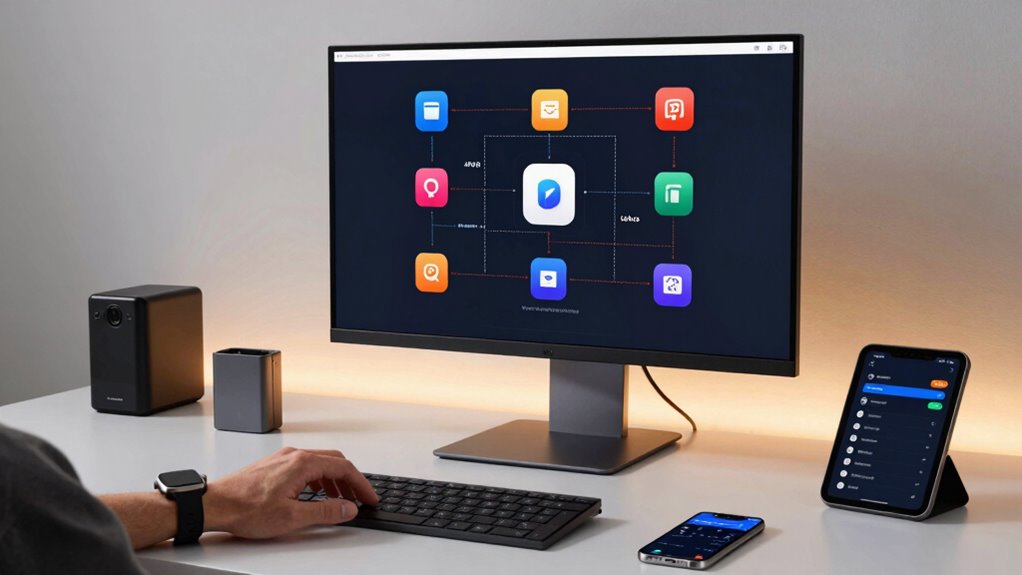

IFTTT makes it easy to automate your apps and gadgets by connecting them through simple workflows called applets. You set triggers, like a weather change or a new email, that automatically launch actions such as adjusting your smart thermostat or saving photos. With a user-friendly interface and plenty of community-sourced recipes, you can customize automations to fit your needs. Keep exploring, and you’ll discover how to create reliable automations that enhance your digital life effortlessly.
Key Takeaways
- IFTTT connects apps and devices to automate tasks through simple trigger-action workflows called applets.
- Users set up automations by linking services, choosing triggers, and defining actions with a user-friendly interface.
- Automations can include smart home control, social media management, notifications, and data syncing.
- Privacy and security are important; review permissions and enable security features during setup.
- Regular testing and updates ensure reliable performance and help customize automations for personal needs.
Understanding the Basics of IFTTT

Understanding the basics of IFTTT starts with recognizing that it’s a platform designed to automate tasks between different apps and devices. When you use IFTTT, it’s important to consider data privacy, as your information often flows between services. The platform’s user interface is straightforward, making it easy for you to create and manage automation tasks called “applets.” You simply connect your apps and devices, then set conditions for when certain actions should occur. While the interface helps you navigate these options smoothly, always review privacy settings to control what data gets shared. IFTTT aims to simplify automation, but staying aware of data privacy ensures your information remains secure as you streamline your digital life. Additionally, understanding the role of vetted wave and wind is essential for managing privacy and security while automating your devices. Incorporating European cloud solutions can further enhance data security and compliance, especially for sensitive information. Being mindful of data flow between services helps prevent unintentional sharing of personal details. Furthermore, privacy-conscious design features can help you customize your automation experience without compromising security.
How IFTTT Works: The Core Concepts
You use triggers to start your automation, and actions are what happen next. Applets or recipes combine these triggers and actions into simple workflows. Together, they enable seamless automation that saves you time and effort in daily tasks. Trusted resources in your area can help you discover reliable services and businesses to enhance your automation experience. Understanding smart home integration can further expand your automation capabilities and improve your overall digital environment. Incorporating AI-powered devices can optimize your home’s efficiency and responsiveness, making your automation even smarter.
Triggers and Actions
Triggers and actions are the fundamental building blocks of how IFTTT automates tasks. A trigger detects specific events, such as receiving an email or a change in weather, while an action performs a task in response. When setting up an applet, you choose a trigger and an action that connects your services seamlessly. It’s important to contemplate data privacy and user permissions during this process. You control what information is shared and which permissions you grant, ensuring your data stays protected. This setup allows you to automate confidently, knowing you’ve authorized only the necessary access. Triggers and actions work together to create meaningful automations, simplifying your digital life while respecting your privacy preferences. Additionally, understanding home automation technology can help you optimize your setups for better efficiency and convenience. Knowing how passive voice detection functions can enhance your ability to write clear and direct instructions within your automations. Recognizing time zone differences can also be crucial when coordinating automations across multiple locations, ensuring actions happen at the right moments. Understanding data privacy considerations is essential for maintaining control over your personal information and safeguarding your digital ecosystem. Exploring balanced designs can further improve the aesthetic appeal of your automations by creating harmonious visual layouts.
Applets and Recipes
Applets and recipes are the practical implementations of triggers and actions, turning them into functional automations that simplify your daily routines. They are the core of IFTTT, allowing you to connect devices and apps effortlessly. You can customize your applets through applet customization options, tailoring automations to fit your needs precisely. Sharing recipes is easy, enabling you to explore and adopt automations created by others, expanding your possibilities. To get started:
- Create personalized applets based on your routines.
- Use pre-made recipes shared by the community.
- Modify existing recipes with applet customization.
- Save and activate your preferred automations instantly.
These features make automating simple, flexible, and social, turning complex tasks into seamless experiences.
Workflow Automation
At the heart of IFTTT’s functionality lies its ability to automate workflows by connecting various devices and services through simple, rule-based logic. You create applets that perform actions automatically when certain triggers occur, streamlining your daily tasks. However, as you connect multiple services, privacy concerns and data security become important considerations. IFTTT processes your data to enable automation, so it’s crucial to understand how your information is handled. You should review privacy policies and enable security features, like two-factor authentication, to protect your accounts. While workflow automation enhances convenience, being mindful of privacy concerns helps ensure your data remains secure. By understanding these core concepts, you can confidently automate your apps and gadgets without compromising your privacy.
Exploring Popular Applets and Automations

You probably already use some popular applets, like automatically saving your photos to the cloud or syncing your to-do list. These automations can simplify your daily routines and save you time. There are also creative ways to customize automations for your unique needs and interests. Exploring options like Free Floating can help you discover innovative ways to enhance your smart home and outdoor living experiences. Additionally, integrating connected appliances with automation platforms enables more seamless control over your kitchen gadgets and appliances, making your cooking environment smarter and more efficient. Understanding automation platforms can further help you optimize your device integrations for a more cohesive smart home system. Incorporating power tools and heavy-duty equipment into your automation setup can also streamline DIY projects and outdoor maintenance tasks, boosting your productivity and safety. Leveraging AI-driven tools can improve the customization and efficiency of your automations, ensuring they work better for your specific lifestyle.
Common Applet Examples
Ever wondered how IFTTT can simplify your daily routines? Many users rely on popular applets to boost productivity and stay connected. Here are some common examples:
- Automatically save new Instagram photos to your cloud storage, ensuring your memories are backed up.
- Turn on smart lights when you arrive home, creating a welcoming environment.
- Post your latest blog updates directly to social media platforms, boosting your social media strategies.
- Receive weather alerts every morning, so you can plan your day better.
- You can also automate your smart home devices, such as robotic vacuums or lawn mowers, to operate on schedules or trigger based on specific conditions smart‑home integrations. These automations leverage digital connectivity to make your devices work more efficiently together.
These applets are perfect for smartphone tips, helping you automate tasks without extra effort. Using IFTTT, you streamline social media management and daily activities, saving time and reducing manual work. Additionally, automation tools like IFTTT enable seamless connection between various apps and devices, enhancing your overall digital experience.
Automations for Daily Tasks
Automations for daily tasks can considerably streamline your routine by automating common activities, saving you time and effort. With popular applets, you can improve your time management by handling repetitive chores effortlessly. For example, automatically saving email attachments to cloud storage or turning on smart lights at sunset reduces manual work. These automations also support digital decluttering by organizing files or silencing notifications during focus periods. By setting up such applets, you free up mental space and minimize distractions, making your day more efficient. Whether it’s managing your calendar, syncing devices, or automating reminders, these automations help you stay organized without constant intervention. Incorporating smart automation tools can further enhance your productivity and help you maintain a balanced routine.
Creative Automation Ideas
Creative automation ideas expand the possibilities of your daily routines by leveraging popular applets that do more than just save time. They enable you to build creative workflows and achieve innovative integrations across your apps and gadgets. For example:
- Automatically save your Instagram photos to a cloud storage service for easy access.
- Turn on smart lights when you start a workout playlist, creating an energizing environment.
- Get weather alerts sent to your smartwatch every morning for proactive planning.
- Log your sleep data from fitness trackers to a spreadsheet for personalized insights.
These ideas inspire you to think beyond basic automations, revealing new ways to streamline tasks and enhance your environment with creative workflows. Exploring popular applets helps you discover inventive integrations tailored for your lifestyle.
Setting Up Your First Workflow
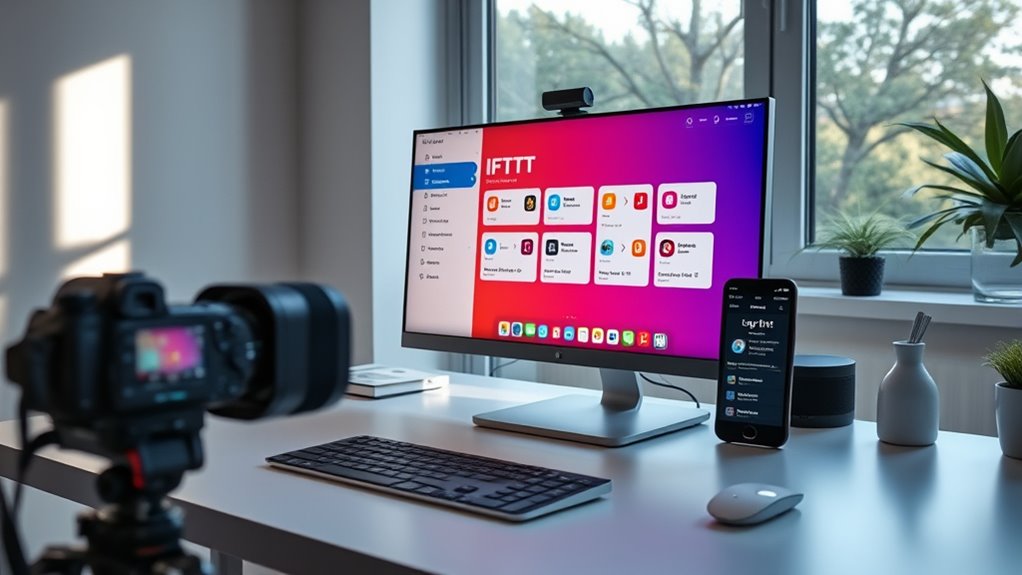
Ready to see IFTTT in action? Setting up your first workflow is straightforward. Start by choosing a trigger—like receiving an email or a specific time. Then, pick an action, such as saving an attachment to cloud storage or sending a notification. Be mindful of privacy concerns; sharing too much information or connecting unsecured accounts can expose you to security risks. Always review app permissions and choose trusted services. Once configured, activate your applet, and it’ll run automatically. Keep in mind that simple workflows are best when starting out, reducing potential security vulnerabilities. Regularly check your applets to ensure they’re functioning correctly and that no privacy issues have arisen. This way, you’ll enjoy automation without compromising your security. Understanding app permissions and security is essential to protect your data while automating tasks. For added safety, consider utilizing regulatory frameworks that guide responsible AI and app integrations. Additionally, staying informed about security best practices can help prevent potential breaches and keep your connected devices safe. Incorporating security awareness into your routine further enhances your safety when automating apps and gadgets. Being aware of pool safety and proper security measures ensures your smart home remains protected against potential vulnerabilities.
Connecting Your Devices and Services

How do you connect your devices and services seamlessly with IFTTT? First, verify device compatibility by checking if your gadgets and apps support IFTTT. Then, follow these steps:
To connect devices seamlessly with IFTTT, verify compatibility and then follow simple setup steps.
- Sign in to your IFTTT account and navigate to the “Services” tab.
- Connect each device or app by linking your accounts securely.
- Grant necessary permissions, keeping privacy concerns in mind.
- Test the connection to confirm your devices communicate properly.
- Additionally, review the integration options to ensure your devices work smoothly with IFTTT and other smart home systems.
Always review privacy settings during setup to protect your data. Some devices may have limited compatibility, so verify before linking. Regularly update your app permissions and stay aware of privacy concerns to maintain a safe and smooth automation experience. Connecting devices with IFTTT becomes straightforward when you follow these steps carefully.
Customizing Automations to Fit Your Routine

To make your smart devices truly work for you, customizing automations to fit your daily routine is essential. Personalization options and user interface customization allow you to tailor applets, making them more intuitive and aligned with your habits. You can adjust triggers, actions, and notifications to suit your preferences, ensuring your automations feel natural. For example, you might set a morning routine that turns on lights and plays music simultaneously. Consider this table to visualize customization:
| Personalization Options | User Interface Customization |
|---|---|
| Adjust trigger conditions | Change app layout for easier access |
| Set specific device actions | Rearrange menu options |
| Customize notification alerts | Choose preferred themes |
These options help you craft a seamless, personalized experience that integrates effortlessly into your routine.
Managing and Organizing Your Applets
Once you’ve customized your applets to fit your routine, the next step is to effectively manage and organize them. To stay on top of your automations, consider these strategies:
- Use folders or labels to categorize applets by function or priority, making them easier to locate.
- Regularly review your applets for outdated or unnecessary ones to keep your dashboard clutter-free.
- Enable notification management to control alerts, ensuring you’re only notified about critical automations.
- Monitor data synchronization to confirm that your applets are working seamlessly across devices, avoiding gaps or overlaps.
Tips for Creating Effective and Reliable Automations

Creating effective and reliable automations with IFTTT requires careful planning and attention to detail. To avoid automation pitfalls, test your applets thoroughly before relying on them daily. Make sure triggers and actions work as intended, and consider potential edge cases. Pay close attention to security considerations—use strong, unique passwords for connected services, and limit applet permissions to only what’s necessary. Regularly review your automations to identify any that might cause unintended consequences or security vulnerabilities. Keeping your applets simple and clearly defined helps prevent errors and increases reliability. Stay informed about updates or changes to your connected services, as these can impact your automations. By following these tips, you ensure your automations are both effective and secure.
Integrating IFTTT With Smart Home Technology

How can you seamlessly connect IFTTT with your smart home devices? First, verify your devices support voice assistants like Alexa or Google Assistant, which act as bridges. Next, follow these steps:
Seamlessly connect your smart devices using IFTTT and voice assistants like Alexa or Google Assistant.
- Link your smart home devices and voice assistants with IFTTT using their respective services.
- Configure security protocols to protect your data and prevent unauthorized access.
- Create applets that trigger actions—like turning on lights or adjusting thermostats—based on voice commands or sensor inputs.
- Test your automations to confirm they work reliably across all devices.
Troubleshooting Common IFTTT Challenges
When your IFTTT app isn’t connecting properly, you need to check your internet connection and reauthorize the app if necessary. If a recipe fails to run, review the trigger and action details to spot any errors or outdated links. Tackling these common issues quickly keeps your automations running smoothly.
Fixing App Connectivity Issues
Connectivity issues between your apps and IFTTT can disrupt your automation flow, but most problems are straightforward to troubleshoot. First, check your internet connection and perform network troubleshooting to ensure stability. Next, verify that your apps are connected and authorized correctly within IFTTT. Then, update the apps and IFTTT applets to the latest versions, as outdated software can cause app connectivity issues. Finally, revisit your applet settings to confirm all connections are active and configured properly. If problems persist, disconnect and reconnect your accounts, or try restarting your device. These steps often resolve common app connectivity problems, keeping your automations running smoothly. Remember, a stable network and current app versions are key to seamless IFTTT performance.
Resolving Recipe Failures
Recipe failures can be frustrating, but identifying the root cause often involves examining specific settings and triggers. Start by performing recipe debugging to pinpoint where the process breaks down. Check if the triggers are correctly set up and active; sometimes, a slight change in app permissions or account settings can cause a recipe to fail. Review the action steps to guarantee they’re properly configured and connected. Applet optimization is also vital—eliminate redundant steps or conflicting actions that might cause issues. Additionally, verify that your services are up-to-date and functioning normally. Regularly testing and tweaking your recipes helps prevent failures and guarantees smoother automation. By systematically troubleshooting and optimizing your applets, you can maintain reliable, seamless integrations across your devices and apps.
Frequently Asked Questions
Can I Use IFTTT Without an Internet Connection?
You can’t use IFTTT without an internet connection because it relies on cloud services for offline functionality and remote triggers. However, for local automation, some smart devices and hubs can perform actions offline without internet. If you want to automate without connectivity, consider devices that support local automation, but keep in mind that IFTTT itself needs internet access to work effectively.
Is There a Limit to How Many Applets I Can Create?
Think of your applet limits as a garden’s fence—boundaries that keep growth in check. Your IFTTT account has restrictions on how many applets you can create, depending on your plan. Free accounts usually have a cap, while paid plans offer more flexibility. These account restrictions ensure the platform remains smooth for everyone, so you can enjoy automating without overwhelming the system. Keep an eye on your limits to maximize your automation potential.
How Secure Is My Data When Using IFTTT?
Your data security with IFTTT depends on its data encryption and privacy policies. IFTTT uses data encryption to protect your information during transmission, reducing risks of interception. However, they collect and store data based on their privacy policies, so it is crucial to review them carefully. While IFTTT implements security measures, always be cautious about the personal data you connect and share on their platform.
Can I Share My Applets With Others?
Sharing your applets is like opening a window to your digital world. You can easily share them through IFTTT’s sharing options, allowing others to use or customize your applet. Whether you want to inspire or collaborate, applet customization lets you tailor shared applets to fit different needs. Just select the share button, choose your contacts or community, and let your automation ideas spread like wildfire.
Does IFTTT Support Automation Across Different Operating Systems?
Yes, IFTTT supports automation across different operating systems through its cross-platform compatibility. You can seamlessly integrate devices from various OS ecosystems, like Android, iOS, Windows, and more. This way, you can create applets that automate tasks involving multiple devices and platforms. IFTTT’s device integration makes it easy to connect and automate actions across diverse operating systems, ensuring your smart home, apps, and gadgets work together effortlessly.
Conclusion
Now that you know how IFTTT works and how to set up automations, you’re ready to simplify your digital life. Remember, Rome wasn’t built in a day—start small, test your applets, and refine them as you go. With patience and practice, you’ll master creating reliable, time-saving workflows. The key is to stay consistent and learn from your experiences, because as the saying goes, “Practice makes perfect.” Happy automating!