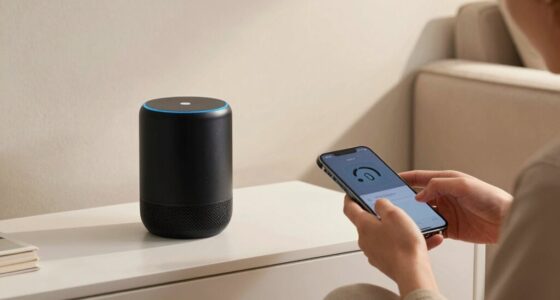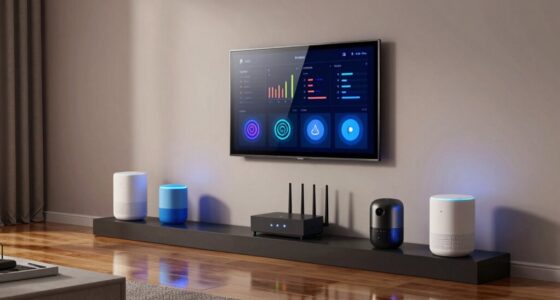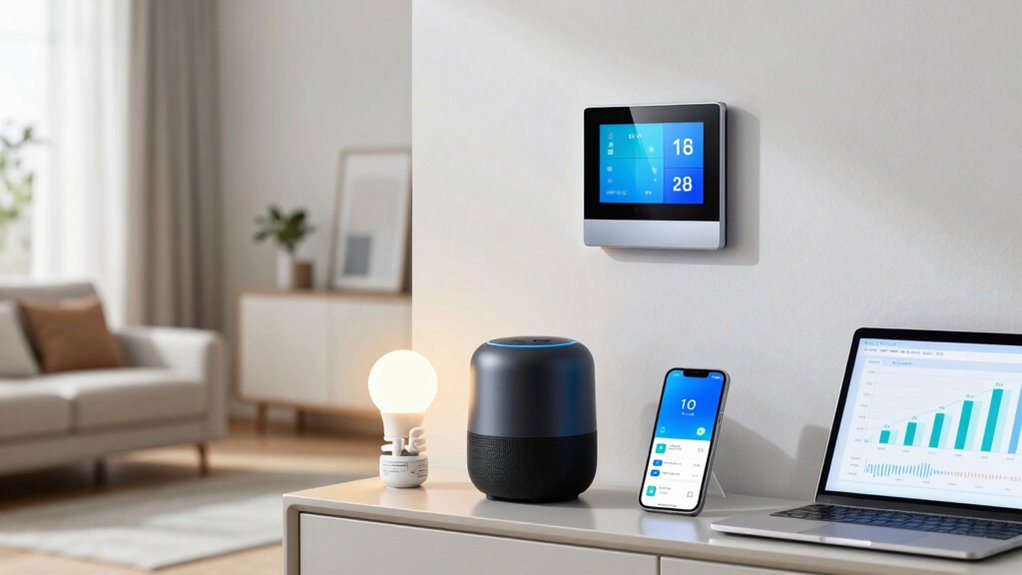

To save energy and money with smart home gadgets, start by installing smart thermostats that adjust your home’s temperature automatically to improve comfort and reduce waste. Use smart plugs and sensors to monitor and control device energy use, turning appliances off when not needed. Automate lighting with motion sensors to avoid unnecessary lighting and extend bulb life. Incorporate solar-powered or energy-efficient devices to further cut costs. Discover more ways to optimize your smart home for savings as you explore further.
Key Takeaways
- Use smart thermostats to optimize temperature and humidity, reducing energy waste and lowering heating and cooling costs.
- Automate lighting with motion sensors and scheduling to turn lights off when rooms are unoccupied.
- Install smart plugs to monitor and control device energy consumption, minimizing standby power.
- Implement energy-efficient appliances and solar panels to decrease reliance on grid power and cut utility bills.
- Set routines and power schedules for devices to ensure they operate only when needed, enhancing overall energy savings.
Optimize Your Home’s Climate With Smart Thermostats
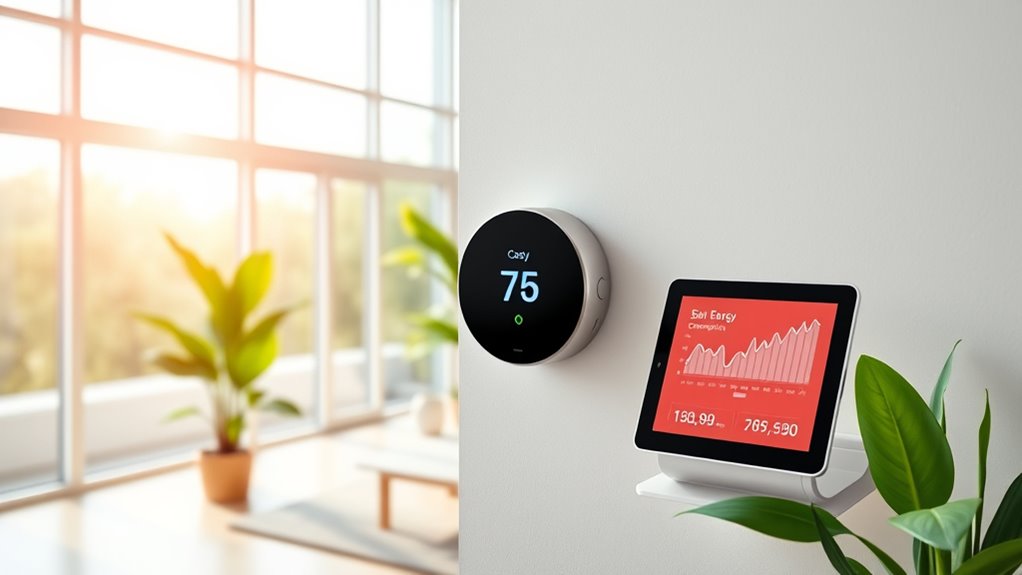
Smart thermostats make it easy to control your home’s climate efficiently. They help you maintain ideal temperature and humidity levels, which directly impacts air quality. By adjusting your thermostat based on your schedule or preferences, you can reduce energy waste while improving comfort. Many smart thermostats include humidity control features, preventing excess moisture that can lead to mold or discomfort. Better humidity management also enhances air quality, reducing allergens and pollutants. With real-time data and remote access, you can fine-tune your home’s climate from anywhere, ensuring your space stays healthy and energy-efficient. Incorporating ventilation considerations into your smart home setup can further improve indoor air quality and energy savings. Paying attention to European cloud solutions can optimize your smart home’s connectivity and security. Taking control of humidity and air quality with smart thermostats not only saves energy but also creates a more comfortable, healthier environment for you and your family. Additionally, understanding air exchange rates helps in designing effective ventilation strategies to maximize energy efficiency and indoor air quality. Implementing smart ventilation systems can further enhance your home’s overall energy performance and indoor comfort.
Automate Lighting for Efficiency and Convenience
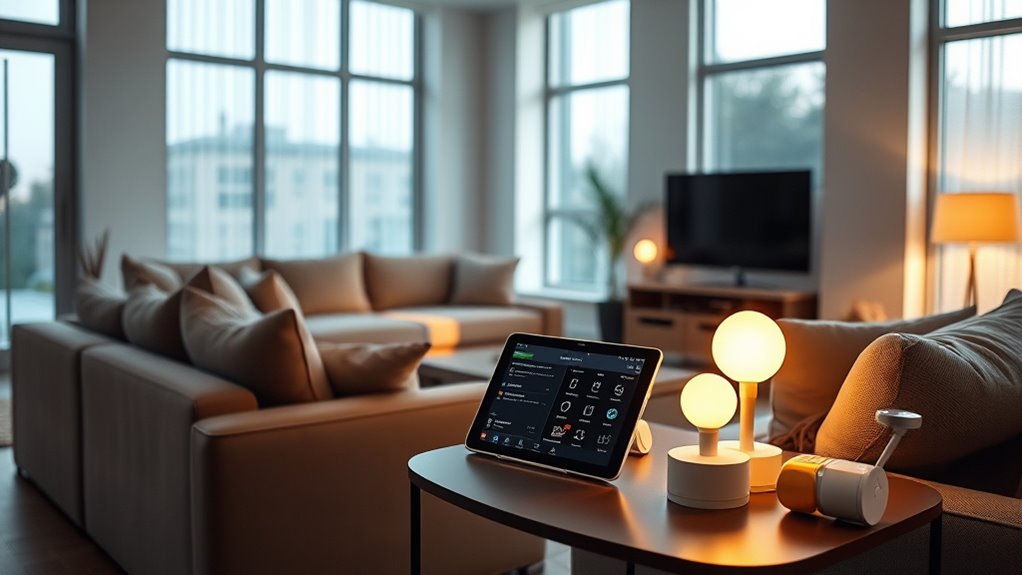
Lighting plays a significant role in both energy consumption and everyday convenience. By automating your lighting, you can reduce waste and enhance your home experience. Motion sensors automatically turn lights off when no one is in the room, saving energy without your effort. They also turn lights on when you enter, providing instant convenience. Voice control adds another layer of ease, allowing you to operate lights hands-free with simple commands. You can dim or brighten lights, set schedules, or turn them on and off using your voice. Combining motion sensors and voice control makes your lighting smarter and more efficient, cutting down on unnecessary power use while making your home more comfortable and responsive to your needs. Integrating local automation ensures your lighting system works seamlessly with other smart devices for even greater efficiency. Additionally, smart lighting systems often include features like remote control via apps, allowing you to manage your lights from anywhere for added flexibility. Incorporating smart lighting technology can further optimize energy use by adapting to your habits and preferences. Employing energy monitoring tools can help you track and reduce your overall power consumption more effectively.
Monitor and Manage Energy Usage With Smart Plugs
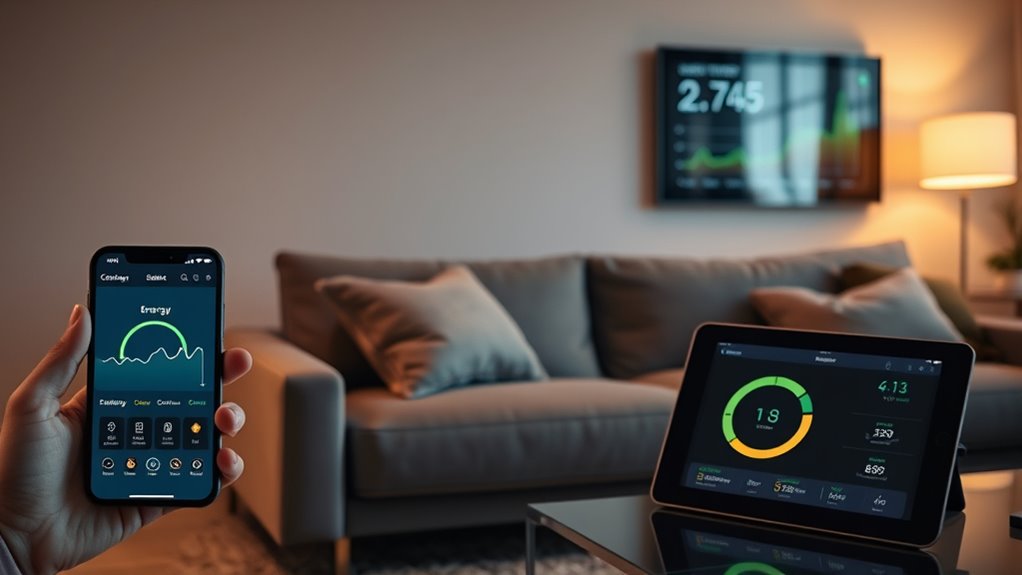
Smart plugs let you automate power schedules so devices turn on and off when you need them. You can also track your energy use to identify savings opportunities and cut down on standby power. Managing these aspects helps you reduce waste and save on energy costs effortlessly. Additionally, integrating smart plugs with other home automation systems can optimize energy efficiency across your entire household. For example, utilizing advanced control features can further streamline energy management and enhance overall savings. Understanding energy consumption patterns enables smarter scheduling and more precise control to maximize savings.
Automate Power Scheduling
Automating power schedules with smart plugs allows you to control your energy consumption effortlessly. With remote access, you can set schedules from anywhere, ensuring devices turn off when not needed. This prevents energy waste and saves money. User customization lets you tailor schedules to fit your routine, whether it’s turning off lights during the day or powering down appliances at night. You can automate morning coffee makers or turn off entertainment systems after a certain hour. Smart plugs enable you to create a consistent routine that maximizes efficiency without manual intervention. By scheduling power in advance, you reduce unnecessary usage and enhance your home’s energy management. Incorporating Free Floating design elements can also help optimize your outdoor spaces for energy efficiency and aesthetic appeal. Additionally, integrating energy-saving features into your smart home setup can further enhance overall efficiency and reduce costs. This simple step makes your home smarter, more efficient, and cost-effective.
Track Energy Consumption
Have you ever wondered how much energy your household gadgets actually consume? Using smart plugs to track energy consumption gives you valuable insights for energy audits and understanding your consumption patterns. Once you connect your devices, you can monitor real-time data and identify which appliances are using the most power. This helps you spot energy hogs and make smarter decisions. Additionally, understanding air quality factors can influence how you manage your home’s energy use for better efficiency. For example, choosing the right electric bike conversion kit can impact your transportation energy footprint. Implementing electric road sweepers and other efficient cleaning equipment can further reduce energy waste. Improving your home’s overall efficiency also involves understanding industry trends and effective energy-saving strategies. Here are three ways tracking energy helps you save:
- Pinpoint devices that waste power in standby mode.
- Adjust usage times to lower energy costs.
- Set goals based on your consumption patterns to improve efficiency.
Reduce Standby Power
Even when devices are turned off, many continue to draw power in standby mode, silently increasing your energy bill. This standby power contributes to energy waste that adds up over time. To combat this, smart plugs let you monitor and control the power supply to your electronics. By scheduling devices to turn off completely when not in use, you prevent unnecessary standby power consumption. Some smart plugs even allow you to set automatic timers or remotely switch off devices via your phone. This reduces energy waste and saves you money. Taking control of standby power is a simple yet effective way to make your home more energy-efficient. With smart plugs, you can easily cut down on hidden energy drain and ensure your appliances aren’t wasting power when they’re not actively in use. Smart energy management tools help you further optimize your overall energy usage for greater savings. Additionally, many smart plugs can provide real-time energy consumption data, allowing you to identify which devices use the most power and make informed decisions to reduce your overall usage. Using these tools can also help you understand the impact of leaked energy on your bills and motivate you to take action, especially considering the significant role of standby power in overall energy consumption. Furthermore, understanding the energy efficiency of your home appliances encourages smarter usage habits.
Enhance Security and Save Energy With Smart Cameras and Sensors
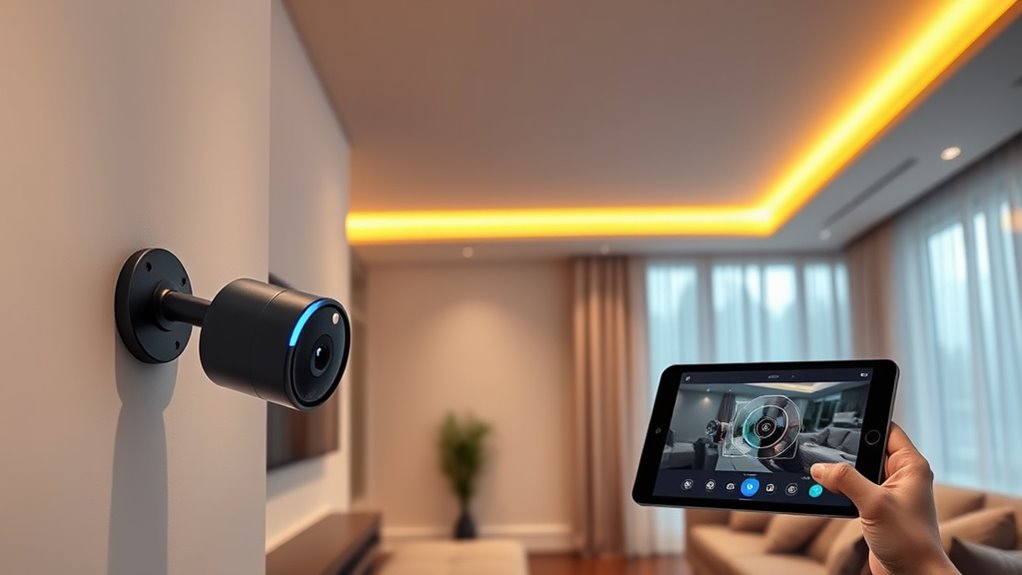
Smart cameras and sensors let you monitor your home in real time, giving you peace of mind and quick alerts if something’s wrong. Automated lighting controls turn lights off when rooms are unoccupied, saving energy without you lifting a finger. Together, these devices boost security and help cut down your energy bills effortlessly. Additionally, understanding drone insights can help you stay informed about safety and emerging technologies related to aerial imaging and surveillance. Incorporating whole-house water filtration systems can also contribute to a healthier living environment, reducing contaminants and improving water quality across your home. Exploring smart home protocols can further optimize device communication and energy efficiency throughout your residence, especially as AI cybersecurity becomes increasingly important to protect connected devices from cyber threats. Staying updated on home automation standards ensures your devices work seamlessly together, maximizing energy savings and security benefits.
Real-Time Monitoring for Security
Real-time monitoring with smart cameras and sensors allows you to keep a close eye on your home’s security while reducing energy waste. With features like security alerts and motion detection, you can respond quickly to any activity, whether you’re home or away. This technology helps you identify suspicious behavior instantly, minimizing false alarms and unnecessary energy use.
Consider these benefits:
- Receive instant security alerts on your phone if motion is detected.
- Use motion detection to activate cameras only when needed, saving power.
- Keep your home secure without constantly running cameras or sensors.
Automated Lighting Control
Automated lighting control with smart cameras and sensors allows you to enhance your home’s security while reducing energy consumption. Motion sensors detect movement, turning lights on only when needed, which prevents unnecessary energy use. When you leave a room, lights automatically switch off, saving power and extending bulb life. Daylight harvesting adjusts indoor lighting based on the natural light available, optimizing energy savings during daylight hours. This smart system also improves security by alerting you to unusual activity and ensuring well-lit areas when you’re away. By integrating sensors and cameras, you create a responsive environment that adapts to your habits, reducing waste and increasing safety effortlessly. Automated lighting control is a simple way to make your home smarter, safer, and more energy-efficient.
Incorporate Solar-Powered and Energy-Efficient Devices
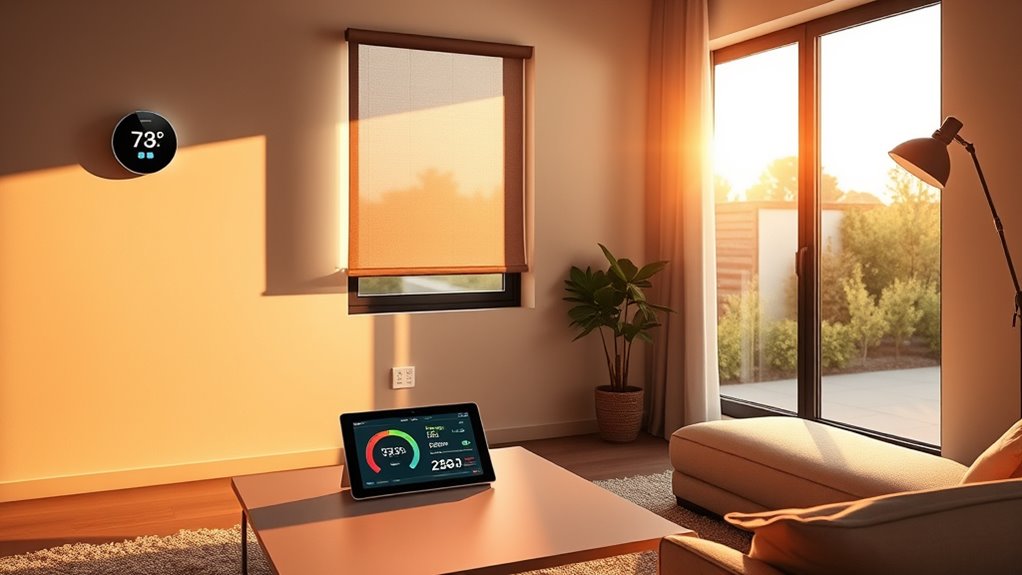
Incorporating solar-powered and energy-efficient devices into your home can substantially reduce your energy consumption and lower utility bills. Installing solar panels allows you to harness sunlight, generating clean energy and decreasing reliance on grid power. Additionally, replace old appliances with energy-efficient models that use less electricity while performing the same tasks. Here are a few ways to get started:
- Install solar panels to capture renewable energy and cut your electric bill.
- Swap out standard appliances for energy-efficient appliances that consume less power.
- Use smart power strips to prevent vampire energy from devices when they’re not in use.
Implement Routine Schedules and Automation for Maximum Savings
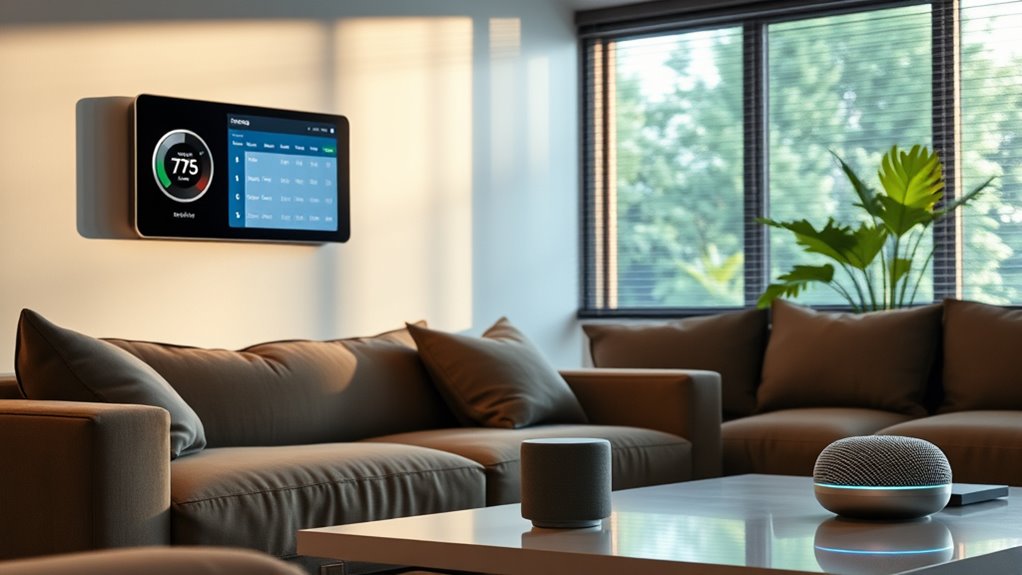
By setting up routine schedules and automation, you can considerably boost your home’s energy efficiency. A smart routine allows you to program devices to turn on or off at specific times, reducing unnecessary energy use. Personalized schedules ensure your appliances operate only when needed, such as lowering heating or cooling during your typical work hours or bedtime. Smart home gadgets can automatically adjust lighting, thermostats, and appliances based on your daily patterns, maximizing savings without sacrificing comfort. With automation, you don’t have to remember to switch things off or on manually. Instead, your system learns your habits and optimizes energy consumption accordingly. Implementing these routines helps you save money while making your home more energy-efficient and environmentally friendly.
Frequently Asked Questions
Can Smart Home Devices Significantly Reduce My Overall Energy Bills?
Yes, smart home devices can considerably reduce your energy bills through effective energy savings. They allow you to control heating, cooling, and lighting more efficiently, avoiding unnecessary usage. By automating routines and monitoring energy consumption, you’ll see a noticeable cost reduction over time. These gadgets help optimize your energy use, making your home more eco-friendly and saving you money in the long run.
Are Smart Gadgets Easy to Install Without Professional Help?
Yes, smart gadgets are generally easy to install without professional help. Many devices are designed for DIY installation, so you don’t need extensive technical expertise. You can follow clear instructions and use your smartphone or hub to set up and connect the gadgets. Most smart home products aim for user-friendliness, so with a little patience, you’ll be able to install and enjoy your energy-saving devices easily.
How Secure Are My Data When Using Smart Home Energy Devices?
Your data security isn’t just a drop in the ocean; it’s the entire universe! Smart home energy devices use data encryption to protect your information, making it nearly impossible for hackers to access sensitive details. While privacy concerns exist, reputable brands prioritize security measures. You can enhance your safety by updating firmware regularly and using strong passwords, turning your smart home into a fortress of privacy and energy efficiency.
Do Smart Devices Work Reliably During Power Outages?
Smart devices often struggle with power outage resilience, which can affect device reliability. During outages, many smart gadgets lose connectivity or stop functioning unless they have backup power sources like batteries or uninterruptible power supplies. You should consider these options to guarantee your smart home remains reliable and responsive, even during power disruptions. Investing in devices with built-in backup options helps maintain control and energy management, keeping your home smarter and more resilient.
Can I Control Smart Home Gadgets Remotely From Anywhere?
Absolutely, you can control your smart home gadgets remotely from anywhere—assuming you don’t accidentally lock yourself out of your own Wi-Fi. Just use voice commands or app control, and you’re golden. Whether you’re at work or on vacation, you can turn off lights, adjust thermostats, or check security cameras with a tap or a shout. It’s like having a magic wand, minus the fairy dust—well, mostly.
Conclusion
By embracing smart home gadgets, you can slash energy bills and make your home an eco-friendly fortress. From climate control to lighting and security, these devices turn your house into a powerhouse of efficiency. With routine automation, you’ll save more than you ever imagined—maybe even enough to buy a small island someday! Start small, stay consistent, and watch your energy savings multiply like magic. Your wallet—and the planet—will thank you!