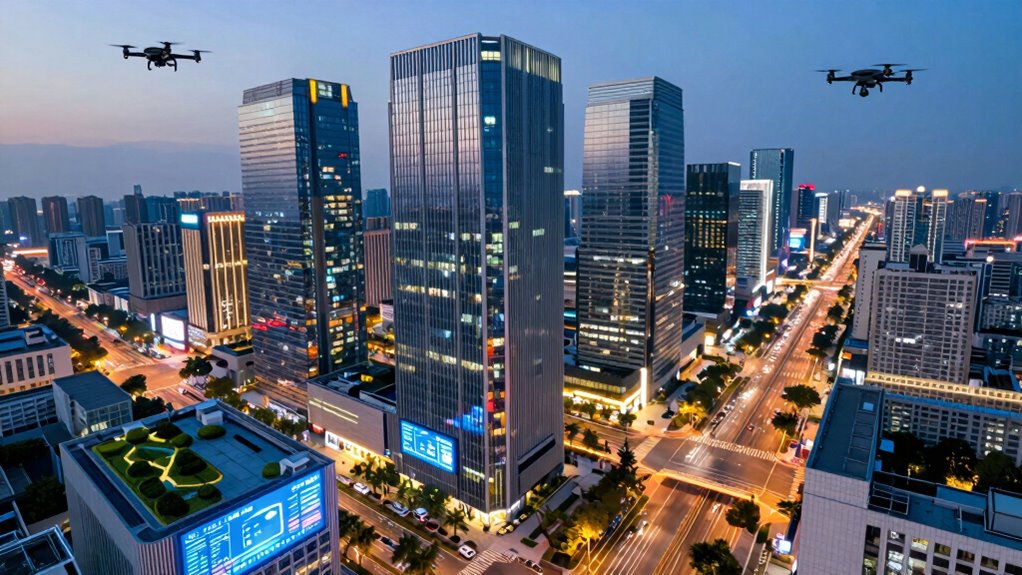

Smart cities use connected technology to improve urban life by making services more efficient, sustainable, and responsive. With sensors, IoT devices, and data analytics, your city can optimize traffic, manage resources, and boost safety. These innovations also encourage civic engagement, create economic opportunities, and reduce environmental impact. But developing smart cities comes with challenges like privacy and security concerns. Explore how these advances are shaping the future of urban living and how you can benefit.
Key Takeaways
- Connected devices and sensors form the Internet of Things (IoT), enabling real-time data collection and smarter city management.
- Big Data Analytics processes vast information to optimize traffic, resource use, and public safety through predictive insights.
- Smart infrastructure incorporates autonomous vehicles, renewable energy, and intelligent sensors for sustainable and efficient urban environments.
- Digital platforms enhance civic engagement, allowing residents to participate in decision-making and improve service responsiveness.
- Connected tech fosters economic growth, job creation, and innovation while addressing challenges like privacy, cybersecurity, and high deployment costs.
What Are Smart Cities and How Do They Work

Smart cities are urban areas that leverage technology and data to improve the quality of life for their residents. They use advanced tools to enhance urban planning, making infrastructure more efficient and sustainable. You’ll notice that smart city initiatives often involve gathering data from sensors and devices to better understand traffic flow, energy use, and public services. This information helps city officials make informed decisions, streamline operations, and respond quickly to issues. Civic engagement plays a crucial role here, as residents are encouraged to participate in decision-making processes through digital platforms. Your input can shape policies and projects, ensuring they meet community needs. By integrating technology with active citizen involvement, smart cities create more livable, responsive, and connected urban environments. Additionally, energy management systems help optimize resource consumption, reducing environmental impact and promoting sustainability. Incorporating secure cloud infrastructure ensures that sensitive data collected from various sources remains protected, facilitating trust and reliability in smart city operations. Moreover, understanding the importance of data-driven decision making can significantly enhance the effectiveness of implemented solutions. Implementing urban data platforms allows for centralized analysis and more comprehensive planning.
Key Technologies Powering Urban Transformation
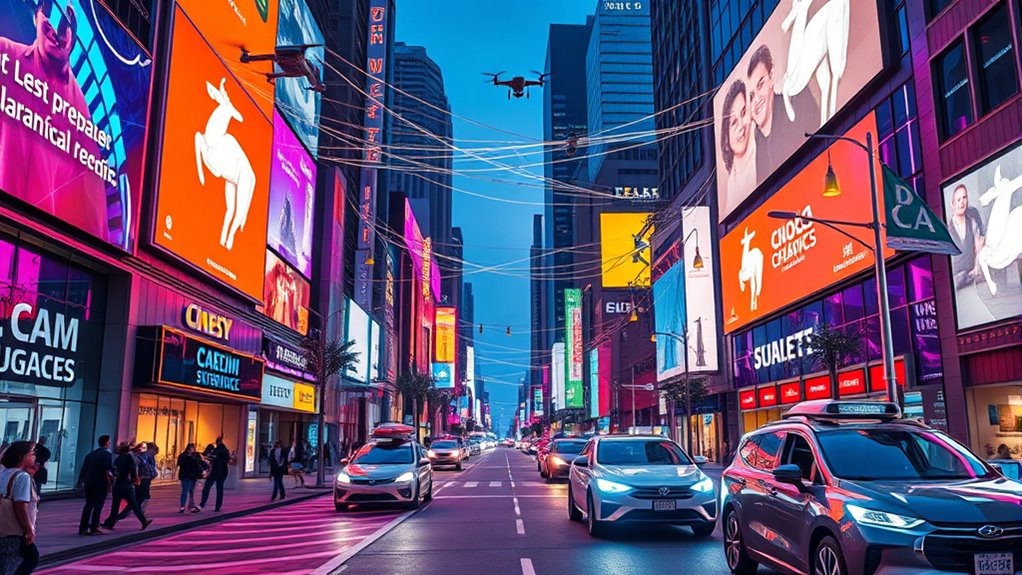
You rely on interconnected devices and sensors that form the Internet of Things to gather real-time data across the city. Big data analytics then process this information to improve services and decision-making. Smart infrastructure systems integrate these technologies to create more efficient, responsive urban environments. Incorporating soul sanctuaries and wellness-focused spaces into urban planning can further enhance residents’ quality of life. The integration of high-quality home decor and gift ideas can also contribute to creating more inviting and personalized urban spaces. Additionally, fostering community engagement through digital platforms can help ensure that smart city initiatives align with residents’ needs and preferences. Understanding the horsepower of electric dirt bikes can inspire innovative transportation solutions within urban mobility plans, promoting sustainable and efficient travel options. Recognizing the influence of net worth in public figures can also help shape community development projects that resonate with local values and aspirations.
Internet of Things (IoT) Integration
How does the Internet of Things (IoT) revolutionize urban living? By connecting devices through sensor networks, IoT enables real-time data collection and seamless communication across city systems. This integration improves traffic flow, energy management, and public safety. Imagine a city where sensors monitor air quality, adjust street lighting, and optimize waste collection automatically. Data interoperability guarantees these systems work together smoothly, avoiding data silos. Data interoperability ensures that all components can share information effectively, making the entire urban infrastructure more efficient. Additionally, essential oils can be incorporated into air quality sensors to enhance scent management and improve public comfort. Here’s a visual of how IoT links urban elements:
Big Data Analytics
Big Data Analytics drives urban transformation by processing vast amounts of information generated by IoT devices, sensors, and other digital systems. You can leverage predictive modeling to forecast traffic patterns, optimize resource allocation, and improve public safety. Data visualization tools help you interpret complex data sets, making insights more accessible and actionable. With real-time analytics, you can identify congestion points, monitor air quality, and adjust services proactively. This technology enables city managers to make data-driven decisions that enhance efficiency and quality of life. Additionally, understanding AI ethics ensures responsible use of data and technology in urban planning. Incorporating data security measures is essential to protect sensitive information from breaches and misuse. By analyzing trends and patterns, you can anticipate issues before they escalate, ensuring smoother urban operations. Utilizing data interoperability frameworks facilitates seamless data sharing across different systems and agencies. Furthermore, investing in smart infrastructure can accelerate the deployment of these analytics solutions, leading to more sustainable and resilient cities. Staying informed about emerging data governance practices helps maintain transparency and accountability in data management. Ultimately, Big Data Analytics empowers you to transform raw data into meaningful strategies that shape smarter, more responsive cities.
Smart Infrastructure Systems
Smart infrastructure systems form the backbone of urban transformation by integrating advanced technologies that enhance city operations. You benefit from autonomous vehicles that improve traffic flow, reduce accidents, and optimize transportation efficiency. These vehicles communicate with traffic signals and other infrastructure, creating a seamless mobility network. Renewable energy sources like solar and wind power are integrated into the city’s grid, reducing reliance on fossil fuels and lowering emissions. Smart infrastructure also includes intelligent sensors and monitoring systems that track infrastructure health, manage resources, and predict maintenance needs. Interconnected systems enable real-time data sharing, which helps cities respond quickly to issues and improve overall efficiency. Incorporating energy management into urban planning ensures smarter resource allocation and sustainability. Additionally, data integration allows for more comprehensive analysis and smarter decision-making across city departments. This interconnected setup ensures more resilient, sustainable, and efficient urban environments. By adopting these technologies, you experience smarter, safer cities that adapt to your needs while promoting environmental sustainability. Incorporating simple systems helps make complex urban challenges more manageable and easier to maintain. Emphasizing urban resilience is crucial for adapting to climate change and unexpected disruptions, further strengthening city infrastructure.
Benefits of Connecting Cities for Residents and Businesses
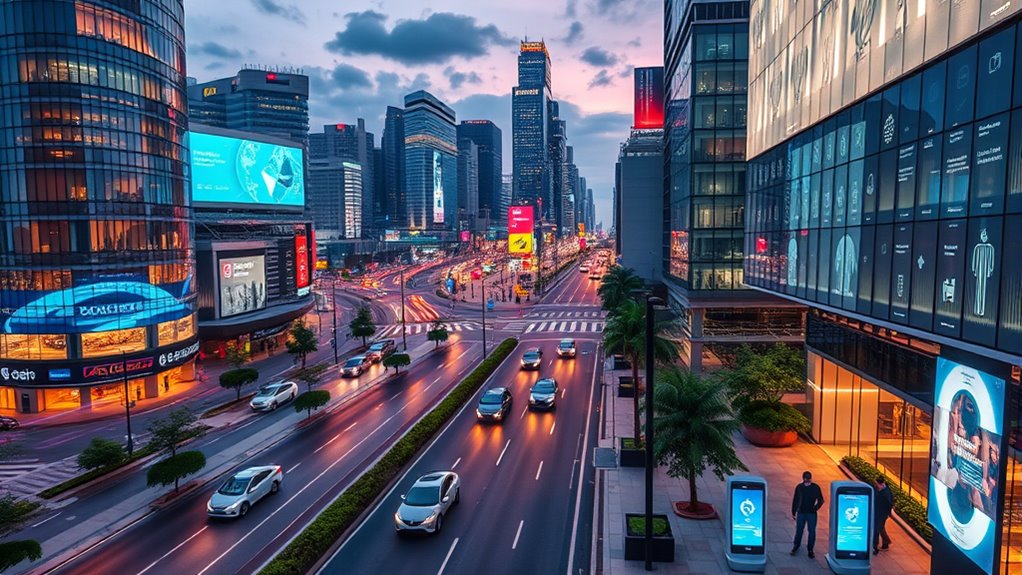
When cities connect through smart technology, you’ll notice easier travel with enhanced mobility networks and better access to services. Resources like water and energy are managed more efficiently, saving you money and reducing waste. Additionally, these connections open up new economic opportunities that can boost local businesses and improve your quality of life. Implementing drone technology in urban management can further enhance safety and operational efficiency in city environments. As innovation progresses, integrated data systems will enable more responsive and adaptive city services to meet residents’ needs effectively. Moreover, leveraging connected infrastructure allows cities to proactively address issues such as traffic congestion and emergency response, creating a safer and more resilient urban environment. Incorporating AI-driven analytics can also facilitate smarter decision-making for urban planning and resource allocation.
Enhanced Mobility Networks
Connecting cities through enhanced mobility networks creates seamless transportation options that benefit both residents and businesses. With improved public transit systems, you experience easier access to work, services, and leisure activities, reducing daily commute times. Traffic optimization algorithms help manage congestion, ensuring smoother flow and less frustration on the roads. These connected networks enable real-time updates on transit schedules and traffic conditions, so you can plan your trips more efficiently. Additionally, integrating wellness-focused features into urban transit can promote healthier lifestyles for commuters. These innovative systems can also support energy-efficient transportation methods, reducing overall environmental impact. For businesses, reliable transportation links mean faster delivery times and better employee punctuality. Residents enjoy increased accessibility, which fosters community engagement and economic growth. Overall, enhanced mobility networks make urban life more convenient, less stressful, and more productive for everyone, transforming cities into smarter, more connected environments.
Improved Resource Management
By linking cities through integrated networks, resource management becomes more efficient and responsive. You can better monitor energy consumption, leading to increased energy conservation. Smart systems identify where energy is wasted and suggest adjustments, reducing costs and environmental impact. Water efficiency also improves as sensors track water usage in real time, detecting leaks and optimizing flow. This prevents water loss and ensures resources are used wisely. For residents and businesses, these advancements mean lower utility bills and a smaller ecological footprint. Additionally, coordinated data helps city officials make informed decisions about resource allocation, preventing shortages and overuse. Overall, connected technology streamlines resource management, making urban environments more sustainable and resilient. You benefit from smarter, more efficient use of essential resources, supporting a healthier city.
Economic Growth Opportunities
Have you ever wondered how smarter city connections can activate new economic opportunities? When cities embrace connected technology, they transform into innovation hubs that attract entrepreneurs and startups. This encourages job creation across various sectors, boosting local economies. Connected infrastructure makes business operations more efficient, reducing costs and fostering growth. Residents benefit from more diverse employment options and improved services. Additionally, data-driven insights help policymakers support emerging industries and nurture innovation. These advancements create an environment where new businesses thrive, attracting investments and talents. As a result, connected cities become economic engines, fueling prosperity for residents and businesses alike. Embracing smart city tech opens doors to sustainable growth, making urban areas more competitive and vibrant.
Challenges and Concerns in Developing Smart Urban Environments

What are the main hurdles cities face when trying to develop smart urban environments? Privacy concerns and cybersecurity risks top the list. As you connect more devices, sensitive data becomes susceptible. You might worry about personal information being exposed or misused. Cities must protect infrastructure from cyberattacks that could disable services or cause chaos. Imagine this table illustrating common challenges:
| Challenge | Impact |
|---|---|
| Privacy concerns | Loss of personal privacy, mistrust |
| Cybersecurity risks | Data breaches, system failures |
| Integration hurdles | Compatibility issues, high costs |
These issues create a barrier, making it essential for urban planners to prioritize security and privacy while balancing technological innovation. Without addressing these concerns, the promise of smart cities risks turning into vulnerabilities.
Real-World Examples of Smart City Initiatives

Have you ever wondered how cities around the world are turning their ideas into reality? Smart city initiatives are making this happen through innovative projects that promote public art and citizen engagement. For example, Barcelona’s smart lighting system adjusts based on activity levels, reducing energy use. In Singapore, sensors monitor traffic and air quality, involving residents in data collection. Seoul’s digital platforms encourage citizen participation in urban planning. Amsterdam integrates public art into interactive urban spaces that respond to community input. These efforts demonstrate how technology fosters a sense of community and shared ownership. By combining data-driven solutions with creative public art, these cities are creating more inclusive, vibrant urban environments where residents actively shape their surroundings.
The Future of Urban Living With Connected Technology
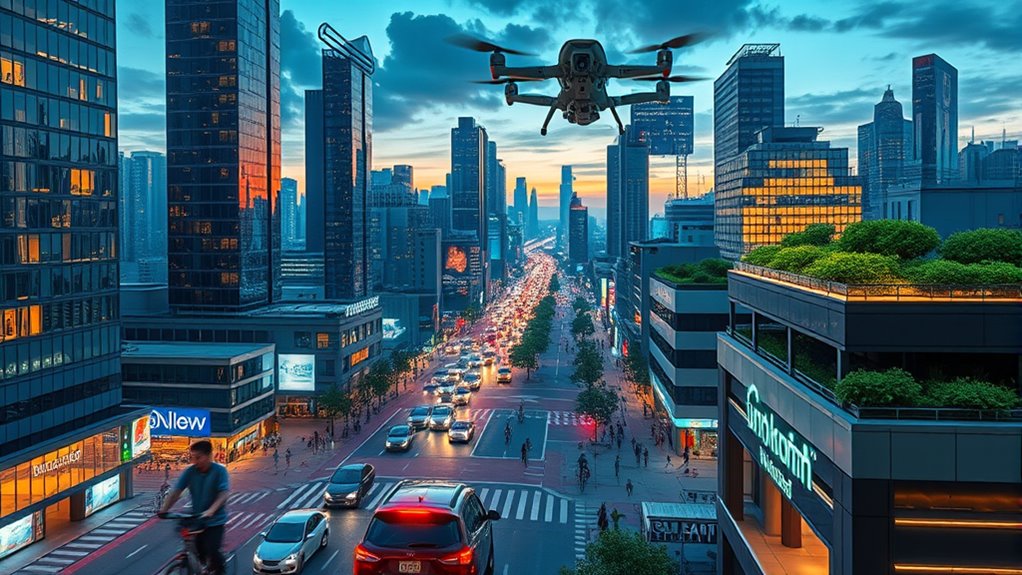
As connected technology continues to advance, urban living is poised to become more seamless, efficient, and responsive to residents’ needs. You’ll see urban planning evolve, integrating real-time data to optimize transportation, energy use, and public services. Smart sensors and IoT devices will enable cities to adapt instantly, reducing congestion and improving safety. Citizen engagement will grow, as residents participate more actively in decision-making through digital platforms and apps. You’ll have greater input on local initiatives, making your voice heard and influencing urban development. This interconnected approach fosters smarter resource management, elevates quality of life, and creates more sustainable communities. Ultimately, the future of urban living with connected technology means a city that works better for everyone, driven by innovation and your involvement.
Frequently Asked Questions
How Do Smart Cities Ensure Data Privacy and Security for Residents?
Smart cities protect your data by implementing strict privacy policies and using data encryption to secure information. They regularly update security measures to prevent breaches and guarantee your personal details stay private. You’re kept informed about how your data is used and have control over your privacy settings. By prioritizing transparency and security, smart cities create a safer environment where your information is protected while benefiting from connected technology.
What Are the Costs Involved in Developing and Maintaining Smart City Infrastructure?
You’ll need to conduct a thorough cost analysis to understand the expenses of developing and maintaining smart city infrastructure. Budget planning is essential, as costs include installing sensors, data centers, and communication networks, along with ongoing maintenance and upgrades. You should also consider funding sources and potential cost-saving measures to guarantee the project remains financially sustainable over time. Proper planning helps avoid overspending and maximizes your investment in smart city technology.
How Inclusive Are Smart City Technologies for Underserved or Marginalized Communities?
Smart city technologies aren’t always inclusive for underserved or marginalized communities. You might find that the digital divide limits access, leaving some residents behind. To bridge this gap, community engagement is essential; involving local populations in planning helps guarantee solutions meet their needs. When you prioritize inclusive strategies and provide affordable access, you create a more equitable urban environment where everyone benefits from connected tech.
What Role Do Citizens Play in Shaping Smart City Policies and Implementations?
You play a crucial role in shaping smart city policies through public participation and citizen feedback. By sharing your experiences, concerns, and suggestions, you help decision-makers understand community needs. Attending town halls, participating in surveys, and engaging with local initiatives empowers you to influence smart city projects. Your active involvement guarantees that technological advancements serve everyone fairly and effectively, creating urban environments that reflect your priorities and foster inclusivity.
How Adaptable Are Smart City Systems to Future Technological Advancements?
Smart city systems are designed to be highly adaptable, thanks to hardware flexibility that allows you to upgrade or modify components easily. However, you’ll face scalability challenges as the city grows, requiring thoughtful planning to guarantee systems can expand seamlessly. By prioritizing modular hardware and scalable infrastructure, you can future-proof your smart city, making it capable of integrating new technologies and evolving to meet changing needs efficiently.
Conclusion
Think of smart cities as a symphony, where each technology is an instrument working in harmony. When all these elements come together, urban life becomes smoother, safer, and more efficient—like a well-conducted orchestra. But just as every instrument needs careful tuning, smart cities require thoughtful planning. Embrace the potential, but stay mindful of the challenges, and together, we can create a future where city life plays in perfect harmony for everyone.