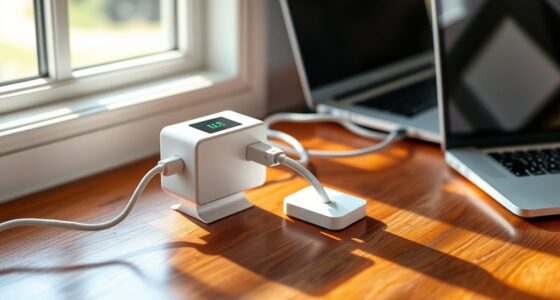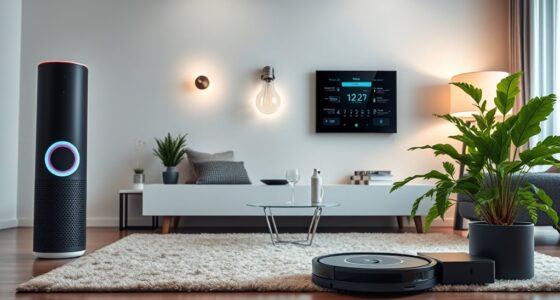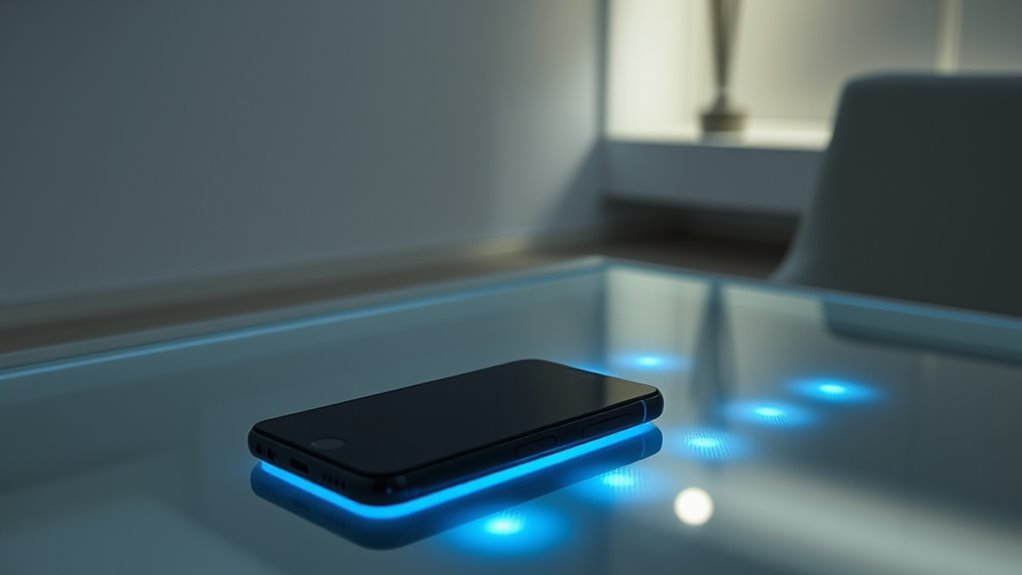

Modern presence detection combines smartphones, network pings, and sensors to give you reliable results. Your devices, like phones connected to Wi-Fi or Bluetooth, help confirm your presence easily. Sensors such as motion detectors and infrared keep track of activity without needing your device. Combining these methods guarantees accuracy while respecting your privacy. If you’re curious about how to balance automation with security, keep exploring—you’ll find useful insights ahead.
Key Takeaways
- Combining multiple methods like phones, pings, and sensors increases detection accuracy.
- Smartphones provide easy presence detection through Wi-Fi or Bluetooth connections.
- Passive sensors (motion, infrared) detect occupancy without user devices, offering real-time reliability.
- Layered detection balances automation with privacy by integrating device signals and sensor data.
- Privacy considerations and user controls are essential when choosing effective presence detection systems.
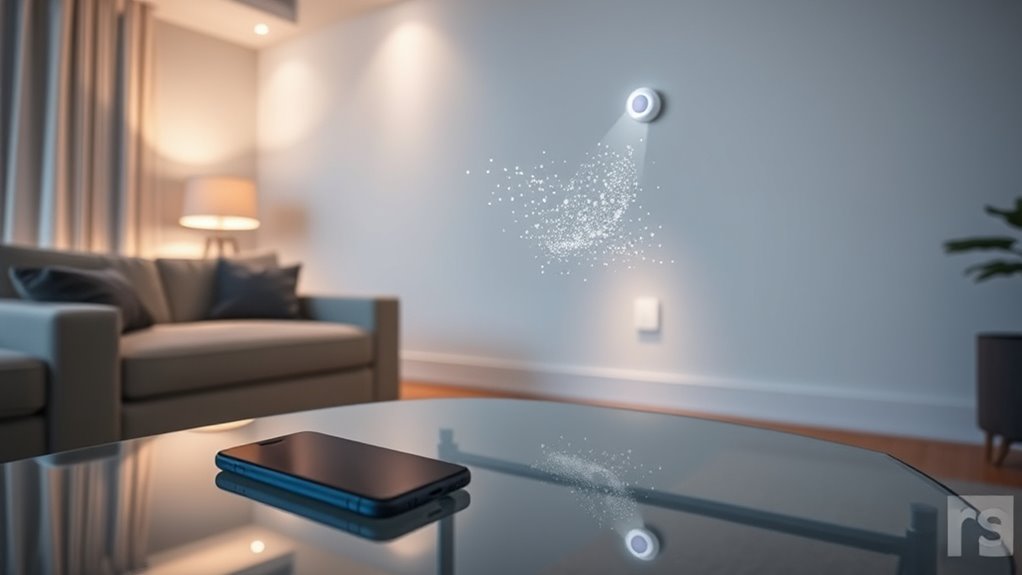
Have you ever wondered how smart homes and automated buildings detect your presence accurately? It’s a question many people ask as these systems become more integrated into daily life. The answer lies in a combination of smart home integration methods, including phones, pings, and sensors, all working together to create seamless experiences. These technologies can detect your arrival and departure, automatically adjusting lighting, climate, security, and even appliances. However, with this convenience come privacy concerns that you should be aware of. Understanding how these systems work can help you decide what level of automation and data sharing you’re comfortable with.
Smart home integration relies on multiple signals to determine your presence. Your smartphone is often the primary device used, thanks to its constant connection to Wi-Fi or Bluetooth. When your phone connects to your home network or detects a Bluetooth beacon, the system registers your presence. This method is straightforward and user-friendly because it leverages devices you already carry. However, it raises privacy concerns because your location data and device activity are continuously monitored. Some systems also use pings—signals sent between your device and the home’s hub—to confirm presence, offering more precise detection but increasing the amount of data collected about your movements.
Sensors play a vital role in modern presence detection. Motion sensors, infrared detectors, and even ultrasonic sensors are installed throughout the building. These sensors detect movement or body heat, providing real-time data about whether someone is in a room. Unlike phones or pings, sensors can detect presence even if your device isn’t actively connected, offering a more passive and reliable detection method. But this also means more data is being collected about where you are within the space, which could be a privacy concern if not managed properly. Some advanced systems combine sensor data with device detection, creating a layered approach that increases accuracy while trying to mitigate privacy risks. Additionally, the effectiveness of these systems can be influenced by the contrast ratio of the projectors used in home cinemas, which affects the clarity of images and overall viewing experience.
The challenge lies in balancing smart home integration with respect for your privacy. Manufacturers often implement encryption and data anonymization to protect user information, but breaches and misuse are still possible. It’s essential to understand what data your systems collect and how it’s stored or shared. Many systems allow you to disable or limit certain features if privacy is a priority. Ultimately, the most effective presence detection combines multiple methods—phones, pings, sensors—while giving you control over your personal data. This way, you enjoy the convenience of automation without sacrificing your privacy or security.
Frequently Asked Questions
How Accurate Are Different Presence Detection Methods?
Different presence detection methods vary in accuracy, with sensor calibration playing a key role. Phone-based detection can be quite precise but may struggle with detection latency if sensors aren’t properly calibrated. Pings are quick but less reliable in crowded environments. Sensors offer consistent results when calibrated correctly, but detection latency can affect real-time responsiveness. Overall, combining methods and proper calibration enhances accuracy and reduces detection latency.
What Are the Privacy Implications of Each Detection Technology?
You should know that over 80% of users worry about privacy concerns with presence detection tech. Phones, pings, and sensors collect personal data, raising significant privacy concerns and data security risks. You might inadvertently share sensitive location info or habits. It is crucial to understand how your data is used and protected. Always review privacy policies and opt for secure, transparent systems to minimize risks and safeguard your personal information.
Which Method Is Most Cost-Effective for Large-Scale Deployment?
You’ll find that using phone-based detection offers the best cost comparison for large-scale deployment, as it leverages existing devices and requires minimal installation effort. Sensors can be more expensive and complex to install, especially over wide areas. Pings fall somewhere in between, but their reliability and ongoing costs make them less ideal. Overall, phone detection balances affordability with ease of deployment, making it the most practical choice for large-scale use.
How Do Environmental Factors Affect Sensor-Based Detection?
Imagine sensors as vigilant sentinels, but environmental factors like dust, moisture, or temperature shifts can throw them off, much like fog blurring a clear view. These interferences cause sensor calibration issues, reducing detection accuracy. To combat this, you must account for environmental interference during installation and regularly maintain sensors. Proper calibration ensures your detection remains reliable, even when nature tries to obscure the picture.
Can Presence Detection Systems Differentiate Between Multiple Occupants?
Yes, presence detection systems can differentiate between multiple occupants by accounting for occupant diversity and sensor calibration. You should guarantee sensors are finely tuned to recognize individual movement patterns or signals, allowing for accurate identification of each person. Proper calibration helps the system adapt to varying occupant behaviors and environmental factors, so it effectively detects multiple individuals without confusion, providing reliable and personalized presence detection.
Conclusion
Ultimately, presence detection is like a heartbeat—the pulse that reveals life in a space. Phones, pings, sensors—each a different beat, a different rhythm. When you choose the right method, you tap into the true rhythm of presence, a steady drum that guides your understanding. Trust in the harmony of technology and intuition, and you’ll always find the pulse that keeps your space alive, connected, and aware.