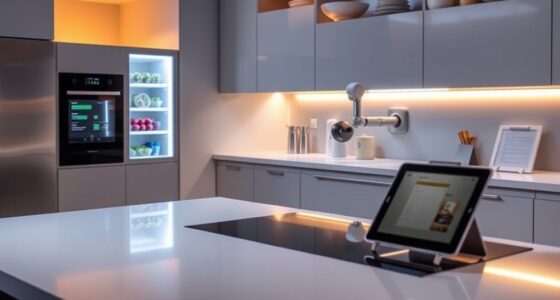
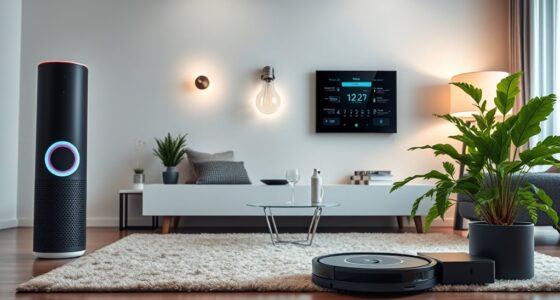
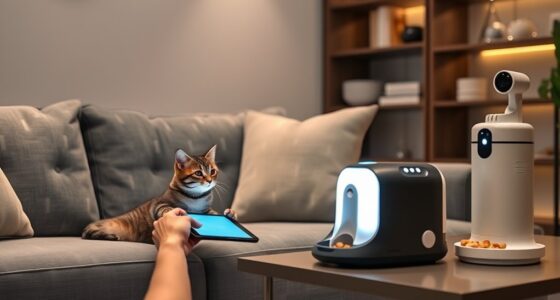
Smart home gadgets can considerably help older adults live independently by enhancing safety, security, and daily convenience. Devices like smart locks, motion detectors, and wearable health monitors allow you to monitor health signs, prevent accidents, and quickly respond to emergencies. Voice assistants and automated routines make day-to-day tasks easier, while video calls keep you connected with loved ones. If you’re curious how these technologies can support independence, explore further to see which options might work best for you.
Key Takeaways
- Smart home gadgets enhance safety with motion detectors, emergency alerts, and remote security controls, reducing the need for constant supervision.
- Devices like medication reminders and automated lighting support daily routines, promoting independence for older adults.
- User-friendly interfaces and voice control make technology accessible, helping seniors operate gadgets confidently.
- Real-time monitoring and alerts enable quick response to health issues or accidents, ensuring prompt assistance.
- Compatibility and privacy-focused features build trust, encouraging adoption and sustained use among seniors.
smart home security for seniors
As an affiliate, we earn on qualifying purchases.
As an affiliate, we earn on qualifying purchases.
The Rise of Technology in Senior Care

Technology has increasingly transformed senior care, making it easier for older adults to live independently and safely. Remote monitoring allows caregivers to keep an eye on critical signs and activity levels without being physically present, providing peace of mind and quick response if needed. Wearable health devices track heart rate, oxygen levels, and other essential metrics, alerting both users and caregivers to potential issues early. These innovations reduce the need for frequent in-person check-ins and help seniors maintain their routines confidently. Additionally, color accuracy in visual displays of health-related apps ensures that caregivers can interpret data reliably. The rise of these technologies marks a significant shift toward safer, more efficient senior care, empowering seniors to live longer, healthier lives at home. Moreover, the integration of European cloud servers can enhance data security and offer reliable, scalable support for these connected devices. Incorporating reliable backup power solutions ensures that critical medical and safety devices remain operational during power outages, further supporting independent living. Implementing secure data transmission protocols also helps protect sensitive health information from potential cyber threats.
medication reminder devices for elderly
As an affiliate, we earn on qualifying purchases.
As an affiliate, we earn on qualifying purchases.
Key Features of Smart Home Devices for Older Adults

Smart home devices designed for older adults focus on enhancing safety, convenience, and independence. Key features include user-friendly interfaces that make operation simple, even for those less tech-savvy. Voice control is common, allowing you to manage devices hands-free. Compatibility is essential; devices should seamlessly connect with your existing gadgets and systems. Privacy concerns are also a priority, so look for devices with strong data security measures to protect your information. Easy setup and reliable performance matter, ensuring you can trust your smart home technology. Clear, adjustable alerts can notify you of important events without overwhelming you. Additionally, local automation can enable devices to respond to specific triggers within your home environment, further customizing your experience. Incorporating user-centered design principles can make these devices more accessible and easier to operate for seniors. Employing adaptive interfaces can accommodate various levels of tech familiarity, making the technology more inclusive. Overall, these features work together to create a supportive environment that promotes autonomy while respecting your privacy and ensuring device compatibility. Integrating security protocols ensures that these systems remain protected from cyber threats, maintaining your peace of mind. Moreover, implementing regular software updates can help address potential vulnerabilities and enhance device functionality over time.
voice controlled smart home devices
As an affiliate, we earn on qualifying purchases.
As an affiliate, we earn on qualifying purchases.
Enhancing Safety and Security at Home

Have you ever worried about accidents or intruders when you’re alone at home? Smart devices can boost your safety and security, but it’s important to take into account privacy concerns and device compatibility. You want gadgets that work seamlessly together without risking your personal information. Regularly updating your smart home security systems can help protect against vulnerabilities and ensure optimal performance. To enhance safety, look for features like motion detectors, smart locks, and emergency alerts. These tools can:
- Provide real-time surveillance without compromising privacy
- Integrate easily with existing devices
- Offer remote access for peace of mind
- Detect unusual activity early
- Navigation and mapping features can help optimize device performance and ensure comprehensive coverage throughout your home. Incorporating device compatibility ensures all gadgets function harmoniously, reducing the risk of technical issues. Choosing compatible devices ensures your smart home system functions smoothly and protects your privacy. Proper setup allows you to feel secure, confident that your home is monitored effectively without unnecessary exposure or technical issues. Additionally, privacy settings are essential to customize how data is shared and stored, safeguarding your personal information. Regular security audits and software updates further strengthen your system’s defenses against emerging threats.
wearable health monitors for seniors
As an affiliate, we earn on qualifying purchases.
As an affiliate, we earn on qualifying purchases.
Improving Daily Convenience and Routine Management

After setting up safety features, focusing on daily convenience can make a big difference in managing routines effortlessly. Smart gadgets can simplify meal planning by suggesting recipes based on available ingredients or dietary needs, saving you time and effort. Medication reminders ensure you never miss a dose, reducing health risks and giving you peace of mind. Voice-activated assistants can help you create shopping lists, set alarms, or check the weather without lifting a finger. Automated lighting and thermostats keep your environment comfortable and energy-efficient. These tools work together to streamline daily tasks, allowing you to focus on what matters most. With smart technology, maintaining independence becomes easier, giving you confidence in managing your routine every day. Additionally, understanding the field‑of‑view and imaging‑scale examples used in astronomical setups can inspire innovative ways to optimize how smart devices are positioned and utilized within the home.
Facilitating Communication With Loved Ones and Caregivers

Staying connected with loved ones and caregivers is essential for your safety and emotional well-being, especially when you’re managing daily routines independently. Smart home gadgets make it easier to maintain communication, offering tools for virtual companionship and emotional support. These devices enable you to video chat effortlessly, receive reminders to call family, and share updates instantly. With voice-activated assistants, you can quickly connect with loved ones without hassle. Additionally, sensors can alert caregivers if you haven’t checked in, providing peace of mind. You can also access personalized messages or comforting sounds that foster emotional connection. These technologies help bridge the distance, ensuring you feel supported and engaged, which is crucial for your independence and overall happiness.
- Video calling devices for instant communication
- Voice assistants for quick connections
- Sensors that alert loved ones of changes
- Personalized messages for emotional comfort
Addressing Challenges and Barriers to Adoption

While smart home devices offer valuable support for seniors, several challenges can hinder their widespread adoption. Privacy concerns are a major barrier, as many seniors worry about data security and personal information being compromised. These fears can lead to resistance and reluctance to fully embrace the technology. Additionally, user acceptance plays a critical role; some seniors find gadgets intimidating or difficult to operate, especially if they lack tech experience. Overcoming these obstacles requires clear communication about privacy protections and designing user-friendly interfaces. Providing education, ongoing support, and demonstrating the tangible benefits can help build trust. Incorporating user-friendly interfaces and intuitive design elements can significantly improve acceptance and ease of use for older adults. Furthermore, understanding technology adoption barriers can guide the development of more accessible solutions tailored to seniors’ needs. Addressing Privacy concerns openly and transparently is essential to foster confidence and encourage adoption among older adults. Recognizing digital literacy gaps among seniors and offering tailored training sessions can also facilitate smoother adoption processes. Additionally, integrating financial literacy education can help seniors better understand and navigate the use of smart home gadgets safely.
Real-Life Examples of Smart Home Successes

Many seniors have experienced life-changing benefits from smart home technology. Emergency response systems now alert loved ones instantly, providing peace of mind. Additionally, daily routines become easier and safer with automation, making independence more attainable. Proper documentation and understanding of tax responsibilities related to these advancements can further enhance their benefits. For example, some smart devices qualify for tax deductions as medical expenses, which can help offset costs for seniors and caregivers alike. Recognizing potential manipulation tactics in managing these technologies can also empower seniors to make informed decisions and safeguard their autonomy. Furthermore, understanding the safe installation practices of these devices ensures that they function reliably without compromising security or safety. Incorporating haute couture principles, such as meticulous attention to detail and quality, can inspire the thoughtful customization of smart home systems for individual needs.
Emergency Response Wins
Have you ever wondered how smart home technology can save lives during emergencies? These devices excel at quick emergency response, giving you peace of mind. For example, fall detection systems automatically alert caregivers or emergency services if a senior falls, even if they can’t call for help. Smart sensors can identify unusual activity, such as prolonged inactivity, prompting immediate intervention. Voice-activated emergency buttons provide instant access to assistance. Additionally, integrated systems coordinate alerts across devices, ensuring timely responses.
- Automated fall detection alerts emergency contacts instantly
- Voice-activated help buttons simplify assistance requests
- Sensors monitor unusual inactivity patterns
- Real-time notifications enable faster emergency response
Daily Routine Enhancements
Smart home technology seamlessly integrates into daily routines, making life safer and more convenient for seniors. With voice commands, you can control devices hands-free, whether it’s adjusting the thermostat, playing music, or checking the weather. Automated lighting ensures your home is well-lit without needing to fumble for switches, especially at night or during early mornings. For example, you can say, “Turn on the lights,” and they’ll illuminate instantly, reducing fall risks. These simple yet effective enhancements help you maintain independence by streamlining everyday tasks. You won’t have to worry about forgetting to turn off lights or manually adjusting settings. The seamless integration of voice commands and automated lighting creates a more comfortable, accessible environment, empowering you to live confidently and safely at home. Additionally, smart home integration can help monitor health and safety, providing peace of mind for both seniors and their loved ones.
Cost Considerations and Accessibility of Smart Gadgets

While smart home gadgets offer valuable safety and convenience features for seniors, their cost can be a significant barrier for many. Affordability concerns often limit access, making it harder for some to benefit from these technologies. Device accessibility is also a challenge, as some gadgets require technical skills or frequent updates that may be intimidating. To navigate this, consider options like:
- Budget-friendly devices with basic features
- Community programs or grants supporting senior tech access
- Simplified gadgets designed specifically for ease of use
- Local retailers offering installation and training services
Addressing both affordability concerns and device accessibility ensures that more seniors can enjoy the independence smart gadgets provide, without financial or technical hurdles.
Future Trends in Senior-Focused Home Technology

As technology continues to evolve, future trends in senior-focused home innovations aim to enhance safety, independence, and quality of life. Expect more advanced wearable devices that monitor health metrics in real-time, alerting both users and caregivers to potential issues. Voice assistants will become even smarter, allowing seamless control of home environments and easy communication with loved ones. These innovations will integrate more personalized data, adapting to individual needs and preferences. Here’s a glimpse of what’s coming:
| Technology | Functionality | Benefits |
|---|---|---|
| Wearable Devices | Health tracking, fall detection | Immediate alerts, safety |
| Voice Assistants | Voice-activated control, reminders | Independence, convenience |
| Smart Sensors | Room monitoring, activity detection | Enhanced safety |
| AI Integration | Predictive health insights | Proactive care |
| Automated Systems | Lighting, climate control | Comfort and energy savings |
Making Informed Choices: Selecting the Right Devices

Choosing the right devices for a senior’s home can feel overwhelming with so many options available. To make informed decisions, prioritize device compatibility to guarantee gadgets work seamlessly with existing systems. Pay attention to user interfaces; simple, intuitive designs help seniors navigate devices confidently. Consider features like voice control or large displays that enhance usability. Additionally, assess whether the devices support remote monitoring if needed.
- Compatibility with existing smart home systems
- User interfaces designed for ease of use
- Features like voice commands or touchscreens
- Compatibility with emergency response services
Frequently Asked Questions
How Secure Are Smart Home Devices Against Hacking and Data Breaches?
Smart home devices are reasonably secure if you keep encryption protocols up to date and regularly install firmware updates. These measures protect your data from hacking and breaches. However, no system is completely invulnerable, so you should use strong, unique passwords and enable two-factor authentication when possible. Staying proactive with security practices helps safeguard your devices and personal information, keeping your smart home safer and more reliable.
Can Seniors Operate Smart Gadgets Without Prior Technical Knowledge?
You can operate smart gadgets without prior technical knowledge thanks to their user-friendly design. Many devices feature simple interfaces, voice commands, and clear instructions that make them accessible. Plus, technical support is often available to assist if needed, ensuring you feel confident using the gadgets. With these features, you can easily manage your smart home devices and enjoy independent living without feeling overwhelmed by technology.
What Are the Privacy Implications of Monitoring Devices in Senior Homes?
Imagine your loved one’s privacy hanging in the balance. Monitoring devices in senior homes raise serious data privacy concerns, especially if consent protocols aren’t clear. You need to know that your loved one’s personal information is protected and that they’ve given informed consent. Without proper safeguards, monitoring can feel intrusive, risking trust. Stay vigilant, ask about privacy policies, and ensure robust data privacy measures are in place to keep their independence safe and secure.
Are There Any Health Risks Associated With Long-Term Use of Smart Technology?
Long-term use of smart devices generally doesn’t pose significant health risks if you follow manufacturer guidelines. However, prolonged exposure to electromagnetic fields (EMF) from these devices might cause minor discomfort or sleep disturbances for some seniors. You should also consider potential eye strain from screens and guarantee proper device maintenance. Regular breaks and monitoring your health can help minimize any long-term health concerns associated with smart technology use.
How Can Families Ensure Ongoing Support and Maintenance of These Devices?
Think of device upkeep like tending a garden—you need regular care to keep it thriving. To guarantee ongoing support, involve your family in routine maintenance and updates, making it a shared effort. Schedule periodic check-ins, troubleshoot issues together, and stay informed about device features. This teamwork keeps gadgets functioning smoothly, providing your loved ones with reliable independence and peace of mind.
Conclusion
Embracing smart home technology can truly transform how seniors live independently, turning their homes into safe, convenient sanctuaries. With gadgets guiding you like a trusty automaton, you’ll enjoy enhanced safety, better communication, and greater peace of mind. Don’t wait for the dawn of a new age—think of it as stepping into the future, one smart device at a time. Your golden years deserve the best tools modern innovation can offer.