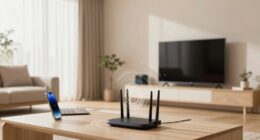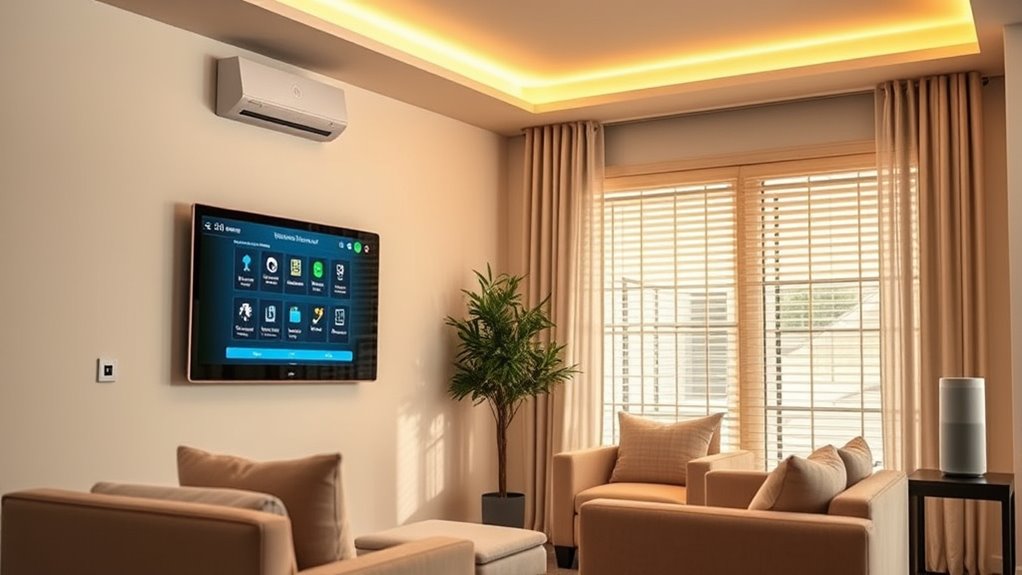

Smart home technology can make aging in place safer by providing you with safety alerts, remote monitoring, and automation of daily tasks. Features like smart locks, cameras, and health sensors help you stay secure and independent, while offering peace of mind to loved ones. Privacy and data security are important, so choose devices with strong encryption. We’ll explore more ways to find the best solutions for your needs and comfort.
Key Takeaways
- Smart home devices enhance safety by monitoring health, detecting falls, and providing automated alerts for emergencies.
- Integration of security features like smart locks and cameras improves safety while maintaining privacy controls.
- User-friendly technology and professional support ensure seniors can easily operate and benefit from smart home systems.
- Cost savings and insurance discounts make investing in smart home tech a financially viable way to support aging in place.
- Proper planning and reputable device choices balance privacy, security, and affordability, improving seniors’ independence and quality of life.
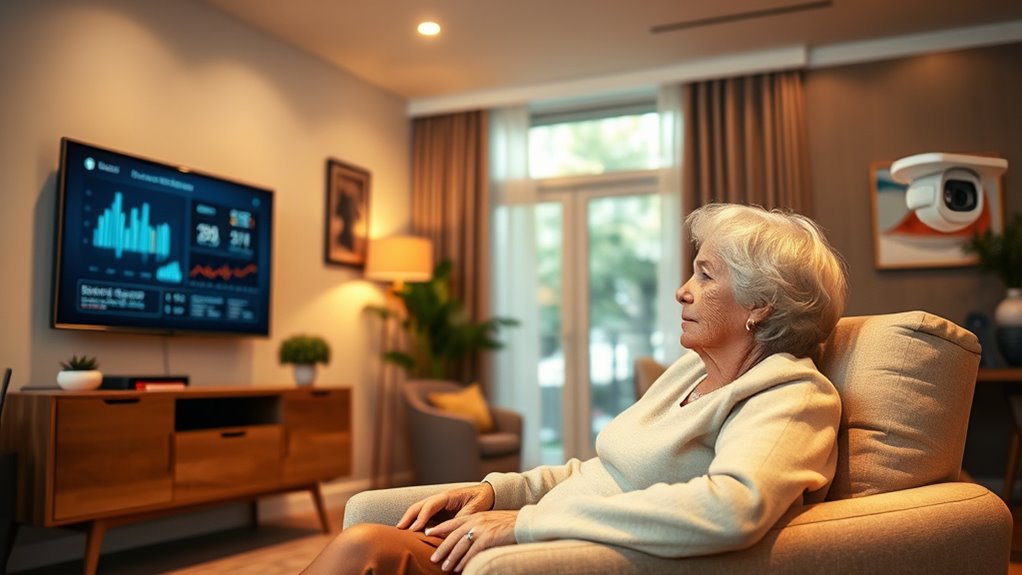
As more seniors choose to age in place, smart homes are becoming an essential tool for maintaining independence and safety. These homes integrate technology that can monitor your health, improve security, and automate everyday tasks. But as you consider upgrading your living space, it’s important to understand the privacy concerns and cost considerations involved. Smart home devices, such as cameras, sensors, and voice assistants, gather a lot of data about your routines and habits. While this data helps tailor assistance to your needs, it also raises questions about privacy. You might worry about who has access to your information and how securely it’s stored. To address this, look for devices with strong encryption and clear privacy policies. Many manufacturers now offer options to control what data is shared and stored, so you can make informed decisions about your privacy. Additionally, choosing local automation options can help keep your data within your home network, enhancing privacy and security.
Smart home devices collect data; choose those with strong encryption and clear privacy policies for peace of mind.
Cost considerations also play a *vital* role. The initial investment in smart home technology can seem steep, especially when you’re paying for devices, installation, and setup. However, weigh this against the potential savings in healthcare costs and increased safety. Automated alerts for falls or health emergencies can reduce response times and prevent serious injuries, potentially lowering medical expenses. Additionally, some insurance providers offer discounts for homes equipped with safety features like smart locks or security cameras. It’s wise to research available programs and incentives that can offset the upfront costs. Over time, the convenience and peace of mind these devices provide might outweigh the initial expenditure.
Another aspect *to ponder* is ongoing maintenance and updates. Smart home systems require regular software updates to stay secure and functional. You’ll want to *assure* you’re comfortable managing these updates or have support to assist you. Compatibility is also key; new devices should integrate seamlessly with your existing setup. When choosing smart technology, prioritize user-friendly interfaces that don’t complicate daily routines. Remember, the goal is to enhance your independence without creating new frustrations.
While privacy concerns and costs are legitimate considerations, they shouldn’t deter you from exploring smart home options. With careful planning, you can select devices that balance security, affordability, and privacy. Take the time to research reputable brands, read reviews, and consult professionals if needed. Ultimately, smart homes can *greatly* improve your quality of life by providing a safer, more connected environment. As you navigate these choices, focus on solutions that align with your comfort and privacy preferences, and you’ll find that aging in place becomes a more manageable, empowering experience.
smart home security system for seniors
As an affiliate, we earn on qualifying purchases.
As an affiliate, we earn on qualifying purchases.
Frequently Asked Questions
What Are the Costs Associated With Installing Smart Home Technology for Seniors?
The costs of installing smart home technology for seniors vary depending on devices and setup, but a thorough cost analysis helps you plan effectively. Expect expenses for devices like sensors, security systems, and voice assistants. Funding options, such as government grants, insurance, or community programs, can reduce financial burdens. By exploring these options, you can make informed decisions and guarantee your loved ones benefit from safer, more independent living.
How User-Friendly Are These Smart Home Systems for Seniors With Limited Tech Experience?
These smart home systems are designed to be user-friendly for seniors with limited tech experience. Voice command simplicity makes controlling devices easy, even for beginners, while touchscreen usability is often simplified with large icons and clear instructions. Most systems also offer step-by-step guidance, ensuring you can learn quickly. Overall, manufacturers prioritize accessibility, making it manageable for seniors to enjoy the benefits of smart technology without feeling overwhelmed.
Can Smart Homes Be Customized to Meet Individual Seniors’ Specific Needs?
Yes, smart homes can be customized to meet your specific needs through personalized features and adaptive technology. You can tailor devices to control lighting, temperature, or security based on your routines. Adaptive technology learns your preferences over time, ensuring the system responds intuitively. This customization helps you feel more comfortable and independent, making your living environment safer and more suited to your unique lifestyle.
What Privacy and Security Measures Are in Place for Smart Home Devices?
Did you know that 85% of smart home users prioritize security? You can rest assured knowing your devices employ data encryption and strict access controls, safeguarding your personal information. Manufacturers often update software regularly, fixing vulnerabilities and maintaining security. Plus, you control who accesses your devices, giving you peace of mind. With these measures, your smart home remains a safe haven, protecting your privacy while enhancing your independence.
How Reliable Are Smart Home Systems During Power Outages or Internet Disruptions?
Smart home systems’ reliability during power outages or internet disruptions depends on their power backup options. You should choose devices with battery backups or uninterruptible power supplies (UPS) to guarantee continuous operation. While internet disruptions can affect connectivity, many systems include local controls that function offline, maintaining safety and security. Investing in robust power backup solutions enhances system reliability, so you stay protected even when the grid or internet falters.
senior-friendly smart locks
As an affiliate, we earn on qualifying purchases.
As an affiliate, we earn on qualifying purchases.
Conclusion
Think of smart homes as your personal lighthouse, guiding seniors safely through life’s changing seas. With the right technology, aging in place becomes a smooth voyage, not a stormy challenge. These tools illuminate daily routines, provide reassurance, and keep loved ones connected. Embracing this innovation means you’re steering toward a safer, more independent future—where every step is guided by the steady beam of smart technology, ensuring a safe harbor for all who choose to stay home.
fall detection sensors for elderly
As an affiliate, we earn on qualifying purchases.
As an affiliate, we earn on qualifying purchases.
remote health monitoring devices
As an affiliate, we earn on qualifying purchases.
As an affiliate, we earn on qualifying purchases.