
To cut bills with a smart thermostat schedule, you should optimize your settings based on your daily routine and seasonal changes. Use zones for different areas and set them according to occupancy, lowering temperatures at night or when you’re away. Automate based on geofencing and occupancy sensors to prevent unnecessary energy use. Leverage learning algorithms that adapt to your habits over time. Keep fine-tuning your schedule to maximize savings and comfort as you explore more strategies.
Key Takeaways
- Use occupancy sensors and geofencing to automatically adjust temperatures when you’re away or asleep.
- Create zone-specific schedules to optimize heating and cooling in different areas of your home.
- Implement seasonal adjustments, increasing or decreasing setpoints based on outdoor weather and insulation.
- Automate nighttime and unoccupied modes to lower energy use without sacrificing comfort.
- Leverage learning algorithms to analyze habits and fine-tune schedules for maximum savings.
Top picks for "smart thermostat schedul"
Open Amazon search results for this keyword.
As an affiliate, we earn on qualifying purchases.
Understanding Your Daily Routine for Optimal Scheduling
To create an effective thermostat schedule, you need to understand your daily routine thoroughly. Your sleep patterns play a vital role in determining when to lower or raise the temperature. If you tend to wake up at the same time each day, set the thermostat to warm up just before that. Similarly, knowing your meal times helps you adjust the temperature during those periods—cooling slightly during meals when you’re less active or heating up when you’re about to eat. By tracking these habits, you can identify periods when the house is unoccupied or less active, allowing you to optimize energy savings. Understanding home automation can further enhance your scheduling efficiency. Incorporating high-performance projectors can also be beneficial in creating an environment that complements your routine. Additionally, integrating AI-driven scheduling can help refine your thermostat settings over time based on your habits, ensuring optimal comfort and efficiency. Leveraging energy management systems enables more precise adjustments and can significantly reduce your energy consumption over the long term. Tailoring your thermostat to fit your routine guarantees comfort while reducing unnecessary heating or cooling costs and highlights the importance of smart device integration for seamless control.
Setting Up Temperature Zones for Different Times of Day

Creating different temperature zones within your home allows you to customize comfort and maximize energy efficiency throughout the day. By applying zoning principles, you can assign thermostatic zones to specific areas, ensuring each space maintains the ideal temperature during different times. This setup helps prevent unnecessary heating or cooling, saving money on bills. To get started, consider these tips:
- Identify high-traffic areas needing consistent comfort
- Assign bedrooms as separate thermostatic zones for nighttime comfort
- Create a zone for the living room during peak hours
- Use sensors to monitor temperature variations within zones
- Adjust zone schedules based on daily routines and occupancy patterns
- Proper zoning can help you optimize your system for better efficiency.
- Understanding zoning principles can further enhance your home’s energy management. Implementing well-planned thermostatic zones allows your smart thermostat to optimize energy use while keeping your home comfortable. Proper zoning guarantees that each area is heated or cooled only when needed, which can significantly improve overall energy efficiency. Additionally, leveraging smart technology can further refine your zoning strategy for optimal savings. Incorporating dynamic scheduling can adapt your thermostat settings in real-time based on occupancy and weather changes, maximizing savings and comfort.
Utilizing Geofencing to Automate Home Comfort
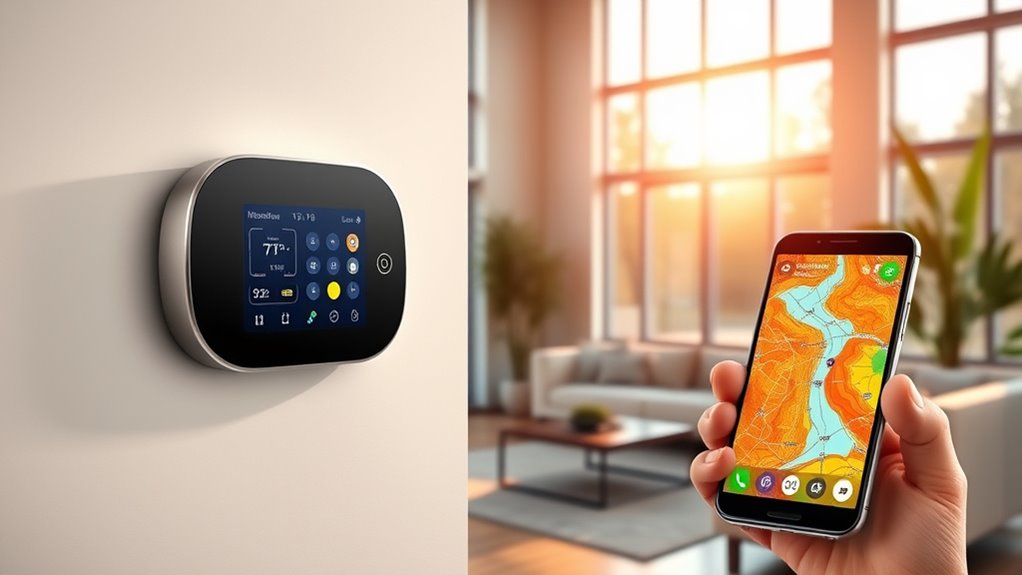
Utilizing geofencing with your smart thermostat allows you to automate your home’s comfort based on your location. When you enable geofencing, your thermostat detects when you’re approaching or leaving home through your smartphone’s GPS. This smart home integration guarantees your system adjusts automatically, saving energy and increasing convenience. Occupancy sensors can also work alongside geofencing to confirm whether someone is in the house, preventing unnecessary heating or cooling. For example, when you leave, the system can lower the temperature, and when you return, it warms up again. This seamless automation reduces energy waste while maintaining comfort. Additionally, local automation can coordinate multiple devices to optimize energy use throughout your home. By leveraging these technologies, you create a home environment that responds intelligently to your routines without manual adjustments. Incorporating smart home technology further enhances the efficiency and responsiveness of your system, ensuring optimal comfort and savings. Implementing energy-saving features can maximize your system’s effectiveness and reduce utility costs over time. Using occupancy detection systems can further fine-tune your home’s climate control, making your setup even more efficient. Moreover, understanding the power backup options available ensures your automation systems remain operational during outages, providing consistent comfort and security.
Creating Energy-Saving Nighttime and Away Modes

Smart thermostats can do more than adapt to your daily routines; they also help you save energy during times when comfort is less critical. Creating effective nighttime and away modes reduces unnecessary heating or cooling, easing the load on your HVAC system. This not only benefits your energy bills but also supports the overall smart home ecosystem by promoting energy efficiency. To optimize these modes, consider:
Using nighttime and away modes optimizes energy savings and eases the smart grid load.
- Lowering temperature settings during sleep hours
- Pre-cooling or pre-heating before occupants return
- Using sensor data to detect home occupancy patterns
- Ensuring your home has good thermal insulation
- Automating mode adjustments based on occupancy patterns
Implementing these strategies can further enhance your energy-saving techniques and make your smart home more responsive. Additionally, understanding the reliability of your wiring can ensure your smart system functions smoothly without connectivity issues. Proper wiring can also prevent system malfunctions, ensuring consistent operation of your thermostat and related devices.
Leveraging Learning Algorithms for Personalized Comfort
Learning algorithms enable your thermostat to adapt to your lifestyle by analyzing your daily habits and preferences. This personalization guarantees your home stays comfortable without wasting energy. For example, occupancy detection allows your thermostat to identify when you’re home or away, adjusting temperatures accordingly to save costs. Over time, the system learns your preferred temperature settings during different parts of the day, optimizing comfort and efficiency. Additionally, these algorithms support predictive maintenance by monitoring system performance and alerting you to potential issues before they cause breakdowns. This proactive approach minimizes repair costs and keeps your heating and cooling systems running smoothly. Incorporating machine learning techniques can further enhance your thermostat’s ability to anticipate your needs and improve energy savings. Understanding body jewelry measurements can help you select the right accessories for comfort and safety. By leveraging learning algorithms, you get a smarter, more responsive thermostat that enhances comfort while reducing energy bills.
Adjusting Schedules Seasonally for Maximum Efficiency
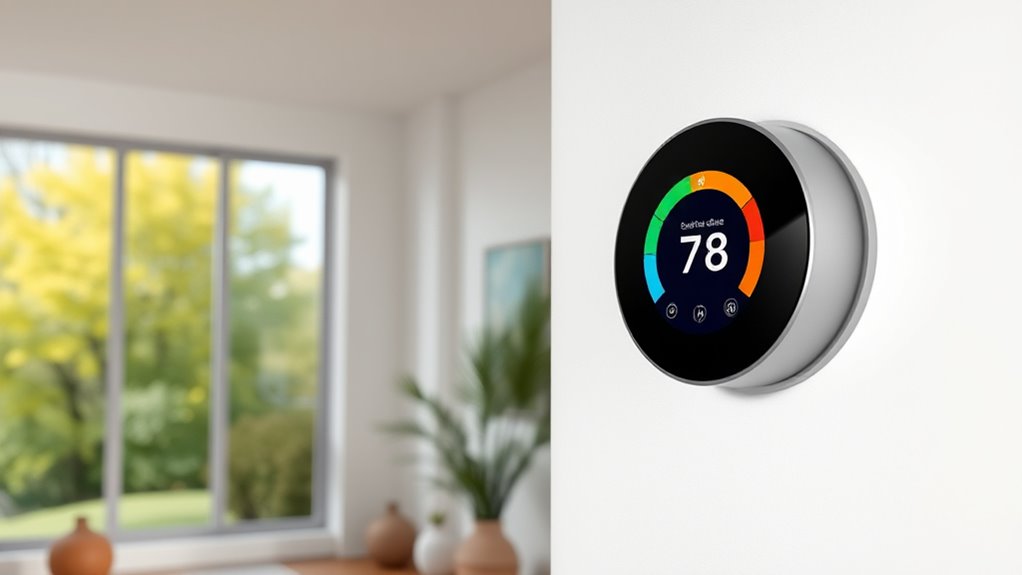
Adjusting your thermostat schedule seasonally guarantees your home remains comfortable and energy-efficient year-round. As temperatures change, you should modify your settings to match the season, ensuring ideal comfort and savings. Consider enhancing seasonal insulation to reduce heat loss in winter and keep cool in summer. Proper thermostat placement also plays a role; position it away from drafts, direct sunlight, or heat sources.
- Increase heating setpoints in winter during occupied hours
- Lower cooling setpoints in summer when home is active
- Adjust schedules for weekends and vacations
- Use seasonal insulation to maintain consistent indoor temperatures
- Ensure thermostat placement avoids temperature extremes and drafts
Monitoring and Fine-Tuning Your Thermostat Settings

To keep your smart thermostat working effectively, you should regularly track your temperature patterns throughout the day. This helps you identify when your home is comfortable and when adjustments are needed. Fine-tuning these settings ensures your space stays cozy without wasting energy.
Tracking Temperature Patterns
Monitoring your temperature patterns is essential for optimizing your thermostat settings. By tracking how temperatures fluctuate daily, you can identify when your home needs heating or cooling most. This helps you make precise adjustments, saving energy and lowering bills. Keep an eye on:
- Variations in indoor temperature during different times of day
- How humidity levels impact comfort and system efficiency
- Effects of airflow management on temperature consistency
- Changes in outdoor weather influencing indoor conditions
- The impact of open windows or doors on temperature stability
Using this data, you can fine-tune your thermostat to match your lifestyle and seasonal shifts. Focusing on humidity control and airflow management ensures your home stays comfortable without wasting energy. Regular monitoring keeps your system responsive and efficient.
Adjusting for Comfort
Once you’ve gathered enough data on your home’s temperature patterns, fine-tuning your thermostat becomes a straightforward process. To improve comfort and efficiency, focus on humidity control, which can prevent the air from feeling too damp or dry. Adjust settings to maintain ideal moisture levels, reducing the need to overheat or cool your space. Additionally, check your window insulation; properly sealed windows prevent drafts that can cause temperature fluctuations. Use your smart thermostat’s monitoring features to identify problem areas and make small adjustments accordingly. Keep an eye on humidity levels and insulate windows as needed. These steps help you create a stable, comfortable environment while saving on energy bills. Fine-tuning based on real data ensures your system works smarter, not harder.
Frequently Asked Questions
Can Smart Thermostats Detect and Respond to Unexpected Weather Changes?
Yes, smart thermostats detect and respond to unexpected weather changes through weather adaptation features. They use real-time data to automatically adjust your home’s temperature, ensuring comfort and energy efficiency. Additionally, many have emergency response capabilities, like alerting you to severe weather or adjusting settings during storms. This proactive approach helps you stay comfortable and safe while saving on energy costs, even when weather conditions shift unexpectedly.
How Secure Is My Data When Using Smart Thermostat Scheduling Features?
Your data is generally secure with smart thermostats because manufacturers implement robust data encryption to protect your privacy. However, privacy concerns still exist if the device connects to insecure networks or if the company experiences a data breach. To stay safe, make sure your Wi-Fi is secure, update your thermostat’s firmware regularly, and review privacy policies. Taking these steps helps minimize risks and keeps your scheduling data private.
Are There Compatibility Issues With Existing Home Heating or Cooling Systems?
You might face some system compatibility issues or installation challenges when installing a smart thermostat. Make certain your existing heating or cooling system is compatible by checking manufacturer guidelines. Older systems may require additional wiring or adapters, which can complicate installation. To avoid problems, consult a professional to assess your setup and ensure smooth integration, so you can enjoy the energy savings without hassle.
What Is the Typical Cost Savings Achieved With Optimized Scheduling?
In this day and age, optimizing your thermostat can lead to impressive savings. On average, you could see a 10-15% reduction in energy costs, thanks to improved energy efficiency. By setting schedules that match your routine, you’re not only cutting bills but also decreasing your carbon footprint. This smart approach guarantees your home stays comfortable while you enjoy significant cost reduction over time, making every penny count.
How Often Should I Update or Review My Thermostat’s Schedule Settings?
You should review your thermostat’s schedule at least once every few months, especially during seasonal changes. Schedule adjustments are essential to optimize comfort and savings. Regular review frequency helps you catch any inefficiencies or changes in your routine. If your schedule stays consistent, you might extend reviews to every six months, but staying proactive guarantees you maximize savings and maintain comfort.
Conclusion
By optimizing your thermostat schedules, you can save up to 10% on energy bills each year. When you tailor your heating and cooling to your routine, you not only cut costs but also reduce your environmental impact. With smart features like geofencing and learning algorithms, you gain personalized comfort without extra effort. Embrace these strategies, and you’ll enjoy a more efficient home—proving that small adjustments make a big difference.