
Zigbee and Z-Wave are two popular smart home protocols, each with unique strengths. Zigbee offers broader device compatibility, longer range, and better power efficiency, making it suitable for larger or more complex setups. Z-Wave provides a more curated, secure ecosystem with reliable device integration and easier setup. Understanding their differences can help you choose the best protocol for your home, and if you keep exploring, you’ll find more details to make an informed decision.
Key Takeaways
- Zigbee is an open standard supporting a wide range of devices, while Z-Wave is a proprietary protocol with curated device options.
- Zigbee offers longer indoor range and supports more devices simultaneously compared to Z-Wave’s smaller coverage.
- Both protocols use mesh networks, but Zigbee is generally more power-efficient, extending battery life for devices.
- Z-Wave emphasizes reliability through strict certification, whereas Zigbee provides broader compatibility and device variety.
- Both protocols employ AES-128 encryption, ensuring secure and private communication in smart home setups.
Understanding the Basics of Zigbee and Z-Wave
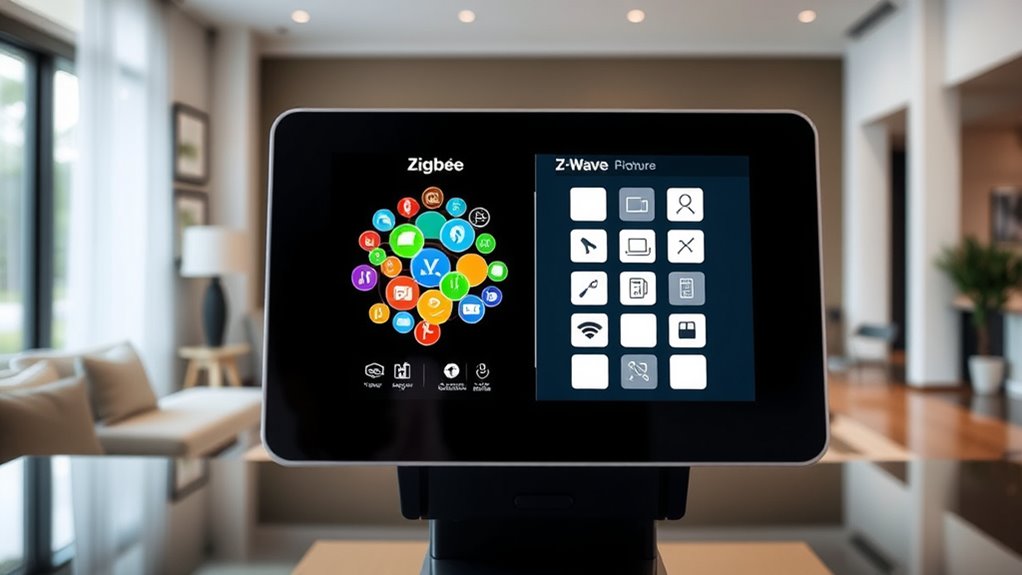
To understand the differences between Zigbee and Z-Wave, it’s important to first grasp their core functions. Both are wireless communication protocols designed for smart home hubs, enabling your devices to connect and communicate seamlessly. Zigbee operates based on open protocol standards, allowing for a broader range of device options and greater flexibility. Z-Wave, meanwhile, uses a proprietary protocol, which can lead to more consistent device compatibility. These protocol standards define how data is transmitted and ensure reliable communication within your smart home network. While Zigbee often supports more devices simultaneously, Z-Wave is known for its simplicity and lower interference. Additionally, outdoor connectivity considerations can influence protocol choice depending on your environment. Understanding these basics helps you make informed choices when building or expanding your smart home system, especially when considering factors like interference resistance and device interoperability. Moreover, protocol reliability plays a crucial role in maintaining a stable and secure smart home network. Recognizing the network range capabilities of each protocol can further assist in designing an effective smart home setup.
Compatibility and Device Ecosystems
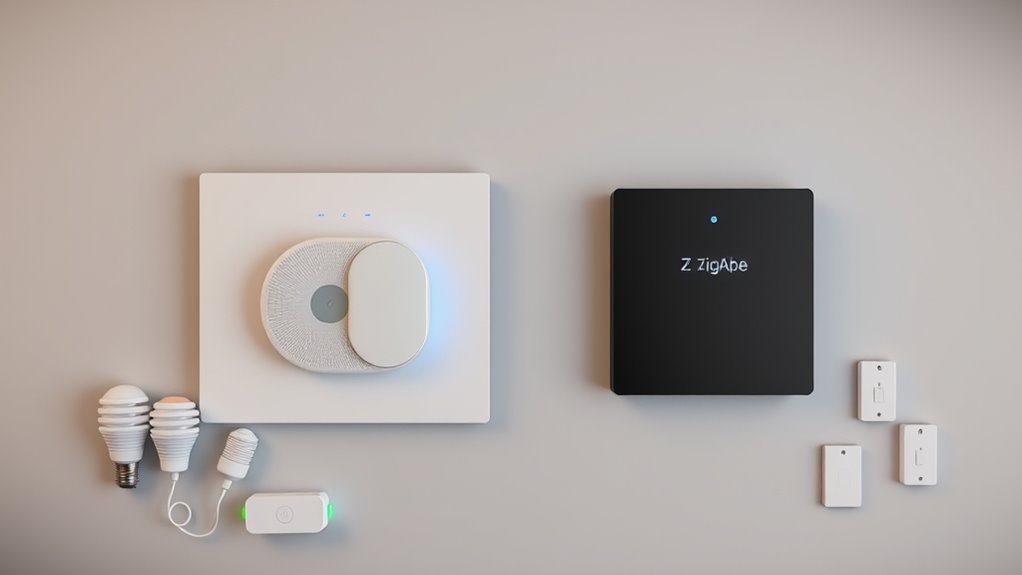
Your choice between Zigbee and Z-Wave impacts which devices you’ll be able to connect and control easily. Consider the compatibility range and how smoothly each ecosystem integrates with your existing smart home setup. Cross-platform support also plays a key role in ensuring your devices work together seamlessly across different systems. Additionally, understanding the Free Floating nature of these protocols can help you better assess their flexibility and adaptability within your smart home environment. Being aware of interoperability considerations can further enhance your ability to create a cohesive smart home network. Recognizing the importance of standardization can assist in selecting protocols that are more likely to remain compatible as your system grows. Moreover, device ecosystem compatibility ensures you can expand your setup without facing major hurdles.
Device Compatibility Range
While both Zigbee and Z-Wave are designed for smart home device communication, their compatibility and device ecosystems vary considerably. Zigbee offers a broader device variety, supporting many different types of sensors, lights, and switches from numerous brands. Its open standard allows for extensive brand diversity, giving you more options when building your smart home. This flexibility facilitates interoperability, making it easier to integrate devices from different manufacturers. Additionally, Z-Wave, with its strict certification processes, tends to have a more curated selection of compatible devices, which limits brand diversity but ensures reliability. This means Z-Wave devices tend to be more consistent and easier to integrate within its ecosystem. The device ecosystem for each protocol also influences how smoothly devices communicate and coordinate, impacting overall smart home performance. The network topology of each protocol affects how devices communicate over different distances, which can influence your setup choices. Your choice depends on whether you prefer a wider range of device options with Zigbee or a more controlled, dependable selection with Z-Wave. Additionally, device interoperability is a key factor to consider when choosing between these protocols, as it impacts how seamlessly your devices work together.
Ecosystem Integration Ease
Ecosystem integration ease plays a significant role in choosing between Zigbee and Z-Wave. Your experience depends on how smoothly devices from different brands work together and how intuitive their user interfaces are. Zigbee often supports a wider variety of device branding, giving you more options, but sometimes complicates ecosystem integration. Z-Wave tends to have stricter device branding standards, which can simplify compatibility but limit choices. To evaluate ease of use, consider:
- The consistency of the user interface across devices and platforms
- The ease of adding new devices within the ecosystem
- How well different brands and device types integrate without conflicts
- The importance of device ecosystem cohesion in creating a seamless smart home experience
Additionally, the availability of industry standards and certifications can influence how reliably devices work together and how straightforward the integration process becomes. Ensuring that devices adhere to recognized compatibility standards can help prevent integration issues and improve overall reliability. Both protocols aim for seamless integration, but your experience depends on the ecosystem’s cohesion and how easily you manage device branding and user interface preferences.
Cross-Platform Support
Choosing between Zigbee and Z-Wave often hinges on cross-platform support, which determines how easily devices from different brands and ecosystems work together. Your device manufacturer’s choice impacts platform compatibility, as not all devices are universally compatible. Zigbee generally offers broader platform support, allowing devices from various manufacturers to connect seamlessly if they adhere to common standards. Z-Wave, however, tends to be more restricted, often requiring devices to be certified for specific hubs or ecosystems. This can limit your options but ensures better interoperability within supported platforms. When selecting a protocol, consider your device manufacturer’s ecosystem and whether your preferred smart home platform supports cross-platform device integration. This guarantees your smart home remains flexible and expandable over time.
Range and Signal Coverage
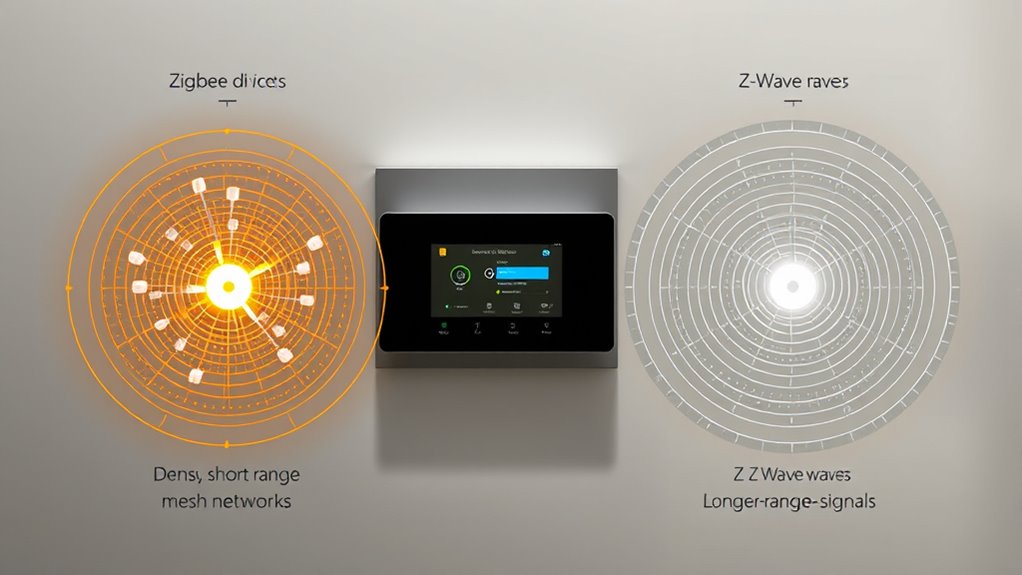
Understanding signal strength and distance helps you determine how far your devices can communicate effectively. Mesh network capabilities can extend coverage, but obstacles and interference may diminish signals. Considering these factors ensures you choose the right technology for your home’s layout. Additionally, proper research and testing can help optimize your smart home setup for reliable connectivity. Knowing the signal propagation characteristics of each protocol can further assist in planning your device placement for optimal performance.
Signal Strength and Distance
When it comes to signal strength and distance, Zigbee and Z-Wave differ markedly in their coverage capabilities. Zigbee typically offers a longer signal reach, providing a wireless range of up to 100 meters indoors, depending on obstacles. Z-Wave usually has a shorter range, around 30 meters indoors, but can extend further with repeaters. To understand their performance better: 1. Zigbee’s broader signal reach allows for more extensive device placement without loss of connection. 2. Z-Wave’s shorter wireless range may require additional devices to maintain coverage in larger homes. 3. Obstructions like walls impact both protocols, but Zigbee’s higher power often results in better signal strength in complex environments. 4. The effectiveness of each protocol can also be influenced by the network topology, which determines how devices communicate and extend coverage within your smart home. Additionally, environmental factors and interference sources can affect signal quality and coverage. The power consumption of each protocol can also influence how well they perform over extended periods, especially in battery-operated devices. Understanding the wireless protocol’s resilience to interference can help you select the best option for your environment. Factors such as environmental conditions and device placement also play crucial roles in maintaining reliable connectivity.
Mesh Network Capabilities
Mesh network capabilities substantially enhance the range and reliability of both Zigbee and Z-Wave, allowing devices to communicate over multiple hops rather than relying on a single point-to-point connection. This setup improves overall coverage by enabling device routing, where messages find the best path through the network. Instead of depending on a central hub alone, devices act as relays, passing signals to extend reach. As a result, your smart home can cover larger areas with fewer dead zones. Both protocols leverage their mesh network design to ensure consistent communication, even if individual devices drop out. This dynamic routing makes your system more resilient and adaptable, providing a robust foundation for seamless and reliable smart home automation. Connected home fitness also benefits from such reliable communication protocols, ensuring your devices work together smoothly.
Obstacle Interference Factors
Obstacles like walls, furniture, and other household objects can substantially reduce the range and signal coverage of both Zigbee and Z-Wave devices. Physical obstructions weaken signals, forcing devices to work harder and potentially drop connections. Additionally, wireless interference from other electronics, such as Wi-Fi routers or cordless phones, can further disrupt signal quality. To mitigate these issues, consider the following factors:
- Material type of walls and furniture, which impacts signal penetration.
- Distance between devices, as greater separation decreases coverage.
- Presence of other wireless devices causing interference, reducing reliability.
Understanding these obstacle interference factors helps you optimize device placement and maintain a robust smart home network.
Power Consumption and Battery Life
Power consumption and battery life are crucial factors to contemplate when choosing between Zigbee and Z-Wave, especially for battery-powered devices. Zigbee is known for its superior battery efficiency due to its effective power management, allowing devices to run longer on smaller batteries. It uses low power by design, making it ideal for sensors and remote controls that need to operate for extended periods without frequent charging. Z-Wave also offers good power management but typically consumes slightly more energy, resulting in shorter battery life for similar devices. If long-lasting battery performance is your priority, Zigbee generally has the edge. Ultimately, your choice depends on how critical battery life is for your smart home setup and the specific power management features of each protocol.
Security Features and Data Privacy
When it comes to security features and data privacy, both Zigbee and Z-Wave implement protocols designed to protect your smart home network, but they do so in different ways. Zigbee uses advanced encryption protocols like AES-128 to secure data transmission, ensuring your devices communicate safely. Z-Wave also employs AES-128 encryption, providing a secure communication channel. Additionally, both protocols utilize data anonymization techniques to prevent sensitive information from being exposed during data exchange.
Both Zigbee and Z-Wave use AES-128 encryption and data anonymization to protect smart home privacy and security.
- Zigbee emphasizes robust encryption protocols to safeguard data.
- Z-Wave leverages encryption and network key management for security.
- Both protocols incorporate data anonymization to enhance privacy protection.
Installation and Setup Process
Setting up Zigbee and Z-Wave networks is generally straightforward, but each protocol has its own process to follow. Zigbee’s installation nuances involve connecting devices to a hub or hubless system, often requiring compatible hardware and a dedicated app for configuration. Z-Wave’s setup complexity centers on pairing devices with a Z-Wave controller, which may involve putting devices into pairing mode and ensuring they’re within range. Both protocols typically require you to install a hub or central controller, but Zigbee’s open standards can lead to more compatibility issues, while Z-Wave’s standardized approach simplifies pairing. Overall, while the setup process is manageable, understanding each protocol’s installation nuances helps prevent confusion and streamlines your smart home setup.
Cost and Availability of Devices
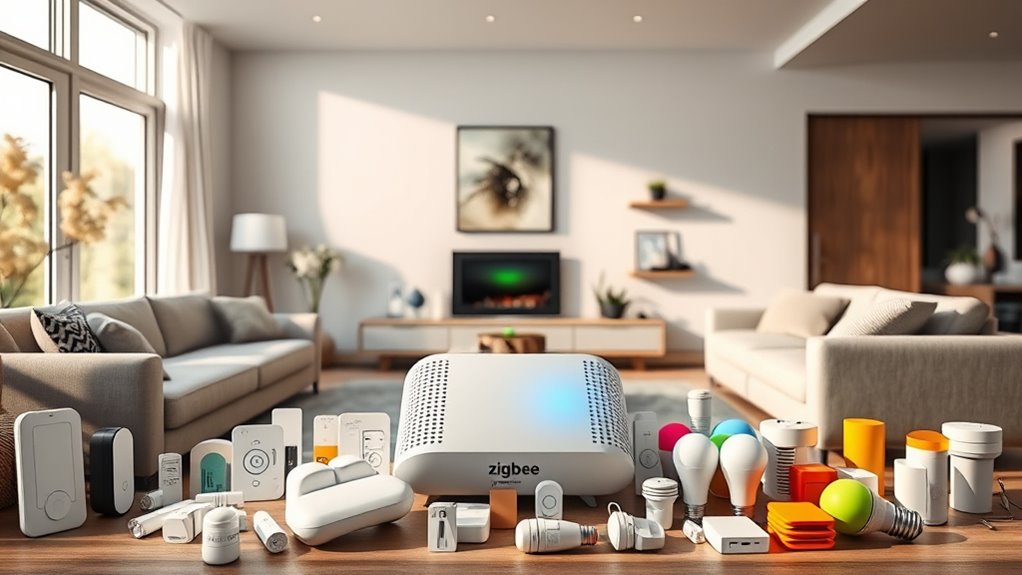
While both Zigbee and Z-Wave devices are widely available, their costs and accessibility can vary considerably. Device pricing often depends on brand, features, and compatibility, which influences your overall budget. Generally, Zigbee devices tend to be slightly more affordable due to broader retail availability and larger manufacturing scale. Z-Wave devices, however, may be more specialized, affecting their retail availability and sometimes increasing costs.
Consider these factors:
- Device Pricing: Zigbee devices are often cheaper, but premium options exist for both protocols.
- Retail Availability: Zigbee products are more widely available in big-box stores and online platforms.
- Compatibility: Limited device options may impact your choices and costs based on your smart home ecosystem.
Which Protocol Is Right for Your Smart Home?

Choosing the right protocol for your smart home depends on your specific needs, budget, and existing ecosystem. If energy efficiency is a priority, Zigbee often offers lower power consumption and better battery life for devices. Z-Wave, on the other hand, provides a straightforward user interface, making setup and control easier for beginners. Consider the compatibility of your current devices and how seamlessly the protocol integrates with your preferred smart home platform. Think about the size of your home and the network reliability you need. If you want a simple, user-friendly experience, Z-Wave might be preferable. For more energy-efficient devices and scalable networks, Zigbee could be the better choice. Ultimately, choose the protocol that aligns with your automation goals and comfort level.
Frequently Asked Questions
Can Zigbee or Z-Wave Integrate With Voice Assistants Like Alexa or Google Home?
Yes, both Zigbee and Z-Wave can integrate with voice assistants like Alexa and Google Home. You’ll find good voice assistant compatibility, making it easy to control your smart devices with voice commands. However, watch out for integration challenges, such as device compatibility issues or setup complexities. Ensuring your hub or bridge supports these protocols helps streamline the process, so your smart home functions smoothly with your preferred voice assistant.
How Do Firmware Updates Differ Between Zigbee and Z-Wave Devices?
Firmware fixes, updates, and upgrades differ between Zigbee and Z-Wave devices. You’ll find Zigbee devices often enjoy frequent, firmware flexibility, but updates can be slower to roll out and less consistent. Z-Wave devices tend to prioritize firmware consistency, with more deliberate update schedules. You should stay vigilant, regularly checking for updates to keep your smart home secure, seamless, and synchronized, ensuring your devices perform perfectly and stay protected.
Are There Any Regional Restrictions for Deploying Zigbee or Z-Wave Networks?
You should be aware that regional restrictions can impact your Zigbee or Z-Wave network deployment. Certain frequencies are regulated differently across regions, affecting device compatibility and legal use. For example, Z-Wave operates on different sub-ensembles depending on the country, which may limit device interoperability or availability. Make sure to check local regulations and confirm your devices are compatible with regional standards to avoid connectivity issues or legal complications.
What Are the Long-Term Reliability Differences Between the Two Protocols?
Think of Zigbee and Z-Wave as two sturdy bridges in your smart home. Zigbee offers excellent protocol stability and long-term durability, especially with frequent updates, making it reliable over years. Z-Wave’s proven track record also ensures steady performance, but its simplicity might slightly limit flexibility. Overall, both protocols are built to last, but Zigbee’s advanced features may give it a slight edge in long-term resilience.
How Do Interference Issues Compare Between Zigbee and Z-Wave in Crowded Environments?
In crowded environments, you’ll find that Z-Wave experiences less interference thanks to its dedicated 908.42 MHz frequency, which reduces congestion. Zigbee, operating at 2.4 GHz, faces more interference from Wi-Fi and Bluetooth devices. However, both protocols use interference mitigation strategies like frequency coexistence and channel hopping to maintain reliable connections. Overall, Z-Wave’s lower frequency offers better performance in busy settings, but proper setup still helps both protocols minimize interference.
Conclusion
Now that you understand the differences between Zigbee and Z-Wave, you can choose the protocol that best fits your needs. Whether you prioritize range, device compatibility, or security, there’s a perfect option for your smart home. Imagine a seamless, secure, and efficient smart system tailored just for you—are you ready to make that vision a reality? Your smart home journey starts with the right protocol—so take the next step today.