
Charging your phone overnight won’t harm your battery thanks to modern technology that stops charging once full. Battery management systems prevent overcharging, reduce heat, and protect against damage. While keeping your phone plugged in around 100% constantly may slightly reduce its lifespan, overall, your device handles overnight charging safely. If you’re curious about how to optimize your battery’s health and get more life from it, there’s more you should know.
Key Takeaways
- Modern smartphones have safeguards that stop charging at 100%, making overnight charging generally safe.
- Keeping the battery at 100% constantly may slightly reduce its lifespan over time.
- Overnight charging can help with battery calibration and maintaining accurate battery readings.
- Using slow charging overnight reduces heat and stress, minimizing battery wear.
- Limiting full charges and avoiding constant top-ups can extend your battery’s overall lifespan.
Top picks for "should charge phone"
Open Amazon search results for this keyword.
As an affiliate, we earn on qualifying purchases.
Understanding How Smartphone Batteries Work
Understanding how smartphone batteries work is key to managing their lifespan effectively. Most smartphones use lithium-ion batteries, which rely on specific battery chemistry to store and release energy efficiently. When you charge your phone, the battery undergoes a charging cycle—one complete process from 0% to 100% and back. Every cycle slightly reduces the battery’s capacity over time. Knowing this, it’s important to avoid unnecessary full charges or discharges, as frequent cycling accelerates battery degradation. Modern batteries are designed to handle a certain number of these cycles before performance drops noticeably. By understanding the role of battery chemistry and limiting unnecessary charging cycles, you can extend your phone’s battery life and maintain ideal performance longer. Additionally, consulting technological integration can help you better understand how digital tools support battery management and device longevity. Being aware of battery health management features on your device can further help you optimize charging habits. Recognizing battery capacity limits can assist in setting realistic expectations for device performance over time. Moreover, staying informed about charging best practices can prevent unnecessary wear on your battery. Implementing these practices along with smart charging features can significantly prolong your battery’s overall lifespan.
The Common Beliefs About Overnight Charging

Many people believe that charging your phone overnight is harmful because it can overcharge the battery and cause damage. This myth persists because of concerns about reducing battery capacity and increasing charging cycles, which supposedly shorten battery life. However, modern smartphones have built-in safeguards that stop charging once the battery reaches 100%. Some common beliefs include:
- Overcharging damages the battery permanently
- Batteries degrade faster with overnight charging
- The battery’s capacity diminishes quickly
- Charging cycles accelerate unnecessarily
- Keeping the battery full all the time harms longevity
In reality, these concerns are often overstated. While frequent full charges can impact battery health over time, overnight charging with current technology typically doesn’t cause immediate harm or markedly reduce your battery’s lifespan.
What Happens Inside Your Battery When Charging

When you plug in your phone, electrical energy flows into the battery, prompting chemical reactions inside that store this energy for later use. Your battery’s chemistry involves lithium ions moving between the anode and cathode, creating electrical current. As you charge, ions migrate to the anode, storing energy. When you use your phone, these ions flow back to the cathode, releasing energy. Each charging cycle – from 0% to 100% and back – gradually wears down the battery’s ability to hold a full charge. Lithium-ion batteries tolerate many cycles, but over time, chemical changes reduce capacity. Fast charging can accelerate this process by increasing stress on the battery’s chemistry. Understanding battery chemistry can help you make smarter decisions about charging habits. Additionally, adopting safe charging practices can extend your battery’s lifespan and maintain optimal performance over time. Recognizing the impact of charging cycles on battery health can guide you in optimizing your charging routines for longevity, especially considering how wave and wind energy sources are influencing sustainable power solutions. Maintaining proper charging habits can also mitigate the effects of rapid charge cycles and improve overall battery longevity.
The Role of Battery Management Systems in Modern Phones
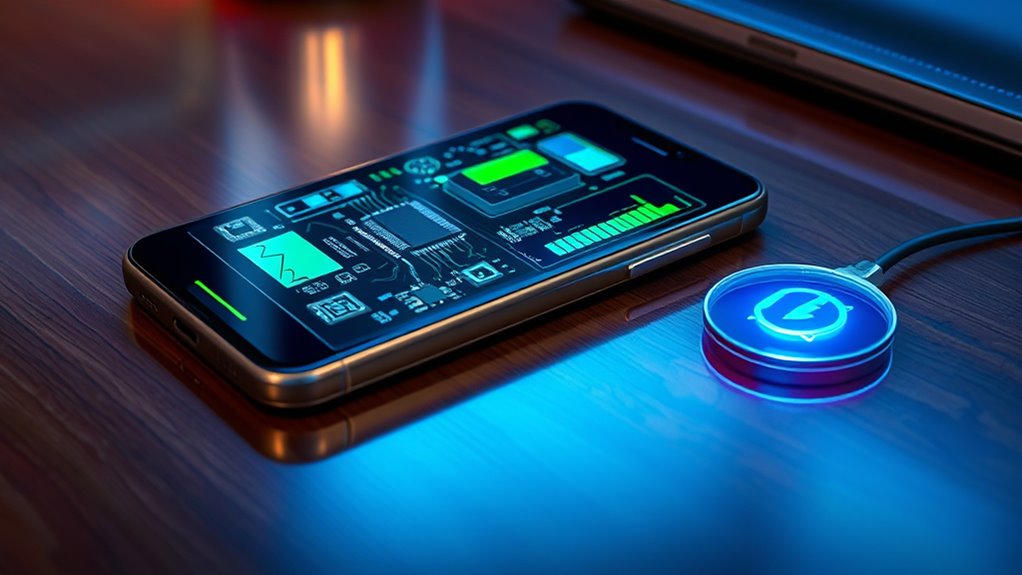
Your phone’s battery management system plays a key role in keeping your device safe and efficient. It uses protection features to prevent overcharging and manages power flow with smart algorithms. This technology ensures your battery stays healthy, even when you charge overnight. Additionally, mastering time zones can help you better understand and optimize your device’s charging routines. By understanding the natural battery cycle, users can further prolong battery lifespan and improve overall device performance. Recognizing charge cycles can also assist in maintaining battery health over time. Incorporating adaptive charging techniques can further enhance battery longevity by adjusting charging patterns based on usage habits. Furthermore, understanding SWIFT/BIC codes can facilitate secure financial transactions if you need to manage device-related purchases or services.
Battery Protection Features
Battery management systems (BMS) play a crucial role in protecting your phone’s battery from damage caused by overcharging or excessive heat. They include features that prevent your battery from overvoltage, monitor temperature, and enhance charging cycles. These systems also facilitate battery calibration, ensuring accurate capacity readings, and encourage power cycling to maintain battery health. Additionally, advanced BMS incorporate smart charging algorithms that optimize charging speed and safety based on usage patterns. Key protection features include: – Limiting charging current after reaching a certain capacity – Reducing heat buildup during fast charging – Implementing thermal management to prevent overheating – Calibrating the battery periodically for accurate charge levels – Managing power cycling to prolong battery lifespan. Furthermore, these systems adapt to changing conditions to maximize battery lifespan and ensure reliable performance over time. They employ thermal management techniques to prevent overheating during high-speed charging, which helps protect the battery’s integrity. Another important aspect is predictive analytics, which allows the system to anticipate potential issues and adjust charging accordingly. Together, these features help you extend your battery’s life, even if you occasionally leave your phone plugged in overnight. They keep your device safe and functioning efficiently over time.
Smart Charging Algorithms
Smart charging algorithms are at the heart of modern battery management systems, actively optimizing how your phone charges in real-time. They balance fast charging capabilities with battery health, preventing overheating and overcurrent that can degrade your battery. These algorithms adjust charging speeds based on temperature and battery level, allowing for rapid charging when needed without harming the cell. Additionally, they facilitate battery calibration by ensuring accurate voltage and capacity readings, which helps maintain ideal performance over time. Modern phones also incorporate battery management systems that monitor and control charging processes more effectively. This integration helps prevent issues like overcharging, ensuring your device’s longevity. By intelligently managing power flow, smart algorithms allow you to enjoy fast charging without the common myths about damaging your battery when charging overnight or continuously. Furthermore, these systems adapt to different usage patterns to optimize overall battery lifespan, making overnight charging a safer practice than many believe.
Debunking the Myth: Does Overnight Charging Really Damage Your Battery?
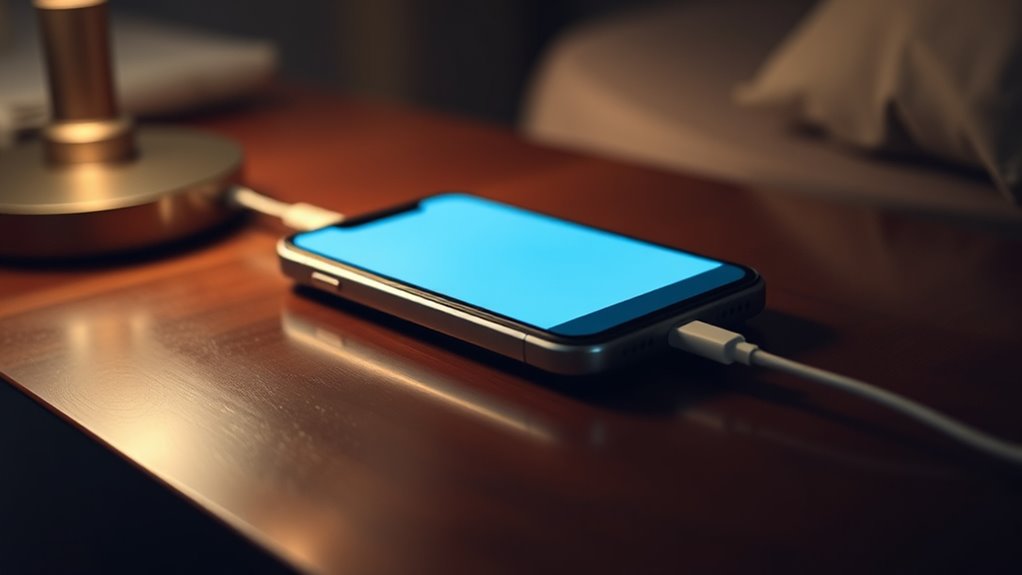
Many people believe that charging a phone overnight will considerably harm its battery, but this isn’t entirely true. Modern phones are equipped with smart charging algorithms that prevent overcharging. Once your battery reaches 100%, the charger slows or stops, reducing stress on the battery. Battery management systems and the system’s design helps protect your battery during overnight charging. Once your battery reaches 100%, the charger slows or stops, reducing stress on the battery. Frequent overnight charging doesn’t necessarily harm the battery if you keep it within healthy charging cycles. In fact, occasional overnight charging can help with battery calibration, ensuring accurate battery level readings. However, consistently keeping your phone at 100% can slightly reduce battery lifespan over time. To minimize risks, avoid letting your battery drain completely often and use quality chargers. Remember, your battery is designed to handle regular charging, even overnight, without significant damage.
How Battery Aging Affects Phone Performance

As your phone’s battery ages, you’ll notice it doesn’t hold a charge as well as it used to, which can lead to decreased performance. Battery degradation caused by aging effects reduces the battery’s capacity, meaning your phone can’t last as long between charges. Over time, chemical changes inside the battery diminish its ability to deliver consistent power, leading to slower performance and unexpected shutdowns. You might also see your device struggle with sudden drops in battery percentage or lag during intensive tasks. These issues are natural consequences of aging effects on the battery, and they highlight how deterioration impacts overall phone performance. While you can’t completely stop battery degradation, understanding its effects helps you set realistic expectations and plan for eventual battery replacement.
Tips for Extending Your Battery’s Lifespan

To maximize your battery’s lifespan, adopting simple habits can make a significant difference. Regularly calibrate your battery by fully charging it to 100% and then draining it to around 10% to ensure accurate power readings. Practice power optimization by dimming your screen, turning off unnecessary notifications, and closing unused apps. Avoid keeping your phone plugged in constantly; instead, unplug it once it hits 80-90%. Keep your software updated, as manufacturers often include battery improvements. Store your device in a cool, dry place when not in use, as extreme temperatures accelerate battery aging. By implementing these tips, you help preserve battery health and extend the overall lifespan of your device.
When and How to Charge Your Phone for Optimal Health
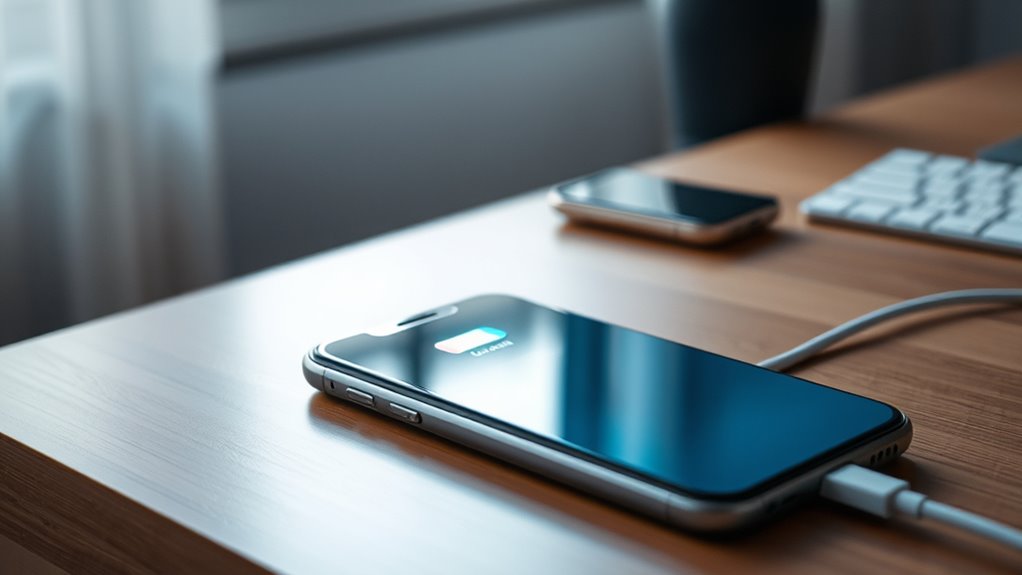
Charging your phone at the right times and in the right way can considerably improve its battery health. To optimize your battery, aim to keep the charge between 20% and 80%, avoiding full cycles that can strain the battery. For better accuracy, perform a battery calibration every few months by fully charging and discharging your phone. Also, consider the charging speed; slow, steady charging reduces stress and heat, helping preserve battery life. If you need a quick boost, use fast charging sparingly, as it generates more heat and may degrade the battery over time. Timing your charges carefully and using the appropriate charging methods can extend your phone’s battery health and overall lifespan.
The Future of Battery Technology and Charging Practices

Future battery tech is set to make your phone last longer and charge faster with new materials. Smart charging innovations will help protect your battery’s health and prevent overcharging. Additionally, sustainable power solutions aim to reduce environmental impact, shaping a greener charging future for you.
Advancements in Battery Materials
Advancements in battery materials are transforming the way we power our devices, making charging faster, safer, and more efficient. Researchers are developing new battery chemistries that improve energy density and longevity, reducing the impact of frequent charging cycles. These innovations help prevent overheating and extend battery life, even with regular use. You’ll see improvements like solid-state batteries, which offer higher safety standards and faster charging times, and lithium-silicon anodes that boost capacity. Additionally, smarter electrode materials enhance stability, meaning your device can handle more charge-discharge cycles without degrading. Keep an eye on:
- Solid-state battery chemistry
- Enhanced electrode materials
- Longer-lasting charging cycles
- Safer, more stable batteries
- Faster, more efficient charging capabilities
Smart Charging Innovations
Innovations in battery technology are paving the way for smarter, more adaptive charging systems that enhance device performance and safety. Wireless charging offers convenience by eliminating cables, allowing you to charge your device simply by placing it on a compatible pad. This technology is improving rapidly, making it more efficient and reducing wear on charging ports. Fast charging is another breakthrough, enabling you to quickly boost your battery when needed, minimizing downtime. These innovations work together to create smarter charging practices, reducing risks of overcharging and overheating. As these technologies advance, you’ll find charging your phone becoming more seamless, faster, and safer, allowing you to stay connected without worrying about battery longevity. The future of charging is about convenience, speed, and smarter battery management.
Sustainable Power Solutions
As the demand for more sustainable power options grows, researchers are developing batteries that last longer, charge faster, and are environmentally friendly. These advancements include innovations in wireless charging, making power transfer more convenient and reducing cable waste. Solar power integration is also gaining traction, allowing you to harness renewable energy directly from the sun. Future battery tech focuses on eco-friendly materials and increased efficiency to minimize environmental impact.
- Wireless charging stations becoming more widespread
- Batteries designed for rapid charging with minimal degradation
- Solar-powered portable chargers for on-the-go use
- Eco-friendly, biodegradable battery components
- Smart charging systems that optimize energy use and extend battery life
Making Informed Decisions About Overnight Charging

Have you ever wondered whether leaving your phone charging overnight is truly safe or if it could harm your device? Understanding how overnight charging affects your battery helps you make informed decisions. Modern smartphones are designed to prevent overcharging, but frequent overnight charging can impact your battery’s health over time. To maintain ideal performance, it’s essential to contemplate battery calibration—periodically fully discharging and charging your phone—to keep the battery readings accurate. Additionally, every full charge counts as a charging cycle, and batteries have a limited number of cycles before capacity diminishes. If you want to extend your battery’s lifespan, avoid constantly topping up the charge and consider unplugging once it reaches 80-90%. Making educated choices about overnight charging can help preserve your battery’s longevity.
Frequently Asked Questions
Can Charging Overnight Cause Your Phone to Overheat?
Charging overnight can cause your phone to overheat, especially if its thermal management system isn’t working properly. When the battery overheats, it can lead to damage or reduced lifespan. Modern phones have built-in thermal management features that regulate temperature, but if these fail or if your phone is in a hot environment, overheating is possible. To prevent this, guarantee proper ventilation and avoid charging in direct sunlight or hot spaces.
How Does Fast Charging Impact Battery Longevity Overnight?
Fast charging is like pouring fuel into a fire—it heats up the battery heat, which can speed up wear over time. Charging overnight with fast charging accelerates this process, stressing your battery’s longevity. To protect it, avoid leaving your phone on fast charging mode for long periods. Instead, use slower charging options overnight to keep your battery cooler and extend its lifespan.
Are There Specific Phone Models More Prone to Battery Damage From Overnight Charging?
Some phone models are more prone to battery damage from overnight charging due to their battery design and charging circuitry. Devices with older or less advanced technology may lack efficient circuitry to prevent overcharging, increasing risk. Conversely, newer models often have smarter battery management systems that protect the battery. Check your phone’s specifications and manufacturer guidelines to understand how well your device handles overnight charging and if it’s vulnerable.
Is It Safe to Use Third-Party Chargers for Overnight Charging?
Is it safe to use third-party chargers for overnight charging? Think of it as playing with fire—many third-party chargers, especially counterfeit accessories, lack the safety features of original ones. They can cause overheating, short circuits, or damage your battery. Always choose certified, high-quality chargers to protect your device. Using genuine or reputable third-party chargers minimizes risks, making overnight charging safer and ensuring your phone’s longevity.
What Are the Signs That Battery Health Is Deteriorating Due to Overnight Charging?
If your battery health is deteriorating, you might notice signs like battery swelling or unusual drain. Swelling indicates the battery’s internal damage, which can be dangerous, so stop using your phone and get it checked. Unusual drain means your battery loses power faster than normal, often caused by overcharging or poor health. Keep an eye on these signs to prevent further damage and guarantee your device’s safety.
Conclusion
So, go ahead and leave your phone charging overnight if you want—your battery’s probably fine. Ironically, all those horror stories about battery death from overnight charging are mostly myths. Thanks to modern tech, your phone’s smarter than you think, and it’s designed to handle those midnight power-ups. So, sleep easy knowing that, unless you’re intentionally abusing it, your battery’s pretty resilient. Who knew overnight charging could be so harmless?