
Face ID generally provides stronger security and better resistance to spoofing than fingerprint recognition. It uses advanced 3D facial mapping combined with infrared sensors and anti-spoofing tech, making it harder for hackers to trick. Fingerprint sensors are reliable but can be fooled with high-quality fake prints. If you’re looking for the safest option, Face ID offers a more secure choice. To find out more about how these methods compare, keep exploring the details below.
Key Takeaways
- Face ID uses 3D facial mapping and infrared sensors, providing better resistance to spoofing than fingerprint scanners.
- Fingerprint sensors can be fooled by fake prints, making them slightly less secure against spoofing attacks.
- Face ID stores encrypted facial data locally, reducing breach risks compared to some fingerprint data storage methods.
- Both methods rely on advanced anti-spoofing measures, but Face ID’s multi-layered sensors offer a marginal security advantage.
- Environmental factors can affect performance, but Face ID generally offers more reliable security in various lighting and conditions.
How Face ID Works and Its Underlying Technology
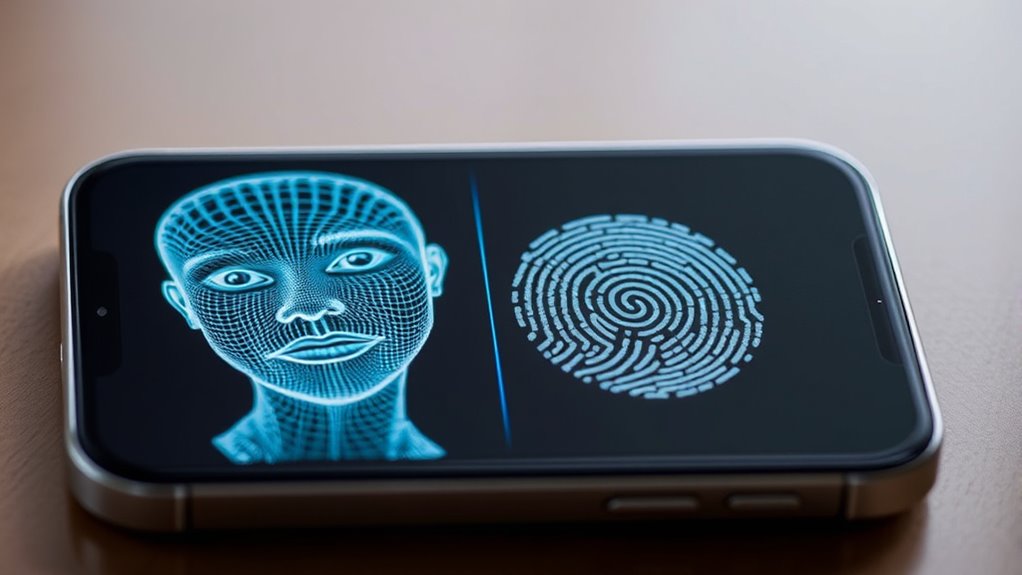
When you set up Face ID on your device, it begins by capturing a detailed 3D map of your face using advanced biometric sensors. These sensors analyze unique facial features, creating a precise digital representation. During setup, your device records multiple images from different angles to guarantee accuracy. When you attempt to unlock your phone, the system compares your live facial data to the stored map in real-time. This process assures secure user authentication, relying on complex algorithms that recognize subtle facial details. Face ID’s technology combines infrared sensors, flood illuminators, and a dot projector to function reliably even in low light or changing conditions. Additionally, the underlying technology ensures that even sophisticated spoofing attempts are difficult to bypass, enhancing overall security. The use of biometric security significantly reduces the risk of unauthorized access compared to traditional methods. Moreover, the contrast ratio plays a role in ensuring that facial recognition remains accurate under various lighting conditions, further bolstering security. The integration of natural facial features helps maintain the system’s resilience against environmental variations and user changes.
The Mechanics of Fingerprint Recognition Systems
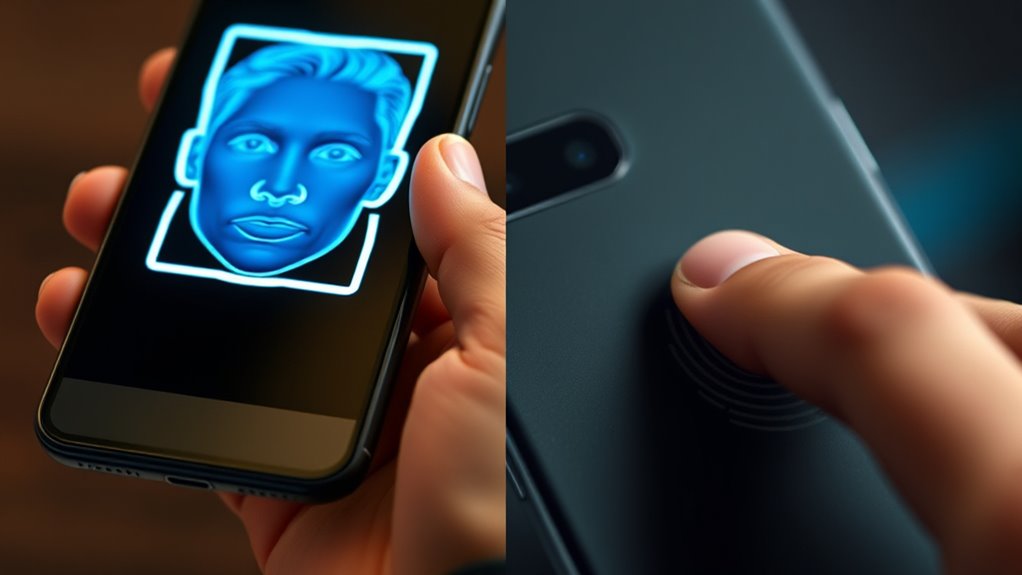
After your device has captured your facial features with Face ID, many users turn to fingerprint recognition as an alternative biometric authentication method. Your fingerprint system works by scanning the ridges, valleys, and unique patterns on your fingertip. The sensor captures this data and converts it into a digital template. Biometric accuracy depends on the sensor’s ability to precisely read these features, guaranteeing reliable recognition even with slight dirt or moisture. Sensor technology plays a crucial role in ensuring consistent performance across different conditions. Sensor durability is also vital; it must withstand daily wear and tear without losing functionality. Modern fingerprint sensors use optical, capacitive, or ultrasonic technology to enhance accuracy and durability. This guarantees quick, secure access while maintaining the longevity needed for constant use. The Vetted – Mad Tasting quality of fingerprint sensors is often reflected in their positive customer reviews highlighting durability and performance. Additionally, advances in sensor calibration help maintain high accuracy levels over time, ensuring continued security and reliability. Proper sensor maintenance can further extend the lifespan and reliability of fingerprint recognition systems, especially considering the importance of ear wax odor and other factors that might affect sensor cleanliness and performance.
Security Features and Vulnerabilities of Face ID
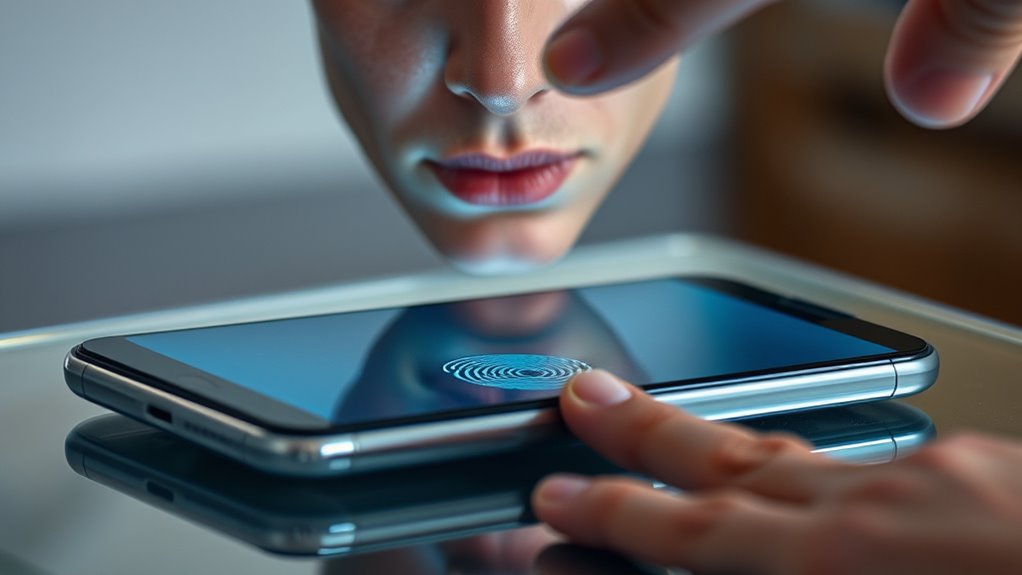
You should be aware that Face ID can be vulnerable to spoofing attempts using photos or masks. Privacy concerns also arise because facial data is stored securely but could be targeted by hackers. Understanding these risks helps you decide how much trust to place in Face ID’s security features. Additionally, biometric authentication relies on unique physical traits, but it is not entirely foolproof against advanced spoofing techniques. The security vulnerabilities associated with facial recognition can vary depending on the technology and implementation used. Moreover, some advanced spoofing techniques can potentially deceive facial recognition systems that lack sophisticated anti-spoofing measures. The effectiveness of anti-spoofing measures depends on the complexity of the system and ongoing technological advancements. Recognizing the security limitations of facial recognition can help users make more informed choices about device security.
Facial Recognition Spoofing Risks
Facial recognition systems like Face ID have advanced security features to prevent unauthorized access, but they are not entirely immune to spoofing attempts. Hackers have devised methods such as using high-resolution photos, videos, or 3D masks to trick facial recognition systems. While modern Face ID models include spoofing prevention measures—like analyzing depth, infrared data, and skin texture—these defenses aren’t foolproof. Skilled adversaries can sometimes bypass these safeguards with convincing replicas or sophisticated techniques. It’s essential to understand that no biometric system is completely invulnerable. You should consider layered security measures and stay updated on the latest spoofing prevention technologies to ensure your device remains protected against potential spoofing attacks.
Data Privacy Concerns
While Face ID offers advanced security features to protect your personal data, it also raises significant privacy concerns. If biometric deception occurs, your facial data could be compromised. Apple encrypts this data locally, reducing risks, but vulnerabilities remain. Data encryption shields your information during storage and transmission, yet potential breaches can expose biometric templates. Consider the table below to understand these nuances: You should also be aware of security protocols that aim to mitigate such risks. Additionally, ongoing biometric data protection measures are crucial to maintaining user privacy and security.
Security Aspects and Weaknesses of Fingerprint Unlocking

Fingerprint enabling can be vulnerable to spoofing, where someone uses fake prints to access your device. Residue and hygiene issues also pose risks, as dirt and oils can interfere with fingerprint sensors. These weaknesses highlight potential security gaps you should consider. Additionally, biometric data can sometimes be compromised through hacking or data breaches, raising concerns about long-term security. Moreover, sensor sensitivity variations can affect the reliability of fingerprint recognition under different conditions.
Fingerprint Spoofing Risks
Despite the convenience of fingerprint accessing, it’s not without its vulnerabilities. One major concern is fingerprint spoofing, which can lead to biometric fraud and potential identity theft. Skilled attackers can create fake fingerprints using materials like silicone or glue to trick scanners. This makes your biometric data susceptible to being bypassed.
Some common risks include:
- Replicating fingerprints from lifted prints
- Using 3D-printed fingerprints for spoofing
- Exploiting weak sensors with high-resolution images
- Circumventing security by duplicating fingerprints
- Sound vibrations are believed to influence cellular regeneration and overall health, which could be exploited in advanced spoofing techniques. Additionally, the reliance on sensor security can be compromised if the hardware isn’t robust enough to detect counterfeit fingerprints.
These vulnerabilities highlight that fingerprint data isn’t foolproof. If compromised, your biometric information can be exploited for unauthorized access, making it critical to understand these risks when choosing your smartphone’s security method.
Residue and Hygiene Issues
Have you ever considered how residue and germs can build up on your device’s fingerprint scanner? Residue buildup from oils, dirt, and sweat can accumulate over time, creating a breeding ground for bacteria. This raises hygiene concerns, especially if multiple people use your device or if your hands are dirty. The scanner’s surface can harbor germs, increasing the risk of contamination. Regularly cleaning the fingerprint sensor is essential but often overlooked. Unlike facial recognition, which minimizes direct contact, fingerprint scanners require physical touch, making hygiene issues more prominent. Over time, residue buildup can also affect scanner accuracy, leading to frustration and potential security vulnerabilities. Being mindful of hygiene and maintaining a clean fingerprint sensor helps ensure both security and health. Additionally, water exposure can damage the sensor or cause malfunctions, further emphasizing the importance of keeping it dry and clean. Proper sensor maintenance is crucial to prevent these issues and prolong the lifespan of your device’s unlocking system.
Comparing Ease of Use and Accessibility
When it comes to ease of use and accessibility, face ID and fingerprint technology each have their strengths and limitations. Face ID offers quick user authentication, often *unlatch* your device instantly with a glance, even in low light. Fingerprint sensors, on the other hand, require you to place your finger precisely on the sensor, which can sometimes be less convenient but is still fast and reliable. Biometric sensors need clear conditions for ideal performance, and environmental factors can impact their accuracy. Modern biometric systems are continually improving to overcome these limitations, enhancing user experience. Face ID works well when your hands are dirty or wet, while fingerprint sensors are accessible with gloves or when your face isn’t visible. Both methods aim for seamless access, but your preferences depend on your daily habits and accessibility needs. Additionally, advancements in biometric security are helping to make these methods more resilient against spoofing and unauthorized access.
Resistance to Spoofing and Fake Biometric Attacks

Both face ID and fingerprint systems have developed techniques to resist spoofing and fake biometric attacks, but their effectiveness varies. Biometric authentication relies on unique features, yet hackers attempt to bypass these methods using masks or fake fingerprints. Face ID employs sophisticated depth mapping and infrared sensors to detect liveness, making it harder to fool. Fingerprint scanners use advanced sensors to identify ridges and skin textures, but fake fingerprints can sometimes trick less secure systems. Your user convenience plays a role here; more secure systems may require additional steps, potentially affecting ease of access. Overall, face ID tends to offer better resistance to spoofing due to its multi-layered detection methods, but both methods are continually evolving to enhance security against fake biometric attacks.
Privacy Considerations and Data Storage

As biometric systems like Face ID and fingerprint scanners become more secure against spoofing, their handling of personal data raises important privacy concerns. Your biometric privacy depends on how securely your biometric data is stored and protected. Manufacturers often encrypt this data to prevent unauthorized access, but vulnerabilities remain if encryption is weak or improperly managed.
Enhanced biometric security raises privacy concerns regarding data storage and protection.
Key points to contemplate include:
- Whether your biometric data is stored locally or on servers
- The strength of data encryption used during storage and transmission
- How companies handle data sharing or backups
- The potential risks if biometric data is compromised
Understanding these aspects helps you evaluate the privacy implications of each unlocking method and guarantees your sensitive information remains protected.
Which Method Offers Better Protection for Your Data?
Choosing between Face ID and fingerprint scanning depends largely on how each method protects your data. Biometric accuracy plays a key role in ensuring only you can unseal your device, reducing the risk of unauthorized access. Face ID uses advanced 3D sensing to verify your identity, making it harder for others to spoof. Fingerprint scans are quick and reliable, but can sometimes be fooled by high-quality images or moisture. User convenience influences protection too; a method that’s seamless encourages regular use, maintaining security. Both methods store data locally, minimizing exposure, but Face ID’s sophisticated sensors offer slightly better protection against hacking attempts. Ultimately, both provide strong security, but Face ID’s higher biometric accuracy can give you a slight edge in safeguarding your data.
Frequently Asked Questions
Can Both Methods Be Used Simultaneously for Enhanced Security?
Yes, you can use both methods simultaneously for enhanced security through dual authentication and biometric fusion. By enabling both Face ID and fingerprint, your device requires you to verify identity with two biometric factors, making unauthorized access much harder. This layered approach benefits from biometric fusion, combining facial recognition and fingerprint data to strengthen overall security. It’s a practical way to protect your device with multiple biometric safeguards.
How Do Environmental Factors Affect the Reliability of Face ID and Fingerprint Scans?
Environmental factors can impact the reliability of Face ID and fingerprint scans. Poor lighting conditions, like low light or direct sunlight, may hinder Face ID’s accuracy, while environmental interference such as moisture, dirt, or sweat can cause fingerprint scanners to misread or fail. To guarantee consistent unlocking, keep your face well-lit and your fingers clean and dry. Recognizing these factors helps you choose the most reliable method in different environments.
Are There Specific Devices That Integrate Both Face ID and Fingerprint Authentication?
Many devices now incorporate dual biometric features, combining face ID and fingerprint authentication for enhanced security. You’ll find smartphones like the iPhone 14 and Samsung Galaxy S23, which seamlessly integrate both methods through device integration, allowing you to access your phone quickly and securely. This dual biometric approach offers flexibility, ensuring you can authenticate even if one method is temporarily unavailable or less reliable due to environmental factors.
What Are the Legal Implications of Biometric Data Leaks?
If your biometric data leaks, you might face serious legal consequences, especially around privacy concerns and legal compliance. Authorities could investigate data breaches, and you could be held liable if personal information is mishandled. To safeguard yourself, verify your device and app providers follow strict privacy laws, and stay informed about how your biometric data is stored and used. Protecting your data helps avoid legal issues and maintains your privacy rights.
How Do Biometric Methods Compare in Terms of Battery Consumption?
Biometric methods like Face ID and fingerprint scanning differ in battery efficiency and power consumption. Face ID typically uses more power because it relies on the front camera and infrared sensors, which consume more energy. Fingerprint sensors, especially capacitive ones, are more power-efficient since they require less processing. If you want to conserve battery, fingerprint authentication generally uses less power, making it a better choice for extended device usage.
Conclusion
Ultimately, choosing between Face ID and fingerprint access is like selecting your shield in a digital battlefield. Face ID offers sleek convenience, but fingerprints hold their ground with proven security. Think of it as a dance—one’s quick and elegant, the other steady and reliable. No method is invincible, but understanding their strengths and weaknesses helps you guard your data like a modern-day hero, vigilant and prepared for whatever threats may come.