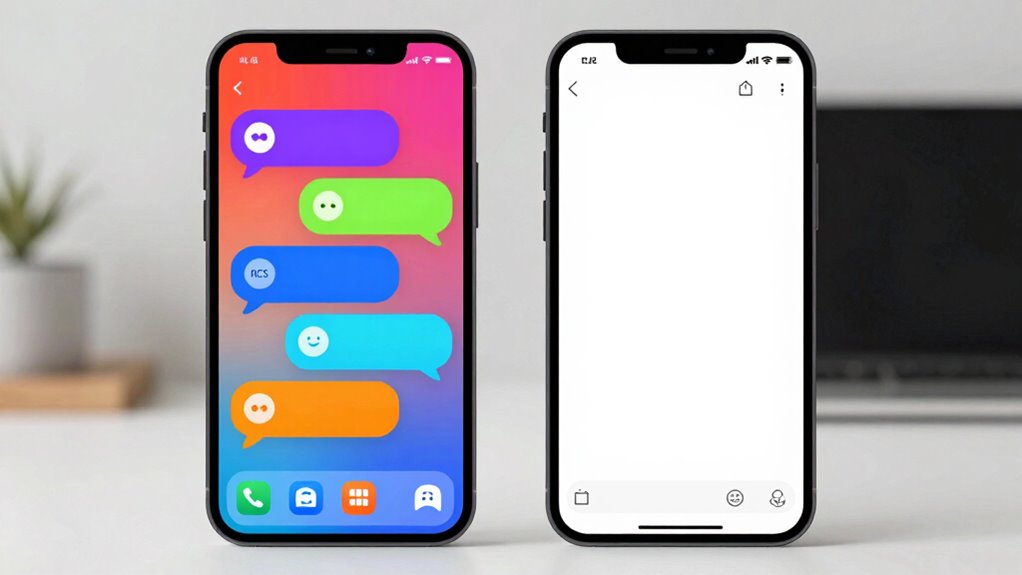

RCS (Rich Communication Services) is a modern messaging technology that offers richer features like high-quality media sharing, read receipts, and end-to-end encryption, making conversations more private and engaging. Unlike SMS, which is limited to basic text and simple media, RCS provides a more dynamic experience for both personal and business use. Understanding these differences helps you choose the right messaging option, and if you keep exploring, you’ll discover how RCS can truly transform your communication.

Get the latest gadgets delivered free with Prime
- Fast, free delivery on millions of items
- Prime Video, Amazon Music and more included
- Member-only deals all year
Key Takeaways
- RCS offers richer features like multimedia sharing, read receipts, and typing indicators, unlike basic SMS.
- RCS provides end-to-end encryption, enhancing message privacy and security over SMS.
- Compatibility for RCS depends on device support, carrier adoption, and regional infrastructure, while SMS is universally supported.
- RCS enables more interactive and engaging communication for both consumers and businesses compared to SMS.
- Transitioning to RCS improves messaging capabilities but faces challenges like adoption, network support, and device compatibility.
As an affiliate, we earn on qualifying purchases.
What Is RCS and How Does It Differ From SMS?
Have you ever wondered how modern messaging apps can send high-quality images, read receipts, and even interactive features? That’s where RCS comes in, offering a significant upgrade from traditional SMS. Unlike SMS, RCS uses encryption privacy to protect your messages, making conversations more secure. This encryption ensures that your texts, images, and videos stay private between you and the person you’re chatting with. RCS also supports features like typing indicators, read receipts, and high-resolution media, providing a richer messaging experience. While SMS is limited to plain text and basic delivery reports, RCS’s encryption privacy and advanced features make your messaging more secure, dynamic, and engaging. Additionally, RCS is part of the European cloud innovation movement that promotes more sustainable and secure cloud solutions. It’s a clear step forward in keeping your conversations safe and versatile, especially as digital communication becomes increasingly integral to daily life. Its ability to seamlessly integrate with other digital devices underscores its importance in a connected world. Furthermore, the compatibility with emerging technologies ensures that RCS remains adaptable to future digital advancements. As the technology continues to evolve, its ability to integrate seamlessly with projector technology and other digital devices highlights its importance in a connected world.
secure multimedia messaging device
As an affiliate, we earn on qualifying purchases.
As an affiliate, we earn on qualifying purchases.
The Evolution of Messaging: From SMS to RCS

The way we communicate has dramatically evolved over the years, shifting from simple text messages to more sophisticated, feature-rich platforms. Early SMS offered basic text, but lacked encryption standards and user privacy protections. RCS, the next step, introduces richer media sharing and enhanced security. This evolution reflects a focus on user privacy, with better encryption standards ensuring your messages stay private. As messaging grew more complex, companies prioritized features that make conversations more dynamic while maintaining security. The progression from SMS to RCS shows how technology adapts to our needs for privacy and richer interactions. Additionally, smart home technology demonstrates how integrated communication systems can enhance everyday convenience and security.
end-to-end encrypted messaging smartphone
As an affiliate, we earn on qualifying purchases.
As an affiliate, we earn on qualifying purchases.
Key Features and Capabilities of RCS
Rich Communication Services (RCS) offers a range of advanced features that considerably enhance your messaging experience. You gain capabilities beyond basic text, such as seamless multimedia sharing, read receipts, and real-time typing indicators. Security is strengthened with end-to-end encryption, ensuring your conversations stay private. RCS also enables group chats with more control and higher quality media transmission. You can send high-resolution images, videos, and even share files effortlessly. These features make your messaging more dynamic and interactive, mirroring modern communication needs. Here are some key capabilities:
- Multimedia sharing with high-quality images and videos
- End-to-end encryption for secure conversations
- Read receipts and typing indicators for better interaction
- Group chats with advanced management options
Additionally, RCS supports compact living principles by maximizing the efficiency and richness of your communication tools, much like optimizing small spaces for better functionality. These enhancements make RCS a significant upgrade over traditional SMS and are part of a broader move towards integrated messaging platforms that unify different communication channels into a single cohesive experience. An important aspect of RCS is its ability to adapt to changing user expectations, ensuring messaging stays relevant in a fast-evolving digital landscape. For instance, the ability to incorporate multimedia-rich interactions enhances user engagement and satisfaction. Furthermore, RCS’s compatibility with existing mobile infrastructure makes it a cost-effective solution for both users and service providers, promoting wider adoption and innovation.
As an affiliate, we earn on qualifying purchases.
Compatibility and Device Support for RCS
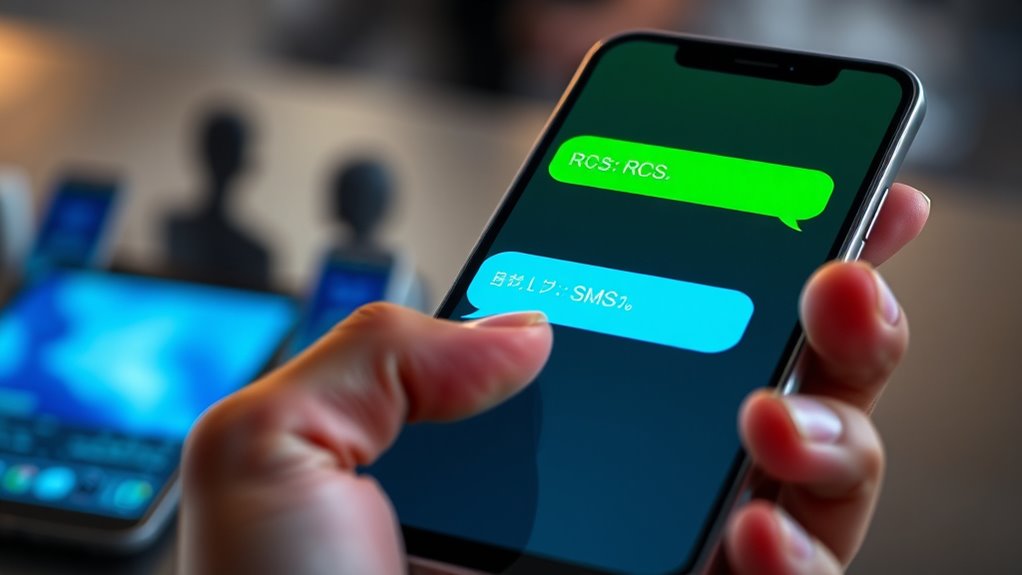
While RCS offers many advanced features, its compatibility depends largely on your device and carrier support. Carrier restrictions can limit who can access RCS, as not all carriers have adopted the technology yet. Device diversity also plays a role; older smartphones or those not updated might not support RCS features fully. If your carrier and device are compatible, you’ll enjoy richer messaging, but if either falls short, you may be limited to basic SMS functions. It’s important to check whether your carrier has enabled RCS and if your device’s software is up to date. Compatibility varies widely across regions and providers, so your experience with RCS may differ depending on these factors.
Why RCS Is a Game-Changer for Consumers
RCS transforms messaging by offering features that go far beyond basic texts, giving you a more dynamic and seamless communication experience. With RCS, you gain access to high-resolution photos, read receipts, typing indicators, and group chats, making conversations richer and more engaging. Unlike traditional chat apps, RCS integrates directly into your native messaging app, simplifying your communication. This integration also allows for seamless user experience, making switching between different types of messaging effortless. This technology also improves business interactions, offering instant replies and multimedia sharing without switching platforms. Additionally, RCS is designed with standardized protocols, which help improve compatibility across different devices and carriers. This standardization promotes interoperability, ensuring messages can be sent and received smoothly across various networks and devices. However, privacy concerns remain, as RCS messages are not end-to-end encrypted by default, raising questions about data security. Overall, RCS is a game-changer because it bridges the gap between simple texts and advanced chat apps, offering better functionality while keeping your messaging integrated and accessible.
How Businesses Are Using RCS to Enhance Customer Engagement
Businesses are leveraging RCS to create more personalized and interactive customer experiences. With chatbot integration, you can offer instant, automated responses that feel natural and engaging. RCS enables you to send rich media like images, videos, and quick reply buttons, making conversations more dynamic. This not only improves customer support by providing immediate assistance but also reduces wait times and increases satisfaction. You can guide customers through complex processes or answer common queries effortlessly, freeing up your support team for more complex issues. RCS also allows for targeted messages based on customer preferences or behaviors, boosting engagement and loyalty. Rich media, a key feature of RCS, significantly enhances communication by enabling the sharing of high-quality images, videos, and other multimedia content. Additionally, the AI-driven solutions in RCS can help businesses analyze customer interactions to further personalize messaging and improve service outcomes. Embracing this technology opens up new possibilities for digital communication, transforming your messaging strategy into a powerful tool for building stronger, more meaningful relationships with your audience. Incorporating advanced thermal management concepts can help optimize the delivery of multimedia content in various network conditions, ensuring a seamless experience for users.
Challenges and Limitations of RCS Adoption

Adopting RCS technology presents several hurdles that can hinder widespread implementation. Network restrictions remain a significant barrier, as not all carriers support RCS or offer consistent coverage, limiting its reach. User adoption also poses a challenge, since consumers may be hesitant to switch from familiar SMS to a new messaging platform. Additionally, compatibility issues arise because RCS works only on devices and networks that support it, creating fragmentation. Finally, businesses might face technical and logistical hurdles integrating RCS into existing systems, slowing down deployment. Field‑of‑view and imaging‑scale examples highlight how technical limitations can impact deployment and user experience. Moreover, the device compatibility issue is compounded by variations in hardware and software environments, which can further complicate deployment efforts. Recognizing these compatibility challenges is crucial for developing strategies that promote broader adoption and smoother integration, especially considering the diverse network infrastructure across regions that influences RCS deployment success. Addressing regulatory compliance and security concerns is also vital for gaining consumer trust and ensuring data privacy in RCS adoption.
Future Trends in Messaging Technology

As messaging technology continues to evolve, future trends are set to reshape how you communicate. AI integration will play a major role, making conversations smarter, more personalized, and efficient. Expect AI to handle tasks like automatic replies, language translation, and even contextual understanding, enhancing your messaging experience. Additionally, the rise of body jewelry measurements and materials reflects a broader shift towards sustainable innovations across industries. However, privacy concerns will grow alongside these advancements. Developers will need to prioritize data security and transparency to address user worries about how their information is used. You’ll increasingly see platforms adopting robust encryption and privacy controls to protect your conversations. These trends suggest a future where messaging is more intelligent and secure, but it’s important to stay vigilant about privacy and data management as technology advances.
Choosing the Right Messaging Solution for Your Needs
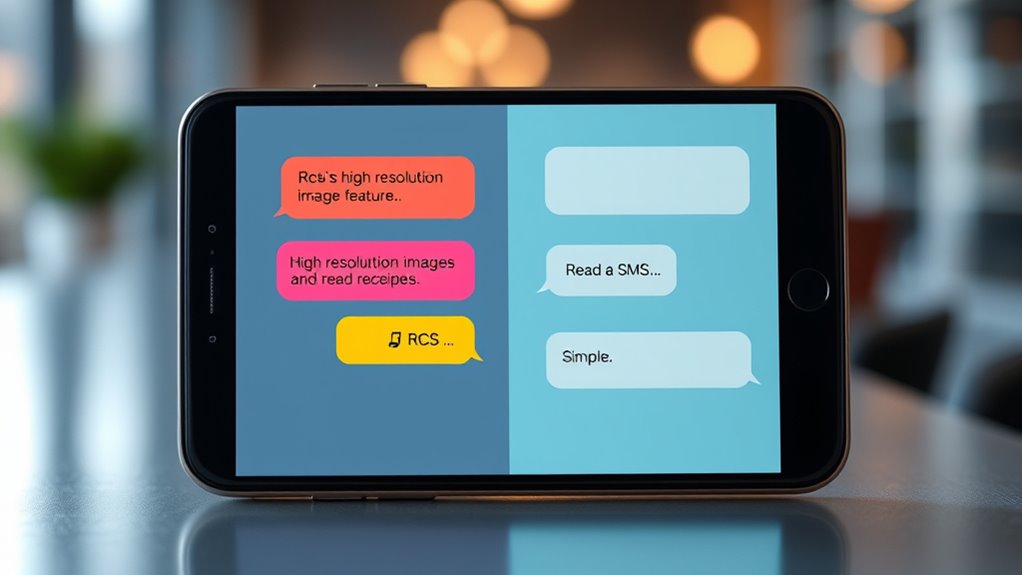
When selecting a messaging solution, you need to contemplate feature compatibility with your existing systems and your budget. Cost and ease of implementation can substantially impact your choice between RCS and SMS. By weighing these factors, you can choose the option that best aligns with your business needs. Additionally, considering the technology landscape can help ensure your messaging strategy remains effective and future-proof. Staying informed about emerging communication standards can also aid in making a more resilient choice.
Feature Compatibility
Choosing between RCS and SMS largely depends on the features you need for your messaging. RCS offers advanced media integration, allowing you to send high-resolution images, videos, and other multimedia content seamlessly. It also provides a richer user interface, making conversations more interactive and engaging. SMS, however, remains limited to basic text and simple media sharing, with no support for read receipts or typing indicators. When evaluating compatibility, consider:
- Support for rich media and multimedia content
- User interface customization and interactivity
- Read receipts and delivery confirmations
- Ease of integration with existing messaging platforms
Your choice hinges on whether these features align with your communication needs and the level of media integration you desire.
Cost and Implementation
Cost and implementation are critical factors to contemplate when selecting between RCS and SMS. Conducting a thorough cost analysis helps you understand the expenses involved in deploying each solution. SMS is generally cheaper upfront, with minimal infrastructure needs, making it easier and quicker to implement. RCS, on the other hand, may require higher initial investments due to its advanced features and the need for compatible devices and network support. Your implementation strategies should consider your existing infrastructure, target audience, and long-term goals. If simplicity and quick deployment are priorities, SMS might be the better choice. However, if you’re aiming for richer, more interactive messaging and are prepared for a more complex rollout, RCS offers significant advantages despite higher initial costs.
Frequently Asked Questions
Is RCS Available Worldwide or Limited to Specific Regions?
RCS isn’t available worldwide yet; it faces regional limitations due to infrastructure and carrier support. While some countries have a broader global rollout, other regions still lag behind, making it less accessible in certain areas. You might find RCS features working smoothly in some places, but in others, you’ll still rely on traditional SMS. Keep an eye on updates from your carrier to know when RCS becomes available in your region.
How Secure Is RCS Compared to Traditional SMS Messaging?
Think of RCS as a step up from SMS, but it’s not entirely foolproof. It offers improved security features like end-to-end encryption, but this isn’t universal and depends on the carrier and device. You should also check data sharing policies, as some providers might share data with third parties. While it’s more secure than traditional SMS, don’t assume it’s completely safe—stay vigilant, especially with sensitive info.
Can RCS Messages Be Sent Without an Internet Connection?
You can’t send RCS messages without an internet connection because they rely on network dependency, which means an active data or Wi-Fi connection is necessary. Unlike traditional SMS, RCS doesn’t support offline messaging, so if you’re offline, your messages won’t go through until you’re back online. This network dependency guarantees richer features but limits the ability to send messages without internet access.
What Are the Costs Associated With Using RCS for Consumers and Businesses?
You’ll find that RCS messaging can have different cost implications for both consumers and businesses. For consumers, RCS often doesn’t add extra charges if included in your data plan, but some carriers might charge for premium features. Businesses may face increased expenses for RCS marketing campaigns and infrastructure, but the benefits of richer engagement can outweigh these costs. Overall, RCS can be cost-effective, but it depends on your usage and provider agreements.
How Does RCS Impact Privacy and Data Sharing Policies?
You might worry about privacy with RCS, but it’s designed with encryption standards to protect your messages. However, carriers can still access some data, and data retention policies vary, possibly affecting your privacy. While RCS aims to improve security, always stay aware of how your information is shared and stored, so you can manage your privacy effectively. Protecting your data remains a shared responsibility.
Conclusion
So, after all this, it’s funny how we’ve moved from simple texts to complex messaging tech. RCS promises richer features, yet many still cling to the old SMS. Maybe it’s comfort, or just the fear of change. Either way, whether you jump on the RCS bandwagon or stick with what’s familiar, one thing’s clear: in messaging, evolution is inevitable—so you might as well embrace it before your old phone becomes a museum piece.
Fall Picks
fall essentials
As an affiliate, we earn on qualifying purchases.