
Smartphones are redefining photography with features like computational photography that deliver professional-quality images through advanced software. Enhanced low-light modes, multi-lens systems, and portrait bokeh effects let you capture stunning shots easily. AI-driven enhancements streamline editing and scene optimization, while 8K video recording and augmented reality add new creative possibilities. If you want to explore how these innovations make capturing incredible moments more accessible, there’s plenty more to discover below.
Key Takeaways
- Computational photography with AI algorithms enables real-time enhancements and professional-quality images without high-end hardware.
- Advanced low-light modes and noise reduction improve nighttime and dark environment photography.
- Multi-lens systems and bokeh effects allow dynamic depth control and versatile scene capturing.
- 8K video recording and high frame rates bring cinematic quality and smooth motion to mobile filmmaking.
- AI-driven scene recognition and customizable editing tools simplify professional-looking photo and video creation.
Top picks for "photography mobile trend"
Open Amazon search results for this keyword.
As an affiliate, we earn on qualifying purchases.
The Rise of Computational Photography
Computational photography has revolutionized how we capture images with our smartphones. It relies on advanced computational algorithms that process and enhance photos in real-time, often producing results once thought impossible with small lenses. Software updates play a vital role in this evolution, consistently introducing new features and refining existing ones. These updates optimize how your device applies AI-driven techniques, like smart scene detection and image stacking, to improve photo quality. As a result, you don’t need high-end cameras to get professional-looking shots; your phone’s software handles much of the heavy lifting. Additionally, the integration of high refresh rates enhances the real-time processing capabilities of smartphones, enabling smoother and more accurate image rendering. This ongoing software-driven evolution allows devices to adapt to emerging photography trends and user preferences without needing new hardware. In essence, computational photography turns your smartphone into a powerful tool for capturing stunning images effortlessly.
Enhanced Low-Light Capabilities
Many smartphones now excel at capturing clear, bright photos in low-light conditions, thanks to advanced camera algorithms. They enhance sensor sensitivity, allowing more light to enter the lens, which results in brighter images. Noise reduction technology further refines photos by minimizing graininess caused by low light. Your device intelligently balances exposure and sharpness, so your photos stay detailed and vibrant even in darkness. To help you understand these features better, here’s a quick overview:
| Feature | Benefit | How it works |
|---|---|---|
| Sensor sensitivity | Improves light intake | Allows more light to reach the sensor |
| Noise reduction | Clears graininess | Uses algorithms to smooth out noise |
| Low-light shooting | Bright, detailed photos | Combines sensor sensitivity and noise reduction |
| Image stabilization | Sharp photos in low light | Reduces motion blur |
| Night mode | Enhanced dark scenarios | Combines multiple exposures |
The Growth of Portrait Mode and Bokeh Effects

You’ll notice that portrait mode now keeps the subject sharply in focus while creating a natural background blur. This enhanced subject focus helps your photos look more professional and eye-catching. Plus, user-friendly editing tools make it easy to refine bokeh effects and perfect your images. Additionally, advancements in smartphone technology continue to expand the capabilities of mobile photography, making high-quality images accessible to everyone. As a result, Free Floating techniques are increasingly popular for creating dynamic and artistic compositions. These innovations are also supported by firewood mastery, which emphasizes careful preparation and technique, illustrating how expertise can elevate even everyday activities. Moreover, the evolving capabilities of devices like those used by Cote de Pablo’s character Ziva David demonstrate how professional-grade photography features are becoming more commonplace in smartphones, further democratizing high-level photography skills. This progress is driven by ongoing sensor improvements, which enhance detail and low-light performance, broadening creative possibilities for users.
Enhanced Subject Focus
Enhanced subject focus has become a defining feature of modern mobile photography, with portrait mode and bokeh effects leading the way. You can now easily achieve subject isolation and background separation, making your photos more professional-looking. Smartphones use advanced algorithms to blur backgrounds while keeping the main subject sharp, emphasizing details and depth. This technology allows you to create striking portraits without bulky equipment. Below is a visual overview:
| Technique | Effect | Purpose |
|---|---|---|
| Portrait Mode | Subject isolation | Focus on main subject |
| Bokeh Effects | Background separation | Enhance depth and aesthetics |
| Depth Mapping | Precise focus control | Fine-tune background blur |
This evolution empowers you to craft images with a professional touch directly from your phone. Additionally, understanding digital distractions can help you better utilize your device’s camera features to focus on creative expression.
Natural Background Blur
The popularity of portrait mode and bokeh effects has led to a natural and authentic background blur that enhances the overall quality of mobile photos. By adjusting the depth of field, your smartphone creates a smooth, pleasing separation between your subject and the background. This natural bokeh mimics professional camera effects, making your images more striking and lifelike. As technology advances, phones now analyze scenes in real-time to produce subtle, realistic blurs that accentuate your subject without looking artificial. You’ll notice how the background seamlessly fades into softness, drawing attention exactly where you want it. This growth in natural background blur empowers you to capture portraits with depth and dimension, elevating everyday photos into more artistic and professional-looking images.
User-Friendly Editing Tools
As smartphone cameras become more advanced, user-friendly editing tools have made it easier than ever to add professional-looking portrait effects and bokeh to your photos. With features like filter presets, you can quickly enhance your images, emphasizing subjects and blurring backgrounds seamlessly. Many editing apps also offer step-by-step tutorials, helping you master the art of editing without prior experience. These tools simplify complex effects, allowing you to create stunning portrait shots with natural-looking depth and smooth backgrounds. Whether you’re adjusting focus, applying soft filters, or refining bokeh effects, these editing options put professional editing within your reach. As a result, you can elevate your mobile photography, making your images more enthralling and share-worthy with minimal effort.
Integration of Artificial Intelligence in Editing
Artificial intelligence now makes editing faster and smarter by offering auto enhancements that improve your photos instantly. With intelligent scene recognition, your device can identify and optimize different settings for every shot you’re taking. Plus, customizable editing tools give you the flexibility to fine-tune your images exactly how you want. Additionally, privacy considerations are supported by these innovative features, empowering users to explore new creative possibilities with confidence. This integration of AI also promotes ethical use by ensuring transparency and control over how your data is utilized during editing processes.
AI-Powered Auto Enhancements
AI-powered auto enhancements are transforming mobile photography by allowing you to quickly improve your images with minimal effort. Thanks to AI innovation, your photos are automatically optimized for brightness, color, and clarity. This auto enhancement feature analyzes each shot and applies the best adjustments in real time, saving you editing time and effort. It’s like having a professional editor in your pocket. You’ll notice improvements instantly, whether you’re capturing landscapes or portraits. Moreover, these AI-driven features can adapt to different lighting conditions and scene types, providing personalized enhancements that suit each unique shot.
Intelligent Scene Recognition
Building on auto enhancements, scene recognition takes mobile photography a step further by intelligently identifying your shooting environment. Using advanced contextual recognition, your device analyzes the scene in real-time, determining whether you’re capturing a sunset, a portrait, or a landscape. This allows your smartphone to make scene-specific adjustments automatically, optimizing exposure, contrast, and color balance for each scenario. As a result, you don’t have to manually tweak settings; the camera adapts seamlessly to produce professional-looking images. This AI-driven approach ensures consistent quality across diverse environments, making photography more accessible and efficient. Smartphone camera technology continues to evolve, integrating these intelligent features to empower users with higher-quality visuals effortlessly. With intelligent scene recognition, your device becomes more than just a camera—it becomes a smart assistant that elevates your creativity through precise, context-aware enhancements.
Customizable Editing Tools
Thanks to advancements in artificial intelligence, customizable editing tools now let you refine your photos with remarkable precision and ease. You can easily adjust filter customization to create unique moods or styles, giving your images a personalized touch. AI-powered tools also simplify color grading, allowing you to enhance or alter the tones in your photos effortlessly. With intelligent suggestions, you can quickly find the perfect look without extensive editing knowledge. These tools adapt to your preferences, offering real-time adjustments that improve overall image quality. This democratizes professional‑level editing, empowering you to craft stunning visuals directly on your smartphone. Additionally, passive voice detection is integrated into some editing platforms, helping you identify and revise passive constructions to improve your writing clarity. Incorporating AI-driven personalization can further tailor your editing experience to your specific stylistic preferences, making your workflow even more efficient. Moreover, user-friendly interfaces are designed to make complex editing processes accessible to everyone. As the technology evolves, automatic enhancement features are becoming increasingly sophisticated, enabling faster and more intuitive edits. Furthermore, advanced algorithms are continuously improving the accuracy and effectiveness of these editing tools, ensuring high-quality results.
The Emergence of 8K Video Recording
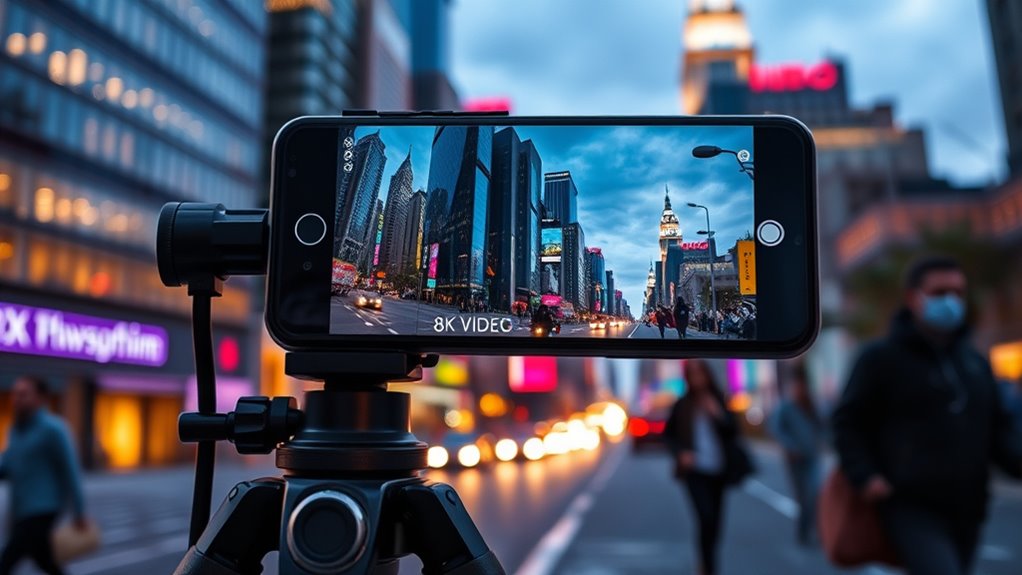
As mobile devices continue to advance, 8K video recording has emerged as a groundbreaking feature that transforms how you capture high-quality footage. With this technology, you can create cinematic videos with incredible detail and clarity. The high frame rate options ensure smooth motion, perfect for fast-paced scenes or action shots. This trend pushes smartphones closer to professional filmmaking standards, especially as processing power plays a critical role in managing such high-resolution files efficiently. Additionally, the increased storage requirements demand hardware capabilities that support large data handling, further emphasizing the importance of high-end components. As digital asset management becomes more sophisticated, smartphones are increasingly equipped to handle these demanding tasks seamlessly. The evolution of smartphone camera technology also means that users can now achieve professional-looking results without additional equipment. Furthermore, innovations like sensor size and advanced image processing algorithms contribute to exceptional video quality in these high resolutions. Here’s a quick comparison:
| Feature | 4K Video | 8K Video | Benefits |
|---|---|---|---|
| Resolution | 3840 x 2160 pixels | 7680 x 4320 pixels | Enhanced detail and clarity |
| Suitable for | Standard videos | Cinematic videos | Higher quality and editing flexibility |
| Required Storage | Moderate | Large | Better hardware capabilities needed |
Focus on Sustainability and Eco-Friendly Devices

As you look for new mobile devices, you’ll notice brands prioritizing eco-conscious materials and energy-efficient manufacturing. These choices help reduce environmental impact while still delivering high-quality photography features. By choosing devices with sustainable practices, you’re supporting a greener future. Incorporating air quality considerations into your purchasing decisions can further enhance your overall well-being and environmental responsibility. Considering eco-friendly device options can also promote better sustainability in your daily tech use. Additionally, selecting devices that utilize natural and organic materials can further align with eco-conscious values while maintaining performance. Paying attention to sustainable manufacturing processes ensures your device contributes positively to environmental conservation efforts.
Eco-Conscious Material Choices
Have you noticed how more smartphone manufacturers are prioritizing eco-friendly materials in their devices? They’re making conscious choices, like using sustainable packaging and eco-friendly materials for internal components. These efforts reduce environmental impact and appeal to eco-conscious consumers. Instead of traditional plastics, some brands incorporate biodegradable or recycled plastics, helping to lower plastic waste. Additionally, manufacturers are choosing responsibly sourced metals and plant-based alternatives for casings and accessories. By focusing on eco-conscious material choices, you’re supporting a shift toward sustainability in tech. These innovations not only minimize ecological footprints but also reflect a commitment to long-term environmental health. As a user, you benefit from devices that are better for the planet, demonstrating how sustainable practices can be integrated without sacrificing quality or performance.
Energy-Efficient Manufacturing Processes
Manufacturers are increasingly adopting energy-efficient manufacturing processes to create more sustainable devices. This shift emphasizes sustainable manufacturing and energy-efficient design, reducing environmental impact and conserving resources. By integrating eco-friendly practices, companies lower carbon emissions and minimize waste during production. You’ll notice these efforts reflected in devices built with recycled materials and optimized for energy efficiency. The table below highlights key sustainable manufacturing strategies:
| Strategy | Impact |
|---|---|
| Use of recycled materials | Reduces raw material extraction |
| Renewable energy sources | Lowers production carbon footprint |
| Modular design approach | Facilitates easier repairs and upgrades |
Adopting these processes aligns with your desire for eco-conscious devices, ensuring your smartphone supports sustainability while maintaining high performance.
Augmented Reality Features for Creative Shoots
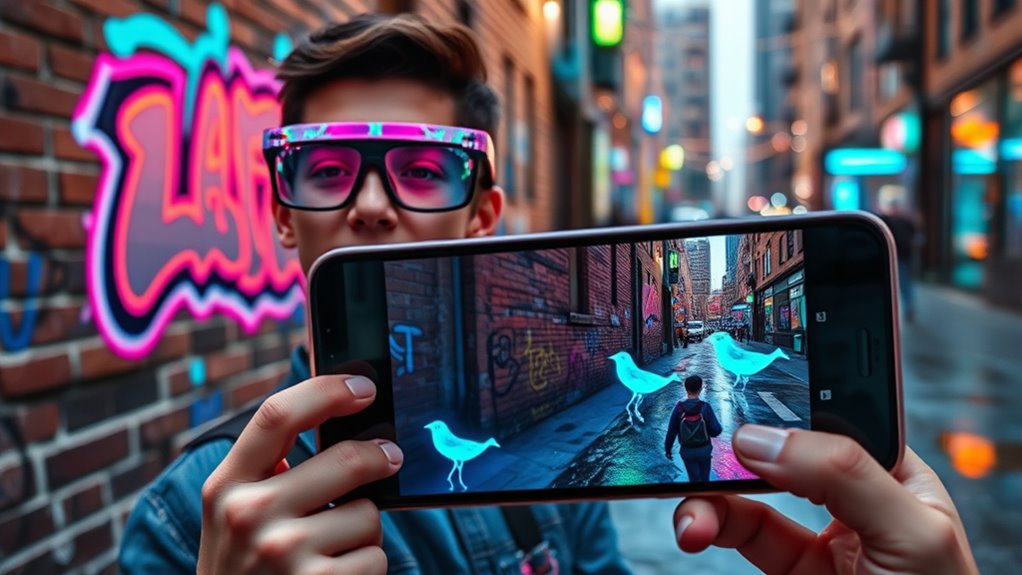
Augmented reality (AR) features are transforming mobile photography by allowing you to create more engaging and imaginative shots. With interactive overlays, you can add dynamic elements that respond to your environment, making your photos more lively. Virtual object placement lets you insert 3D objects into real-world scenes, giving your images a surreal touch. These tools enable you to experiment with creative concepts without additional equipment. For example, you can:
- Overlay animated characters for playful scenes
- Insert virtual props into real-world backgrounds
- Design immersive environments directly through your smartphone
AR’s real-time capabilities make it easy to visualize and adapt your ideas instantly. By leveraging these features, you can push the boundaries of mobile photography and craft truly unique, enthralling images.
The Expansion of Night Mode Photography

Ever since night mode photography first appeared, its capabilities have rapidly expanded, transforming how you capture low-light scenes. Thanks to night mode innovations and low light sensor advancements, smartphones now deliver brighter, clearer images in darkness. These improvements enable you to shoot handheld at night without blur or noise, revealing details previously lost. As a result, night photography is no longer limited to professional equipment. You can now effortlessly capture stunning nightscapes, cityscapes, and nighttime portraits with your device.
| Feature | Impact | Technology Behind |
|---|---|---|
| Enhanced algorithms | Sharper images in low light | Advanced computational photography |
| Larger sensors | Better light absorption | Low light sensor advancements |
| Longer exposures | More detail in dark scenes | Improved stabilization technology |
| Real-time processing | Instant quality improvements | Real-time image processing |
Increasing Use of Multiple Camera Lenses
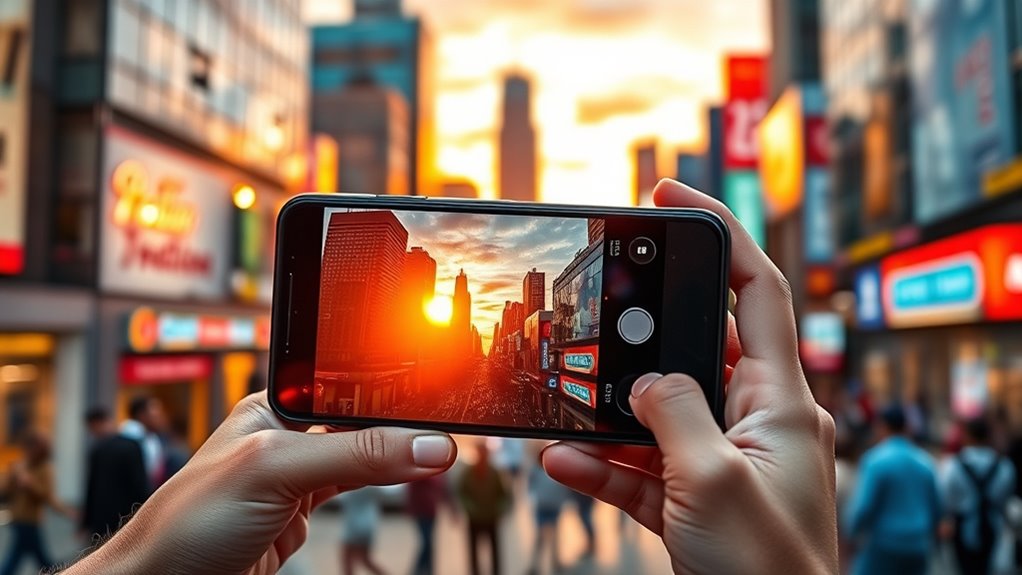
As smartphone cameras evolve, they increasingly incorporate multiple lenses to enhance image quality and versatility. This trend boosts lens versatility, allowing you to capture a wider range of scenes with better detail. Multiple lenses enable you to switch seamlessly between wide, telephoto, and ultra-wide perspectives, making multi angle shots effortless. With these options, you can:
- Capture stunning landscapes and close-ups without changing devices
- Achieve better depth and background blur for professional-looking portraits
- Adapt quickly to different lighting conditions and subjects
Mobile Photography as a Social Media Powerhouse
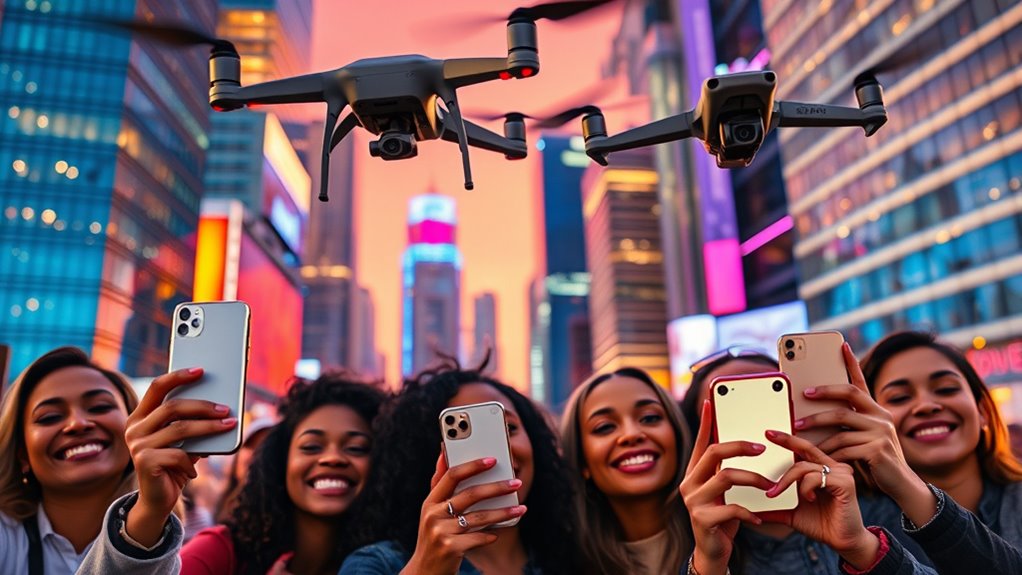
Mobile photography has become a powerful tool for social media users, transforming everyday moments into shareable content. With high-quality images and instant editing, you can easily capture and share photos that resonate with your audience. Social media sharing is now seamless, making it simple to reach followers and engage with a broader community. Influencer collaborations thrive because smartphones enable authentic, eye-catching visuals that boost visibility. Whether you’re posting stories, reels, or static images, mobile photography elevates your content, encouraging more interaction and followers. As smartphones continue to improve, they empower you to create professional-looking images on the go, solidifying mobile photography’s role as a social media powerhouse. Your ability to craft compelling visuals directly impacts your digital presence and influence.
Frequently Asked Questions
How Do Smartphone Cameras Influence Professional Photography Standards?
Smartphone cameras influence professional photography standards by pushing for higher camera quality and advanced editing capabilities. You’re encouraged to experiment more, knowing that smartphones can produce stunning images with impressive detail and color. This shift encourages professionals to embrace mobile editing tools, making post-processing easier and more accessible. As a result, the line between amateur and professional photography blurs, prompting you to rethink traditional standards and explore new creative possibilities.
What Are the Privacy Concerns With Advanced Mobile Photography Features?
Ironically, your advanced mobile photography features might make you a data privacy concern. As you capture stunning images, you also share personal data that could be exploited. Surveillance risks increase as location and photo metadata are easily accessible, raising privacy alarms. Be cautious, as your smartphone’s powerful camera doesn’t just document moments—it can also expose sensitive information, making you vulnerable to unwanted tracking and data breaches.
How Sustainable Are the Materials Used in Modern Smartphone Cameras?
You’ll find that modern smartphone cameras are increasingly made with sustainable materials, which helps reduce environmental impact. Brands are adopting eco-friendly manufacturing processes, using recycled metals and plastics, and minimizing hazardous chemicals. While some components still rely on non-renewable resources, efforts to improve sustainability are growing. By choosing devices from companies committed to eco-friendly practices, you support a future where smartphone camera materials become more sustainable and environmentally responsible.
Can Mobile Photography Replace Traditional DSLR Photography Entirely?
You might think mobile photography will replace DSLRs, but it’s unlikely. While smartphones excel in camera ergonomics and accessory compatibility, they often can’t match the depth, detail, and control of traditional cameras. For casual shots, smartphones are perfect, but for professional-grade photography requiring advanced settings and lens options, DSLRs still hold their ground. So, instead of replacement, see mobile devices as versatile companions enhancing your photography experience.
What Future Innovations Might Further Transform Mobile Photography?
Future innovations will likely include augmented reality features that let you visualize shots before capturing them, making composition easier. Expect AI integration to enhance image processing, allowing your smartphone to automatically adjust settings for perfect photos every time. These advancements will make mobile photography even more powerful, helping you create professional-quality images quickly and effortlessly, transforming how you capture and share your world.
Conclusion
As you explore these trends, remember that your smartphone isn’t just a device—it’s your creative partner, transforming everyday moments into stunning stories. With every new feature, you’re not just capturing images; you’re shaping a visual narrative that resonates. So, embrace these innovations and let your imagination run wild. After all, isn’t it exciting to think that the power to redefine photography is now in your hands? Your next masterpiece awaits—are you ready?