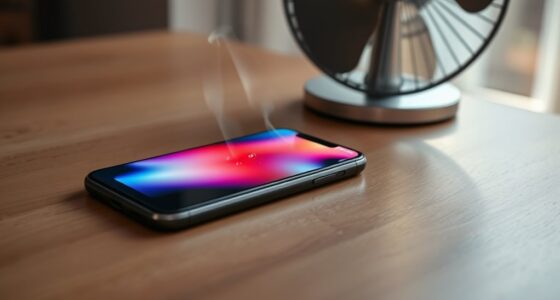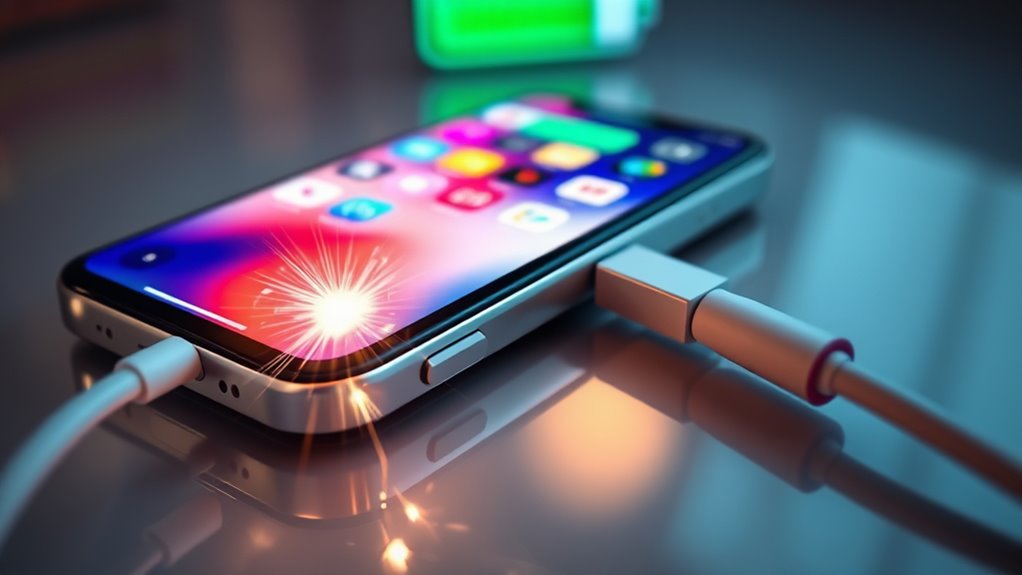

Fast charging can speed up battery wear over time because it generates more heat and increases chemical stress inside your phone. This extra heat accelerates battery breakdown, leading to capacity loss after repeated use. While most modern devices include thermal management to limit damage, consistently charging quickly in hot environments can still harm your battery in the long run. If you want to learn how to protect your battery better, keep exploring the details below.
Key Takeaways
- Fast charging increases heat and electrical current, which can accelerate battery chemical reactions and degradation over time.
- Modern smartphones use thermal management systems to regulate heat and minimize damage during fast charging.
- Repeated fast charging in high-temperature environments can cause gradual capacity loss and reduce battery lifespan.
- Manufacturers often implement algorithms to slow charging when temperatures are high, helping preserve battery health.
- Using fast charging sparingly and avoiding excessive heat exposure can help maintain battery longevity.
Fast charging has become a popular feature in smartphones, allowing you to power up your device quickly when you’re short on time. It’s convenient, especially when you need that extra boost before heading out or during busy days. However, many people wonder if this rapid charging process could be harming their phone batteries in the long run. The truth is, fast charging can impact your battery’s lifespan, primarily through factors like battery degradation and thermal management. But understanding how these factors work can help you use fast charging more wisely.
When you use fast charging, your phone’s battery is subjected to higher electrical currents, which generate more heat. This heat is a key factor in battery degradation, meaning it can cause your battery’s capacity to decline faster than normal over time. Lithium-ion batteries, which are common in smartphones, are sensitive to temperature changes. Excess heat accelerates chemical reactions inside the battery, leading to the breakdown of its components. This process diminishes the overall lifespan of your battery, making it hold less charge and needing replacement sooner. That’s why thermal management is essential. Modern smartphones come equipped with sophisticated thermal management systems designed to keep your device cool during fast charging. These systems regulate heat levels, slowing down charging speeds if temperatures get too high, thereby protecting your battery from overheating and reducing potential damage.
Despite these safety measures, repeated exposure to high temperatures during fast charging can still contribute to gradual battery wear. It’s not that fast charging instantly ruins your battery, but over months and years, the cumulative effect of thermal stress can lead to noticeable capacity loss. Manufacturers are aware of these issues and often implement optimized charging algorithms that slow down the charging process once the battery reaches a certain level. This feature helps mitigate battery degradation by reducing heat and electrical stress during the final stages of charging. Additionally, appliance maintenance plans for electronic devices, including smartphones, can help prolong their optimal performance and lifespan. Still, if you want to extend your battery’s health, it’s wise to avoid consistently using fast charging when you don’t need it, especially if your device becomes unusually warm during the process.
Top picks for "fast charg phone"
Open Amazon search results for this keyword.
As an affiliate, we earn on qualifying purchases.
Frequently Asked Questions
Does Using a Fast Charger Affect My Phone’s Warranty?
Using a fast charger typically doesn’t void your phone’s warranty, but it depends on the manufacturer’s charging policies. Warranty concerns usually arise if fast charging causes damage due to improper use or third-party chargers. To avoid issues, stick to official or certified chargers, and check your device’s warranty terms. If damage occurs from fast charging, your warranty might not cover repairs, so always follow recommended charging guidelines.
Can I Safely Switch Between Fast and Regular Charging Modes?
You can safely switch between fast and regular charging modes; just remember, “a stitch in time saves nine.” Changing modes occasionally won’t harm your battery health or increase charging cycles markedly. To keep your battery in good shape, avoid constant fast charging and give it time to cool down. Switching modes as needed is fine, and your phone’s battery will thank you for balancing quick power-ups with gentle charging.
Are There Specific Brands of Fast Chargers That Are Safer for Batteries?
Yes, some brands are safer for your battery. Look for fast chargers with strong brand reputation and proper charger certifications like UL, CE, or FCC. These certifications guarantee the charger meets safety standards and reduces risks. Reputable brands like Anker, Aukey, and Belkin are known for quality and safety. Always check reviews and certifications before buying, so you safeguard your phone’s battery from potential damage caused by subpar chargers.
How Does Fast Charging Impact Battery Calibration Over Time?
Fast charging can gradually affect your battery calibration accuracy over time, making your battery health seem inconsistent. You might notice your phone’s battery percentage jumps or drops unexpectedly. This happens because rapid charging can cause slight voltage fluctuations, impacting calibration. To maintain calibration accuracy, avoid frequent fast charging sessions and let your battery cool down. Proper calibration helps your device display accurate battery life and prolongs overall battery health.
Is It Better to Charge My Phone Overnight or During the Day?
It’s generally better to charge your phone during the day rather than overnight to protect your battery health. Overnight charging can lead to prolonged exposure to high charge levels, which may degrade the battery over time. By adjusting your charging habits and avoiding continuous charging, you help preserve your battery’s lifespan, ensuring ideal performance and longevity. Being mindful of when and how you charge supports better overall battery health.
Conclusion
So, is fast charging really bad for your battery? The truth is, it’s not all bad if you use it wisely. Fast charging saves you time, keeps your device ready, and can be safe when your phone and charger are compatible. But, push it too often, and you might reduce your battery’s lifespan. Balance your fast charging use—respect it, monitor it, and enjoy the convenience without sacrificing your battery’s health.