
To choose the right internet plan, consider your household’s activities and device use. Streaming in 4K, gaming, working remotely, or video calls all require different speeds. For light browsing, 3-5 Mbps works well, but heavy streaming or multiple users need 50 Mbps or more. Fiber offers fast, reliable service for future needs. Keep in mind your growth plans—more devices mean higher bandwidth. To find out how to optimize your setup, explore further details below.
Key Takeaways
- Assess household activities and device usage to determine minimum Mbps requirements for streaming, gaming, work, and browsing.
- Opt for scalable plans that can increase bandwidth as your household’s digital demands grow.
- Prioritize fiber optic internet for high speeds, low latency, and reliable performance for multiple users.
- Consider data caps and unlimited plans to avoid throttling during heavy uploads, downloads, or streaming.
- Regularly monitor network performance to adjust your plan and ensure seamless internet experience.
Top picks for "choos right internet"
Open Amazon search results for this keyword.
As an affiliate, we earn on qualifying purchases.
Understanding Internet Speed Metrics
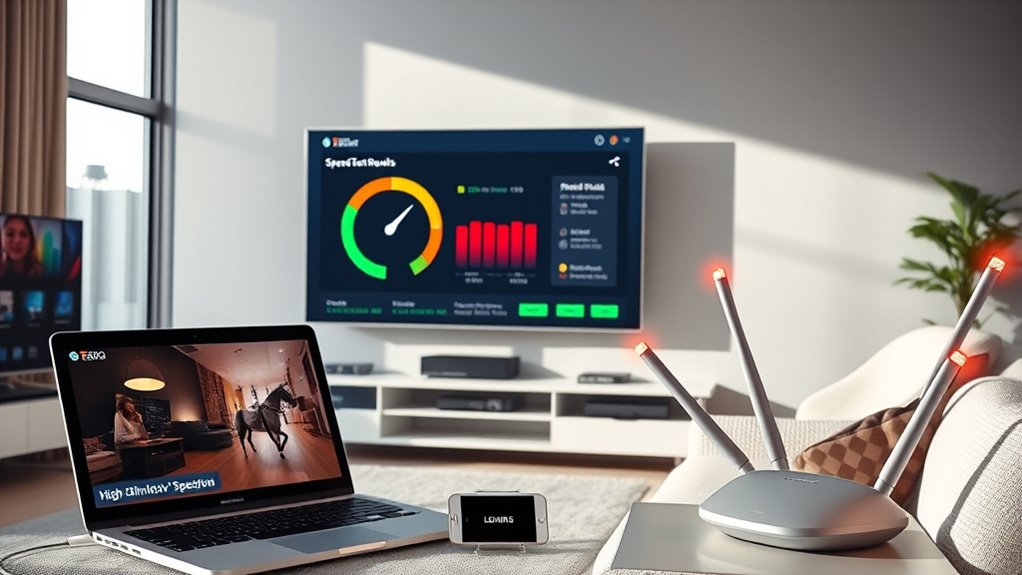
Understanding internet speed metrics is essential because it helps you choose the right plan for your needs. When comparing options, pay attention to download and upload speeds, which indicate how quickly data moves to and from your devices. Fiber optics offer ultra-fast speeds and reliable connections, making them ideal for heavy streaming or gaming. Wireless connectivity, on the other hand, can vary based on signal strength and interference, affecting your actual experience. Mbps (megabits per second) measures speed; higher numbers mean faster data transfer. Knowing these metrics helps you avoid overpaying for unnecessary speed or settling for too little. Additionally, understanding the contrast ratio of your internet connection can help gauge how well your setup handles different types of content, especially in environments with varying lighting conditions, ensuring a better overall experience. Being aware of network stability is also crucial because frequent disconnections can disrupt your online activities and reduce productivity. For optimal performance, consider bandwidth allocation to prioritize critical activities like work or streaming. It’s also important to factor in your household’s data usage patterns to select a plan that accommodates peak times without throttling. Recognizing your connection type, whether fiber, cable, or wireless, can further help tailor your internet plan to suit your specific needs, ensuring you get the most efficient and reliable service. Focus on plans that match your household’s activities, whether streaming, working remotely, or gaming, to ensure smooth and efficient internet use.
Assessing Your Household Internet Usage

To choose the right internet plan, you need to understand how your household uses the connection daily. Consider your streaming and gaming habits, as well as work and study requirements, to determine your bandwidth needs. This assessment helps guarantee you select a plan that keeps everyone connected smoothly. Recognizing your home organization needs can also help you manage and optimize your internet usage more effectively. Additionally, understanding your Vibe coding skills can empower you to troubleshoot and customize your network setup for better performance. Being aware of your network security practices is equally important to protect your household data and maintain reliable service. A clear understanding of power management principles can further enhance your ability to optimize your internet and device setup for energy efficiency. Knowing your support requirements ensures you can seek appropriate assistance when needed to maintain optimal connectivity.
Streaming and Gaming Demands
Since streaming movies and gaming often require significant bandwidth, gauging how much internet speed your household needs is vital. If you stream in 4K or have multiple devices simultaneously, fiber optics can provide the high speeds and low latency necessary for smooth experiences. Gaming also demands consistent, quick connections, so speeds of at least 25 Mbps per device are recommended. If your only option is satellite internet, be aware that it might have higher latency and data caps, which can affect gaming and streaming quality. Consider how many people use the internet at once and the types of activities they do. This assessment helps guarantee you choose a plan that keeps everyone’s streaming and gaming experiences seamless without lag or buffering.
Work and Study Needs
Evaluating your household’s work and study needs is essential to selecting the right internet plan. If you rely on video conferencing, cloud file sharing, or online learning platforms, a fiber optics connection offers consistent high speeds and low latency, ensuring smooth communication. Consider plans with unlimited data or high data caps, especially if multiple users are streaming, downloading, or uploading frequently. Heavy data usage can cause throttling or extra charges if your plan has low caps. Assess how many devices are connected simultaneously and the types of tasks performed. For work and study, prioritize reliability and speed over just download limits. Additionally, understanding your network performance requirements ensures you choose a plan that supports your household’s online activities effectively. Choosing a plan tailored to your household’s specific online activities helps you stay productive without interruptions or unexpected costs.
Streaming and Gaming: How Much Speed Do You Need?
To enjoy smooth streaming and gaming, you need to know the recommended speeds and latency levels. Fast, stable connections are essential for multiple devices running simultaneously. Understanding these requirements helps you choose an internet plan that keeps your entertainment seamless. Additionally, considering the upgrades and maintenance options available can help optimize your connection for better performance. Being aware of outdoor-friendly tech can also ensure your internet setup remains reliable even in less conventional environments. Moreover, selecting the right network equipment like routers and extenders can significantly improve your overall connection quality and stability, especially when integrating with smart home devices that require consistent connectivity. Regularly reviewing these service plans and features ensures your internet setup continues to meet your evolving needs.
Recommended Speeds for Streaming
When it comes to streaming and gaming, having the right internet speed makes all the difference in guaranteeing smooth, interruption-free experiences. For HD streaming, a download speed of at least 5 Mbps is recommended, while 25 Mbps suits 4K content. Faster speeds support multiple devices and high-quality streams without buffering. Fiber optics provide reliable, high-speed connections ideal for streaming, especially in busy households. Wireless connectivity can also deliver decent speeds but may experience interference. Here’s a quick guide:
| Activity | Recommended Speed |
|---|---|
| HD Streaming | 5-10 Mbps |
| 4K Streaming | 25 Mbps or more |
| Multiple Devices | 50+ Mbps |
Choosing the right plan guarantees your favorite shows stay smooth and your gaming remains lag-free. Additionally, understanding your internet speed requirements can help you select the most suitable plan for your household’s needs.
Optimal Gaming Latency Levels
Achieving low latency is essential for a smooth gaming experience, especially during fast-paced action or competitive play. Ideal gaming latency typically falls below 30 milliseconds, ensuring minimal delay between your actions and on-screen responses. Higher ping levels can cause noticeable lag, frustrating your gameplay and reducing your chances of winning. To enhance ping, choose an internet plan with a stable connection and prioritize low-latency routes. Using wired connections instead of Wi-Fi can considerably reduce gaming latency, providing more consistent performance. Additionally, close background applications that consume bandwidth, and avoid network congestion during gaming sessions. By focusing on ping optimization, you’ll enjoy quicker response times, smoother gameplay, and a more competitive edge. Remember, a low-latency connection is key to a truly immersive gaming experience.
Bandwidth for Multiple Devices
Balancing the bandwidth needs of multiple devices, especially when streaming and gaming simultaneously, requires a clear understanding of your internet speed. Fiber optics provide high-speed, reliable connections that support multiple devices without lag. To optimize your network, use a quality wireless router capable of handling multiple streams efficiently. Streaming in 4K and online gaming demand substantial bandwidth, so a plan offering at least 100 Mbps is recommended for households with several users. If you frequently stream or game on multiple devices at once, consider plans with higher speeds to prevent buffering and latency issues. Upgrading to fiber optics and investing in a robust wireless router guarantees your network can handle multiple devices seamlessly, providing smooth entertainment and gaming experiences without interruptions. Proper network management is essential for maintaining optimal performance when multiple devices are in use.
Working From Home: Internet Requirements for Productivity

Working from home demands a reliable internet connection to stay productive and connected. For tasks like video conferencing, file sharing, and cloud-based applications, fast and stable speeds are essential. Fiber optics offers the best performance, providing high upload and download speeds with minimal latency, ensuring smooth communication. If fiber isn’t available in your area, satellite internet can be a viable alternative, though it may have higher latency and occasional interruptions. To work efficiently, aim for at least 25 Mbps download speed, especially if multiple devices are used simultaneously. Additionally, understanding the different types of internet plans can help you choose the most suitable option for your needs. Investing in the right plan guarantees you can handle daily work demands without frustrating disruptions or lag. As more people adopt connected home fitness solutions, a robust internet connection becomes even more critical to support multiple smart devices and apps running seamlessly. Furthermore, considering the additional features offered by certain plans can enhance your overall experience and ensure you meet your specific work and leisure needs, especially when prioritizing reliable connectivity for remote work success.
It’s also important to note that newer technologies like fiber optics can significantly improve your internet speed and stability, making remote work more efficient.

For browsing websites, using social media, and performing light online activities, a reliable internet connection doesn’t need to be ultra-fast. A speed of 3-5 Mbps usually suffices for smooth performance. To guarantee your connection stays secure, focus on wireless security measures like strong passwords and regular updates. Proper router placement also plays an essential role; position your router in a central, elevated spot to maximize coverage and minimize dead zones.
| Activity | Recommended Speed | Tips |
|---|---|---|
| Light browsing & social media | 3-5 Mbps | Keep router away from interference sources |
| Streaming music or podcasts | 1-2 Mbps | Use secure Wi-Fi with strong encryption |
| Video calls (low quality) | 3-4 Mbps | Regularly update router firmware for security |
| General light use | 3-5 Mbps | Guarantee reliable wireless security practices |
The Impact of Multiple Users and Devices

When multiple users and devices connect to your internet network simultaneously, the overall speed and performance can quickly decline if your plan isn’t capable of handling the increased demand. Streaming videos, gaming, video calls, and browsing all compete for bandwidth, which can cause lag and buffering. To keep your network secure and efficient, make certain your Wi-Fi uses strong wireless security and network encryption. This not only protects your data but also helps prevent unauthorized access, especially when many devices are connected. Additionally, a plan with sufficient speed helps maintain seamless performance across all devices. Remember, each device and user adds strain, so choosing a plan that accounts for your household’s activity level ensures everyone stays connected smoothly without sacrificing security or speed. Regularly monitoring your network can also help identify bandwidth demands and optimize your setup accordingly. Keeping an eye on your network performance can help you adjust your internet plan to better suit your household’s needs. Incorporating device management practices can further improve your network efficiency and security, and understanding how network capacity impacts overall speed allows for better planning and upgrades.
Comparing Different Internet Plan Tiers
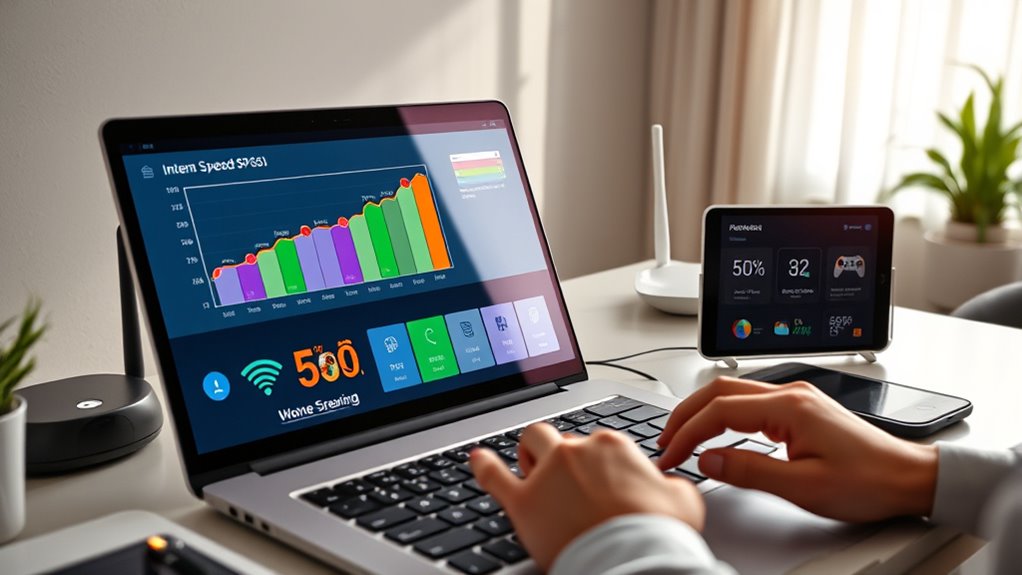
Choosing the right internet plan involves evaluating the different tiers offered by providers to match your household’s needs. When comparing options, consider factors like fiber options, which can provide faster, more reliable connections, and data caps that limit your monthly usage. Higher-tier plans often include:
Evaluate plan tiers, fiber options, and data caps to select the best internet service for your household needs.
- Faster speeds suitable for streaming and gaming
- Unlimited data or higher data caps for heavy users
- Access to fiber options for better performance
Lower-tier plans may have slower speeds and strict data caps, making them ideal for light browsing. Think about your household’s activities to determine if you need premium speeds or if a basic plan suffices. By understanding the differences between plan tiers, you can avoid overspending while ensuring your internet service supports your daily needs efficiently.
Tips for Choosing a Cost-Effective Internet Package
Finding a cost-effective internet package starts with evaluating your actual usage needs. Consider how often you stream, browse, or work remotely to determine the speed and data capacity required. If you mainly use wireless connectivity for light browsing and email, a basic plan with lower data caps might suffice. However, if you frequently stream videos or gaming, look for packages with higher data caps to avoid costly overages. Be cautious of plans with unlimited data, as they can be more expensive without added benefits if your usage is moderate. Also, compare providers to find the best balance between price and performance. Choosing wisely helps you avoid paying for features you don’t need, saving money while ensuring reliable internet access.
Future-Proofing Your Internet Plan for Growth

As your internet needs grow, it’s important to select a plan that can keep pace with future demands. To future-proof your connection, consider providers offering fiber upgrades, which support faster speeds and reliability as technology advances. Think about how upcoming innovations, like smart homes or 4K streaming, will require more bandwidth. Visualize a network that seamlessly handles:
Future-proof your internet with fiber upgrades that support faster speeds and upcoming tech innovations.
- Multiple devices streaming, gaming, and working simultaneously
- Upgrades to fiber infrastructure that boost speed and stability
- Compatibility with future technology like enhanced virtual reality or IoT devices
Choosing a plan with scalable options ensures you won’t outgrow your service quickly. Investing in fiber upgrades now sets the stage for a resilient, high-performing internet connection that adapts to your evolving digital lifestyle.
Frequently Asked Questions
How Does Latency Affect My Internet Experience?
Latency impact can critically affect your internet experience, especially during gaming. Lower latency means less delay between your actions and the game’s response, leading to smoother gameplay. High latency causes lag, making controls feel delayed and frustrating. If you game online or stream in real-time, you’ll notice that reducing latency improves gaming performance and overall responsiveness, providing a seamless experience. So, aiming for low latency is essential for ideal internet use.
What Is the Difference Between Upload and Download Speeds?
Did you know that upload speeds are often 10 times slower than download speeds? Upload speed refers to how quickly you send data, like videos or files, while download speed is how fast you receive data from the internet. Bandwidth comparison shows that most plans prioritize download speeds for streaming and browsing, but if you upload large files or stream, you’ll want higher upload speeds. Speed benchmarks help you choose the right plan for your needs.
How Do I Test My Current Internet Speed Accurately?
To test your current internet speed accurately, use reliable speed test tools like Ookla or Fast.com. Make certain you’re connected directly to your modem via Ethernet for best results. Close background apps that might affect your connection, and run multiple tests at different times. This helps you gauge your connection stability and get a true measure of your upload and download speeds, so you know if your plan meets your needs.
Can I Upgrade My Plan Without Switching Providers?
Did you know over 60% of internet users prefer plan flexibility? Yes, you can upgrade your plan without switching providers—many offer options to increase speed or data limits directly through their customer portals. Check your provider’s options, as they often allow plan upgrades easily. Contact customer service or log into your account online to explore available upgrades, making it simple to get faster internet without the hassle of changing providers.
What Are the Signs I Need a Faster Internet Plan?
If your streaming quality frequently buffers or your online gaming lags, it’s a sign you need a faster internet plan. You might also notice slow downloads or difficulty connecting multiple devices at once. When these issues happen regularly, upgrading your plan can improve your experience. Faster speeds reduce buffering, enhance streaming quality, and guarantee smoother online gaming, making your internet more reliable for all your needs.
Conclusion
Choosing the right internet plan is like finding the perfect pair of shoes—you need enough room to move comfortably without paying for extras you don’t need. Think of your household as a race car driver; upgrading your internet is like installing a better engine to handle the speed. By evaluating your usage and planning ahead, you’ll guarantee your connection keeps pace with your life, keeping you running smoothly without unnecessary costs.