
📊 Full opportunity report: Desktop Automation Made Simple With Watch-Once Spoken Commands on IdeaNavigator AI — validation score, market gap, and execution plan.

Get the latest gadgets delivered free with Prime
- Fast, free delivery on millions of items
- Prime Video, Amazon Music and more included
- Member-only deals all year
TL;DR
A new desktop automation feature allows users to record workflows once and trigger them with spoken commands. It aims to reduce setup friction for power users handling repetitive tasks. The system uses screen-understanding models to generalize workflows and improve trustworthiness.
IdeaNavigator AI has unveiled a new desktop automation system that enables users to record a workflow once and trigger it with spoken commands, promising a streamlined solution for power users who spend hours on repetitive tasks. This development aims to address longstanding friction points in automation setup, leveraging recent advances in screen-understanding models to generalize workflows and increase trust in autonomous chains.
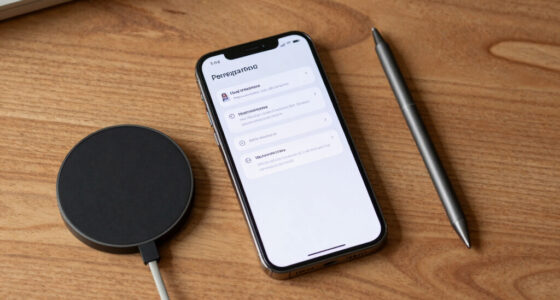
The technology allows users to perform a task—such as batch renaming files, resizing images, or transferring data between applications—once, and then replay it on demand through a simple spoken command. The system records all user interactions, including clicks, drag-and-drop actions, and data copying, capturing the entire workflow in a single session.
Once recorded, users can invoke the workflow via voice, with the system providing visible step-by-step replay. It pauses at critical points for user approval, allowing manual intervention if needed, and offers rollback options to revert to the last safe checkpoint if a step fails or produces unintended results. This design aims to build trust and reliability for real-world use, especially among power users who frequently perform similar tasks.
According to an anonymous researcher affiliated with IdeaNavigator AI, the approach is intended as a ‘narrow first-win’ workflow, targeting common repetitive tasks that currently require scripting or brittle hotkey setups. The company plans to validate the prototype by releasing a beta version capable of handling five archetypal workflows, with a focus on weekly retention among a test group of 200 power users.
Potential Impact on Desktop Productivity
This innovation could significantly reduce the time and effort spent on repetitive desktop tasks, especially for power users who currently rely on complex scripting or manual hotkey configurations. By simplifying setup and increasing trust through visible step-by-step replay and rollback, the system may lower the barrier to automation adoption in professional environments. If successful, this could lead to broader use of voice-activated workflows in productivity software, transforming how users interact with their desktops.
desktop automation voice command software
As an affiliate, we earn on qualifying purchases.
As an affiliate, we earn on qualifying purchases.
Advances in Screen-Understanding and Automation
Recent developments in screen-understanding models enable software to interpret and generalize user workflows from a single run. This contrasts with traditional automation tools that require extensive scripting or brittle hotkey setups. The concept of watch-once recording leverages these advances to create more adaptable and trustworthy automation chains. The idea aligns with ongoing trends toward more natural, voice-driven interfaces and smarter automation solutions for desktop environments.
Historically, automation has been limited by setup complexity and reliability concerns. The new approach aims to address these issues by providing a more intuitive, less friction-prone method for creating and executing workflows. The beta testing phase will focus on common tasks like batch renaming, report reformatting, and data transfer, which are typical pain points for many power users.
workflow automation tools for Windows
As an affiliate, we earn on qualifying purchases.
As an affiliate, we earn on qualifying purchases.
Uncertainties About Reliability and Adoption
It is not yet clear how well the system will generalize workflows beyond initial archetypes or how reliably it will handle complex or highly variable tasks. The effectiveness of the visible step-by-step replay and rollback features in real-world scenarios remains to be tested at scale. Additionally, user acceptance and trust in voice-triggered automation will influence adoption, but these factors are still under evaluation during the beta phase.
voice-activated desktop automation
As an affiliate, we earn on qualifying purchases.
As an affiliate, we earn on qualifying purchases.
Next Steps for Beta Testing and Validation
IdeaNavigator AI plans to release a beta version capable of handling five common workflow types, with a focus on measuring weekly retention among 200 power users. The company will gather feedback on usability, reliability, and trustworthiness, and refine the system accordingly. Success in these early tests could lead to wider deployment and potential integration into existing productivity suites, with future enhancements to support more complex workflows and broader voice command support.
screen understanding automation software
As an affiliate, we earn on qualifying purchases.
As an affiliate, we earn on qualifying purchases.
Key Questions
How does the watch-once recording differ from traditional automation?
Traditional automation often requires scripting or configuring hotkeys, which can be brittle and time-consuming. The watch-once approach records a workflow in a single session and generalizes it using screen-understanding models, allowing it to be triggered by voice with visible step-by-step replay and rollback features.
What types of tasks can this system automate?
Initial capabilities focus on common repetitive tasks such as batch renaming or resizing files, report reformatting, and data transfer between applications. The system is designed to expand to more complex workflows based on user feedback and validation results.
Will this require extensive setup or scripting knowledge?
No. The goal is to enable users to record workflows once without scripting, and then trigger them with simple spoken commands, making automation accessible for non-technical users as well as power users.
When will the beta be available to the public?
The beta is expected to launch in late 2023, initially for a limited group of 200 power users, with broader availability depending on early testing outcomes.
Could this system handle complex or highly variable workflows?
It remains uncertain how well the system will generalize beyond initial archetypes. Its effectiveness for complex or highly variable workflows will depend on further development and user feedback during testing.
Source: IdeaNavigator AI
Halloween Picks
halloween
As an affiliate, we earn on qualifying purchases.