
If you want to fix common gadget problems yourself, start by troubleshooting frozen screens with a restart or system update, and clear app caches to solve crashes. Check your connections if Wi-Fi drops and reset network settings if needed. Manage battery life by closing high drain apps and activating power-saving modes. Keep your storage clear and perform basic resets for performance issues. More tips will help you become confident in fixing various problems on your own.
Key Takeaways
- Troubleshoot frozen screens by calibrating the touch interface, running diagnostics, and performing system updates or resets.
- Resolve app crashes by force quitting, clearing cache, updating software, and reinstalling problematic apps.
- Improve connectivity issues by restarting devices, resetting network settings, and ensuring firmware is up-to-date.
- Extend battery life through power-saving modes, adjusting brightness, closing background apps, and managing device settings.
- Recover deleted data by checking backups, avoiding overwriting, and using trusted recovery tools or professional services.
Top picks for "tech support cheat"
Open Amazon search results for this keyword.
As an affiliate, we earn on qualifying purchases.
Troubleshooting Frozen or Unresponsive Screens

When your screen freezes or becomes unresponsive, it can be frustrating and disruptive. The first step is to perform touch screen calibration, ensuring your device registers your inputs correctly. Sometimes, calibration issues cause the unresponsiveness, especially on tablets and smartphones. If calibration doesn’t help, run hardware diagnostics to check for underlying problems with your device’s components. Many devices have built-in diagnostic tools—use them to identify hardware issues like a faulty digitizer or damaged display. Restart your device after calibration and diagnostics to see if the problem resolves. If the screen remains frozen, consider performing a soft reset or updating your device’s firmware. These steps help isolate whether the issue is software-related or hardware failure, guiding your next move. Additionally, understanding projector contrast ratio can help you optimize your home cinema setup to avoid display issues caused by inadequate contrast. Being familiar with troubleshooting techniques can also empower you to resolve other common gadget problems more efficiently. Recognizing home energy integration principles can further assist in maintaining device performance and longevity. Moreover, paying attention to component compatibility ensures your device functions smoothly without conflicts that could lead to unresponsiveness. Proper maintenance and awareness of system updates can also prevent many screen-related issues before they occur.
Resolving Connectivity and Wi-Fi Issues
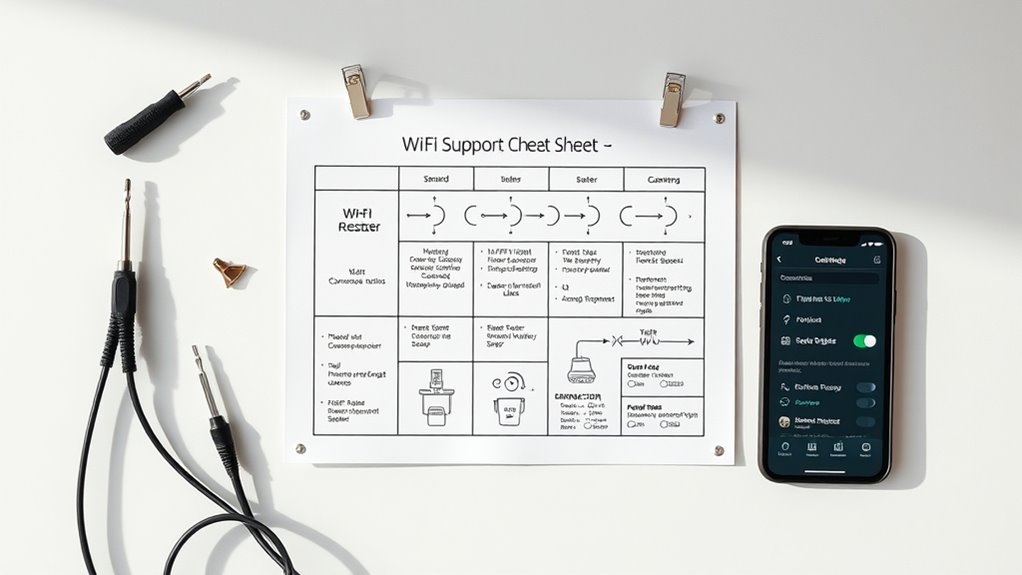
Are you experiencing slow or unreliable Wi-Fi connections? Wi-Fi troubleshooting can often resolve these issues quickly. Start by checking your network configuration—ensure your device is connected to the correct network and that your router is functioning properly. Restart your router and device to refresh the connection. If problems persist, move closer to the router to improve signal strength or eliminate interference from other electronics. Reset your network settings if needed, but remember this will erase saved networks and passwords. Update your device’s firmware or network drivers for maximum performance. Performing these simple steps often restores stable connectivity, helping you avoid more complex fixes. Keep your network configuration optimized, and you’ll enjoy smoother, more reliable Wi-Fi. Additionally, consider optimizing your home network setup with smart routing and device prioritization to enhance overall performance. Regularly reviewing your network security settings can also prevent unauthorized access that might degrade your connection quality. To further enhance stability, consider upgrading your router if your current device is outdated or not supporting higher speeds. Implementing security zone best practices can also help protect your network from external threats that could impact connectivity. In some cases, consulting an AI-driven diagnostic tool can help identify underlying issues more efficiently.
Fixing Battery Drain and Power Problems

To fix battery drain and power issues, start by checking which apps use the most energy and close any unnecessary ones. Adjust your display brightness to lower levels or enable auto-brightness to save power. Managing your battery settings can also help optimize performance and extend your device’s battery life. For additional efficiency, consider using tools like Techno Capture to monitor and manage your device’s background processes more effectively. Understanding power consumption patterns can further assist in identifying energy-draining activities, similar to how understanding essential oils for specific health issues can help in selecting appropriate natural remedies and optimize their benefits.
Check App Usage
Wondering which apps are draining your battery? To identify the culprits, check your app usage in your device settings. This gives you a clear view of which apps consume the most power. Also, review app permissions to see if any unnecessary access is causing background activity. Here are some steps to help:
- Open your device’s battery or app usage settings.
- Sort apps by power consumption to spot the biggest drainers.
- Tap on high-usage apps to see detailed info.
- Adjust app permissions or restrict background activity for apps that use excessive power.
- Keep in mind that background activity can be influenced by factors like app behavior, which may vary depending on the app’s design and purpose. Additionally, monitoring system resources can help you identify other processes that may impact your device’s performance. Managing software updates by keeping your apps and operating system current can also mitigate performance issues caused by outdated software. Being aware of background processes can further help optimize your device’s battery life and overall efficiency.
Adjust Display Brightness
Adjusting your display brightness can substantially extend your device’s battery life, especially if you often leave your screen at full brightness. To do this, open your display settings and find the screen brightness slider. Lowering the brightness reduces power consumption, helping your device last longer between charges. Many devices also have an automatic brightness option, which adjusts the screen based on ambient light. Turning this on can optimize battery life without sacrificing visibility. Keep in mind that setting the screen too dim may strain your eyes, so find a comfortable level that balances visibility and power savings. Regularly adjusting your display brightness is a simple, effective way to improve battery performance without sacrificing usability. Additionally, being aware of gadget problems and how to troubleshoot them can help maintain overall device health and longevity. Being mindful of power management features can further enhance your device’s energy efficiency over time. Properly managing piercing aftercare can also prevent infections and complications that might drain your device’s batteries faster due to health issues. Understanding energy-efficient settings can make a significant difference in how long your device operates on a single charge, especially when combined with battery optimization techniques.
Manage Battery Settings
Struggling with rapid battery drain or unexpected power loss? Managing your battery settings can greatly improve battery life. Start by enabling power saving modes—they reduce background activity and limit non-essential functions. Next, consider adjusting battery optimization settings for individual apps to prevent unnecessary energy use. You should also:
- Turn off Wi-Fi, Bluetooth, and GPS when not in use.
- Reduce screen timeout and lower screen brightness further.
- Avoid multitasking with heavy apps running in the background.
- Keep your device’s software updated for maximum power efficiency.
- Regularly monitor battery health to identify potential issues early and maintain optimal performance. Additionally, selecting energy-efficient devices can further enhance your device’s power management.
Dealing With Software Crashes and App Errors

When an app crashes or errors pop up, your first step is to force quit the problematic app to prevent further issues. Next, clearing the app cache can remove corrupted data that might be causing the problem. To keep things running smoothly, make sure you update your software regularly.
Force Quit Apps
If an app becomes unresponsive or crashes unexpectedly, force quitting it can save you time and frustration. Sometimes, apps hang or freeze, and a simple app force close is your best option. To force quit apps:
- On Windows, press Ctrl + Shift + Esc to open Task Manager, then select the app and click “End Task.”
- On Mac, press Command + Option + Esc, select the app, then click “Force Quit.”
- On iPhone or iPad, swipe up from the bottom (or double-click the Home button), find the app, and swipe it off the screen.
- On Android, open the Settings menu, go to Apps, select the app, then tap “Force Stop.”
Using these methods, you can quickly perform an app force close and resolve software glitches.
Clear App Cache
Have you ever noticed that an app crashes or behaves erratically even after restarting your device? This often happens because of a cluttered app cache. The app cache stores temporary data to speed up your experience, but over time, it can become corrupted or overloaded, causing issues. To fix this, you need to clear the cache. On Android, go to Settings > Apps, select the problematic app, and tap “Clear Cache.” On iOS, you might need to delete and reinstall the app or use specific settings to clear its cache. Clearing cache removes temporary files, freeing up space and resolving glitches. Just remember, clearing cache doesn’t delete your personal data or app settings, only the temporary files that may be causing the crashes.
Update Software Regularly
Regularly updating your device’s software is essential for preventing crashes and fixing app errors. Software updates include bug fixes and security patches that improve stability. By maintaining proper version control, you guarantee your device runs smoothly and stays protected. Here are four tips to keep your software current:
- Check for updates regularly in your device’s settings.
- Enable automatic updates if available.
- Read update notes to understand what’s fixed or improved.
- Install updates promptly to prevent compatibility issues.
Staying on top of software updates ensures you get the latest features and security enhancements. Remember, proper version control helps avoid conflicts and crashes caused by outdated software. Making this a routine minimizes errors and keeps your device functioning at its best.
Addressing Audio and Video Malfunctions

Audio and video malfunctions can disrupt your workflow, but many issues have straightforward fixes. If your audio sounds off, try recalibrating your speakers or headphones through your device’s audio calibration settings. This ensures balanced sound levels and clarity. For video problems, check your device’s video resolution settings; lowering or adjusting the resolution can resolve lag or fuzzy images. Make sure cables are securely connected and update your graphics drivers if needed. If you experience no sound or picture, verify that your device’s mute settings aren’t active. Restarting your device can also clear temporary glitches. These simple steps often fix common audio and video issues quickly, saving you time and frustration.
Restoring Data and Recovering Deleted Files
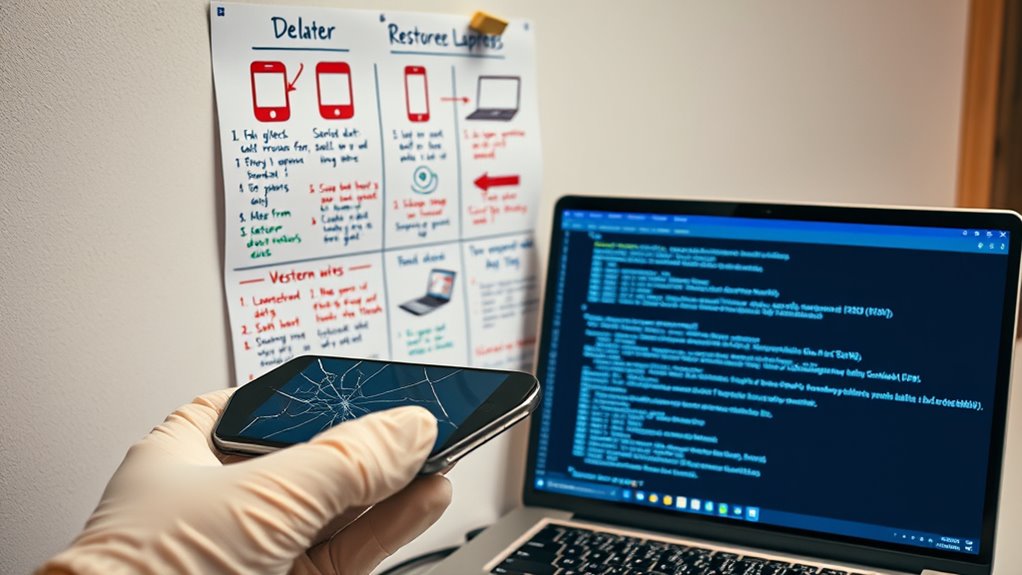
When accidental deletions or data corruption occur, quick action can minimize data loss and reduce downtime. Start by checking if you have a recent cloud backup; restoring from it is often the most critical solution. If not, use reliable file recovery tools designed to scan your storage for deleted files. Here are steps to follow:
Act quickly to recover lost data by checking backups and using reliable recovery tools.
- Stop using the affected device immediately to prevent overwriting lost data.
- Choose a trusted file recovery tool suitable for your system (Windows or Mac).
- Scan your drive thoroughly to locate deleted files or corrupted data.
- Recover files to a different location to avoid overwriting existing data.
In cases of significant loss, consider professional data recovery services, especially if your files are essential.
Managing Storage Space and Performance Slowdowns
Are you noticing your computer slowing down or running out of storage space? To fix this, start with storage optimization. Delete unnecessary files, clear cache, and empty your recycle bin regularly. Use built-in tools to identify large files taking up space and remove them if they’re no longer needed. Managing apps is equally important; uninstall unused programs and disable startup apps that slow down performance. Keep essential apps updated, as updates often include performance improvements. Consider moving large files like videos or photos to external storage or cloud services to free up space. Regularly performing these steps helps keep your device running smoothly and prevents slowdowns caused by cluttered storage. Staying on top of app management and storage optimization guarantees your gadget performs efficiently over time.
Resetting Devices and Performing Basic Repairs

If your device continues to slow down or encounter issues despite managing storage, resetting it can often resolve lingering problems. A factory reset restores your device to its original settings, fixing software glitches and improving performance. Before resetting, back up your data to avoid loss. You might also need to recalibrate your device afterward to ensure accurate performance. Basic repairs, like cleaning charging ports or replacing batteries, can also help. Here are some key steps:
Reset your device if issues persist; back up data, recalibrate, and perform basic repairs to restore optimal performance.
- Perform a factory reset through your device settings.
- Follow calibration procedures if the device’s screen or sensors are off.
- Restart your device to clear temporary glitches.
- Check hardware connections or replace faulty parts for better performance.
Protecting Your Gadgets From Future Problems
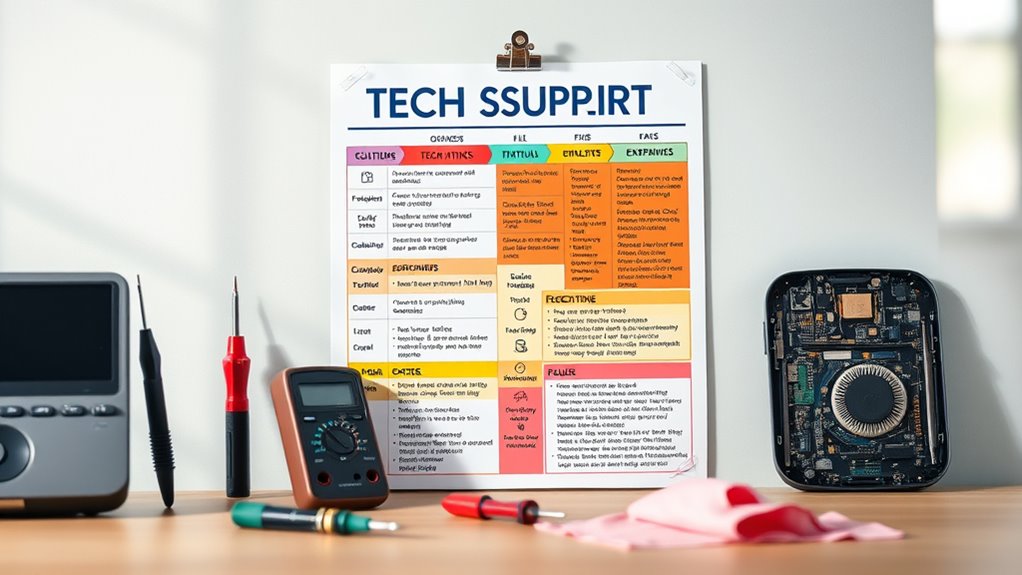
Protecting your gadgets from future problems requires proactive habits and proper maintenance. Start by keeping software and apps up to date, as updates often include security patches that help prevent malware. Use strong, unique passwords and enable two-factor authentication where possible to safeguard your accounts. Protecting gadgets also means being cautious with downloads and avoiding suspicious links or attachments. Regularly back up your data so you don’t lose important information if something goes wrong. Install reputable security software to monitor for threats and remove malware before it causes damage. By practicing these habits, you reduce the risk of future issues and keep your devices running smoothly. Staying vigilant today helps prevent larger problems down the line.
Frequently Asked Questions
How Can I Prevent My Device From Overheating During Use?
To prevent your device from overheating, you should implement effective cooling solutions and follow ventilation tips. Keep your device in a cool, well-ventilated area, avoid direct sunlight, and remove any obstructions blocking airflow. Use cooling pads or external fans if necessary, and regularly clean vents and fans to prevent dust buildup. These steps help maintain ideal temperature, ensuring your device runs smoothly and avoids overheating issues during use.
What Are Signs of a Failing Battery Before It Needs Replacement?
Did you know that batteries typically lose about 20% of their capacity after 300-500 charge cycles? Signs of a failing battery include reduced battery health, faster drain, and inconsistent charging indicators. You might notice your device takes longer to charge or shuts down unexpectedly. Keep an eye on these clues, and consider replacing the battery before it causes more serious issues, ensuring your device stays reliable.
How Do I Back up My Data Before Performing a Reset?
To back up your data before resetting your device, start by using a cloud backup service to save your important files securely online. Make certain data synchronization is enabled so all your recent changes are saved. You can also connect your device to a computer and copy files manually. This way, you’ll preserve your photos, contacts, and documents, making it easy to restore everything after the reset.
What Steps Should I Take if My Device Won’T Turn on at All?
If your device won’t turn on, start by performing power button troubleshooting—press and hold the power button for 10-15 seconds to see if it responds. Next, check the battery connection; make sure it’s properly seated and charged. If it still doesn’t turn on, try connecting it to a charger and wait a few minutes. If these steps don’t work, consider seeking professional repair assistance.
How Can I Improve My Device’s Performance Over Time?
Oh, sure, because your device just magically improves itself over time, right? In reality, you should keep software updates current to patch bugs and boost speed. Manage your apps—delete the ones you never use and keep only essential ones running smoothly. Regularly restart your device to clear cache and memory. These simple steps help your device stay snappy and efficient, proving that a little upkeep goes a long way.
Conclusion
Think of your gadgets as trusty sidekicks—you’re the hero in their story. With these simple fixes, you can tame the wildest glitches and keep everything running smoothly. Like a skilled gardener tending to a garden, you’ll nurture your devices back to health, avoiding future storms. So, grab your toolkit, stay curious, and turn tech troubles into triumphs. Your gadgets are counting on you to keep the adventure going smoothly!