
When you pass away, your Facebook account can be memorialized to honor your memory and protect your privacy or deleted entirely if preferred. Memorialized profiles remain visible to friends and family but restrict features and access to sensitive information. You can also designate a trusted contact to manage your account after death or plan your digital legacy with estate options. To learn how to control your online presence for the future, explore further details below.
Key Takeaways
- Facebook allows you to memorialize your account or designate a legacy contact to manage it after death.
- Upon death, profiles can be memorialized to preserve memories and restrict certain features for privacy.
- Memorialized accounts remain visible but are limited in customization, privacy controls, and content updates.
- Digital legacy planning, including estate arrangements and trusted contacts, helps ensure your online presence aligns with your wishes.
- Proper account management, security, and legal planning protect your digital assets and facilitate respectful post-mortem handling.
Understanding Facebook’s Policies on Memorialized Accounts
When a loved one passes away, Facebook has specific policies to honor their memory and protect their digital presence. They offer the option to memorialize accounts, which helps preserve the person’s profile while respecting their privacy settings. Once an account is memorialized, Facebook restricts certain features to maintain account security, such as preventing unauthorized changes or access. This process guarantees that the deceased’s information remains safe and private, while still allowing friends and family to share memories. Facebook’s policies are designed to balance honoring the individual’s digital legacy with protecting personal privacy. If you’re managing a loved one’s profile, understanding these policies helps ensure their online presence is handled respectfully and securely, in line with Facebook’s guidelines. Proper management of memorialized accounts also involves privacy considerations, ensuring that sensitive information remains protected even after death. Additionally, familiarity with account management tools can assist loved ones in navigating these processes effectively. It is also important to be aware that wave and wind can influence how digital legacy policies are applied in different regions, ensuring compliance and respectful handling. Understanding regional regulations related to digital assets can further aid in managing online memorials compliantly.
The Difference Between Deceased and Memorialized Profiles

When your profile status changes to deceased or memorialized, you’ll notice differences in visibility and privacy settings. Memorialized profiles often keep your legacy visible to friends and family, while deceased profiles may be more restricted. Understanding these distinctions helps you manage your digital presence effectively. Cookie management options can influence how your profile is handled in terms of data privacy after death. Additionally, European cloud solutions can offer enhanced security and compliance for digital legacy management. Being aware of privacy controls can further help you tailor your digital footprint to your preferences, especially considering the importance of digital security in managing your online presence after death.
Furthermore, understanding the implications of digital footprint can assist you in planning how your online identity will be preserved or memorialized over time.
Profile Status Changes
Understanding the difference between deceased and memorialized profiles is essential for managing your digital legacy effectively. When your profile status changes, Facebook treats your account differently. A deceased profile becomes inactive, with no further updates allowed, while a memorialized profile remains visible but with limited options for profile customization. You can’t change privacy settings or add new content to a memorialized account, preserving your digital footprint respectfully. Here’s a quick comparison:
| Feature | Deceased Profile | Memorialized Profile |
|---|---|---|
| Profile customization | No changes allowed | No changes allowed |
| Privacy settings | Locked in place | Locked in place |
| Content visibility | Remains visible | Remains visible |
| Updates allowed | No | No |
| Account management | Usually handled by family/legacy | Managed by designated legacy contacts |
This distinction helps ensure your profile’s final state aligns with your wishes. Additionally, understanding digital legacy and how to prepare for it can provide peace of mind for you and your loved ones. It is also important to know that Facebook offers options for legacy contact management to help loved ones handle your account responsibly after your passing.
Visibility and Privacy
Although deceased and memorialized profiles both remain visible on Facebook, their privacy settings and visibility options differ considerably. Deceased profiles often have limited privacy controls, leaving personal memories accessible to the public, which can raise privacy concerns. Conversely, memorialized profiles offer more control, allowing loved ones to manage privacy and restrict who sees the account. This distinction impacts your online reputation and how much of your life remains accessible after death. Consider how these differences resonate with your wishes:
- Protecting your loved ones from unwanted exposure
- Ensuring your legacy reflects your privacy preferences
- Preventing sensitive information from becoming public
- Digital legacy management helps ensure your digital legacy aligns with your privacy concerns and preserves your dignity after you’re gone. Additionally, understanding privacy controls and how they differ between profile types can help you make informed decisions about your online presence.
How to Convert a Profile Into a Memorialized Account
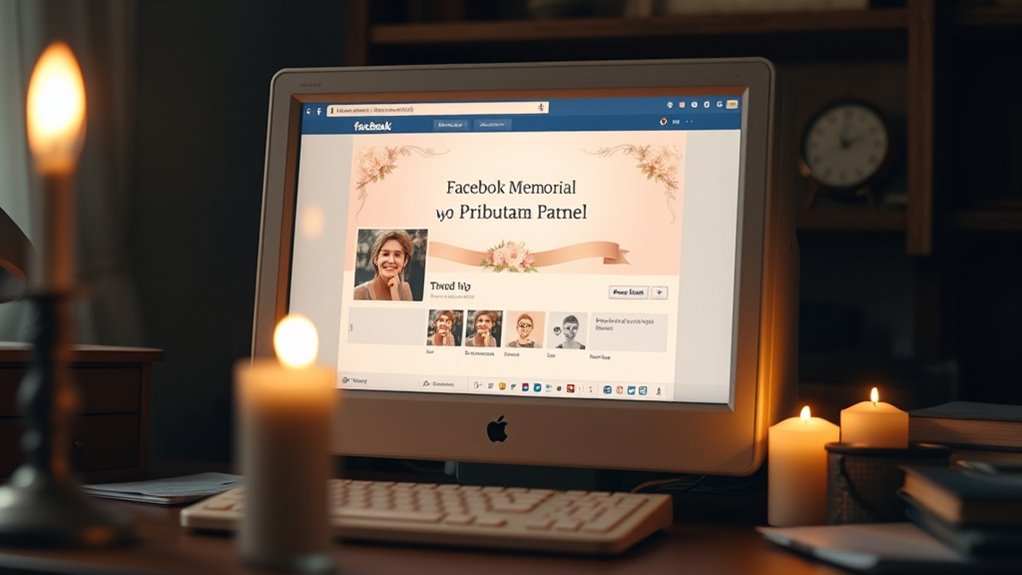
To convert your profile into a memorialized account, start by accessing your profile settings. Then, select the memorialization option and follow the prompts to confirm and finalize the process. This straightforward steps guarantee your loved ones can honor your memory online.
Access Profile Settings
Converting a profile into a memorialized account allows loved ones to honor and remember someone who has passed away. To access profile settings for this process, you’ll need to navigate through your Facebook privacy settings. This guarantees the transition respects the user’s wishes and maintains dignity. When adjusting settings, consider how the account will be preserved for friends and family, and ensure account recovery options are in place if needed.
Remember:
- Respect the deceased’s privacy preferences and digital footprint
- Enable memorialization to keep memories alive while protecting sensitive information
- Manage privacy settings to control who can see or interact with the profile post-mortem
Taking these steps helps loved ones find solace and keeps their memories safe. Proper access ensures the account’s legacy is handled with care and respect.
Select Memorialization Option
Once you’ve accessed the profile settings, the next step is to select the memorialization option that best honors your loved one’s wishes. Facebook allows you to choose between memorializing the account or requesting its deletion. When memorializing, you can specify who can see the profile and manage privacy settings to protect the account’s integrity. This process helps preserve the account’s dignity while maintaining account security. By converting the profile into a memorialized account, you ensure that friends and family can still access memories while preventing unauthorized changes. Remember, memorialization settings are designed to respect the deceased’s privacy preferences and uphold their digital legacy. Carefully review the options to align with your loved one’s wishes and safeguard their online presence. Understanding the importance of digital legacy management can help you make informed decisions during this process.
Confirm and Finalize
After selecting the memorialization option, it’s important to review all your choices carefully before finalizing the process. Confirming your decision guarantees your digital inheritance is handled exactly as you wish, preserving your online memorials with dignity. Take a moment to double-check that your account settings reflect your intentions, and ensure the right contacts are notified. Remember, this process helps loved ones find comfort and closure through your online presence. Transparency in data handling is essential to ensure that your privacy preferences are respected during this process. Once you finalize, your profile becomes a memorialized account, safeguarding your digital inheritance and providing a meaningful online memorial. This step ensures your digital legacy continues to serve as a lasting tribute for those who cherish your memory.
Managing Privacy and Security for Your Digital Legacy
Because your digital presence continues to grow, managing privacy and security becomes essential to protect your legacy. You should review your privacy settings regularly to control who can see your posts, photos, and personal information. Adjust these settings to limit access and prevent unauthorized viewing. Strengthening your account security is equally important; use strong, unique passwords and enable two-factor authentication whenever possible. Consider setting up trusted contacts or legacy contacts who can manage your account after you’re gone, ensuring your digital footprint is handled according to your wishes. Regularly review your privacy settings to stay current with platform updates and maintain control over your online presence. Additionally, understanding how to manage your digital footprint can help you maintain a consistent and secure online identity for your legacy. Being aware of digital security best practices can further protect your account from unauthorized access. Implementing privacy controls can help you customize what information remains accessible, providing peace of mind. By actively managing privacy settings and account security, you safeguard your digital legacy and maintain control over your online presence, even after you’re no longer active. Regularly updating your privacy preferences and security measures ensures your digital estate remains protected over time.
Options for Deleting Your Facebook Account After Death

When planning your digital legacy, it’s important to understand the options available for deleting your Facebook account after death. You can choose to have your account memorialized, deleted, or managed through your online estate planning. These choices are part of your digital inheritance, ensuring your wishes are honored. Utilizing trusted business listings can help you find professional services that assist with digital estate planning and account management. Consider these options:
- Request Facebook to delete your account permanently.
- Designate a trusted person as a legacy contact to manage or delete your account.
- Use online estate planning tools to specify your preferences.
Understanding account security can help you better prepare for your digital legacy and protect your online presence after your passing. Incorporating digital estate planning into your overall estate plan can provide clarity and peace of mind for your loved ones. Deciding now helps prevent your loved ones from facing emotional stress or confusion later. Taking control of your digital inheritance ensures your digital footprint reflects your true intentions, offering peace of mind for both you and your family. Preparing this in advance can also include setting up privacy settings to control what remains accessible or visible after your death. Additionally, understanding digital footprint management enables you to make informed decisions about your online presence and legacy.
Using Legacy Contact to Manage Your Facebook After Passing

Setting a legacy contact for your Facebook account allows someone you trust to manage your profile after you pass away. This person can pin online memorials, respond to new friend requests, and control your digital inheritance. Choosing a legacy contact guarantees your digital presence reflects your wishes and provides comfort to loved ones. They won’t access your private messages unless you grant them permission, but they can keep your profile active or memorialized. Here’s a quick overview:
| Action | Purpose | Result |
|---|---|---|
| Assign a legacy contact | Manage memorials | Preserves memories online |
| Confirm permissions | Control digital inheritance | Ensures your wishes are honored |
| Update contact info | Easy future access | Smooth transition after passing |
The Role of Trusted Contacts in Preserving Memories

Trustworthy contacts play a vital role in safeguarding and sharing your memories online. They can help guarantee your digital estate is handled according to your wishes, fostering meaningful online remembrance. By selecting trusted individuals, you create a support system that preserves your digital legacy beyond your lifetime. These contacts can:
- Share treasured photos and messages, keeping your memory alive for loved ones
- Manage or memorialize your online presence, providing comfort during grief
- Act as guardians of your digital estate, ensuring your online content is treated with respect
- Understanding the importance of essential oils can also help you maintain your health and well-being, which is an important aspect of preserving your quality of life and memories.
Having trusted contacts offers reassurance that your digital memories won’t be lost or misused. They become the custodians of your online remembrance, helping loved ones find comfort and connection even after you’re gone.
Legal Considerations and Rights Over Digital Content

Legal considerations and rights over digital content are vital because online assets are protected by laws that govern ownership, access, and privacy. Your digital estate includes all online accounts and data, making understanding content ownership essential. Laws vary by jurisdiction, but generally, digital assets are considered property, and rights are determined by service agreements or estate laws. When you pass away, your digital estate may be transferred to heirs or managed according to your will. However, platforms like Facebook have policies that may restrict access or delete accounts unless specific instructions are provided. Knowing your rights helps guarantee your digital content is handled according to your wishes and legal frameworks, preventing disputes and safeguarding your privacy after death.
Planning Your Digital Legacy: Steps to Take Today

To safeguard your digital assets are handled according to your wishes, it’s essential to start planning your digital legacy now. Creating a digital estate plan ensures your online inheritance is protected and accessible. Take immediate steps like assigning trusted contacts, documenting login details securely, and choosing digital executors. This preparation can prevent loved ones from emotional distress and confusion later. Consider these actions:
Plan your digital legacy now to protect your online assets and ease loved ones’ future access.
- Designate a digital executor to manage your online accounts
- Store passwords securely with password managers
- Draft clear instructions for your digital estate and online inheritance wishes
Frequently Asked Questions
Can I Set Multiple Legacy Contacts on My Facebook Account?
Yes, you can set multiple legacy contacts on your Facebook account for better account management after you pass away. Facebook allows you to choose several trusted contacts to manage parts of your account, like pinning a tribute post or downloading your profile data. To do this, go to your settings, select “Legacy Contact,” and add multiple contacts. This way, you guarantee your digital legacy is handled according to your wishes.
What Happens if I Don’T Designate a Legacy Contact Before I Pass Away?
If you don’t designate a legacy contact, your digital estate becomes like an unguarded garden—open to anyone and vulnerable to privacy concerns. Without a chosen guardian, Facebook may memorialize your account, but friends won’t be able to manage or access your profile. This can complicate loved ones’ efforts to preserve your memory and raises privacy issues, highlighting the importance of planning ahead to protect your digital legacy.
Are There Specific Privacy Settings for Memorialized Accounts?
Yes, memorialized accounts have specific privacy controls to safeguard your legacy. Facebook allows you to manage who can see your posts, send friend requests, or comment on your memorialized profile, enhancing account security. You can also customize settings to control who can view your profile or send messages. These privacy controls help guarantee your digital legacy remains respectful and secure, giving you peace of mind about your account after you’re gone.
How Does Facebook Handle Digital Content Rights After Death?
Think of your digital content rights as a treasured book, with your Facebook account as its open pages. When you pass, Facebook respects your wishes by allowing account inheritance or memorialization. They handle digital content rights carefully, ensuring your legacy lives on or is responsibly managed. You can set up legacy contacts to control your account after death, giving loved ones access to preserve your digital story.
Can I Restrict Access to Certain Parts of My Facebook Profile After Death?
Yes, you can restrict access to certain parts of your Facebook profile after death using privacy controls. You should set your account’s privacy settings to limit who can see specific content, or designate trusted contacts to manage your profile. This way, you control content restrictions even after you’re gone, ensuring that sensitive information remains private and only accessible to authorized individuals, according to your preferences.
Conclusion
Planning ahead guarantees your digital legacy reflects your wishes. By understanding Facebook’s policies and setting up legacy contacts, you take control of your online presence even after you’re gone. Remember, “A stitch in time saves nine”—it’s better to organize now than leave loved ones guessing later. Take action today to manage your digital footprint, so your memories are preserved the way you want, and your loved ones can honor your legacy with ease.