

Artificial intelligence is transforming industries by automating routine tasks and creating new roles, which can threaten some jobs but also open doors to innovation. While AI enhances productivity and decision-making, it raises ethical concerns, biases, and reliance risks. If you stay adaptable, learn new skills, and embrace change, you’ll find opportunities to thrive alongside AI. To understand how humans and AI can work together rather than compete, keep exploring these evolving dynamics.
Key Takeaways
- AI automates routine tasks, increasing efficiency but potentially displacing some jobs.
- It also creates new roles in AI development, management, and oversight, expanding employment opportunities.
- Reskilling and continuous learning are essential for humans to stay relevant alongside AI.
- Ethical AI use and responsible deployment can enhance societal benefits and reduce risks.
- Overall, AI has the potential to both displace certain jobs and significantly improve quality of life.
Top picks for "human artificial intelligence"
Open Amazon search results for this keyword.
As an affiliate, we earn on qualifying purchases.
The Current Landscape of Artificial Intelligence

Artificial intelligence has rapidly transformed from a niche research area into a fundamental technology shaping various industries. As you explore this landscape, you’ll notice that AI’s growth raises significant questions about AI ethics and data privacy. Companies leverage AI for automation, decision-making, and personalization, but this progress comes with concerns about how data is collected, stored, and used. Ensuring AI systems are ethical means addressing biases and transparency, so you can trust the technology. Data privacy remains a top priority, especially with increasing amounts of personal information involved. The current AI landscape balances innovation with responsibility, prompting ongoing debates about regulation and oversight. A clear understanding of ethical AI is essential to prevent misuse and ensure technology benefits all users. Recognizing the role of European cloud innovation can also enhance data security and support sustainable AI development efforts. Moreover, data security protocols are vital to protect sensitive information as AI systems become more integrated into daily life. Understanding these dynamics helps you grasp how AI is shaping today’s world and the importance of safeguarding human rights amid rapid technological advances. Additionally, color accuracy in AI-driven visual systems is crucial for creating more realistic and trustworthy representations, impacting applications from entertainment to security. Staying informed about compliance standards can further help developers and users navigate the evolving regulatory landscape effectively.
How AI Is Reshaping the Job Market

AI is changing the job market by automating routine tasks, freeing you up for more complex work. At the same time, new roles are emerging that require advanced skills, creating fresh opportunities. However, this shift also highlights a growing skill gap that you’ll need to address to stay competitive.
Automation of Routine Tasks
Have you noticed how many routine tasks in the workplace are now handled automatically? Thanks to advancements in machine learning and process automation, repetitive tasks like data entry, scheduling, and customer inquiries are managed without human intervention. AI systems analyze patterns and optimize workflows, freeing you to focus on more complex responsibilities. This shift not only increases efficiency but also reduces errors and operational costs. As AI continues to improve, you’ll see more processes being automated across industries, transforming how work gets done. While some jobs may change or disappear, this automation allows you to spend less time on mundane tasks and more on strategic, creative, or interpersonal activities. It’s a significant step toward a more streamlined and productive work environment. Additionally, understanding Free Floating concepts can help workers adapt more effectively to these changes.
New Job Opportunities Emergence
As automation takes over routine tasks, the job market is evolving in unexpected ways. You’ll find new opportunities emerging, especially in areas like the gig economy and remote work. AI has created roles in developing, managing, and maintaining intelligent systems, opening doors for tech-savvy professionals. It also fuels freelance markets where flexible, project-based jobs flourish. Additionally, businesses increasingly hire remote workers, broadening access to global talent. This shift benefits those willing to adapt and learn new skills. You might explore roles such as AI trainers, data analysts, or virtual customer support specialists. The landscape is shifting from traditional jobs to more dynamic, technology-driven positions. Embracing these changes can help you stay relevant and even thrive as AI continues to reshape the workforce, highlighting the importance of future-proof skills. Moreover, understanding the Gold IRA Rollovers process can be advantageous for securing your financial future amid these technological shifts. Staying informed about emerging job markets can further prepare you for the evolving employment landscape.
Skill Gap Challenges
While new job opportunities are emerging in response to technological shifts, a significant challenge lies in the growing skill gap. Many workers struggle to keep pace with AI-driven changes, making reskilling initiatives essential. Education reform is needed to better prepare you for evolving roles, but gaps remain. To visualize, consider this table:
| Skill Level | Current Challenges | Required Actions |
|---|---|---|
| Entry-Level | Limited digital literacy | Basic tech training |
| Mid-Level | Outdated skills, automation risk | Reskilling programs, education reform |
| Advanced Skills | High specialization demand | Continuous learning, advanced certifications |
| Leadership | Strategic adaptation to AI | Leadership training, innovation focus |
Addressing these gaps guarantees you’re equipped for the future job market, not left behind. Additionally, understanding the fundamentals of butter can serve as a metaphor for adapting to change—just as butter transforms in cooking, so must your skills evolve to stay relevant.
Sectors Most Affected by Automation
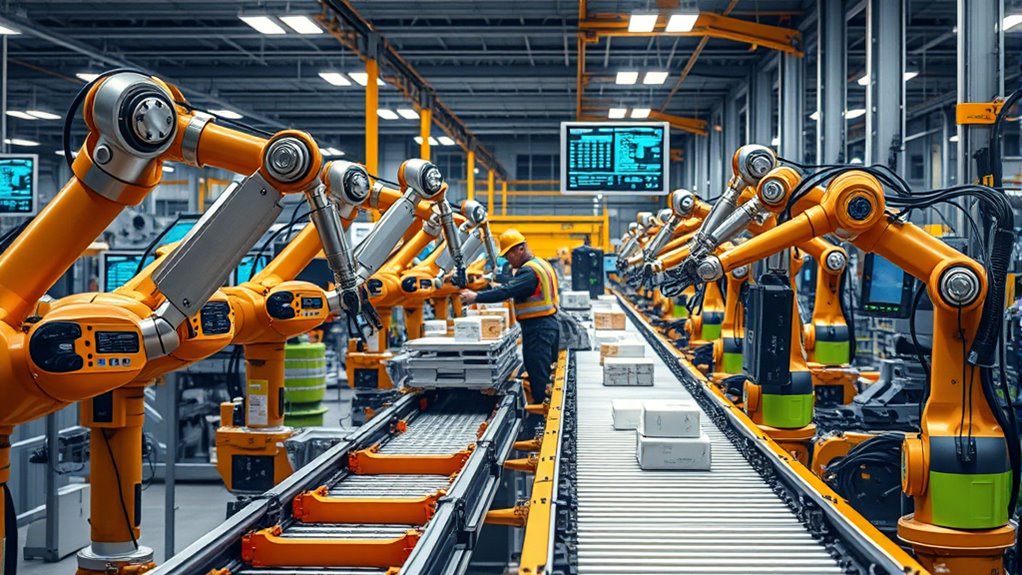
Automation has rapidly transformed several key sectors, disrupting traditional workflows and redefining job roles. You’ll notice significant changes in areas like creative industries, where AI handles design and content creation, streamlining production. Healthcare automation is also reshaping the sector, with AI-powered diagnostics and administrative tasks reducing human workload. Other affected sectors include manufacturing, with robots assembling products faster and more accurately, and transportation, where self-driving vehicles are emerging. These shifts mean you might see fewer roles in repetitive tasks, but new opportunities also arise for those who adapt. Staying informed about these changes can help you prepare for the evolving workforce. Keep an eye on how automation influences your industry and consider how you can leverage these advancements to stay competitive. Additionally, understanding the thermal behavior of high‑heat outdoor cooking equipment can help you optimize safety and performance in food preparation. Moreover, as AI technology continues to advance, it is also impacting areas like customer service and data analysis, creating new job roles and opportunities for innovation. Recognizing the impact of automation on various sectors can help individuals develop strategies to thrive in the changing job landscape.
Opportunities Created by AI Innovation
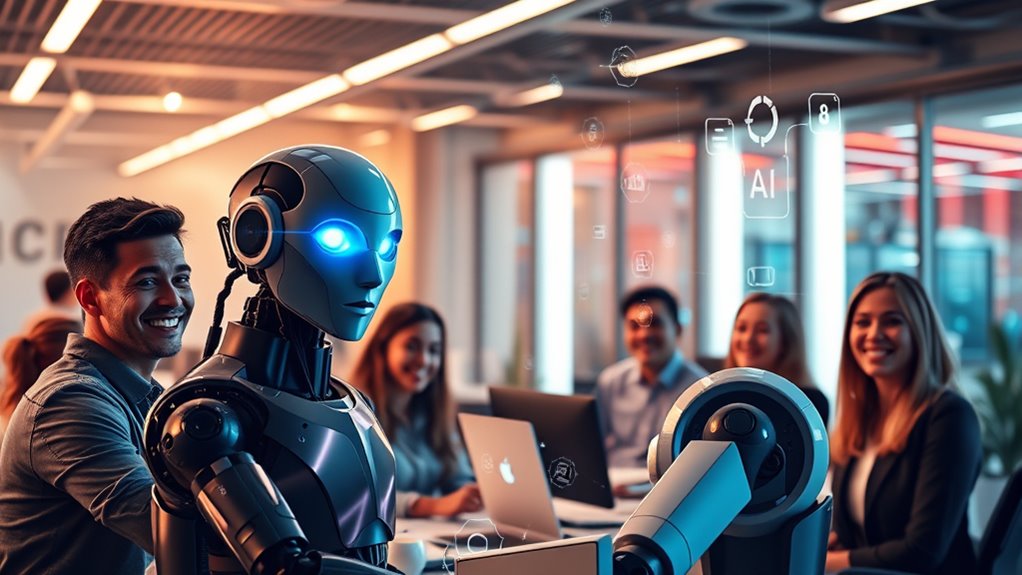
AI innovation opens up new job opportunities you might not have considered before. It also boosts productivity, allowing you to accomplish more in less time. Embracing these changes can help you stay ahead in a rapidly evolving landscape.
New Job Creation
Have you noticed how AI breakthroughs are opening up new job opportunities across various industries? As AI advances, it creates roles that didn’t exist before, such as AI trainers, data analysts, and ethical AI auditors. These new positions often require specialized skills, giving you a chance to upskill and stay relevant. While some worry about job displacement, AI regulation helps make sure that new roles are included and ethical standards are maintained. This shift encourages the development of industries focused on AI deployment, support, and oversight. You might find yourself working alongside AI systems or managing their integration into daily operations. So, instead of fearing job loss, see AI as a catalyst for new job creation and growth opportunities. Additionally, understanding how to work with different body jewelry materials could become an asset in tech-related roles involving wearable devices or biometric sensors. Exploring emerging technologies can further position you at the forefront of this evolving landscape, especially as industries adapt to the rapid pace of innovation and the need for ongoing skilling and reskilling initiatives.
Enhanced Productivity Gains
Thanks to AI innovations, businesses can now achieve significant productivity gains that transform how work gets done. These advancements enable seamless creative collaboration, allowing teams to generate ideas faster and refine solutions more efficiently. AI automates routine tasks, freeing up your time to focus on complex, strategic projects that require human insight. Additionally, integrating advanced automation can further optimize workflows and reduce manual errors. For example, many companies are adopting AI-driven analytics to better understand their operations and customer behaviors, leading to more informed decision-making. However, as you leverage AI for enhanced productivity, you’ll face ethical dilemmas around data privacy, bias, and decision-making transparency. Balancing efficiency with responsible use of technology becomes essential. By embracing AI’s potential, you can boost innovation, improve workflows, and reveal new opportunities that were previously unattainable. Implementing document management systems can further streamline information handling and reduce clutter. Additionally, understanding holistic SEO strategies can help your content rank higher and attract more engaged users. Staying informed about ethical AI principles ensures responsible integration of these tools. Ultimately, these productivity gains empower you to work smarter, not harder, shaping a more dynamic and competitive future.
Challenges and Risks of Relying on AI

While AI systems can greatly enhance efficiency and decision-making, relying on them without caution introduces significant challenges and risks. One major concern is data privacy; sensitive information may be exposed or mishandled if not properly protected. Additionally, biases embedded in AI algorithms can lead to unfair outcomes, making bias mitigation essential. You also face the risk of overdependence, which can diminish human judgment and critical thinking skills.
- Data privacy breaches that compromise personal information
- Biases in AI causing unfair or discriminatory decisions
- Overreliance reducing human intuition and oversight
Addressing these issues requires careful implementation, ongoing monitoring, and ethical considerations to guarantee AI benefits society without unintended harm.
Skills Needed to Thrive in an AI-Driven World

To thrive in an AI-driven world, you need to develop a combination of technical skills and soft skills that enable you to adapt quickly and effectively. Creative problem solving is vital, as AI can handle routine tasks, but your ability to think outside the box remains valuable. Emotional intelligence also plays an indispensable role, helping you understand and respond to others’ feelings, fostering teamwork and leadership. These skills allow you to navigate complex situations and build strong relationships in workplaces transformed by AI. While machines excel at data processing, your ability to interpret, empathize, and innovate sets you apart. Continuously honing these skills ensures you stay relevant and can leverage AI as a tool to enhance your capabilities rather than replace them. Incorporating principles of Design Thinking can further enhance your capacity to develop innovative solutions in an evolving technological landscape. Developing a mindset of resilience and adaptability will help you embrace change and seize new opportunities as they arise. Additionally, cultivating digital literacy can empower you to use new tools effectively and stay ahead in an AI-enhanced environment.
Ethical Considerations and Societal Impact

As AI becomes more integrated into daily life, ethical considerations and societal impacts demand your attention. You must consider issues like bias mitigation, ensuring AI doesn’t reinforce discrimination. Privacy concerns also rise as AI collects vast amounts of personal data, risking misuse or breaches. Additionally, you should think about:
- How AI’s decisions affect fairness and equality
- The transparency of AI systems and accountability
- The societal shifts caused by automation and job displacement
Being aware of these ethical challenges helps you advocate for responsible AI development. Addressing bias mitigation and privacy concerns isn’t just technical—it shapes trust and societal well-being. You play a role in ensuring AI benefits everyone without compromising ethical standards.
Case Studies: Successes and Failures of AI Adoption
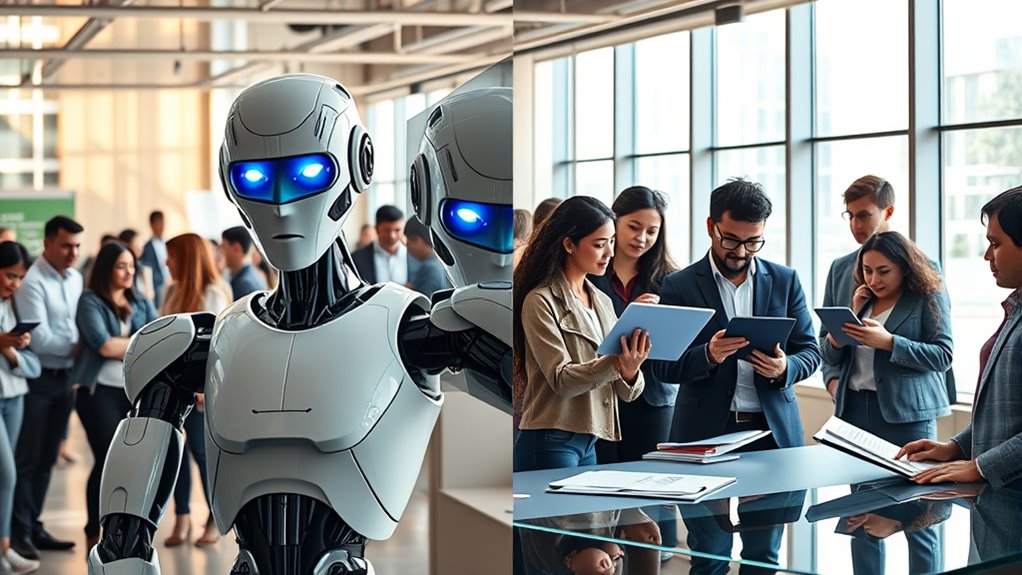
The adoption of AI has produced a mix of remarkable successes and notable failures that highlight both its potential and pitfalls. For example, AI-driven medical diagnostics have improved accuracy and speed, saving lives and streamlining healthcare. However, some AI systems have failed due to poor human oversight, leading to biased outcomes or errors. These cases underscore the importance of AI ethics, ensuring algorithms are fair and transparent. Conversely, failures often occur when human oversight is insufficient, allowing unethical practices or mistakes to persist. Successful AI integration relies on balancing automation with human judgment, emphasizing ethical standards and continuous oversight. Studying these case studies helps you understand where AI excels and where careful human intervention is still essential.
Future Outlook: Collaboration or Competition?
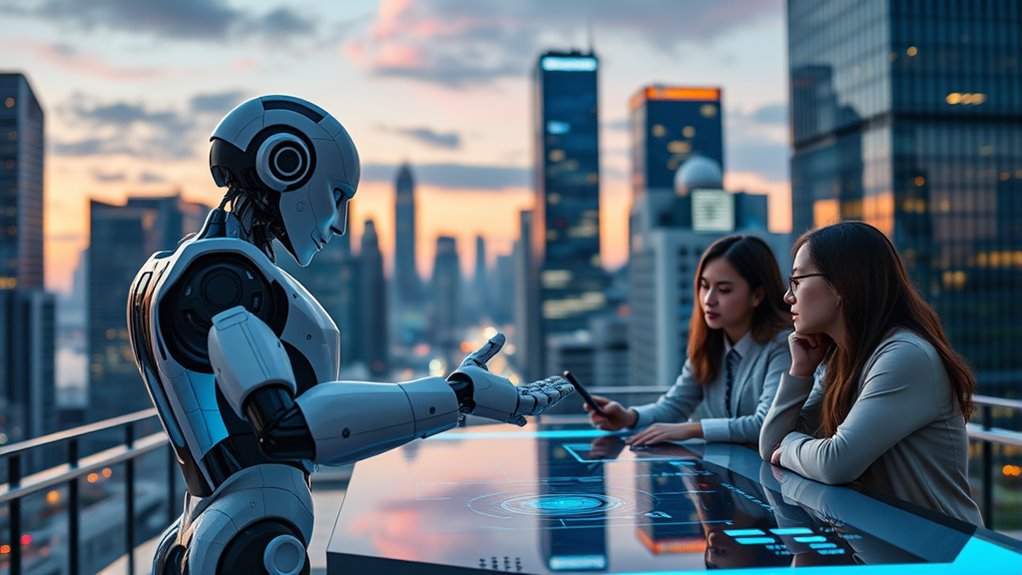
The future of AI hinges on whether humans and machines will work together or compete for dominance. If collaboration prevails, AI can enhance human empathy, allowing us to focus on emotional intelligence and personalized care. But if competition takes hold, ethical dilemmas will intensify, risking misuse or bias. To navigate this future, consider these points:
- Promoting synergy between AI and human skills to improve productivity and compassion
- Addressing ethical dilemmas proactively to ensure responsible AI development
- Fostering human empathy as a core value in AI integration
Ultimately, your role is crucial in shaping whether AI becomes a partner or a rival, determining if the future fosters growth or conflict.
Frequently Asked Questions
How Will AI Impact Income Inequality Worldwide?
AI can widen income inequality if wealth redistribution and Universal Basic Income aren’t implemented. You might find that automation favors the wealthy, increasing wealth gaps. However, you can also see opportunities for AI to promote fairness by supporting policies like Universal Basic Income, which helps redistribute wealth. If these measures are embraced, AI can lessen income inequality worldwide, ensuring more equitable benefits for everyone instead of deepening existing disparities.
Can AI Replace Human Creativity and Emotional Intelligence?
AI can’t fully replace human creativity and emotional intelligence. While machine empathy helps AI understand feelings better, it still lacks genuine emotional depth. Creative automation can assist in generating ideas and content, but it doesn’t match the originality and nuanced understanding humans bring. You’ll find AI as a tool that complements your emotional insight and creative skills, rather than replacing the uniquely human aspects of empathy and innovation.
What Legal Regulations Are Needed for AI Deployment?
Like Pandora’s box, AI deployment demands careful regulation. You need laws that address privacy concerns by safeguarding personal data and establishing clear liability issues when AI causes harm. Regulations should also set standards for transparency and accountability, ensuring AI acts ethically and responsibly. Without these measures, your privacy could be compromised, and liability disputes will increase, risking trust in AI technologies and their integration into everyday life.
How Does AI Influence Global Economic Stability?
AI influences global economic stability by driving automation ethics and integrating digital currencies, which can boost efficiency and reduce transaction costs. You might see increased economic growth as AI streamlines industries, but you should also be cautious of potential disruptions and inequalities. Policymakers need to regulate AI responsibly, ensuring it benefits everyone and maintains stability while adapting to rapid technological changes.
Will AI Create New Job Categories in the Future?
Yes, AI will create new job categories in the future. As automation potential increases, you’ll find opportunities in emerging fields like AI management, data analysis, and cybersecurity. To stay ahead, you’ll need to focus on skill adaptation, learning new technologies, and developing expertise that complements AI. Embracing these changes helps you leverage AI’s benefits and guarantees you remain valuable in a transforming job market.
Conclusion
As you stand at the crossroads of this AI-driven landscape, picture a horizon where human ingenuity and machine precision intertwine like a dance. Embrace the opportunities, but stay vigilant to the shadows of uncertainty. With awareness and adaptability, you can navigate this evolving world—turning potential pitfalls into stepping stones—so that technology becomes a tool, not a threat, shaping a future where both humans and AI flourish together amidst the shifting tides.