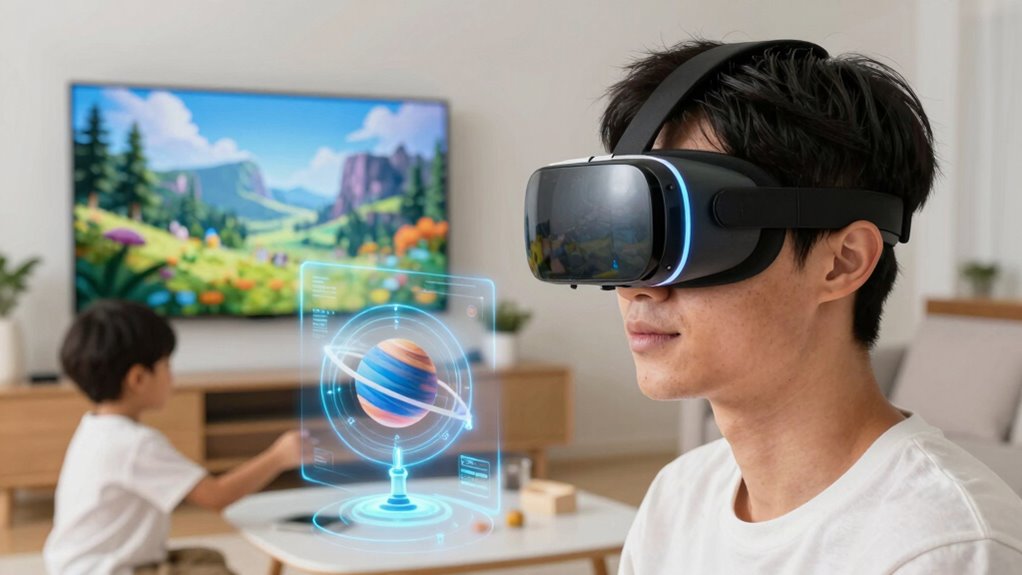

Beyond gaming, AR and VR are transforming healthcare, education, remote work, design, and industrial tasks. You can experience real-time surgical guidance, immersive learning environments, and virtual collaboration that save time and increase engagement. They help improve patient care, make education more interactive, and streamline complex repairs or prototypes. These technologies are opening new frontiers in efficiency and innovation; keep exploring to uncover how they’re shaping everyday life and work.
Key Takeaways
- Enhance medical procedures with AR/VR for real-time visualization, precise navigation, and immersive training.
- Improve education through interactive lessons, virtual field trips, and personalized immersive learning experiences.
- Enable remote collaboration with virtual environments for meetings, team building, and real-time troubleshooting.
- Streamline design and prototyping with virtual walkthroughs, real-time modifications, and early flaw detection.
- Support industrial maintenance via AR-guided instructions, virtual diagnostics, and digital twin monitoring.

VT Telephone-Headset Microphone Noise-Cancelling Headphone QD – Quick Disconnect Call Center Headset with RJ09 Cables Compatible with Polycom,Yealink,Grandstream,Snom,Fanvil,Mitel Phones (Mono)
Compatible with a Wide Range of Desk Phones: This QD headset includes two QD-RJ09 cables and is compatible…
As an affiliate, we earn on qualifying purchases.
As an affiliate, we earn on qualifying purchases.
Transforming Medical Training and Patient Care

Virtual and augmented reality are revolutionizing medical training and patient care by providing immersive, hands-on experiences that were previously impossible. AR surgical navigation allows you to visualize complex anatomy in real time, guiding you precisely during procedures and reducing errors. VR pain management offers patients a distraction from discomfort by immersing them in calming virtual environments, which can decrease reliance on medications. These technologies enable medical professionals to refine skills through realistic simulations, improving outcomes and confidence. Patients benefit from less invasive procedures and more effective pain relief. Additionally, the integration of energy-efficient cloud servers ensures that these advanced applications are supported sustainably and securely, aligning with modern digital healthcare demands. Incorporating high-resolution displays further improves visualization accuracy, crucial for detailed medical procedures. Moreover, advances in haptic feedback technology can provide tactile sensations that mimic real tissue interactions, further enhancing training and procedural accuracy. Implementing proper ventilation systems is also essential to maintain a safe environment when using VR and AR equipment in medical settings. As these immersive tools become more widespread, they are also enabling innovative approaches like remote consultations that extend care to underserved areas, improving overall accessibility.

MedEduQuest Contraceptive Application Training Model – Reproductive Health Demonstration Simulator with Suction Base for Medical & Health Education (White)
Reproductive Health Education Training Model: Designed for reproductive health education and clinical skills training, this model supports proper…
As an affiliate, we earn on qualifying purchases.
As an affiliate, we earn on qualifying purchases.
Revolutionizing Education With Immersive Learning
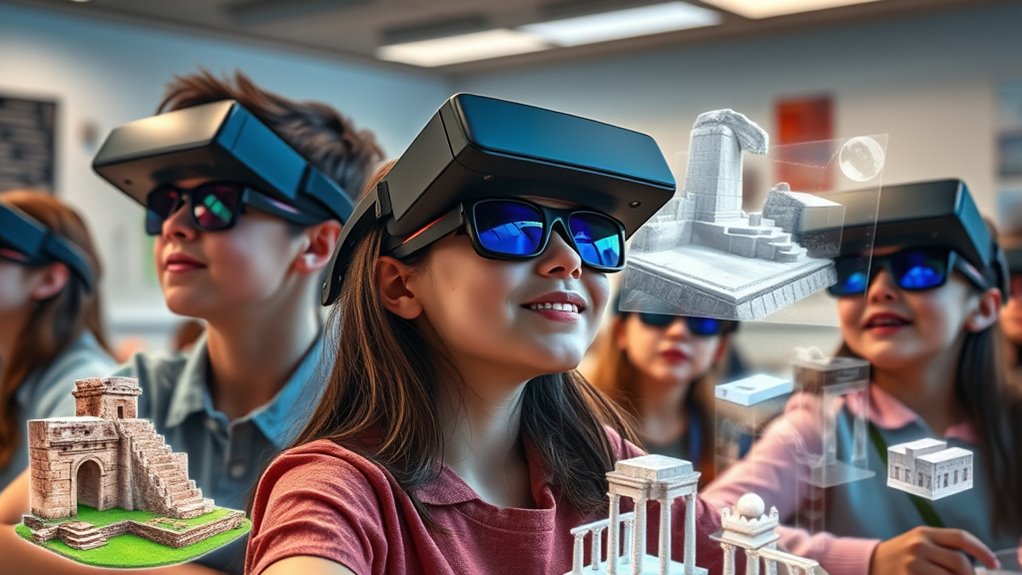
Immersive learning through AR and VR is transforming education by making lessons more engaging and interactive. You can explore concepts through interactive storytelling, which helps deepen understanding by immersing you in narratives. Virtual field trips let you visit places like museums, historical sites, or even outer space without leaving your classroom. This technology enhances your learning experience by: 1. Increasing retention through hands-on interaction 2. Providing real-world context for abstract ideas 3. Engaging diverse learning styles with visual and experiential content and promotes natural curiosity by encouraging exploration in a safe environment. Additionally, incorporating anime-inspired visuals can further captivate and motivate learners by integrating familiar storytelling techniques. The use of immersive technologies can also support learners with different needs by offering personalized and adaptable educational experiences. By providing interactive simulations, learners can practice skills in a controlled setting, boosting confidence and competence. As a result, these tools can also help address learning gaps by offering tailored interventions and engaging methods.

Rokid Max AR Glasses and HDMI, Augmented Reality Glasses Wearable Headsets Smart Glasses for Video Display, Myopia Friendly Portable Massive 1080P Screen,Watch on iOS/Android/PC/Tablets/Game Consoles
Enjoy cinema-grade entertainment at home, on the road, or wherever you like with Rokid Max.Rokid Max ar glasses+HDMI…
As an affiliate, we earn on qualifying purchases.
As an affiliate, we earn on qualifying purchases.
Enhancing Remote Collaboration and Virtual Meetings
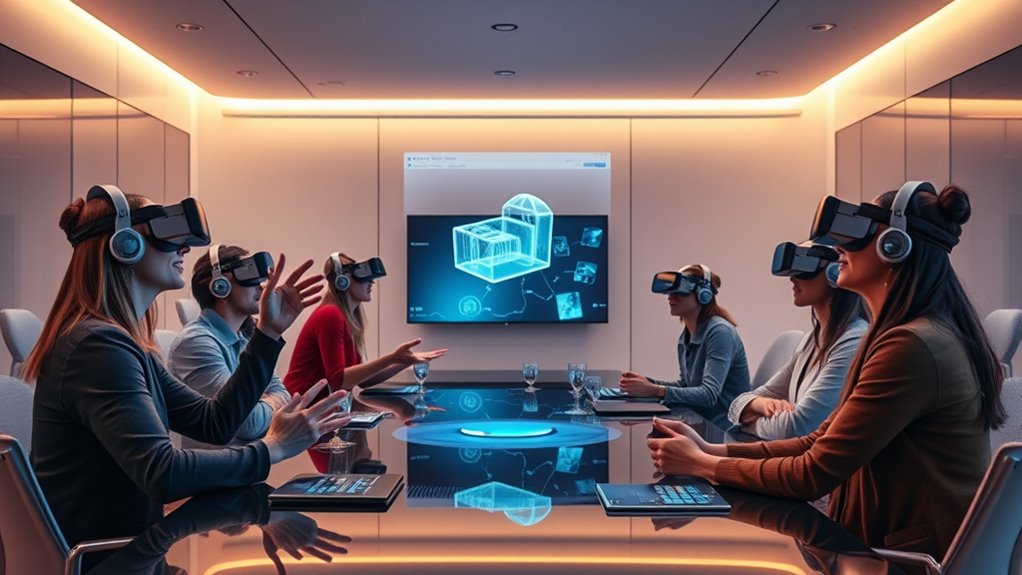
Although remote work has become increasingly common, collaborating effectively across distances remains a challenge. AR and VR transform virtual meetings by creating immersive environments that boost engagement and productivity. These technologies enable virtual team building, making interactions more personal and interactive. You can troubleshoot remote issues in real-time, with shared virtual spaces that facilitate remote troubleshooting, reducing misunderstandings. For example, you might virtually gather around a 3D model or prototype, enhancing communication. This boosts team cohesion and streamlines problem-solving. To understand the potential, consider this table:
| Benefit | Application | Impact |
|---|---|---|
| Virtual Team Building | Interactive group activities | Strengthens team bonds |
| Remote Troubleshooting | Collaborative problem-solving | Faster, more effective solutions |
| Enhanced Engagement | Immersive meeting environments | Increased participation |
| Reduced Travel | Virtual presence for meetings | Cost and time savings |
| Better Communication | 3D visualizations and demos | Clearer understanding |

Abacus Brands Virtual Reality History! – Illustrated Interactive VR Book and STEM Learning Activity Set – for Ages 8 and Up
THE ULTIMATE HISTORY EXPERIENCE – Travel Through Time in VR! Embark on a historical journey with VR HISTORY!…
As an affiliate, we earn on qualifying purchases.
As an affiliate, we earn on qualifying purchases.
Improving Design and Prototyping Processes
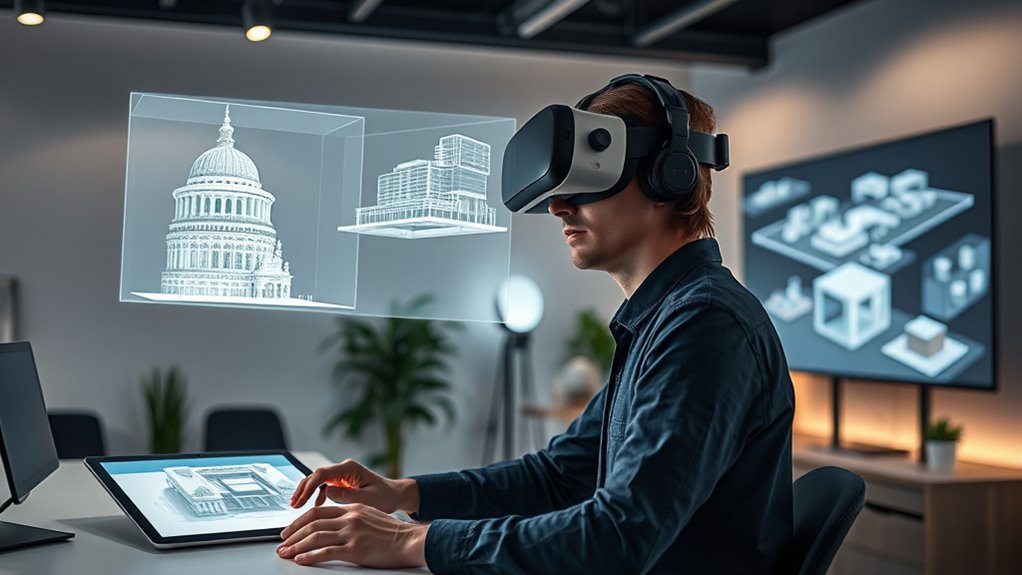
AR and VR revolutionize design and prototyping by allowing you to create, test, and refine models in a highly interactive environment. With virtual walkthroughs, you can explore designs from every angle, gaining insights that static images can’t provide. This immersive experience accelerates decision-making and improves accuracy. Rapid prototyping becomes faster and more cost-effective because you can simulate and modify models in real time. Consider these benefits:
AR and VR enable interactive, efficient design and prototyping with immersive walkthroughs and real-time modifications.
- Visualize complex structures easily
- Detect design flaws early
- Save time and resources during iterations
Using AR and VR, you can streamline your workflow, making prototypes more realistic and functional before physical production. This technology transforms traditional processes, enabling you to innovate more efficiently and confidently. Embracing artistic expression and curiosity in design can lead to more innovative and user-centric solutions.
Assisting in Complex Industrial and Maintenance Tasks
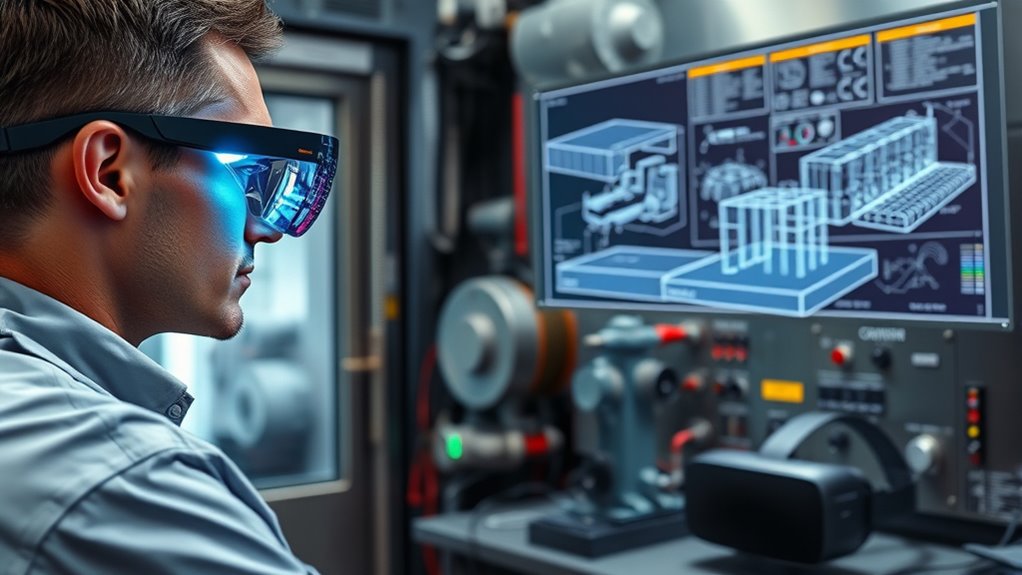
When tackling complex industrial and maintenance tasks, AR and VR provide real-time guidance that enhances accuracy and safety. AR maintenance allows you to see step-by-step instructions overlaid directly onto equipment, reducing errors and speeding up repairs. VR diagnostics enable you to simulate and troubleshoot machinery in a virtual environment, identifying issues before they escalate. With AR, you can access detailed schematics or parts information instantly, which minimizes downtime. VR diagnostics give you a safe space to practice and refine procedures without risking further damage. These immersive technologies streamline operations, improve precision, and help you stay safe under challenging conditions. Additionally, local automation can be programmed to adapt to specific workflows, further enhancing operational efficiency and safety. Incorporating digital twins into maintenance processes allows for continuous monitoring and predictive analysis, further preventing failures before they occur. Moreover, augmented reality interfaces can be integrated with existing systems to provide seamless updates and alerts during maintenance, boosting overall productivity. By leveraging advanced visualization tools, technicians can better interpret complex data and make informed decisions rapidly.
Frequently Asked Questions
How Affordable ARe AR and VR Technologies for Everyday Consumers?
AR and VR technologies have become increasingly affordable thanks to cost reduction and improved device accessibility. You can find budget-friendly options like standalone headsets or smartphone-compatible devices that fit within most budgets. As technology advances, prices continue to drop, making AR and VR more accessible for everyday consumers. So, whether you’re interested in gaming, education, or virtual travel, you’ll find options that won’t break the bank.
What ARe the Potential Privacy Concerns With AR and VR Applications?
Your virtual world is a glass house—easily shattered by privacy concerns. With AR and VR, data privacy becomes a tightrope walk, where personal info can be exposed without your knowledge. You must give informed user consent and stay vigilant, because your data’s safety depends on it. If you’re not careful, your digital footprints could be exploited, turning your immersive experience into a privacy nightmare.
How Do AR and VR Impact Mental Health and Well-Being?
AR and VR can positively impact your mental health and well-being by offering virtual therapy sessions and mindfulness apps that help manage stress, anxiety, and depression. You can practice relaxation techniques in immersive environments or connect with therapists remotely. However, it is crucial to use these tools mindfully, as excessive immersion might lead to social withdrawal or disconnection from reality, so balance is key.
What ARe the Limitations of Current AR and VR Hardware?
You’ll find that current AR and VR hardware face limitations like hardware constraints, which affect performance and graphics quality. User comfort is another issue, as bulky headsets and rough ergonomics can cause fatigue or discomfort during extended use. These constraints hinder the seamless experience you seek, but ongoing advancements aim to improve device portability, comfort, and processing power, making future AR and VR experiences more immersive and accessible for everyone.
How Will AR and VR Influence Future Job Markets and Employment?
They say “change is the only constant,” and AR and VR will reshape your job market by enabling remote collaboration and immersive skill development. You’ll find new roles emerging, requiring tech-savvy expertise, and existing jobs evolving with these tools. As you adapt, you could enjoy increased flexibility and efficiency, making your work more engaging. Embracing AR and VR now can position you at the forefront of future employment opportunities.
Conclusion
As you explore AR and VR beyond gaming, you’ll find they’re transforming industries in incredible ways. For instance, over 70% of healthcare providers now use VR for training and therapy, highlighting its impact. These technologies make complex tasks easier, enhance collaboration, and revolutionize education. Embracing AR and VR opens up a world of possibilities, pushing boundaries and improving efficiency across sectors. So, get ready to experience the future—it’s closer than you think.