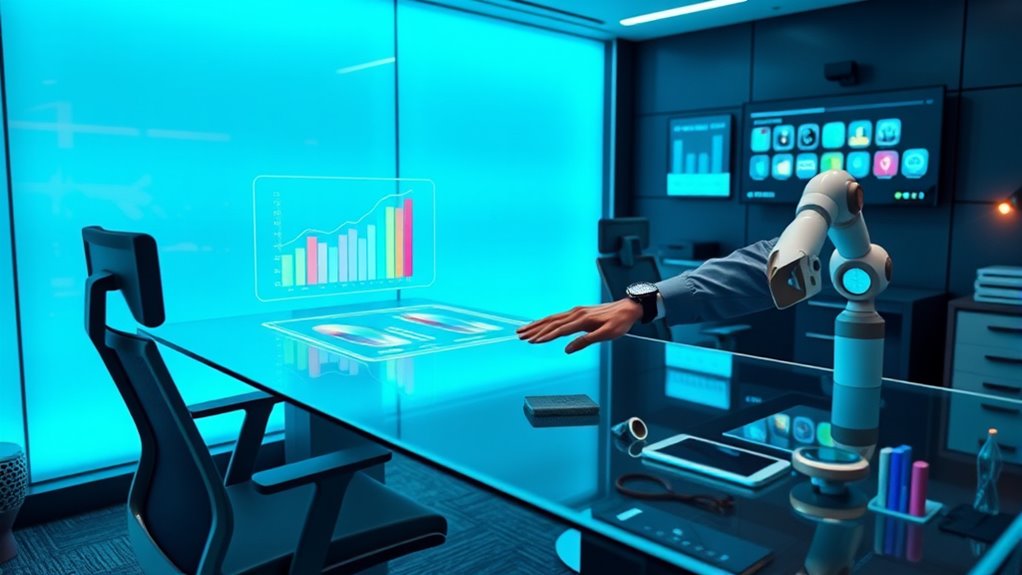

Tech gadgets are transforming your office life by making workspaces smarter, more connected, and employee-focused. Wearable devices monitor your health and help prevent burnout, while IoT integration optimizes infrastructure like lighting and HVAC. Remote tools enable seamless collaboration across distances, and ergonomic gadgets support your well-being. AI and virtual reality boost training and productivity, all supported by enhanced security features. Keep exploring to uncover how these innovations will shape your future workplace experiences.
Key Takeaways
- Wearable sensors and ergonomic devices enhance employee health, productivity, and well-being through real-time monitoring and personalized workspace adjustments.
- Smart IoT integration automates office maintenance, optimizes energy use, and streamlines operations via connected sensor networks and predictive analytics.
- Remote collaboration tools, VR, and AR create immersive, efficient work environments, supporting hybrid models and reducing communication barriers.
- AI-powered automation and analytics optimize workflows, facilitate decision-making, and improve overall office efficiency and responsiveness.
- Smart lighting, adaptive environments, and intuitive controls enhance comfort, environmental quality, and seamless management of office spaces.
Top picks for "future work tech"
Open Amazon search results for this keyword.
As an affiliate, we earn on qualifying purchases.
The Rise of Smart Devices in the Workplace

Have you noticed how smart devices are transforming your daily work routine? Wearable sensors now monitor your health and activity levels, providing real-time feedback to improve productivity and well-being. Voice-activated devices, like smart assistants, allow you to manage tasks hands-free, enhancing efficiency. These gadgets seamlessly integrate into your workspace, reducing distractions and streamlining communication. With wearable sensors, you can track posture and fatigue, helping prevent strain or injury. Additionally, many of these devices utilize wearable technology to connect seamlessly with other tools, creating a more integrated work environment. The development of Free Floating technology enables these devices to adapt effortlessly to different environments, making them more versatile and user-friendly, similar to how adaptive lighting can adjust to your workspace needs. Furthermore, connectivity standards are improving, allowing these smart gadgets to communicate more reliably across various platforms and devices. As a result, interoperability is becoming a key factor in creating cohesive and efficient smart workspaces. Voice-activated devices make scheduling and information retrieval instant, saving you valuable time. As these smart tools become more advanced, they’re shaping a future where your workplace is more connected and responsive. Embracing these technologies today means staying ahead in an evolving work environment driven by innovation.
Enhancing Productivity With Wearable Technology
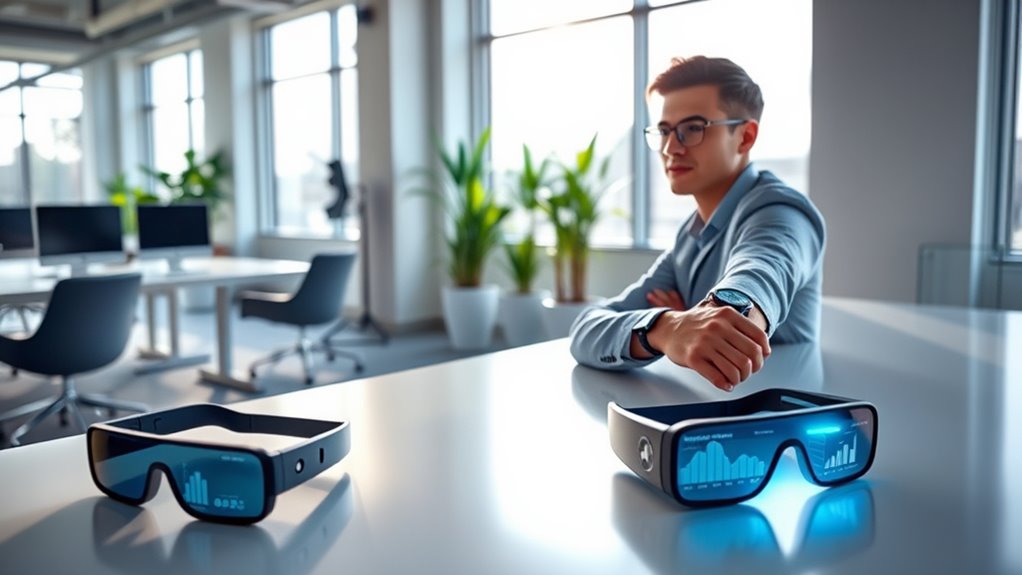
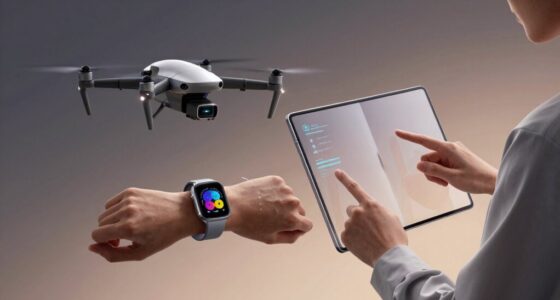
Wearable technology is revolutionizing how you boost your productivity at work. With wearable sensors and fitness trackers, you can monitor your health, manage stress, and stay focused. These devices provide real-time data on your activity levels, sleep quality, and heart rate, helping you optimize your day. Using this information, you can identify when to take breaks or adjust your workload for better efficiency. Here’s a quick overview:
| Device Type | Functionality | Benefit |
|---|---|---|
| Wearable Sensors | Track movement and essential signs | Prevent burnout |
| Fitness Trackers | Monitor steps, calories burned | Stay active during work |
| Smartwatches | Receive notifications, apps | Stay connected easily |
| Sleep Monitors | Analyze sleep patterns | Improve rest for productivity |
| Stress Trackers | Measure stress levels | Manage workplace pressure |
Additionally, integrating luxurious fabrics and craftsmanship principles from haute couture can inspire the design and durability of high-end wearable tech, blending fashion with function for a more stylish office experience. Incorporating features aligned with industry recognition and security standards further enhances the reliability and appeal of wearable devices in professional settings. Moreover, advancements in market trends and insights are continually shaping the development of these innovative gadgets, ensuring they meet evolving workplace needs and support consecration of a productive environment. For example, the integration of user-centric design ensures these gadgets are both functional and comfortable for daily use.
Remote Collaboration Tools Transforming Team Dynamics

Remote collaboration tools are reshaping how teams work together, making it easier to coordinate across distances. These tools foster real-time communication and streamline project management, breaking down geographical barriers. As teams adapt, there’s a growing emphasis on balanced digital use, encouraging periods of digital detox to prevent burnout. This not only supports mental health but also aligns with personal growth principles that promote sustainable work habits. Additionally, establishing clear routines can help teams maintain consistency and organizational clarity even when working remotely. Implementing navigation and mapping features within these platforms can further enhance efficiency by helping teams locate shared resources quickly. Incorporating digital well-being features can also support maintaining healthy boundaries during work hours. The integration of these features promotes a healthier approach to remote work, emphasizing work-life balance as a core component. This shift influences office design, with many organizations creating hybrid spaces that support both in-person and remote work. You now find yourself navigating digital platforms that enhance teamwork while also safeguarding well-being. Collaboration becomes more flexible, dynamic, and inclusive. By integrating these tools thoughtfully, you can maintain strong team bonds without sacrificing mental health. Ultimately, remote collaboration tools are transforming team dynamics into more agile, resilient, and connected units.
The Impact of IoT on Office Infrastructure
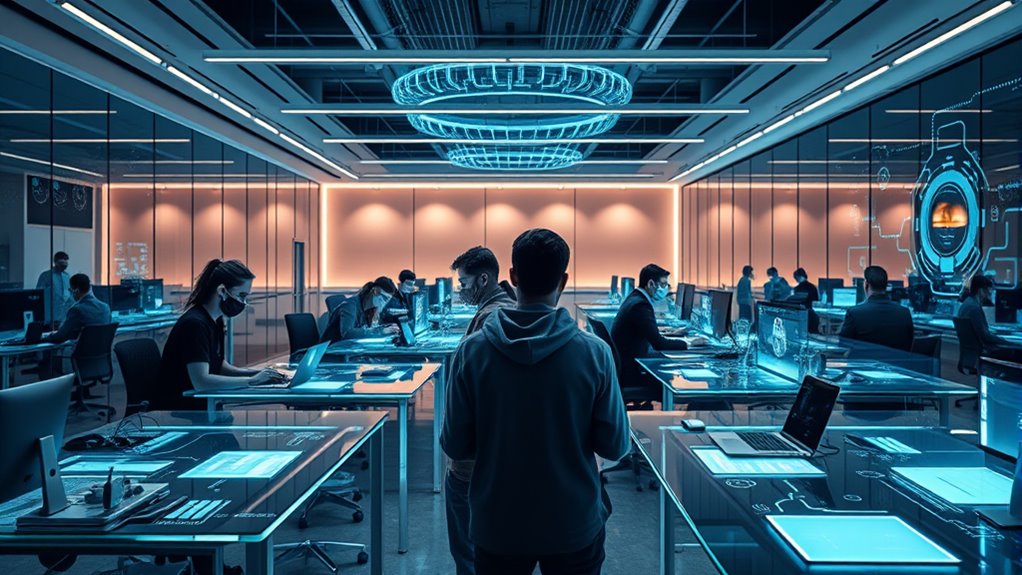
How is the Internet of Things (IoT) revolutionizing office infrastructure? You’ll notice sensor networks that monitor everything from lighting to HVAC systems, providing real-time data to optimize your workspace. These sensors help identify issues early, enabling predictive maintenance that prevents costly breakdowns and reduces downtime. Instead of reactive repairs, IoT allows your office to run smoothly with proactive adjustments. For example, sensors can detect when a printer is low on toner or when a conference room’s temperature needs adjustment, automatically triggering maintenance or updates. This integration streamlines operations, cuts costs, and enhances efficiency. As IoT continues to evolve, your office’s infrastructure becomes smarter, more responsive, and better equipped to support your day-to-day tasks seamlessly. Additionally, leveraging European cloud solutions ensures your data remains secure and compliant with regional regulations, further bolstering your office’s infrastructure resilience. The use of sensor networks also facilitates data-driven decision-making, enabling a more agile and adaptive work environment. Furthermore, implementing load calculations ensures your electrical system can handle the increased demands of connected devices safely and effectively. Incorporating environmental monitoring can help optimize energy consumption for sustainable and reliable power management.
Ergonomic Gadgets for Better Employee Well-being
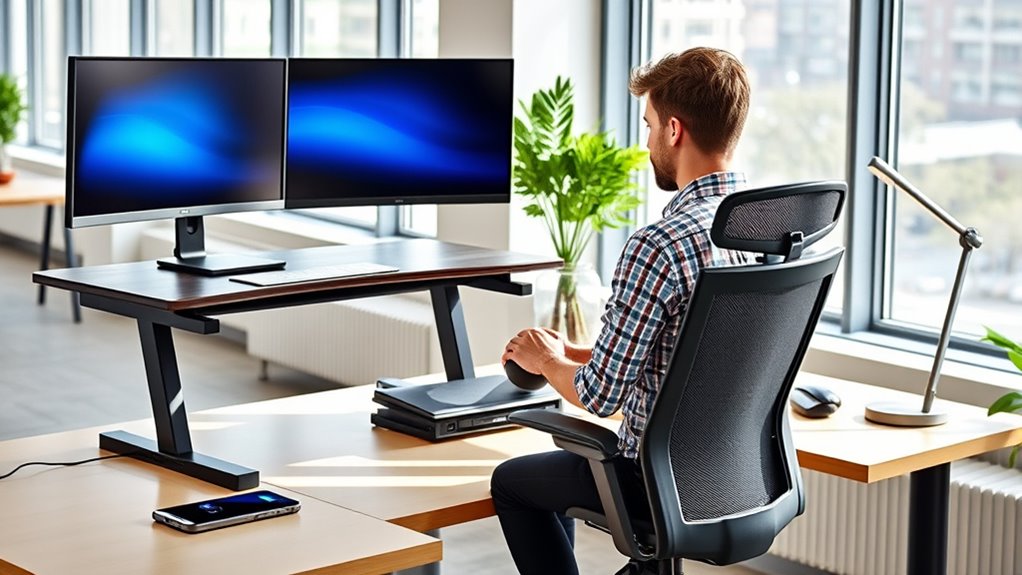
To promote employee well-being in modern offices, ergonomic gadgets are playing an essential role in reducing strain and preventing discomfort. Ergonomic seating supports proper posture, helping you avoid back pain and fatigue during long hours at your desk. Adjustable desks enable you to switch between sitting and standing positions, keeping blood flowing and reducing stiffness. These gadgets encourage healthier work habits by allowing customization to your body’s needs. When your workspace adapts to you, it minimizes musculoskeletal issues and enhances focus. Investing in ergonomic seating and adjustable desks isn’t just about comfort—it’s about boosting productivity and overall health. By prioritizing these gadgets, you create a more sustainable and employee-centric environment that promotes well-being every workday. Understanding the importance of proper workspace setup can further improve posture maintenance and efficiency in the modern office. Additionally, integrating ergonomic accessories can further customize the workspace to individual needs, promoting better health and comfort. Incorporating ergonomic technology can also support adaptive work environments, enhancing overall employee satisfaction and tool maintenance ensures these gadgets remain effective and safe to use.
AI-Powered Assistants and Automated Tasks

AI-powered assistants are transforming how you handle daily tasks by making workflows more efficient. They help personalize your task management, so you focus on what matters most. Plus, they boost team collaboration by seamlessly integrating communication and project updates.
Streamlining Daily Workflows
As technology advances, more workplaces are adopting AI-powered assistants and automated tasks to enhance efficiency. These tools help you streamline daily workflows by reducing manual effort. For example:
- Digital filing systems automatically organize documents, saving you time searching for files.
- Automated reminders keep you on track with meetings and deadlines.
- Smart office setups, including ergonomic chairs, improve comfort, allowing you to focus longer without fatigue.
Personalized Task Management
Building on the efficiency gains from automated workflows, personalized task management tools tailored to your needs can further boost productivity. AI-powered assistants analyze your work habits and preferences to create customized work routines, helping you prioritize tasks and meet deadlines more effectively. These tools can suggest the best times for focused work, remind you of important deadlines, and even automate routine tasks like scheduling meetings or sending follow-up emails. By adapting to your individual workflow, personalized task management minimizes distractions and reduces decision fatigue. This tailored approach ensures you stay organized without feeling overwhelmed, allowing you to focus on high-value activities. As a result, your workday becomes smoother, more efficient, and better aligned with your personal productivity style.
Enhancing Team Collaboration
How can teams work more seamlessly together in an increasingly digital workplace? AI-powered assistants and automated tasks make collaboration smoother and more efficient. They facilitate digital brainstorming by organizing ideas instantly, saving time and encouraging creativity. Automated scheduling tools help coordinate meetings effortlessly, supporting team building by reducing logistical stress. Additionally, these tools track progress and set reminders, ensuring everyone stays aligned. By integrating AI, you can focus more on strategic thinking rather than mundane tasks. This technology empowers your team to communicate better, share ideas faster, and stay connected regardless of location. Ultimately, AI-driven solutions foster a more cohesive, productive environment where collaboration is effortless and impactful.
Virtual and Augmented Reality in Training and Meetings
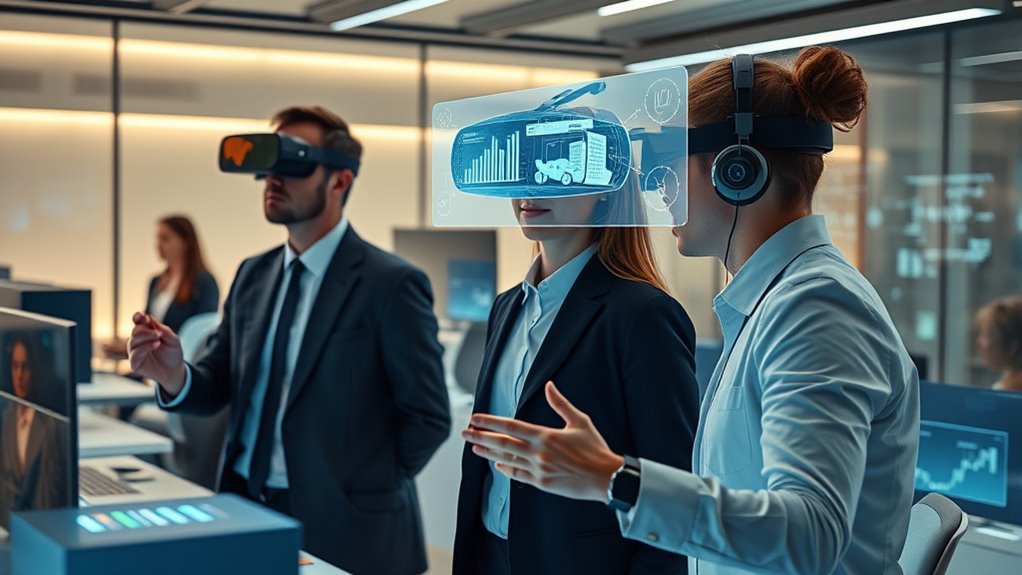
Virtual and augmented reality are transforming how we conduct training and meetings by creating immersive, interactive environments. With virtual meetings, you can feel as if you’re in the same room with colleagues, even when you’re miles apart. These tools make remote collaboration more engaging and effective, eliminating distractions and enhancing focus. Augmented training allows you to practice skills in realistic simulations without real-world risks, improving retention and confidence. Whether you’re participating in a virtual workshop or attending a meeting with AR overlays, these technologies make communication clearer and more dynamic. As a result, workplace interactions become more efficient and engaging, paving the way for a more connected, tech-driven office environment. You’ll find these innovations reshape how work gets done daily.
Security Innovations for a Connected Workspace

Security innovations like biometric access control and encrypted data transmission are transforming your connected workspace. These technologies help protect sensitive information and guarantee only authorized individuals gain entry. As these innovations advance, they’ll become essential for keeping your work environment secure.
Biometric Access Control
Biometric access control is transforming the way we secure connected workspaces by providing a seamless and reliable way to verify identities. With biometric authentication, you no longer need keys or passwords; your unique physical traits grant access. This enhances security and speeds up entry processes. Here’s how it works for you:
- Fingerprint scans instantly authenticate your identity at doors or devices.
- Facial recognition verifies your face, reducing the risk of unauthorized access.
- Retinal or iris scans offer high-security access for sensitive areas.
This technology streamlines access control, making it more intuitive and secure. You benefit from reduced security breaches and faster entry, all while maintaining a high level of privacy. Biometric authentication truly elevates the security standards of your connected workspace.
Encrypted Data Transmission
As workplaces become more connected, safeguarding data during transmission has never been more critical. You need to verify that your information stays private and protected from cyber threats. Implementing encrypted communication methods guarantees that your messages and data are unreadable to unauthorized parties. When transferring files, opt for secure file transfer protocols that encrypt data end-to-end, preventing interception or tampering. These security innovations make it difficult for hackers to access sensitive information during transmission. By prioritizing encrypted data transmission, you reinforce your organization’s defenses and build trust with clients and partners. Staying updated on the latest encryption technologies helps you maintain a secure, connected workspace where data remains confidential at every stage of the transfer process.
The Role of Mobile Tech in Flexible Work Arrangements

How has mobile technology transformed the way we work? It’s made flexible arrangements possible and more efficient. With smartphones and tablets, you can work from anywhere, anytime. Here’s how:
- You can stay connected securely by using mobile device security features that protect sensitive data on the go.
- Apps are now customizable, allowing you to tailor your workspace to fit your needs and boost productivity.
- Mobile tech also enables seamless communication and collaboration, even when you’re remote or traveling.
This shift means you’re less tied to a physical office and more empowered to manage your work-life balance. Mobile device security and app customization play essential roles in making this flexibility safe and effective.
Future Trends: What’s Next for Office Technology

You’ll see AI seamlessly integrated into daily workflows, making tasks faster and decision-making smarter. Conference rooms will become fully smart spaces, equipped with automation and immersive tech to enhance collaboration. Meanwhile, wireless connectivity will keep improving, ensuring your devices stay connected without interruptions.
AI Integration in Offices
AI integration in offices is transforming the way workplaces operate, making processes more efficient and collaborative. You’ll notice smarter office automation that handles routine tasks, freeing you to focus on strategic work. However, as AI advances, addressing AI ethics becomes vital to guarantee responsible use and prevent bias. Here’s what you can expect:
- Seamless office automation that streamlines scheduling, data management, and communication.
- Enhanced decision-making through AI-powered analytics that provide real-time insights.
- Growing importance of AI ethics to maintain transparency and fairness in AI-driven processes.
Smart Conference Rooms
Smart conference rooms are redefining how teams collaborate and communicate during meetings. Interactive displays make presentations more engaging, allowing everyone to contribute directly on a shared screen. These displays facilitate real-time annotations, making discussions more dynamic and productive. Smart lighting adjusts automatically to suit the mood and task, reducing eye strain and creating a comfortable environment. With intuitive controls, you can easily dim or brighten the room, enhancing focus and visibility. The integration of these technologies streamlines meeting setups, saving time and minimizing disruptions. As a result, your team can collaborate more efficiently, whether brainstorming, reviewing data, or making decisions. Smart conference rooms are not just about gadgets—they’re about transforming your office experience into a seamless, high-tech environment.
Wireless Connectivity Advancements
Advancements in wireless connectivity are set to revolutionize office technology by enabling faster, more reliable, and seamless communication across devices. As wireless protocols and connectivity standards evolve, you’ll notice significant improvements in your daily workflow. Here’s what to expect:
- Faster Data Transfer: New protocols like Wi-Fi 6 and 5G boost speed, reducing lag during video calls and file sharing.
- Enhanced Reliability: Improved connectivity standards minimize disruptions, ensuring smooth, uninterrupted communication.
- Better Device Compatibility: Upgraded standards support a wider range of gadgets, making integration effortless.
These advances make your office smarter and more efficient. As wireless protocols become more sophisticated, your work environment will benefit from consistent, high-quality connectivity that keeps everything running seamlessly.
Frequently Asked Questions
How Will AI Influence Workplace Decision-Making Beyond Automation?
AI will influence your workplace decision-making by providing you with predictive analytics that forecast outcomes and identify trends. Decision algorithms analyze complex data quickly, helping you make informed choices faster. This means you can focus on strategic tasks while AI handles routine analysis. As a result, your decisions become more accurate, efficient, and data-driven, ultimately boosting productivity and guiding your team toward better results.
What Ethical Concerns Arise From Increased Surveillance via Smart Devices?
You might worry about employee privacy as smart devices monitor your every move, raising serious ethical concerns. Increased surveillance can lead to consent challenges, making it unclear if you’re fully aware of or agree to being constantly watched. This erodes trust and can create a workplace where employees feel undervalued. It’s essential for companies to balance productivity benefits with respecting individual privacy rights to foster a fair, transparent environment.
How Can Companies Ensure Data Privacy With Interconnected Office Gadgets?
To guarantee data privacy with interconnected office gadgets, you should implement strong data encryption methods and regularly update security protocols. Additionally, you need to provide employee training on data protection best practices, emphasizing the importance of secure device use and recognizing potential threats. By combining these strategies, you create a safer environment that protects sensitive information and builds trust in your company’s handling of data.
Will Virtual Reality Replace Traditional Face-To-Face Meetings Entirely?
Virtual reality will transform, but not erase, face-to-face meetings. You’ll find yourself immersed in virtual collaboration, where immersive meetings feel almost like real conversations. While VR offers a new dimension for teamwork, it won’t fully replace the warmth of in-person interactions. Instead, it acts as a bridge, expanding your ability to connect across distances, making your work more flexible without losing the human touch that fuels genuine relationships.
How Accessible Are These Advanced Tech Gadgets for Small and Medium-Sized Businesses?
Advanced tech gadgets are becoming more accessible to small and medium-sized businesses, but cost barriers and implementation challenges still exist. You can find affordable options, but integrating them requires careful planning and investment. It’s essential to evaluate your business needs and budget, then choose gadgets that offer the best value. With some effort, you can leverage these tools to boost productivity without overspending or facing major hurdles.
Conclusion
As you embrace these tech innovations, remember that staying ahead of the curve is key. The workplace is evolving faster than ever, and you’ve got to keep your finger on the pulse. Don’t let the grass grow under your feet—adapting now will pay off in the long run. By leveraging smart gadgets and new tools, you’ll not only boost productivity but also create a more dynamic, comfortable workspace where everyone can thrive.